



If you’ve followed the development electric cars at all, you’ve heard the phrase “solid-state battery”.
For years, carmakers and tech companies have promised that this next-generation technology is just around the corner, bringing ultra-fast charging, longer range and a step-change in safety. Toyota, Nissan, BYD, Mercedes-Benz and BMW have all talked it up as the next big leap for electric cars.
But what actually is a solid-state battery? And how is it different from what’s in today’s EVs? Here’s the plain-English version.
First: how current EV batteries work
Most electric cars today use lithium-ion batteries - broadly similar in chemistry to the one in your phone or laptop, just much larger.
Inside a typical lithium-ion battery are three key parts:
- An anode (negative side)
- A cathode (positive side)
- An electrolyte (the material that lets charged particles move between them)
When the battery powers the car, lithium ions move from the anode to the cathode through the electrolyte. When you plug in to charge, they move back again. That constant back-and-forth is what stores and releases energy.
The crucial component here is the electrolyte. In almost all current EV batteries, it’s a liquid (or gel-like) chemical solution. It lets ions to flow easily - but it comes with trade-offs:
- It’s flammable.
- It limits the use of higher-energy materials, capping energy density.
- It degrades over time.
- It requires careful cooling and monitoring.
Modern EV batteries are extremely safe in real-world use, but they depend on sophisticated battery management systems to keep everything stable.
So what is a solid-state battery?
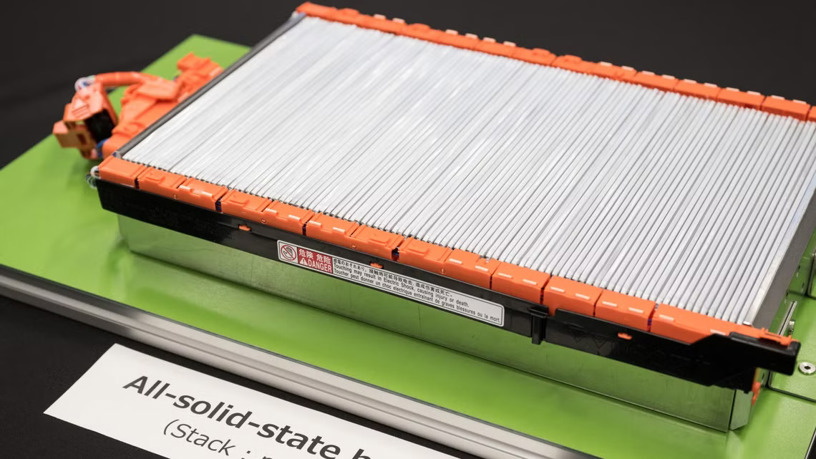
At a basic level, it’s the same concept - anode, cathode and electrolyte - but with one critical difference: the electrolyte is solid, not liquid.
Instead of a liquid solution, solid-state batteries use solid materials such as ceramics, glass-like compounds or specialised polymers to allow lithium ions to move between the electrodes.
One change. Potentially big consequences.
Why does that matter?
Swapping the liquid electrolyte alters several key characteristics. The biggest promise is higher energy density - more energy stored in the same size and weight.
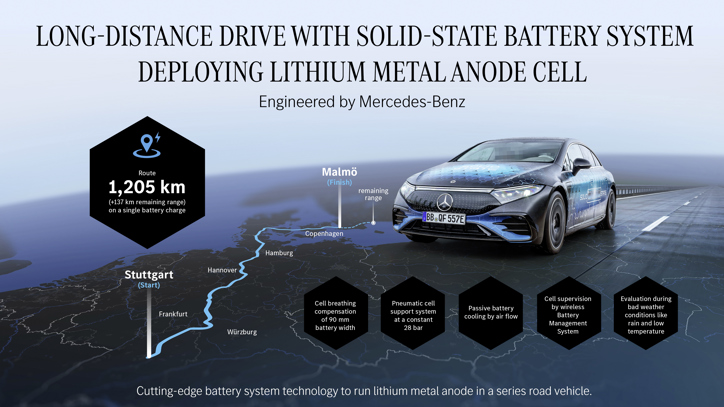
Because solid electrolytes are generally more stable, they can potentially enable the use of a lithium metal anode instead of the graphite used in most current batteries. Lithium metal can store significantly more energy, opening the door to longer range, lighter battery packs, or even both.
In theory, an EV that travels 500km today could manage 700 to 1000km at similar weight, or deliver the same range with less mass to lug around.
There’s also the promise of faster charging. Liquid electrolytes have limits on how quickly lithium ions can move safely. Push too hard and you risk overheating or forming tiny needle-like structures called dendrites, which can damage the battery.
Under laboratory conditions, solid electrolytes have shown they can reduce dendrite formation and tolerate higher charging rates. That could mean substantially faster charging - in some tests approaching 10 to 15 minutes for a major top-up that might take 30 to 40 minutes in a current EV.
Safety is another potential advantage. Liquid electrolytes are flammable, and while EV battery fires are rare, they can be severe. Removing the flammable liquid reduces the risk of thermal runaway, the chain reaction that can lead to battery fires and makes them difficult to extinguish. That doesn’t make solid-state batteries fireproof, but they are widely expected to be inherently safer.
There’s also durability, as solid-state batteries are, in theory, more stable and may degrade more slowly than current lithium-ion packs.
Battery degradation happens for several reasons: chemical breakdown, heat, repeated charging cycles and structural changes inside the cell. Early research suggests solid-state designs could reduce some of these degradation mechanisms, although they introduce new material and interface challenges that researchers are still working through.
If those hurdles are solved, it could mean longer warranties, stronger resale values and less range loss over time.
If they’re so good, where are they?
Because building them is hard. And expensive.
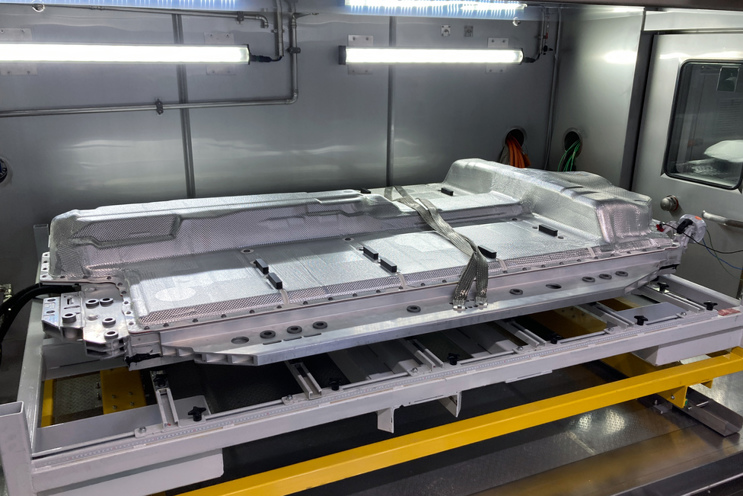
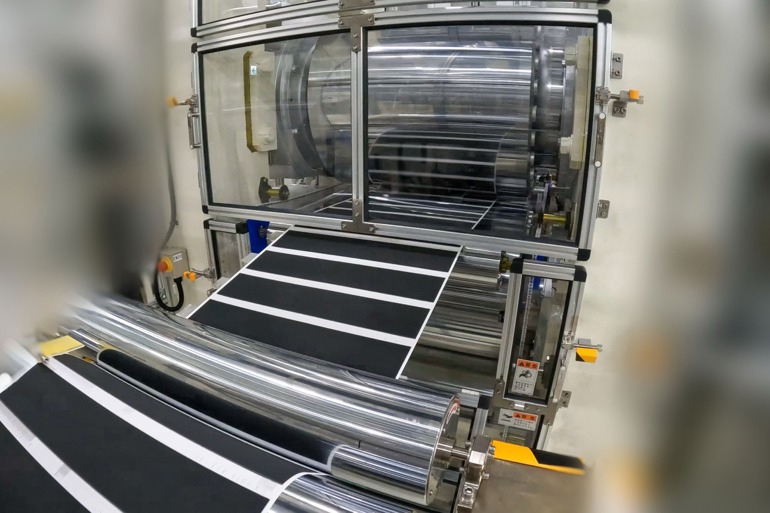
Producing ultra-thin, defect-free solid electrolyte layers at automotive scale is significantly more difficult than manufacturing conventional liquid-based cells. Even tiny cracks or imperfections can hurt performance.
Cost is another barrier. New materials, new production processes and low initial volumes make solid-state batteries expensive. Until they can be produced in the millions at competitive prices, they won’t replace today’s lithium-ion packs.
And lab results aren’t enough. Automotive batteries must survive extreme heat and cold, vibration, repeated fast charging and thousands of cycles over 10 to 15 years. Proving that kind of durability takes time.
So are they coming soon?
Carmakers have been saying “five years away” for more than a decade. But progress is genuine.
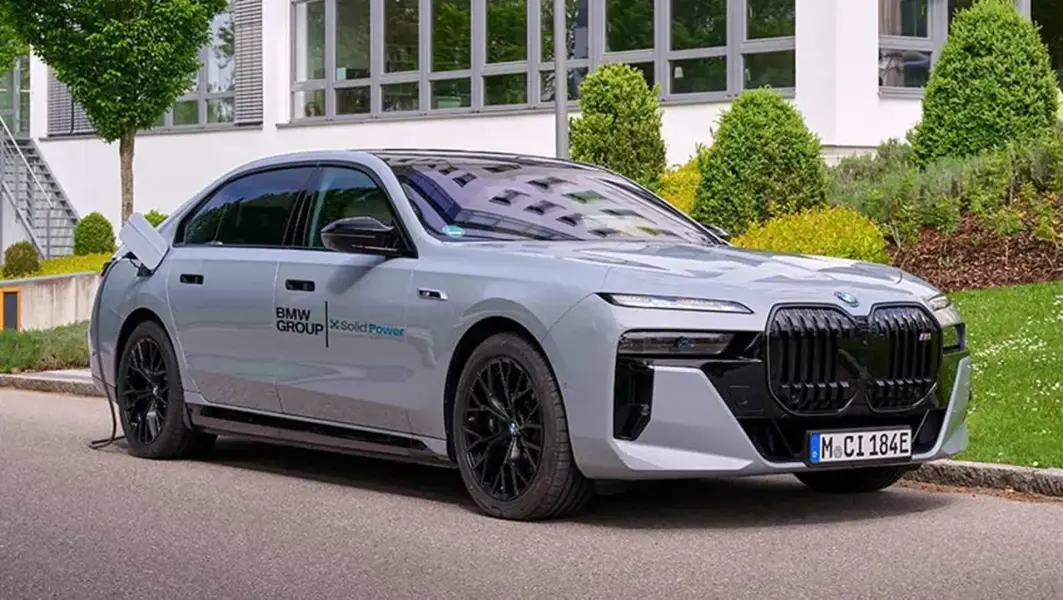
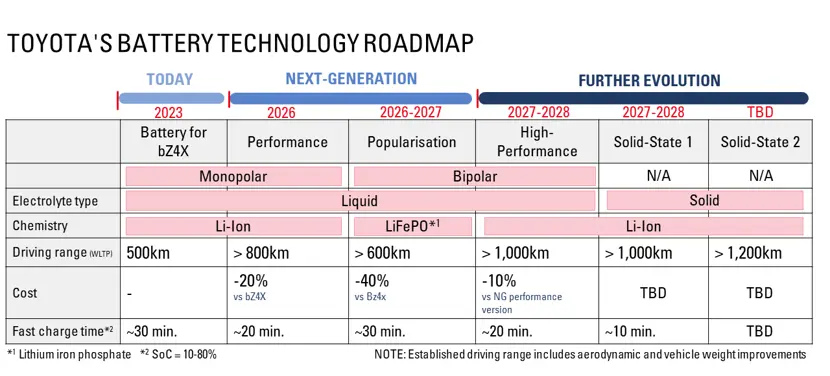
Toyota has said it aims to commercialise solid-state batteries later this decade, while BYD says it will start solid-state production in 2027, with mass market sales by 2030. Nissan has similar ambitions, while BMW is working with specialist partners and expects test vehicles before full production.
More likely than an overnight revolution is a gradual rollout - perhaps in limited-production or premium models first, before filtering down to mainstream vehicles.
Meanwhile, conventional lithium-ion batteries aren’t standing still. They’re getting cheaper, denser and faster-charging every year.
The bottom line
A solid-state battery isn’t a radical reinvention. It’s an evolution of the lithium-ion concept, swapping a liquid electrolyte for a solid one.
That single change could eventually deliver more range, faster charging, improved safety and longer lifespan. But turning promising lab results into affordable, mass-produced automotive batteries remains one of the toughest engineering challenges in the industry.
Today’s EV batteries are already very good, and improving quickly. Solid-state technology may well be the next big step, but it won’t arrive like a light switch. It’ll be another steady step in how we power our cars.