



- Several new utes are on their way from BYD amid a slew of new models over the next two years.
- A more powerful Shark 6 variant will possibly be followed by a smaller Shark 5 and a larger Shark 8.
- The smaller Shark 3 has been offered to NZ, but was declined by the local distributor.
While BYD has already made significant inroads into the New Zealand ute market with the Shark 6, the company isn't content to sit back and stop disrupting the traditionally conservative market segment just yet.
The petrol plug-in hybrid Shark 6 has shaken up the previously diesel dominant segment, and now more variants are on their way to New Zealand shores, with a more powerful 2.0-litre version with increased towing and off-road capabilities adding to the recently introduced cab chassis variant, and along with the strong possibility a smaller Hilux-sized Shark 5 and larger American pick up-sized Shark 8 in 2027.
Little has been revealed about the Shark 5 as of yet, although BYD NZ general Manager, Warren Willmot, told DRIVEN Car Guide that it will be a ladder-chassis based pick up, very close in dimensions to the Toyota Hilux. Willmot also said that single and space cab options were under consideration alongside a double cab variant.
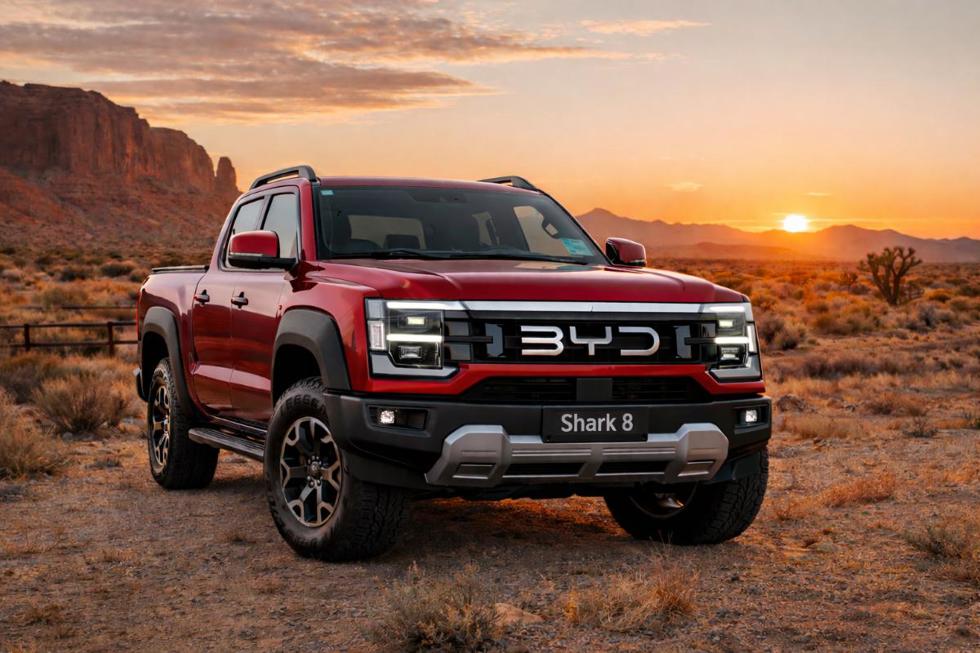
The Shark 8 on the other hand is a full-size pick up aimed at the likes of the Ford F150, Chevrolet Silverado and Ram 1500, expected to use a 2.0-litre petrol engine and four electric motors.
While the Shark 5 and Shark 8 are strong possibilities for New Zealand, Willmot revealed that the local operation has turned down the offer a smaller ute developed for the South American market.
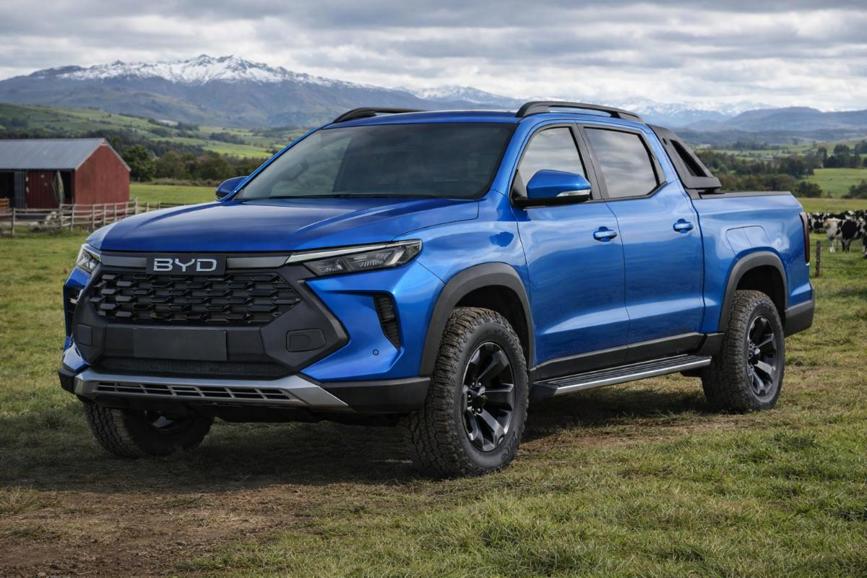
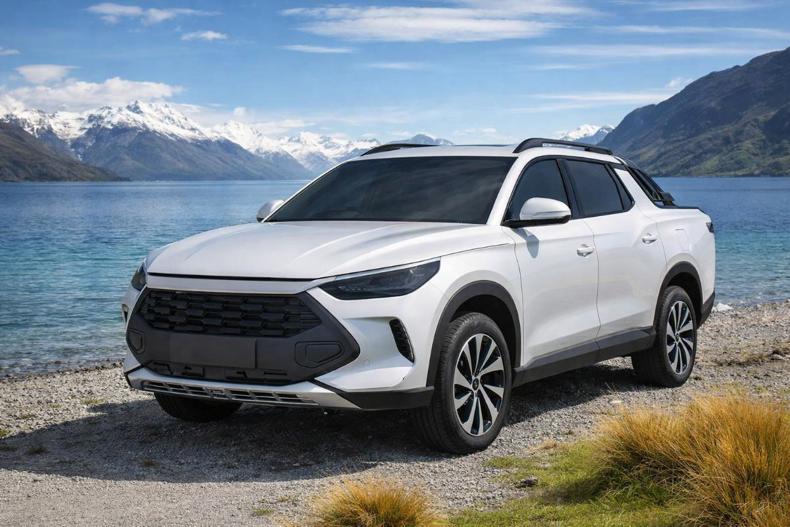
Called the Shark 3 (confusingly referred to as the Shark 5 by Australian media), the smaller ute is based on the DM-i platform (the same as the Sealion 5 and 6, as well as the Seal 6 Touring due here shortly) and is aimed at the same market as other smaller monocoque-based utes we don't get here, like the Ford Maverick and Hyundai Santa Cruz.
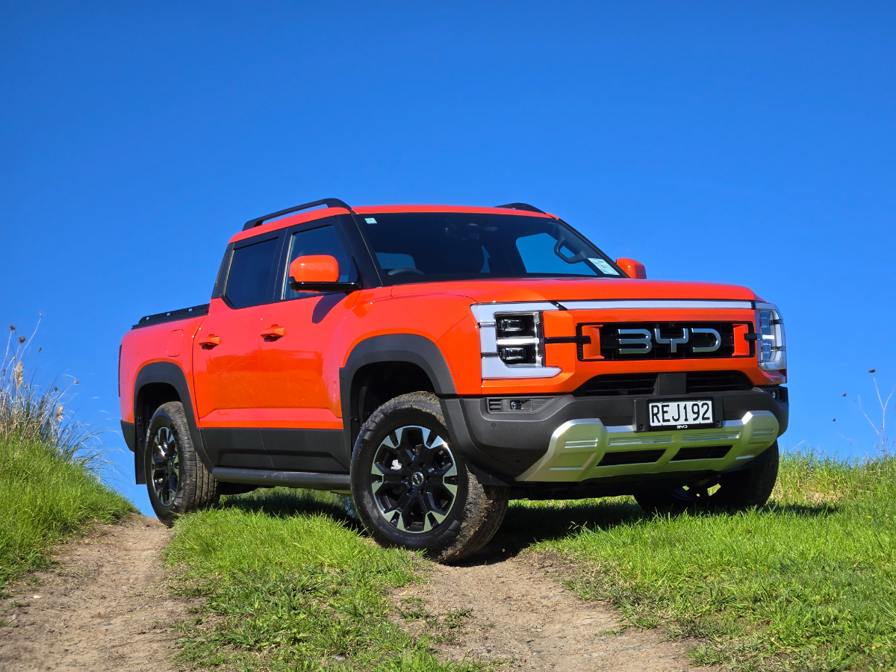
One ute that is definitely on its way here, however, is the more powerful 2.0-litre variant of the Shark 6 - likely to be called the Shark 7 - that boasts 350kW and 700Nm, an increase of 30kW and 50Nm over the Shark 6, as well as a considerable bump in its towing capacity - where the Shark 6 can haul 2500kg on a braked trailer, an amount largely seen as its biggest weakness, the 2.0-litre variant will be able to haul the full segment standard of 3500kg.
However, thanks to its sizeable GVM (3500kg for the existing Shark 6), customers intending to tow over two and a half tonnes combined will require a Class 2 driver's license, something BYD General Manager, Warren Willmot says the company will be warning buyers of.
However, the higher-powered Shark does have a theoretical GVM of 3700kg, which would move it out of the light vehicle classification. According to Willmot, the company sought an exemption from NZTA to classify a 3700kg GVM Shark as a light vehicle, which would exempt it from Certificate of Fitness (COF) requirements, speed limiting, and special tow bar regulations.
"We put a submission in to NZTA for an exemption because we'd like it to be 3700 kilos, but run as a light vehicle," said Willmot. "They said 'that makes a lot of sense, we're changing the rule in two years time anyway, but no you can't have an exemption right now'".
"Despite, Minister Brown, Minister Seymour and Minister Bishop all telling me they'd get it through, NZTA ultimately said 'we could give you an exemption, but we're not going to', saying it was the Ministry of Transport's area. So now they're merging the ministry (The government is merging the Ministry of Transport, Ministry for the Environment, Ministry of Housing and Urban Development, and Department of Internal Affairs local government functions into a new "mega-ministry").
"The whole thing is political, bureaucratical, just red tape. The rules were written in the 1950s when cars were a lot lighter," said Willmot.
As a result, the Shark 7 will ultimately be classified and treated as a light vehicle, similar to other double cab one-tonne utes on the market, with a maximum braked towing capacity of 3500kg, while Willmot said that it would also be equipped with additional software to enhance its off-road performance, and feature minor interior cosmetic changes, including a shift to a column gear selector.
The Shark 7 will also be available in the new cab chassis variant that has just been added to the Shark 6 line up here. While this variant is only $1,000 less than the wellside model, it saves the cost of approximately 4.5 to 5 hours labour to remove the wellside to facilitate the installation of flat decks and service bodies. A factory-supplied flat deck is expected to be available shortly as well.


