


- Ferrari has announced that its upcoming all-electric sports car will be named the Ferrari Luce.
- During an event held in San Francisco the company provided the first look at the Luce's interior.
- Ferrari showed the underlying EV architecture late last year and will unveil the exterior styling of the Luce in May.
Ferrari has announced that its upcoming all-electric vehicle will be named the Ferrari Luce, marking a new naming strategy for the manufacturer's lineup. The company revealed the name at an event held in San Francisco on February 9, 2026, where it also provided the first look at the vehicle's interior architecture and user interface.
Ferrari says the new naming strategy reflects how the Luce marks a "significant addition" to the Prancing Horse’s line-up, embodying a "seamless expression of tradition and innovation".
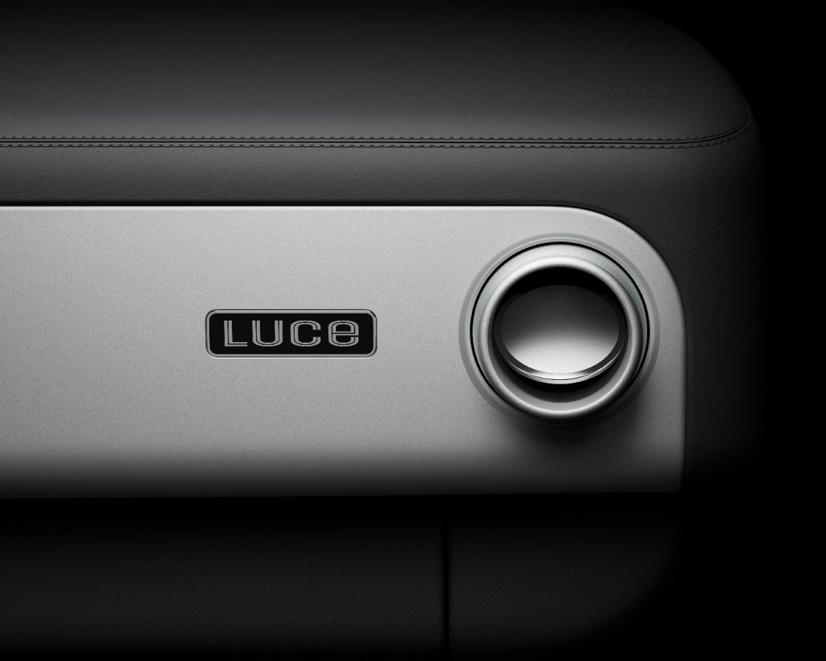
According to the company, the Luce "unites Ferrari’s racing heritage, the timeless spirit of its sports cars, and the evolving reality of contemporary lifestyles" and represents Ferrari’s determination to go beyond expectations, with the Luce "illuminating the path ahead". 'Luce' means 'light' or 'illumination' in Italian.
The design of the Ferrari Luce is the result of a five-year collaboration between Ferrari and LoveFrom, the creative collective founded by designers Sir Jony Ive (formerly of Apple) and Marc Newson.
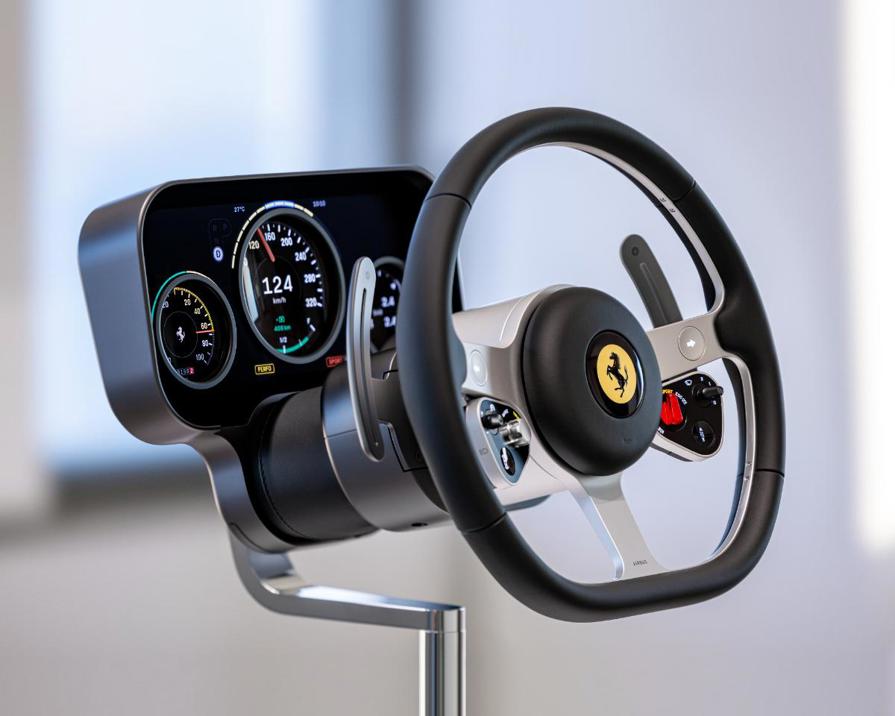
The interior of the Luce is designed as a "single volume aimed at creating a simplified and focused environment for the driver". The interface combines "precision-engineered" physical controls, such as dials and toggles, with multifunctional digital displays. According to the company, the hardware and software were developed in tandem to ensure the physical layout and digital behaviours are harmonious.
Materials in the cabin where chosen to "emphasises durability and technical precision" with switchgear and other physical controls made from 100 percent recycled aluminium alloy machined from solid billets using CNC technology and finished with an anodisation process to increase surface hardness. Additionally, screens and some surfaces are made from precision-milled Corning Fusion5 Glass, chosen for its scratch resistance and clarity.
The design team says it prioritised physical controls that "invite touch and engagement" and create a "compelling connection between driver and car". As such, the Luce largely avoids the idea that electric cars must be dominated by large touchscreens, with many of its controls being mechanical and "precisely engineered to be intuitive and satisfying" by making every interaction simpler and more direct.
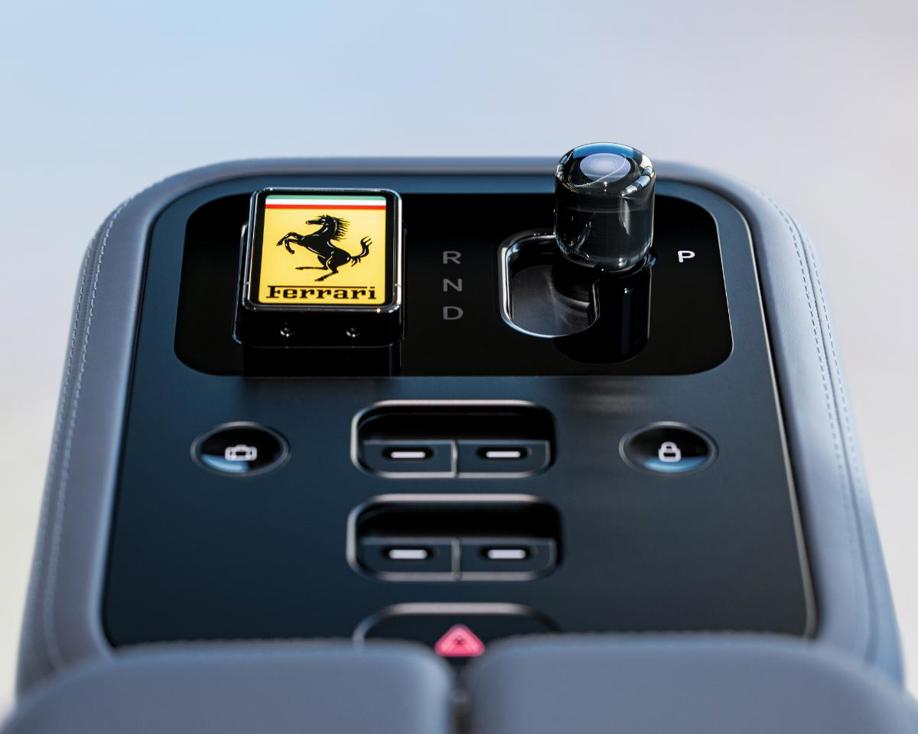
Ferrari says the look of the controls is inspired by its classic sports cars and Formula One single-seaters, with fantastically retro-modern touches like the gorgeously minimalist steering wheel and tactile aluminium switches conforming with that concept.
The design team intentionally chose a simplified three-spoke form for the wheel, reinterpreting the iconic 1950s and 60s wooden three-spoke Nardi wheel. The aluminium structure of the spokes is intentionally exposed and highlighted, and the wheel weighs 400 grams less than a standard Ferrari steering wheel.
Of course, starting the Ferrari Luce is designed to be "theatrical and memorable", despite the lack of a traditional explosion of combustion that usually accompanies firing a Ferrari up. To achieve this Ferrari has developed a start up "ritual" that begins with a new "key" constructed from Corning Fusion5 Glass and featuring a specially developed e-ink display that only uses power during colour changes.
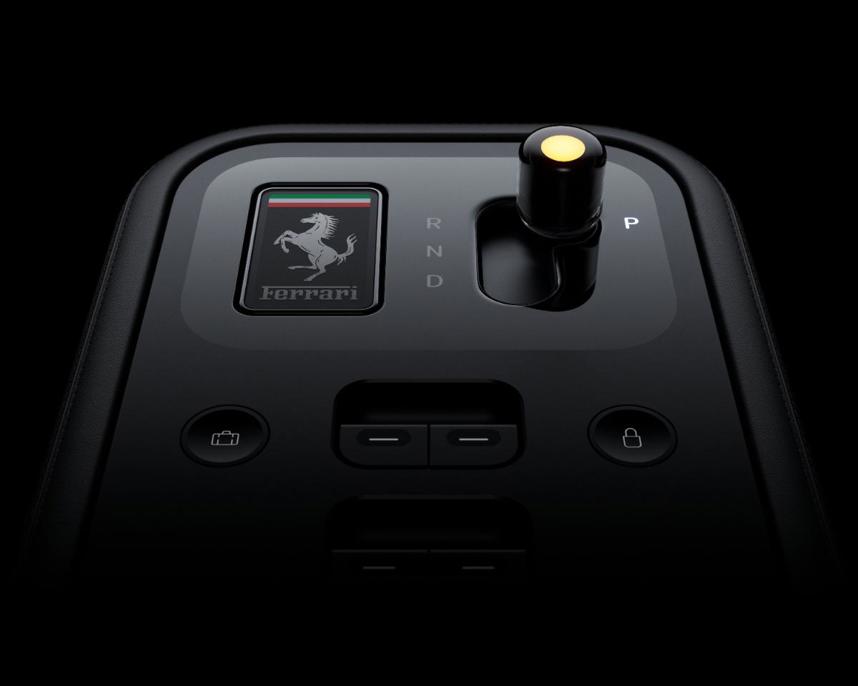
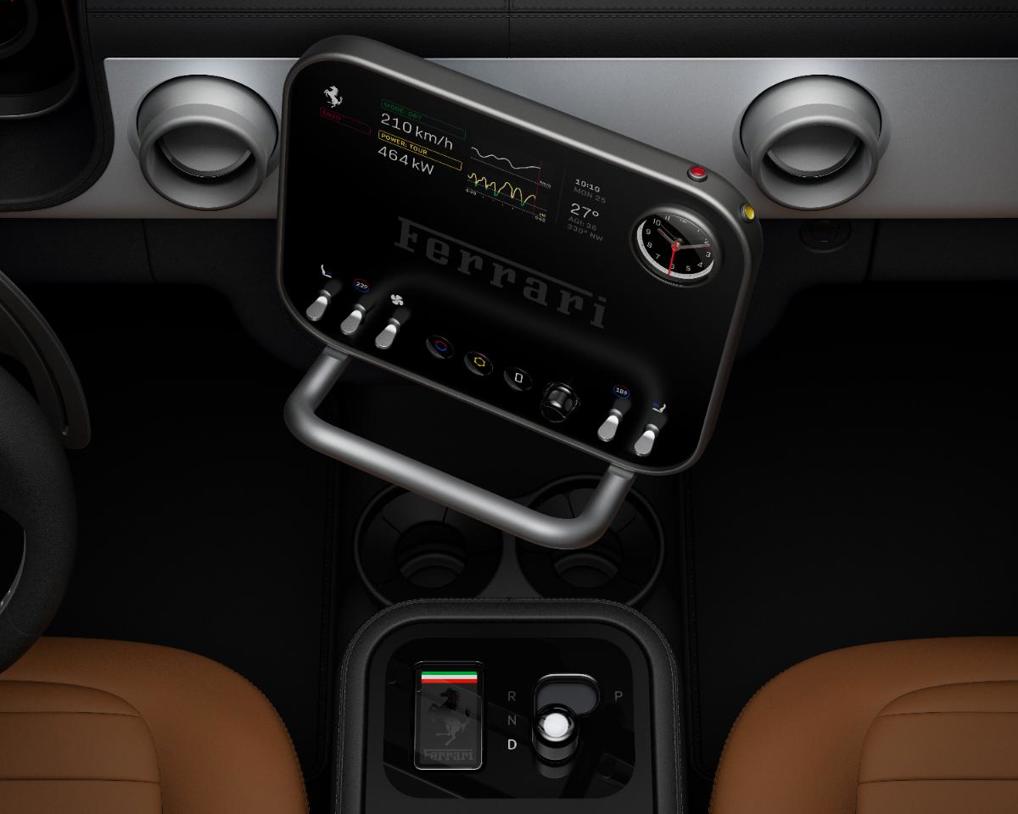
Inserting the key into its dock on the centre console kicks off a "carefully choreographed sequence" as the key’s colour switches from yellow to black to integrate it with the glass surface of the centre console, while the control panel and binnacle simultaneously light up.
The binnacle moves with the steering wheel, while the instrument cluster mounted on the steering column is a first for Ferrari. It features two overlapping OLED displays and merges digital and analogue elements in a self-contained unit attached to the steering column.
The control panel is mounted on a ball-and-socket joint that allows the screen to be oriented towards either the driver or passenger – while a palm rest allows users to interact with controls "effortlessly and intuitively" without needing to look at them.
Ferrari says the instrument cluster is inspired by both "historic automotive cues and the purposeful, clear graphics found in aviation" and are designed to resemble analogue gauges while being fully digital beneath their surface.
The reveal in San Francisco represents the second stage of the Ferrari Luce's launch: the underlying technology for the car was previously shown in Maranello in October last year, while Ferrari has scheduled the third and final phase of the launch, which will include the unveiling of the exterior design, to take place in Italy in May 2026.
The Luce will apparently use design cues from the Purosangue SUV and be positioned as a lower, almost shooting brake-styled crossover. Oh, and you shouldn't expect to see any change out of a million dollars for it either - the Luce is expected to be priced at "more than €500,000."


