



- Researchers found unencrypted tyre pressure sensors can broadcast unique IDs, potentially allowing vehicle tracking.
- Signals were captured from over 50m away, even through walls, using cheap radio equipment.
- Experts say TPMS was built for safety, not security, and future systems need stronger protections.
If you drive anything built after 2008, your tyre pressure monitoring system (TPMS) may be broadcasting more than just air pressure.
A new study from the IMDEA Networks Institute in Madrid has found that the wireless signals emitted by tyre pressure sensors can be intercepted and used to track vehicles, without ever seeing a number plate.
Over a 10-week period, researchers collected roughly six million wireless signals from more than 20,000 vehicles. Their conclusion: the unencrypted unique ID transmitted by TPMS sensors can effectively act as a persistent vehicle fingerprint.
Safety system, unintended consequence
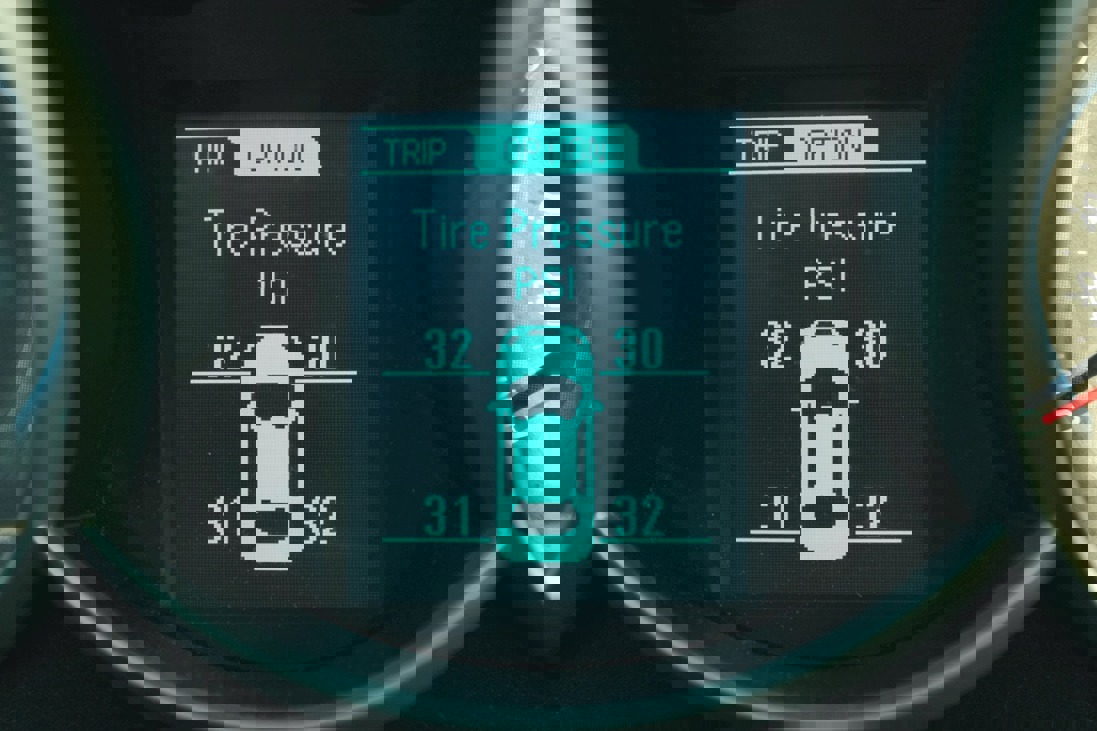
TPMS became mandatory in many markets following the United States' 2000 TREAD Act, designed to improve road safety by alerting drivers to under-inflated tyres. The system works by transmitting pressure data wirelessly from sensors inside each tyre to the car’s control unit.
The issue is that those signals are continuously broadcast and unencrypted. According to the researchers, anyone nearby with inexpensive radio equipment could detect and later recognise the same vehicle .
“Our results show that these tire sensor signals can be used to follow vehicles and learn their movement patterns,” said Domenico Giustiniano, research professor at IMDEA Networks Institute .
In testing, signals were captured from more than 50m away, even through walls and from inside buildings .
Not a new warning, but still unresolved
This vulnerability was first raised in a 2010 study by researchers at Rutgers University and the University of South Carolina, yet remains present today.
“TPMS was designed for safety, not security,” said Dr Yago Lizarribar, one of the study’s authors . “Our findings show the need for manufacturers and regulators to improve protection in future vehicle sensor systems.”
The researchers are urging policymakers and carmakers to redesign future TPMS systems with stronger privacy safeguards.
For now, the warning light on your dashboard may not be the only thing your tyres are signalling.