



When this generation of Mercedes-Benz GLC was launched back in 2023, the brand was pretty clear about the role electrification had to play. Based on what people were buying, the mainstream GLC would restrict itself to a petrol mild hybrid powertrain, while plug-in technology would be left to M-B’s specialist EQ models; pure-electric only, thank you. Nothing in-between.

Different times, right? With pure-EV on the back foot and lots of interest/development in hybridisation of all kinds across the industry, M-B has now introduced a plug-in hybrid (PHEV) version of the GLC called 350 e.
It combines the familiar 2.0-litre turbo-petrol engine with a relatively large battery, giving an EV range of 112km. You can charge it at home, but option the DC fast-charging package and you can also plug in at public stations (maximum charge rate 55kW).
It’s actually the most powerful non-AMG GLC you can buy, with a combined 230kW/550Nm, although still not the fastest because it’s over 300kg heavier than the 190kW/400Nm GLC 300. Not far off, though: 6.7 seconds to 100km/h versus 6.2sec.
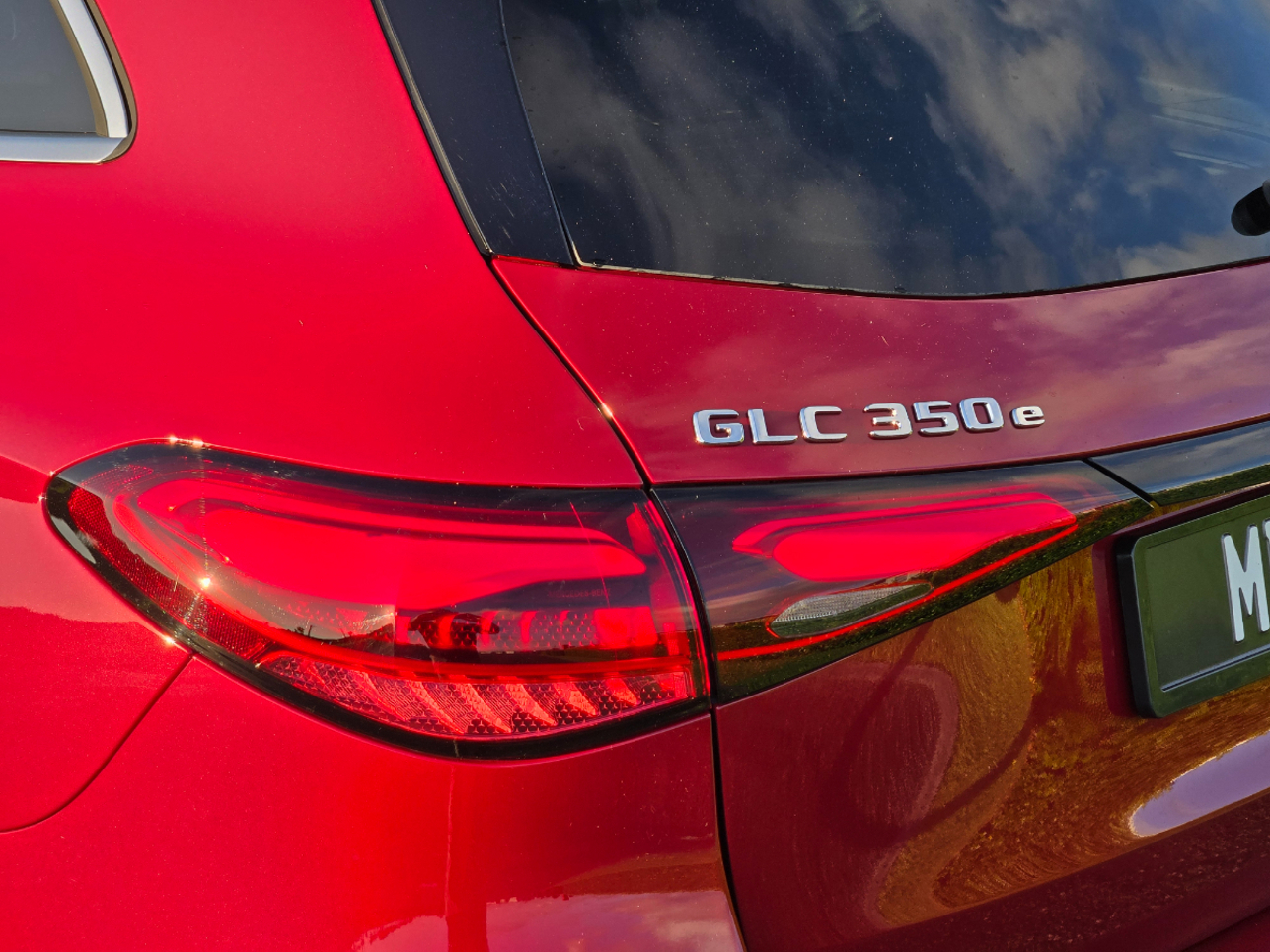
Overall, it looks like a promising technology package and M-B certainly seems to want to give it a good push. At $115,990 it’s exactly the same price as the GLC 300, despite the EV-ability and some other touches like self-levelling rear suspension (perhaps to help manage that extra weight).
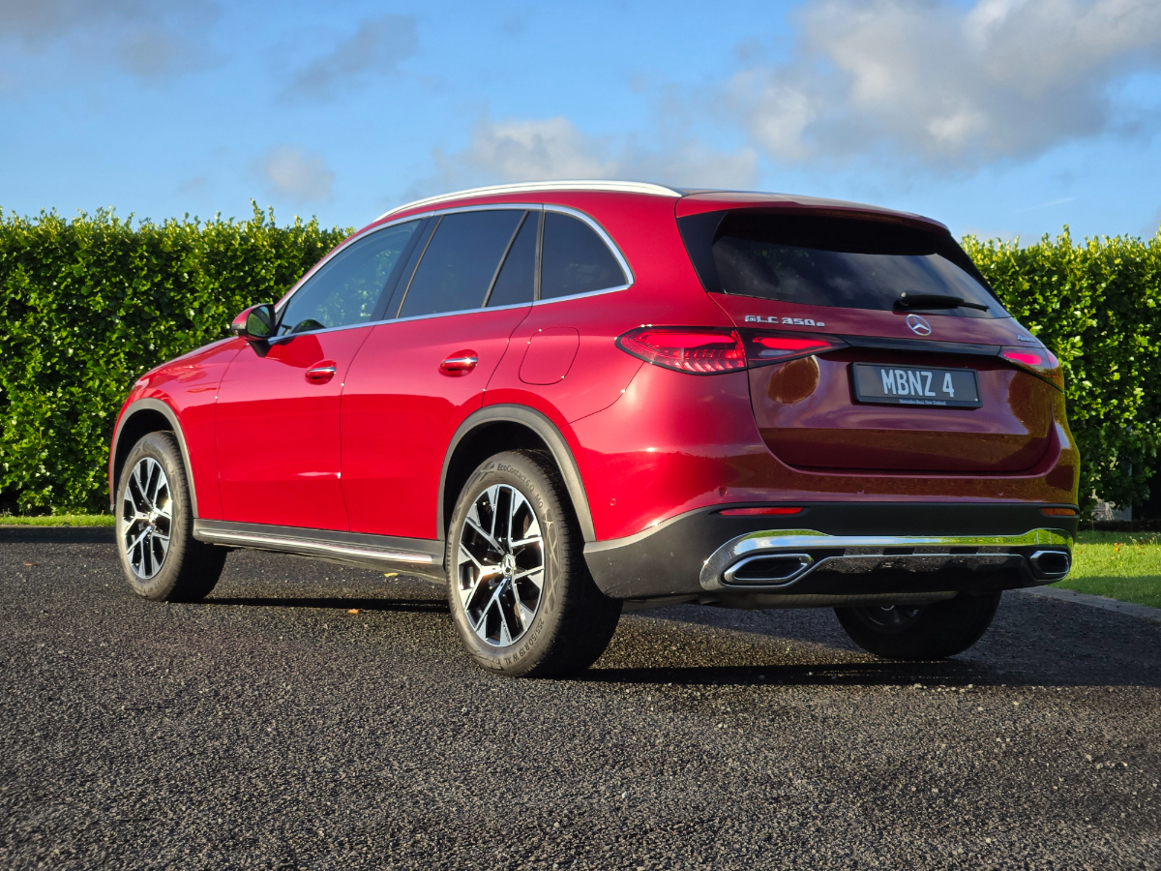
This is the most powerful non-AMG GLC you can buy, although still not the fastest because it’s over 300kg heavier than the mild-hybrid model.
Just to be clear, this is not the GLC EV we’ve been talking so much about in recent months; you know, the one with the sparkly grille. That’s the new-generation “GLC 400 with EQ Technology” which is still on the way, and a whole other thing. The 350 e is simply a plugged-up iteration of the existing GLC. But it works.
So much of the case for a PHEV depends on how you use it, and it’s the same for us in a review. As ever with this technology, the official fuel economy figure of 1.2l/100km doesn’t tell you anything, because it’s done on a set test cycle with a full charge.
The great advantage of a PHEV is that you don’t have to stop and plug in if you don’t want to. So on our trip to Taupo we just stuck to driving.
What you need to know is that it’s a genuine 100km-plus EV on a full charge, so if your daily commute is less than that and you’re plugging in overnight (as you should), this can pretty much be an electric GLC during the week.
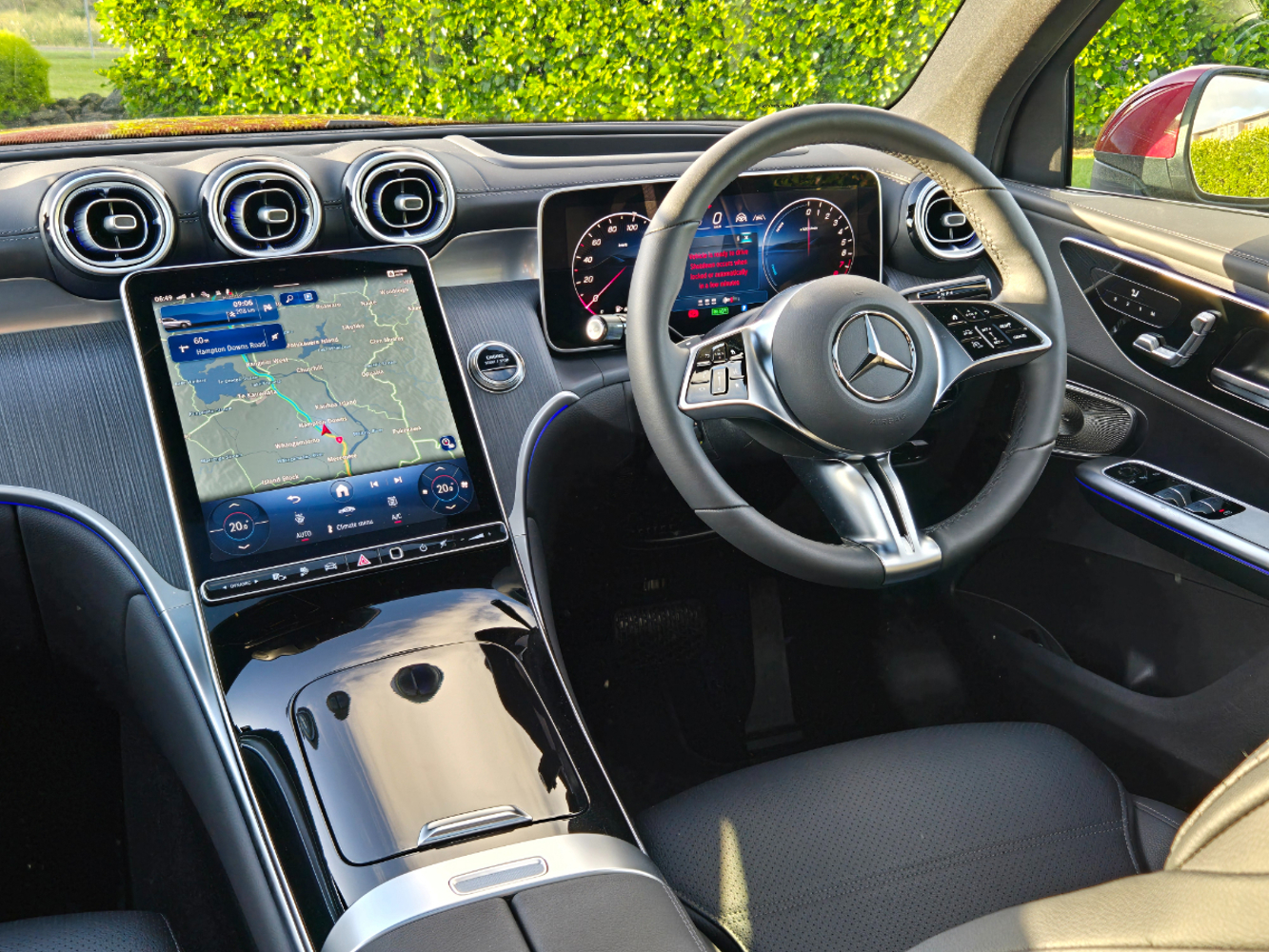
What about as a hybrid? During our week with the car we had to undertake an Auckland-Taupo round trip, a distance of around 600km. We did the drive down starting with a full charge and set the car in Hybrid mode (you can also set it to prioritise electric or hold the current charge), letting it do the sums and work the petrol-electric combo.
You really do need to charge a PHEV as often as possible to get the most out of the technology, but the GLC 350 e is still thrifty even if you don’t.
We got about half-way before the battery was depleted (it keeps some hidden for hybrid operation, of course) and completed the first 300km at 4.7l/100km. Pretty good.
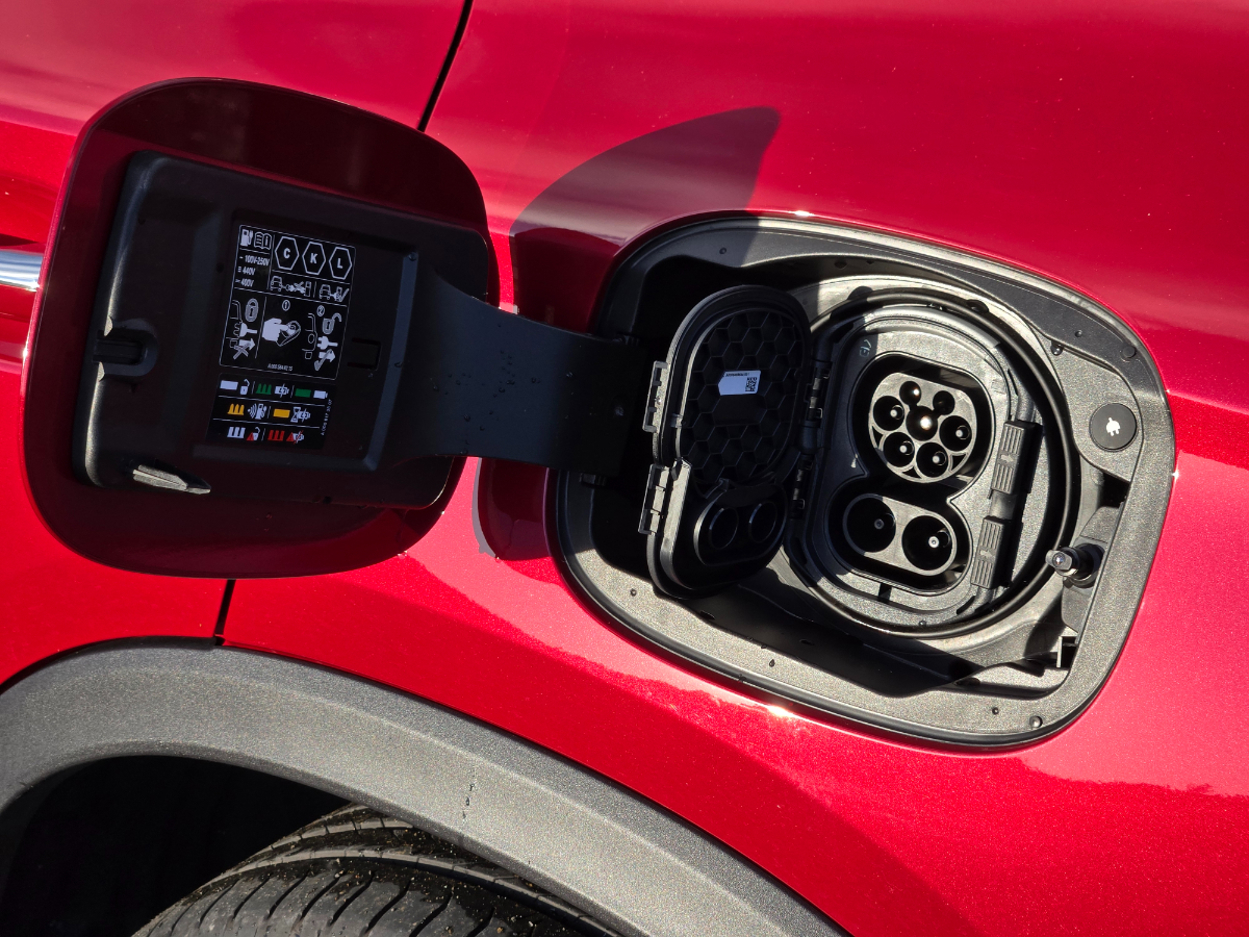
Our car had the DC fast charging package, so we could have stopped along the way to recharge and done most of the trip in electric (a 20min coffee stop would have topped it up), but the great advantage of a PHEV is that you don’t have to stop and plug in if you don’t want to. So we stuck to driving.
For the sake of science, we didn’t charge at all on the way back, to see what the 350 e could do as a straight hybrid. Not usually a good idea with a PHEV, because if you don’t use the battery to its fullest all you’ve got is a petrol-electric car that’s a whole lot heavier than a conventional hybrid.
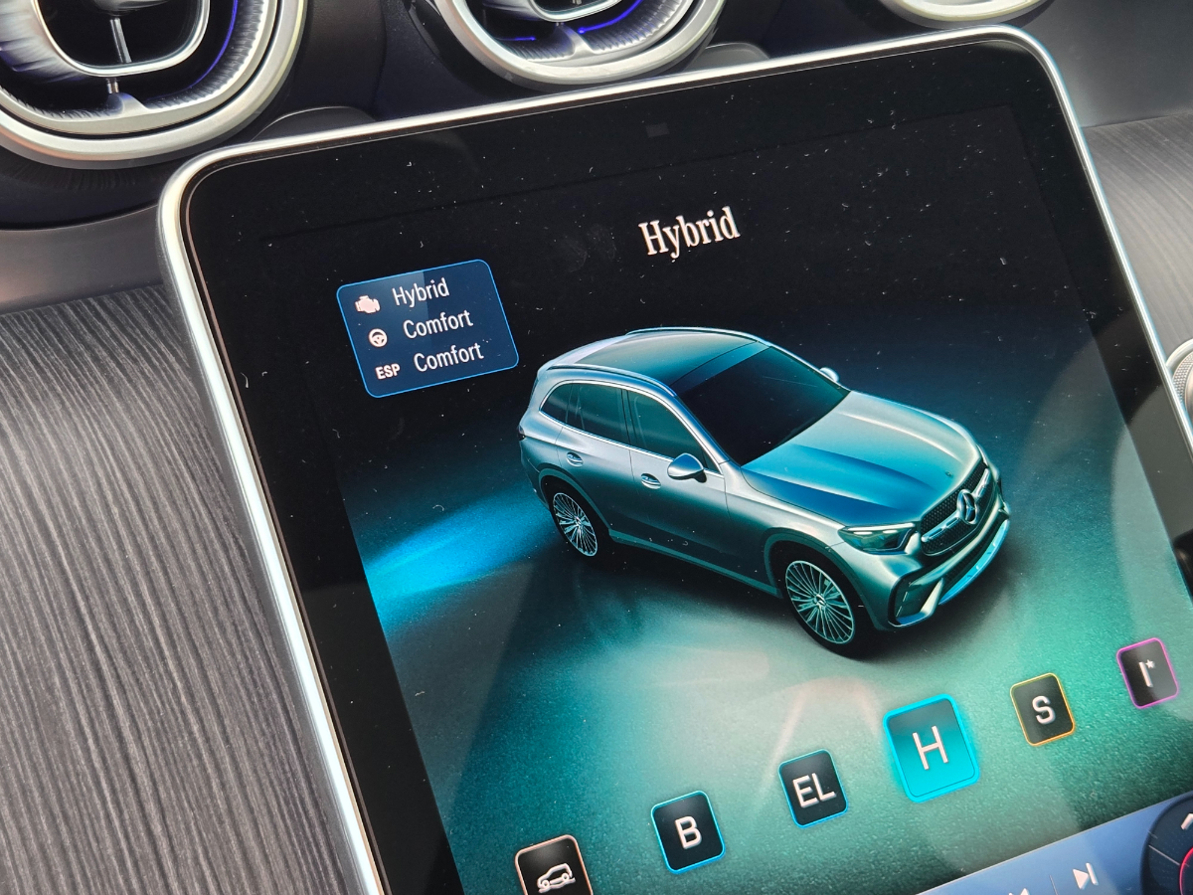
However, the GLC returned 6.7l/100km on the run back to Auckland, which is pretty impressive in itself. You really do need to charge a PHEV as often as possible to get the most out of the technology, but the GLC 350 e is still thrifty even if you don’t.
The GLC remains a conservative but highly polished M-B SUV. On this model’s Comfort suspension with the self-levelling function, it was also an impressive long-distance machine.
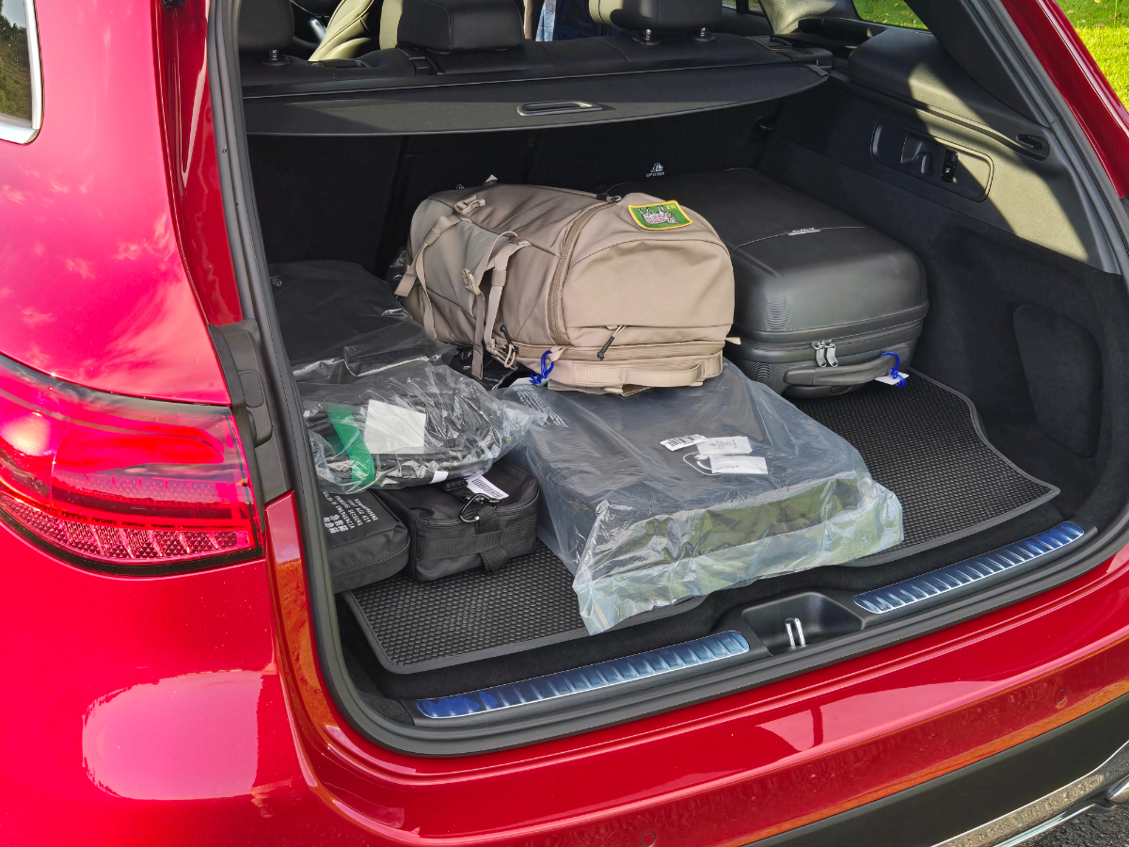
So what are you really losing compared to a GLC 300? A little slice of sportiness, with smaller (19in) wheels and all that extra weight, but then the GLC is not necessarily a press-on kind of car. And it’s still AWD, with the electric motor housed in the transmission.
There’s 150 litres less bootspace and no spare tyre thanks to the PHEV hardware underneath the car, but the cargo area is still decent at 470 litres.
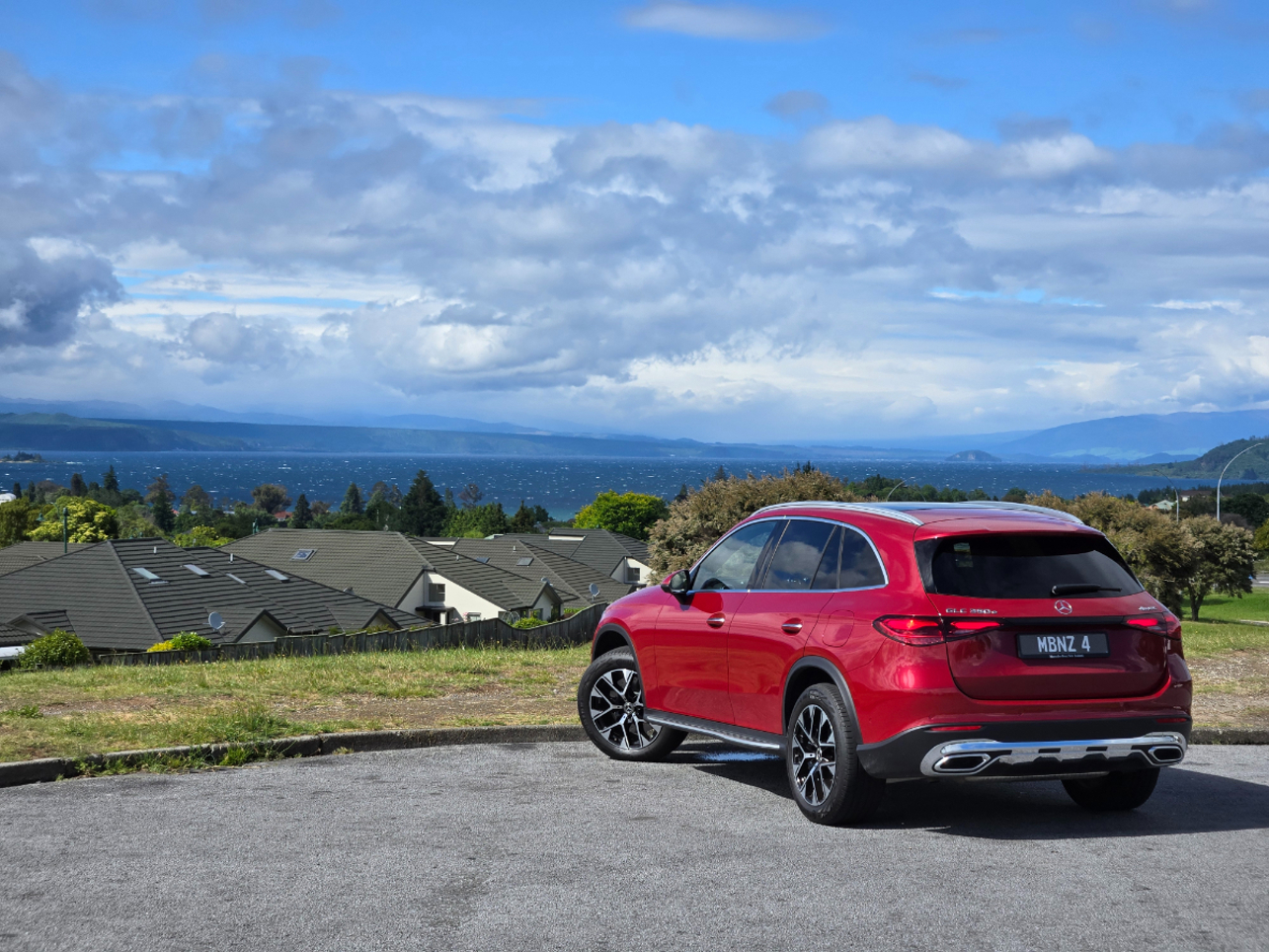
Like we said, you need to be mentally and physically placed to charge a PHEV regularly in order to get the most out of it. But M-B has enhanced the positives and removed many of the negatives with the GLC 350 e. Especially the price.


