



What's this new car all about then?
While Nissan has previously given us a ‘first drive’ of the new Navara, that was primarily a preview that focussed on its off-road abilities. Now, however, Nissan has officially launched the fifth generation of its ute, giving us a significantly longer time behind the wheel on the road.
Navara is a nameplate with a significant legacy spanning four decades and more than 500,000 units sold in Australia and New Zealand since 1986. This time round, however, there is a Mitsubishi-shaped twist, with the D27 incarnation of the Navara sharing all of its mechanical underpinnings and most of its sheet metal with the Mitsubishi Triton.
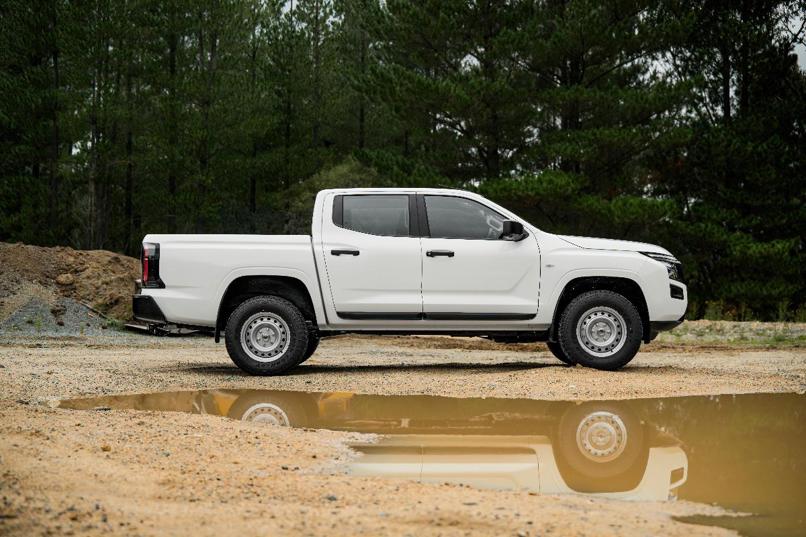
As such, the Navara shares the Triton’s dimensions, measuring 5320mm in length, between 1865mm and 1930mm in width (depending on model), 1795mm in height, with a 3130mm wheelbase and a cargo bed that measures 1555mm in length and 1545mm in width.
The Navara’s 228mm of ground clearance represents an 8mm increase over the previous model, while its departure angle is also improved by 2.2 degrees (to 22.8 degrees), with an approach angle of 30.4 degrees and a rampover angle of 23.4 degrees.
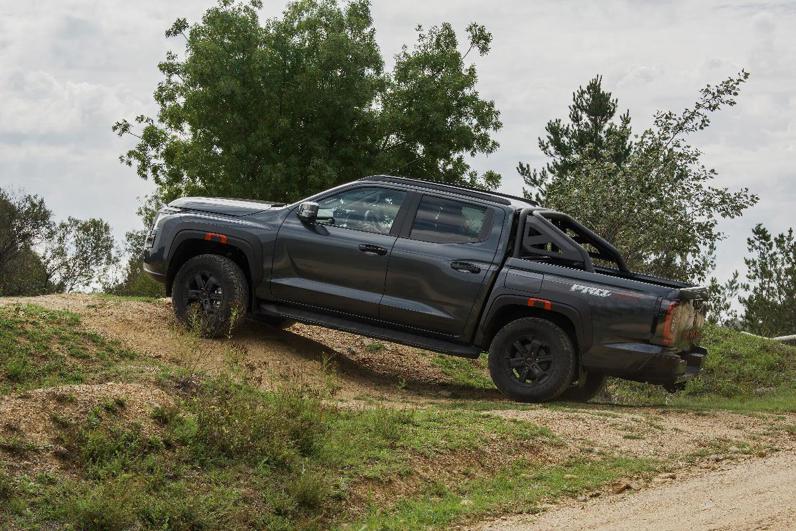
A key highlight of the new Navara is its locally developed suspension system. Nissan partnered with Australian engineering firm Premcar to create three distinct suspension tunes tailored specifically for Australian and New Zealand conditions.
The entry level SL and ST workhorses get a heavy-duty four-leaf rear spring setup calibrated with a baseline of 450kg in the tray to mirror real-world work use, while the more lifestyle-focussed mid-spec ST-X and up-spec Pro-4X use three-leaf rear springs, and are tuned with an empty tray, but with two occupants in the cabin.
The ST-X gets a unique damper calibration for its 18-inch wheels and an on-road focus, while the off-road oriented Pro-4X also gets its own damper map for a compliant all-terrain balance, and its 17-inch wheels and all-terrain tyres with larger sidewalls.
The switch to Mitsubishi’s 150kW/470Nm 2.4-litre diesel four-cylinder turbo engine sees an increase in both power and torque over the D23, as well as a reduction in fuel consumption, while the entire Navara range boasts a five-star ANCAP safety rating.
SL and ST models use the “Easy 4WD” system that features the ability to shift-on-the-fly between 2WD and high-range 4WD at speeds of up to 100km/h, as well as low-range 4WD, hill start assist, and a standard rear diff lock.
Meanwhile ST-X/ and Pro-4X models use the “Super 4WD” system that adds a Torsen centre differential that defaults to a 40:60 torque split in normal driving, with lockable 4H and 4L for tough conditions. Hill descent control and seven drive modes (Normal, Eco, Gravel, Snow, Mud, Sand, Rock) let drivers tailor performance to suit the terrain.
How much is it?
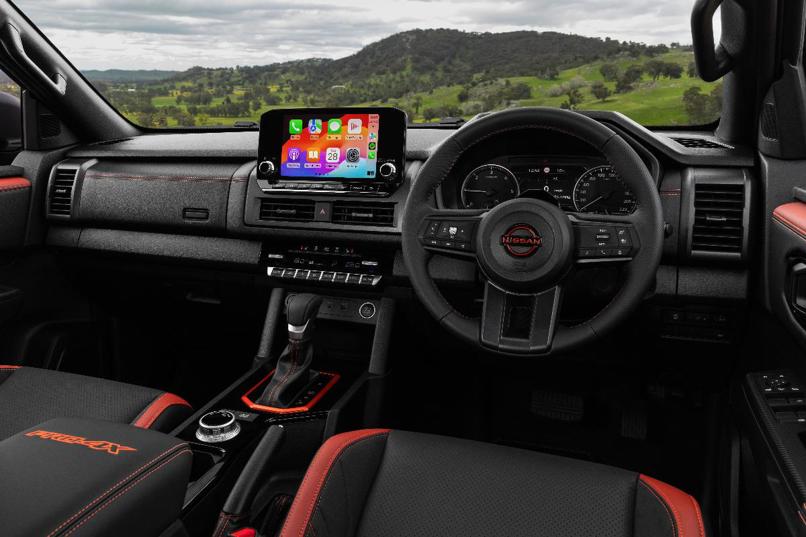
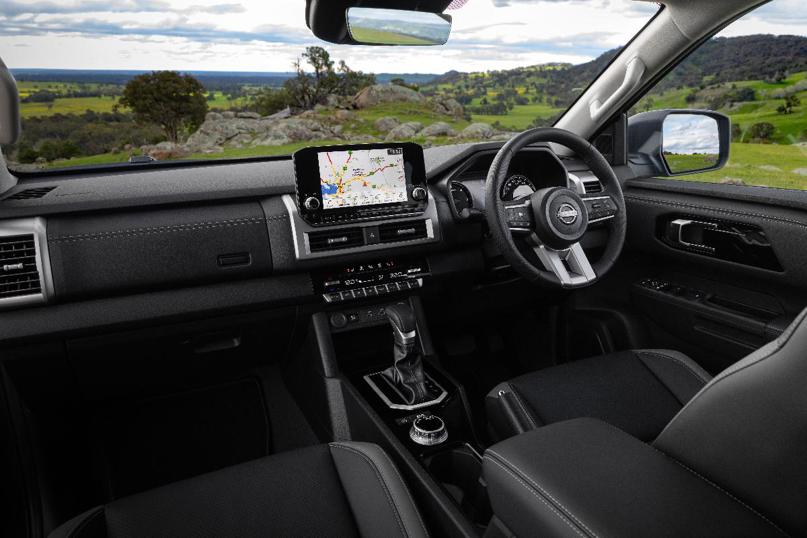
The Navara range begins with the $54,690 SL that comes standard with LED headlights, a 7-inch instrument cluster display, a 9-inch infotainment touchscreen with wireless Apple CarPlay and wired Android Auto, and 17-inch steel wheels with all-terrain tyres.
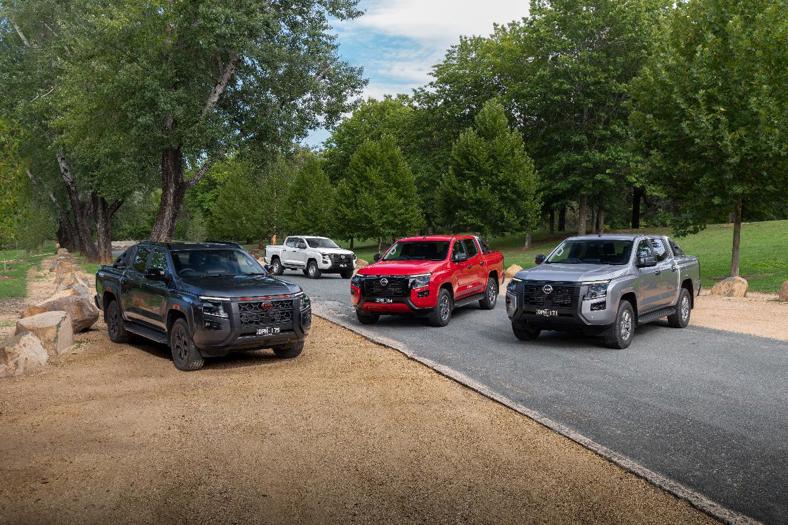
Next up is the Navara ST that lands at $57,690 and adds 17-inch alloy wheels, LED front fog lamps, power-folding heated exterior mirrors, a leather-accented steering wheel and carpeted flooring, while the $62,690 ST-X ups the game further by adding a the Super 4WD system, 18-inch gunmetal grey alloy wheels, chrome-finished external mirrors, dual-zone climate control, leather-accented seats with power adjustment for the driver, and a wireless smartphone charger.
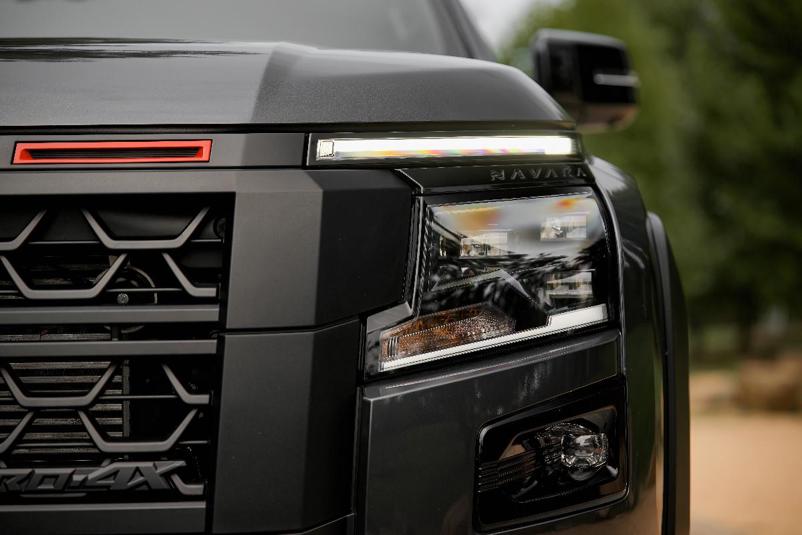
Topping the Navara range in New Zealand is the $67,690 Pro-4X model that gets 17-inch matt black alloy wheels with all-terrain tyres, a unique grille with lava red accents, black roof rails, and leather-accented seats with suede bolsters and orange stitching.
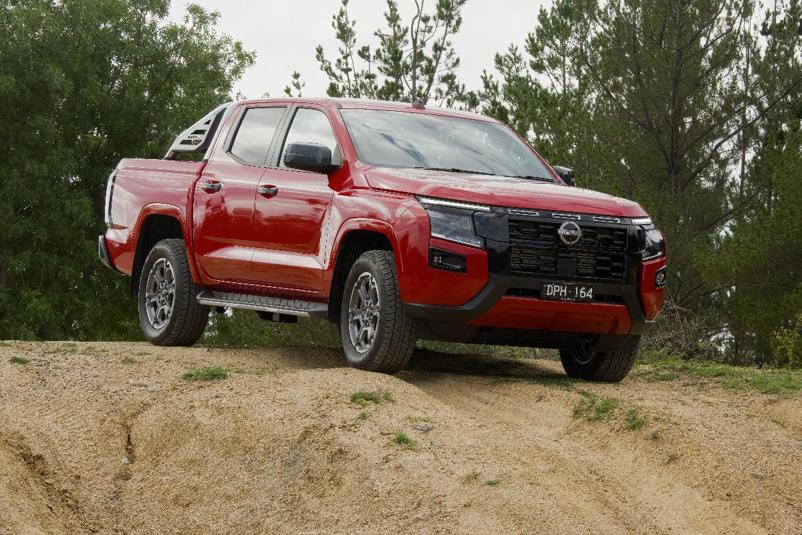
Nissan is currently offering a “factory bonus” (ie: discount) of $3000 on the ST-X and Pro-4X if they are ordered before the end of this month.
What's it like to drive?
The driving experience of the new Navara has been a central focus of Premcar’s local development of the Navara’s suspension, with a particular emphasis on creating a vehicle that feels both controlled and comfortable.
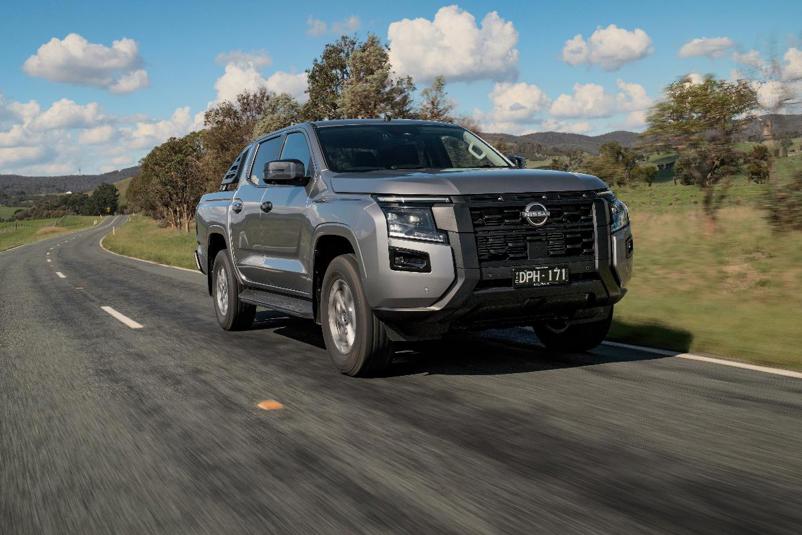
According to Premcar CEO Bernie Quinn, the company aimed to enhance steering response, provide superior primary ride control - settling quickly after hitting large bumps - and maintain a plush secondary ride for rolling comfort. This was partly achieved by introducing an innovative internal rebound spring in the front dampers, a technology developed in Australia that allows for a better balance between control and comfort.
Quinn said that drivers could expect linear and predictable handling, where the vehicle's response is directly proportional to steering input, something that was a definite highlight of the Navara on the road and something that was achieved solely with the damper tuning, and no actual changes to the EPAS power steering system.
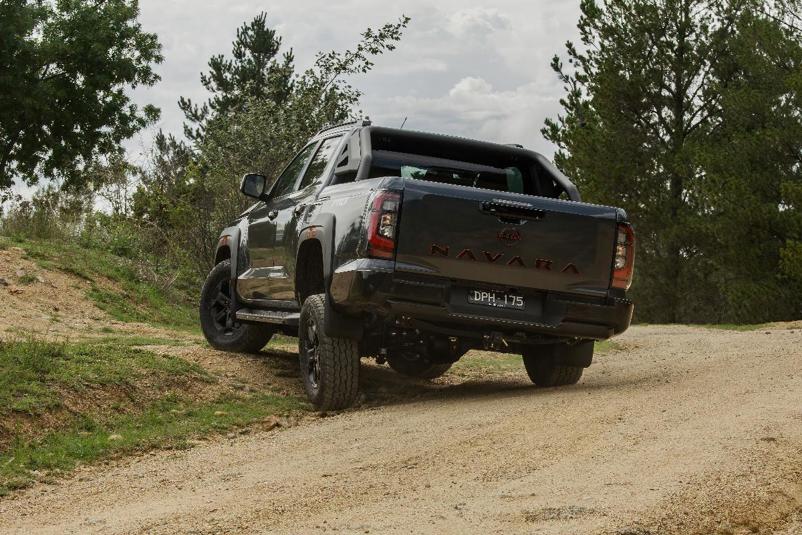
Premcar’s tuning is immediately noticeable in the ride as well, with what is probably the most compliant and refined ride of any double cab diesel ute in the segment, even bettering that of the BYD Shark 6 PHEV for good measure.
Premcar’s focus on primary ride control sees the Navara aim for a single, up-down-settle oscillation after hitting a larger bump, rather than the multi-wave “aftershake” common in most other utes. Crucially, it achieves this without sacrificing secondary ride comfort thanks to that clever internal rebound spring in the front dampers that was co-developed with Tenneco in Australia, and allows lower rebound damping for more plushness, while preserving composure.
And it simply works, with the Navara boasting a noticeably better ride than its Mitsubishi counterpart on the road.
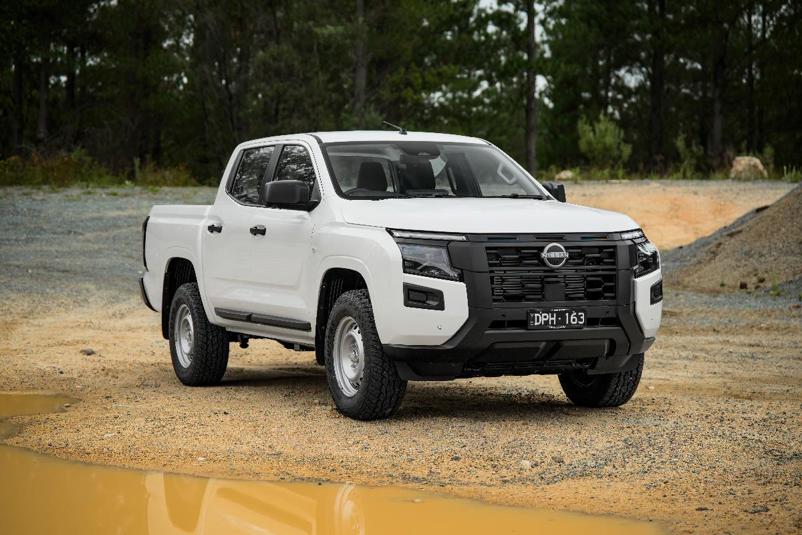
However, while the ride and handling are a class above its Mitsubishi sibling, the 2.4-litre turbodiesel engine is still in the same class, coming across as adequate, but hardly exciting in the face of the new breed of significantly more powerful petrol PHEV utes. It’s perfectly fine, but definitively old-school in terms of its performance.
While it’s not going to push you back in your seat, the torque is nicely placed for both on and off-road use, offering up a decent amount of shove in the lower mid-range.
What's the pick of the range?
Premcar’s targeted suspension tweaks make it genuinely difficult to settle on a specific model as being a standout, as each grade has been tuned for its likely use case.
The ST is the pick of the workhorses, simply by offering the same heavy duty suspension setup as the basic SL, but with enough extra kit to make it usable as a daily driver as well, while the ST-X proved to be a very agreeable mid-spec offering the combined that impressive ride with a good level of standard equipment.
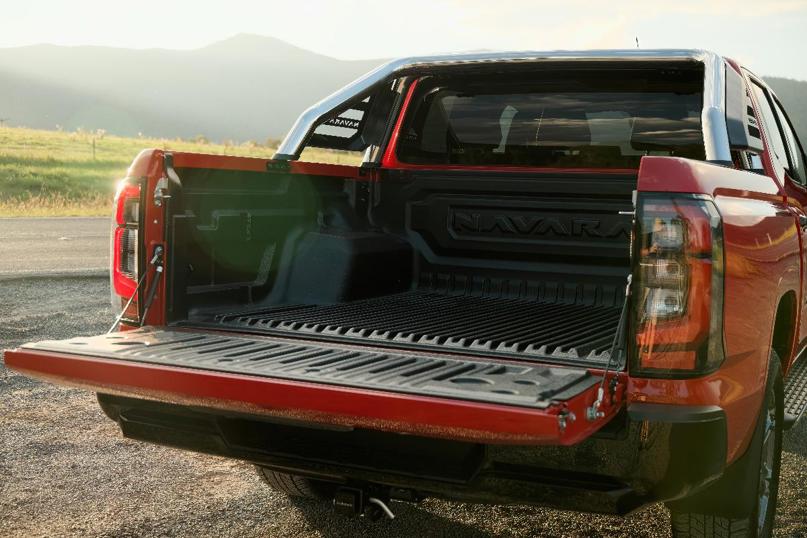
For the ultimate blend of on-road comfort and off-road ability, however, the Pro-4X is the standout, combining the comfort-oriented three-leaf rear suspension with a taller tyre sidewall, a combination described as the "ideal scenario" by the Premcar engineering team, and likely to see it be the volume-seller in the new Navara line up.
What other utes should I consider?
Nissan is only offering the Navara in 4WD double cab wellside form (so no 2WD, single cab or cab chassis models are currently available).
While it shares a lot with what would seem likely to be its most direct competitor - the Mitsubishi Triton 4WD double cab range ($50,740-$59,990) - the local suspension improvements actually push it beyond that. It's easily into the realms of the Ford Ranger four-cylinder double cab range ($59,990-$75,490) in terms of ride comfort and drivability, although the Ranger now has a less powerful 125kW/405Nm diesel four powering it; the V6 models are considerably more expensive, starting at $66,490 and running up to the $92,990 Platinum model.
In terms of performance and ability, the Navara sits with the pack in the one-tonne diesel ute crowd - such as the 150kW/500Nm Toyota Hilux ($56,990 to $63,990) and 140kW/450Nm Isuzu D-Max ($57,990 to $69,990), but in terms of on-road refinement and handling, it is actually more comparable with the likes of the new breed of petrol PHEV utes like the BYD Shark 6 ($69,990), albeit with the performance (and rattle) of a significantly less powerful diesel engine.
Then, of course, you could wait and see what Nissan has up its sleeve with the almost certain launch of the Shark-rivalling Frontier Pro PHEV that probably won't be all that far away...


