



Honda first became a global motorcycle brand when it popularised a single technology – the automatic clutch. The ability of the Honda Super Cub to automatically take off from a standstill enabled this highly accessible step-through scooter to become the world’s most popular motorised vehicle.
More than 100 million Honda Super Cubs have been produced since their debut in 1960, and that figure would likely double if we included all the bikes from other manufacturers that have used the little Honda as their design template.
Mimicking the Super Cub, the automatic clutch soon became the operational standard throughout the scooter world; however, such clutches have yet to become a popular method for initiating forward motion or preventing stalling when coming to a halt in motorcycles.
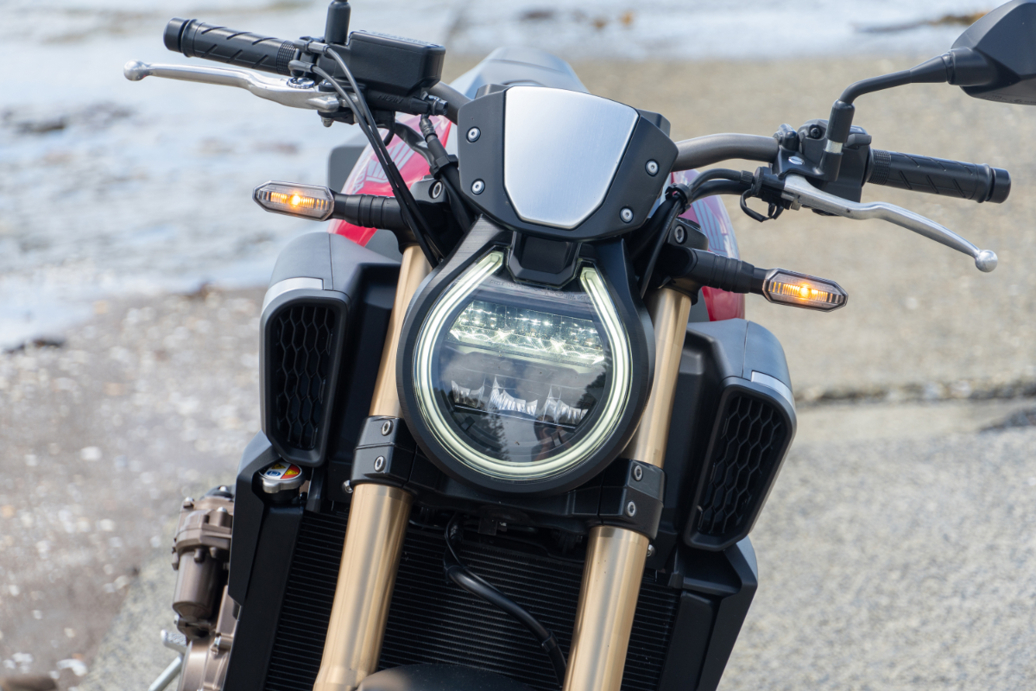
Enter the $15,995 Honda CB650R E-clutch streetbike, harbinger of a new wave of auto-clutch Hondas that will allow older riders to give their arthritic left wrist muscles a rest and avoid clutching while riding. It will also permit no-brainer take-offs for learners who will no longer need to develop precise clutch lever control before their first ride.
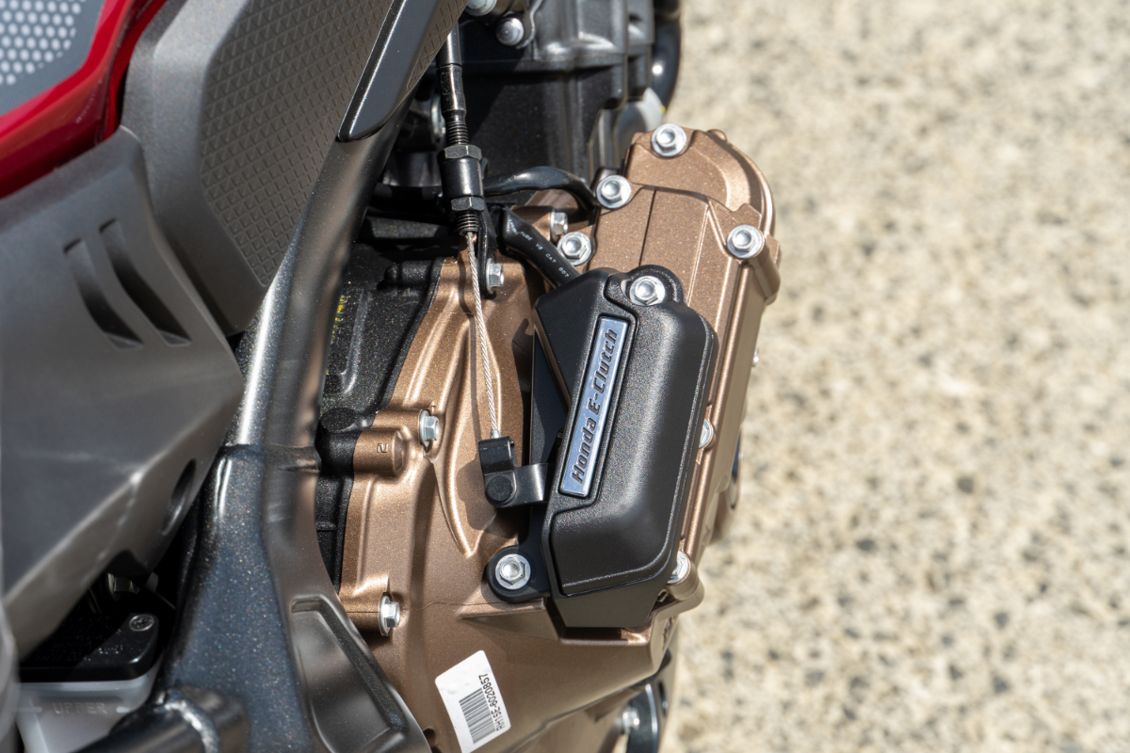
Honda’s second take on an auto-clutch is a beauty. Forget the dull take-off of a Super Cub, with its modest little fuel-conserving single cylinder engine. The scooter uses a centrifugal clutch that needs to get up to rotational speed before triggering the sliding weights that engage forward motion. In the CB650R, the new E-clutch instantly connects engine power to the drive chain, as it’s activated electronically instead of mechanically.
Honda first became a global motorcycle brand when it popularised a single technology – the automatic clutch.
It’s also hooked to a sporty 649cc liquid-cooled inline four complete with four-valve cylinder heads and double-knocker camshafts. The motor might be radically detuned in the interests of gaining official learner approval, but it retains decent riding force in the bottom half of the rev-range and the bike positively sprints away when the throttle is given a decent twist.
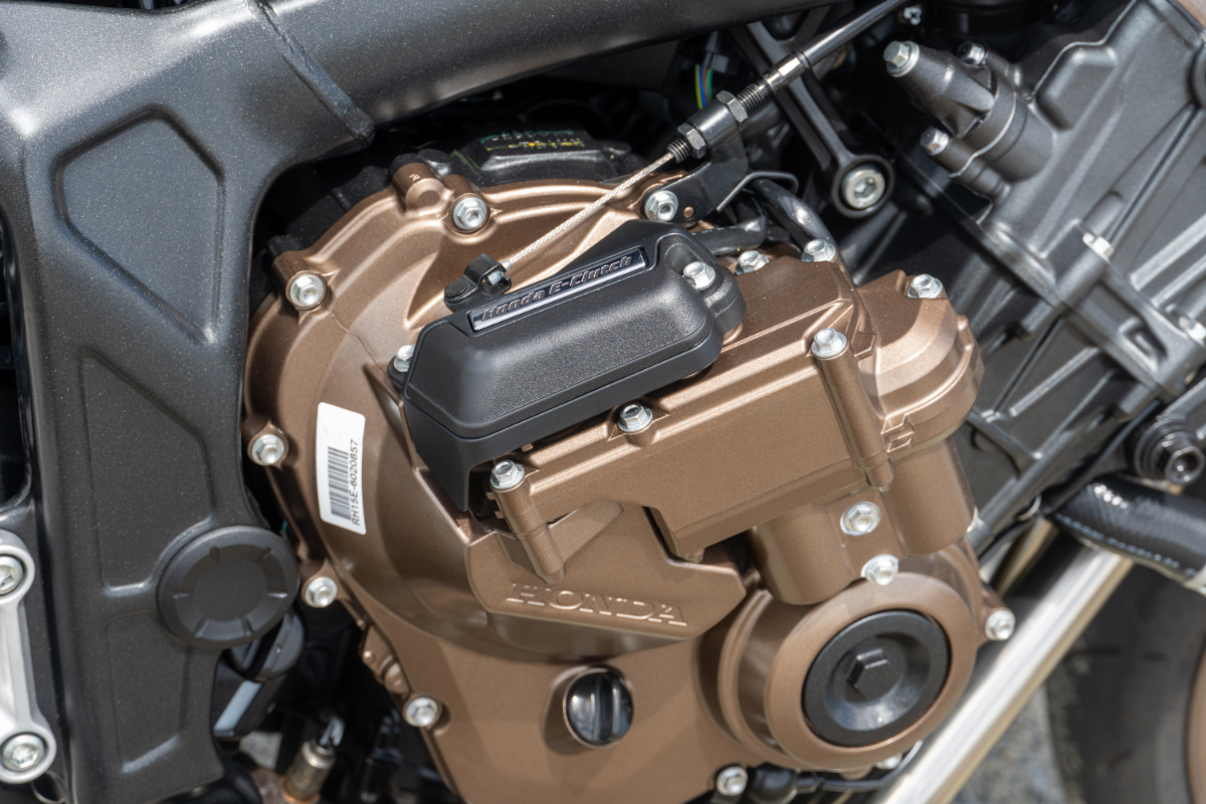
Once in motion, upshifts are made with the throttle open and are virtually instantaneous. Downshifts on a closed throttle aren’t quite as smooth as there’s no accompanying throttle blipping to help the gears mesh. However, they’re still more polite than a Super Cub’s and perfectly acceptable. The E-clutch operates so efficiently and effectively on the CB650R that many owners will completely ignore the remnant clutch lever on the left-side handlebar during their tenure with the bike.
Any use of the clutch lever with the E-clutch active also initiates manual mode for a couple of seconds. Which means that there are plenty of options.
Why did Honda leave a manual clutch hand lever in situ? It’s there so that motorcycling “grommets” can develop their manual clutch control before moving on to riding bikes not equipped with an E-clutch. More confident riders can give the lever a dab with the throttle open in a low gear and initiate a mono-wheeling salute.
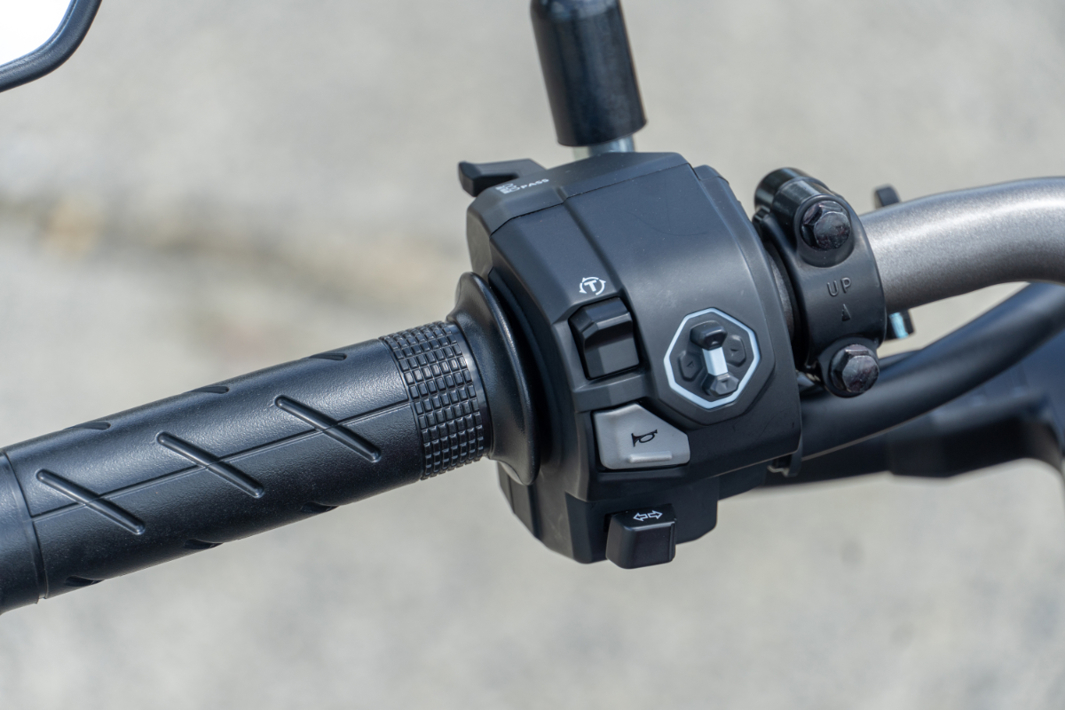
Using the Honda’s easily manipulated electronic interface on the left switch-block, the E-clutch can also be disabled should a veteran wish to find out if their hard-braking-while-downshifting-and-blipping-the-throttle routine has survived an entire week of automatic clutching convenience.
Any use of the clutch lever with the E-clutch active also initiates manual mode for a couple of seconds. Which means that there’s plenty of options when operating the CB650R and you soon work out what’s best for your riding style.
In more spirited riding, I found using the E-clutch most of the time, then going to the lever during the braking-downshifting-blipping phases, to be enjoyable and rewarding.
The essential mechanical ingredients of the CB650R date back to a CBR600RR supersport bike of 2008 vintage, marking the bike as a four-cylinder survivor of the tide of parallel twin engines that have flooded the middleweight motorcycle market in recent times. It therefore emits a nearly forgotten banshee-like wail all the way to the 12,000rpm redline.
Not that the rider will rev the 206kg CB650R to that point often. For in the LAMS-friendly 48bhp (36kW) form sold here, there isn’t enough oxygen reaching the combustion chambers of the engine above 6000rpm to sustain the initial surge of acceleration below that crankshaft speed. Other markets get the full-phat 70kW (93bhp) version.
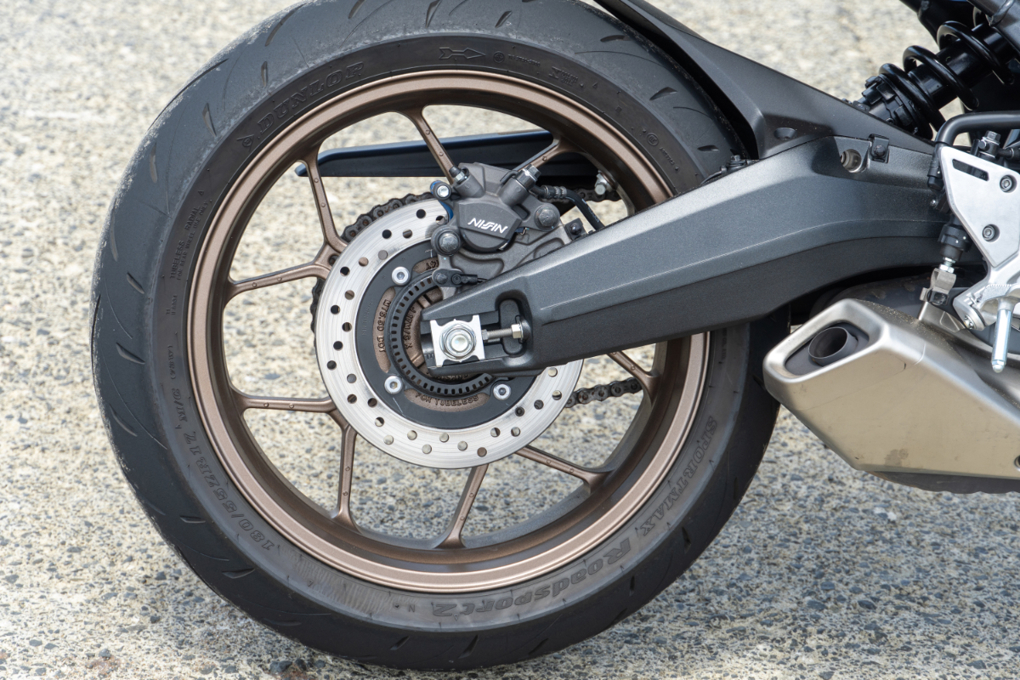
Despite this, the neutered CB650R is still satisfying to ride. The simple flex-free steel frame has inverted forks raked to a comparatively slack 25.5 degrees, a boon to unflappable cornering stability along with the sporty Dunlop tyres in Superbike sizes. While many LAMS bikes feel like works in progress, this is a more complete package dynamically, equipped with the segment’s most charismatic engine. Topped off by a fantastic electronic clutch.


