


As part of my job, I take photos of cars. LOTS of photos of cars. And while that sounds like fun - and, indeed, even was to begin with - after several decades of doing it, it has become literally just that - a job.
Much of the drain of enjoyment is that now, instead of arty shots for glossy magazines (which is where I started doing this), the shift to newsprint and online formats (where I am now) means the pics simply need to show the car clearly, with little in the way of artistic license or, indeed, creativity. Get the usual shots and get onto the next job, preferably before it rains.
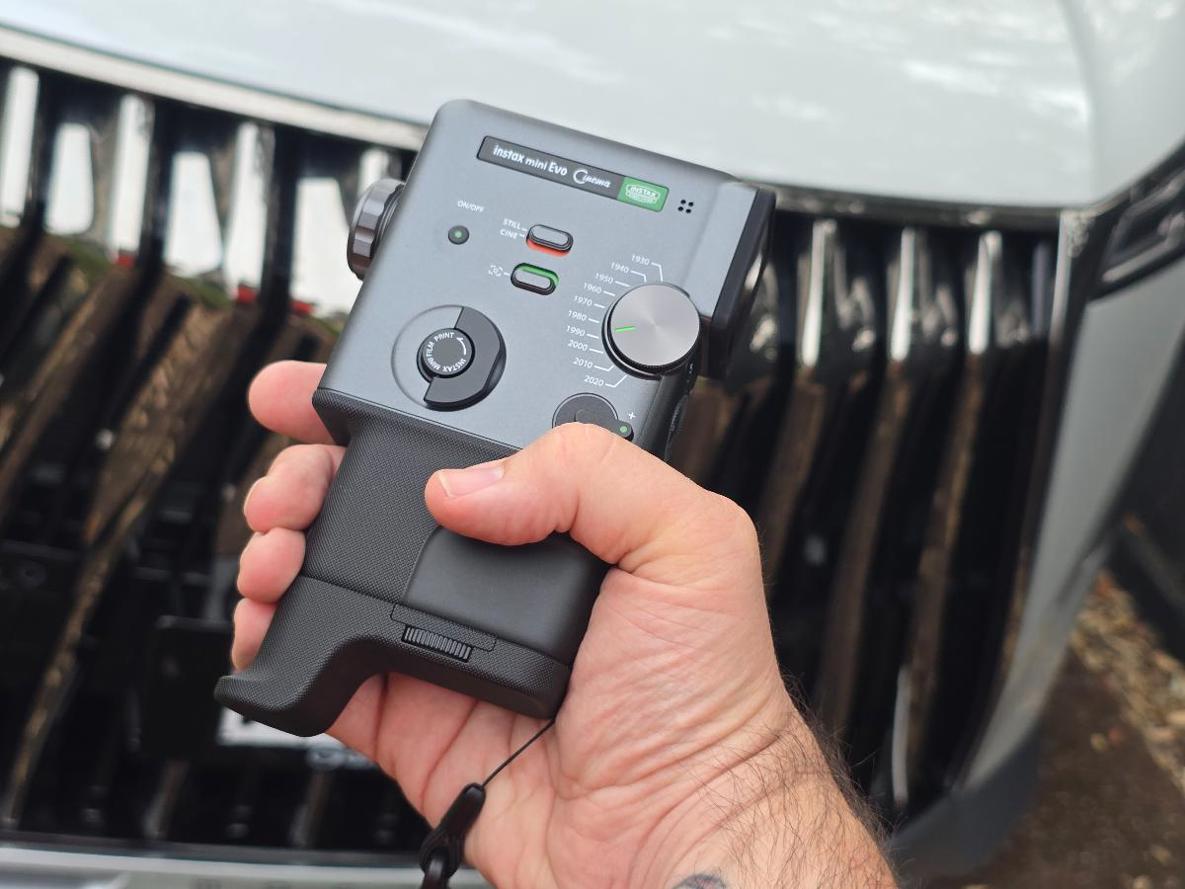
However, I recently had the pleasure of testing a strange little device that genuinely reignited my love for photography all over again, and it did it through blatant low-fi weirdness.
The Fujifilm Instax Mini Evo Cinema is a sophisticated - yet unashamedly weird - hybrid device that marks a significant departure from traditional instant cameras by serving as a 3-in-1 digital camcorder, still camera, and printer.
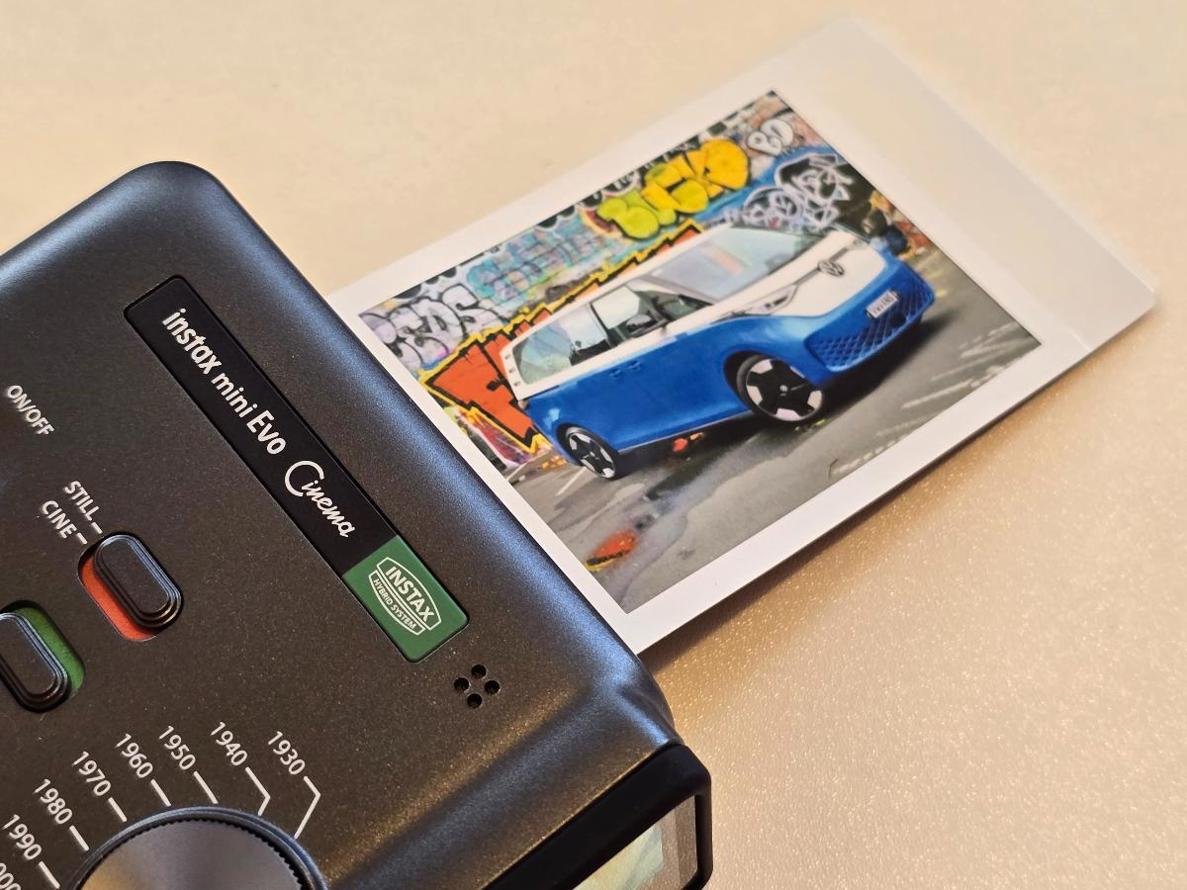
It is a quirky, fun device that is at the same time, slow, clunky and occasionally infuriating, but also huge fun and wonderfully engaging in the right circumstances.
The Mini Evo Cinema’s design is a deliberate homage to vintage Super 8 movie cameras - specifically the Fujica Single 8 series - that features a tall, slender body and a front-positioned shutter trigger that encourages a "pistol grip" shooting style. To complete the nostalgic experience, the camera includes a screw-in handle for extra stability and a magnetic eyepiece that magnifies the rear 1.54-inch screen, allowing users to frame shots as if using an optical viewfinder.
Yes, this plus the need to accommodate the internal printer, does make it somewhat bulky which, in turn, could make the front trigger slightly difficult for those with smaller hands to reach comfortably, but felt just right in my hands.
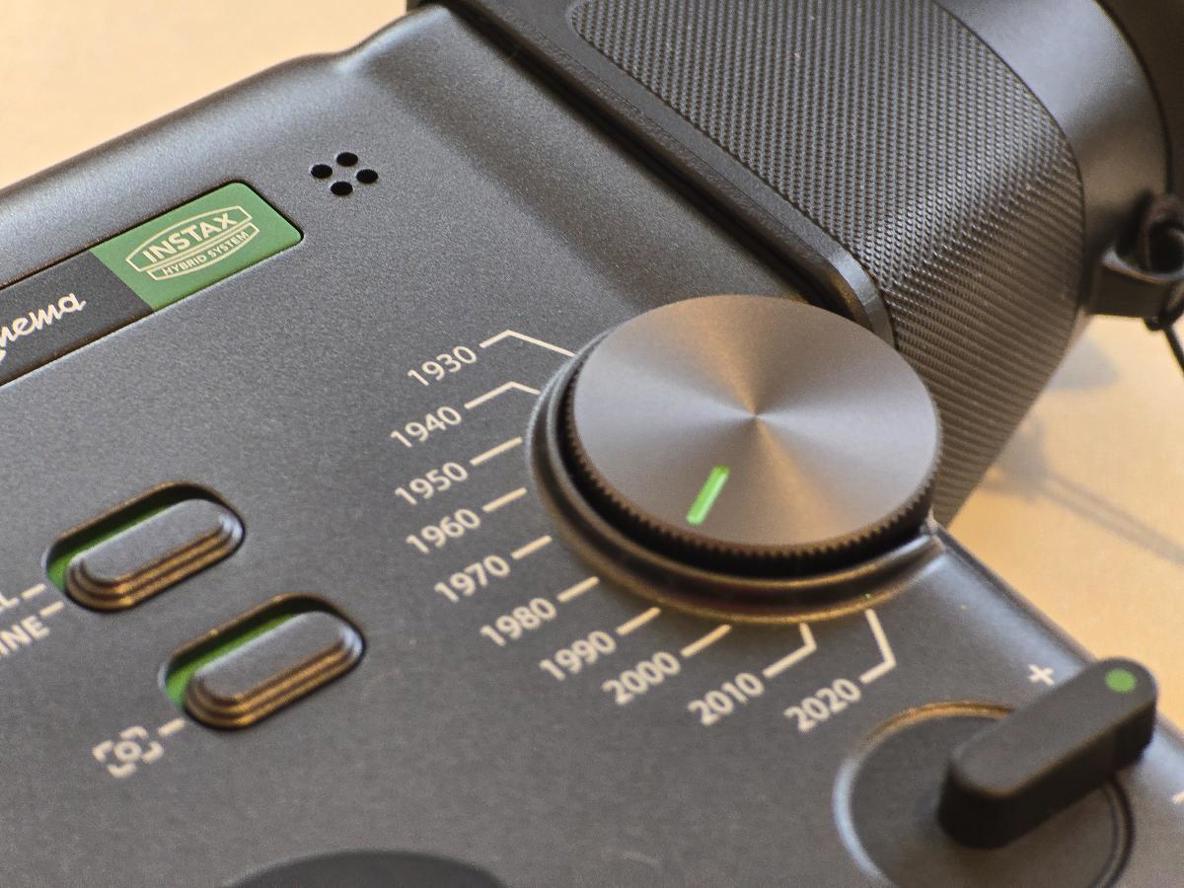
At the heart of the user experience is the "Era Dial" which allows creators to navigate through ten decades of cinematic history.
The camera’s technical specifications are intentionally low-fi, partially to add charm to go along with its retro appearance, but mainly to mask the limitations of its small 1/5-inch CMOS sensor.
Each decade, from the 1930s to the 2020s, applies a specific visual and audio filter to the 15-second video clips the camera records. For example, the 1930s setting produces a wobbly, scratched black-and-white aesthetic with muffled, hollow audio, while the 1970s presents as a washed out CRT television effect, the 1980s adds video tape tracking errors and the 1990s mode introduces digital video artifacts.
These effects are further refined by a Degree Control ring around the lens, which adjusts the intensity of noise, contrast, and saturation across ten levels, resulting in up to 100 different creative combinations. Users can also toggle era-appropriate frame overlays, such as cathode-tube TV borders for the 1950s or YouTube-style graphics for the 2010s.
The camera’s technical specifications are intentionally low-fi, partially to add charm to go along with its retro appearance, but mainly to mask the limitations of its small 1/5-inch CMOS sensor.
Video resolution is typically capped at 600x800 pixels at 24fps, though the "clean" 2020 mode offers a higher 1080p option, while a unique feature is the ability to perform "in-camera" editing, whereby users can pause and resume recording to build a single 15-second clip from multiple angles, mimicking the style of VHS era recording, something I genuinely never realised I missed.
This creative process culminates in the ability to print a physical Instax Mini photo featuring a QR code that, when scanned, sends you to the video hosted on Fujifilm’s servers for up to two years, effectively merging analogue physical media with digital video sharing.
Forget fidelity and high-res sharpness; what you get here is brilliantly low-fi photography and low-res, shaky (there’s no built-in stabilisation, because of course there isn’t) video.
Anyone that scans the QR code can then download the video, but it does lock easy sharing behind Fujifilm’s expensive Mini Evo instant film. But this isn’t really a huge problem, as the instant photos are likely going to be one of the largest parts of buying this anyway, and as many people as you want can scan the code off a single print, as well as simply download them off the Micro SD card.
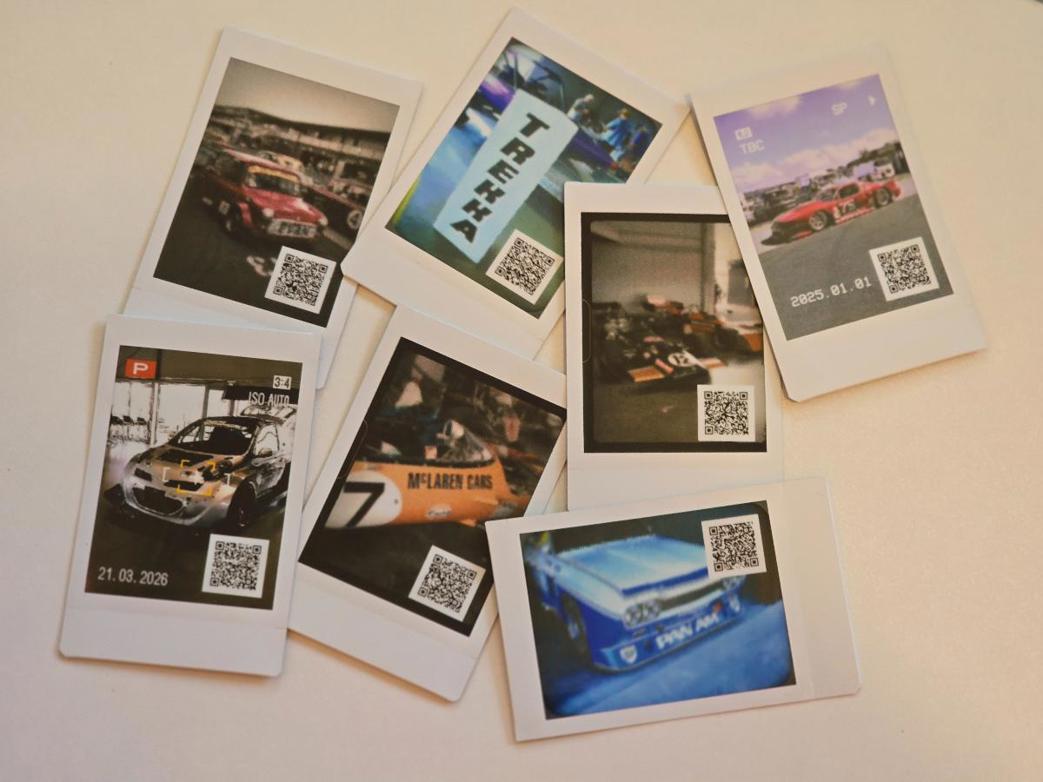
While it is genuinely an immense amount of fun to use, the Mini Evo Cinema does have a couple of drawbacks, including a slow interface that features noticeable delays when switching between decade filters or navigating menus, while the rear 170k-dot LCD is low-resolution and can be difficult to view in direct sunlight without the magnifying eyepiece, and the internal battery is relatively short-lived, providing roughly 30 minutes of recording time or 100 prints per charge.
However, these ‘complaints’ genuinely do blend in nicely with the Mini Evo Cinema’s charm, with everything (apart from the short battery life) adding to the whole retro feel of the camera.
In terms of pictures, while the Mini Evo Cinema presents in a portrait format (that's perfect for social media, after all), landscape shots can be taken by tipping it on its side, although this does make it a bit awkward to handle. The filters make for wonderfully period-correct images, but even with the intensity dialled right down, often come across as a little bit too much, however simply switching it to 2020 mode removes all filters for more conventional pics and videos.
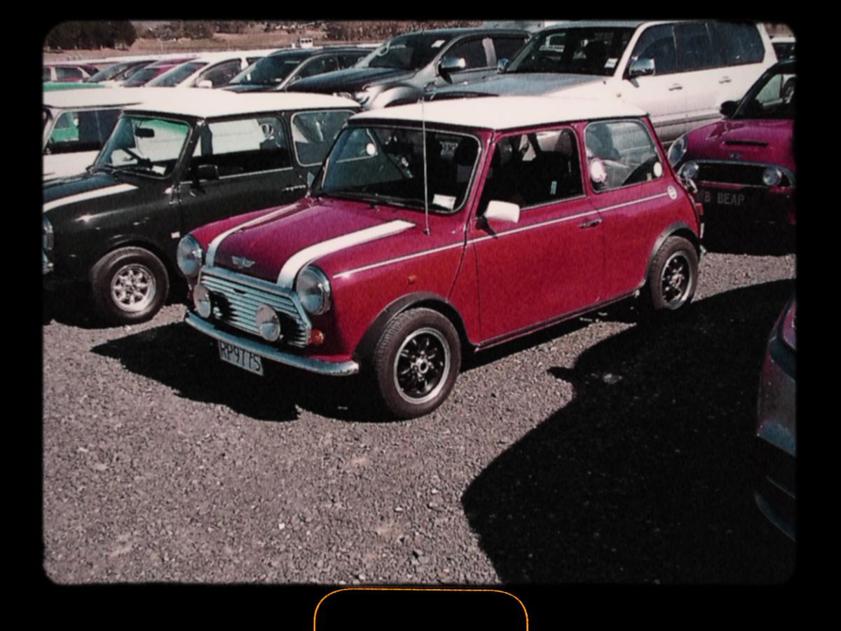
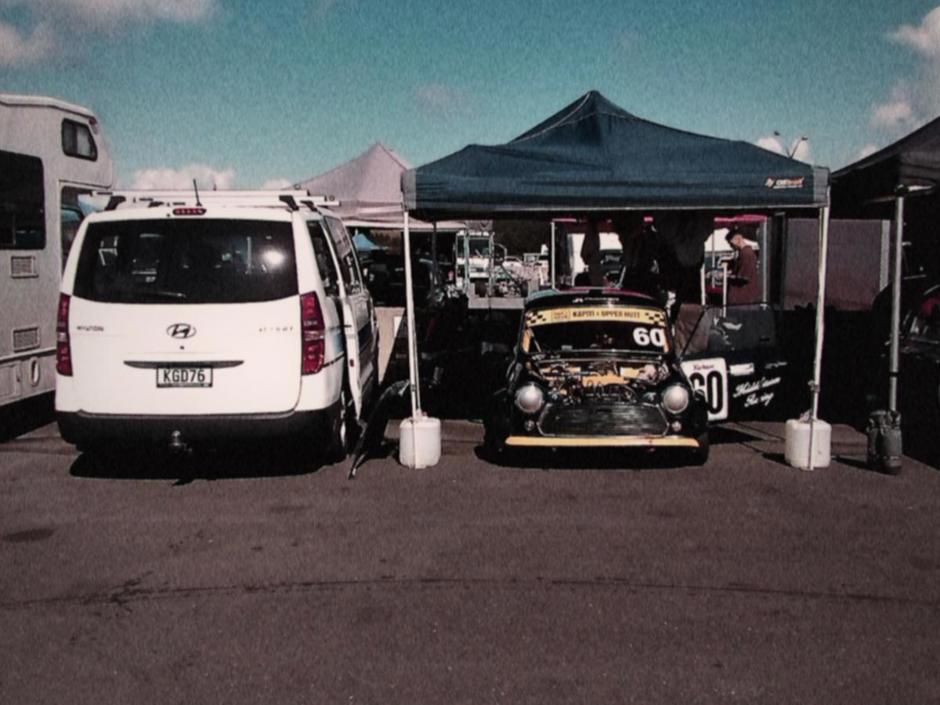
But the true enjoyment of the Instax Mini Evo Cinema comes from those filters, and the recent NZIGP Legends of Speed race meeting at Hampton Downs provided the perfect environment to take photos and video of classic racing cars in the same format you would have seen in their respective eras. Or wildly different ones, just for a laugh.
As an added bonus, the camera also functions as a wireless smartphone printer, producing high-quality prints from phone photos that surpass the quality of those taken with the camera's own 5MP sensor.
Forget fidelity and high-res sharpness; what you get here is brilliantly low-fi photography and low-res, shaky (there’s no built-in stabilisation, because of course there isn’t) video. No, you’re not going to enjoy watching them on a 100-inch OLED TV, but they are an absolute joy on your phone screen.
One downside of shooting at a motorsport event is that, while the Mini Evo Cinema has a zoom function, it is only a digital zoom that basically just crops the image, meaning that distant track action disappears into an indistinct fuzzy mess.
For those wanting to take the Mini Evo Cinema’s video capabilities further, the Fujifilm Instax Mini Evo app is a useful companion that allows for linear editing, where users can combine two of the 15-second clips into a 30-second short film, like the cinematic masterpieces you see here...
As an added bonus, the camera also functions as a wireless smartphone printer, producing high-quality prints from phone photos that surpass the quality of those taken with the camera's own 5MP sensor. This adds genuine value to the Mini Evo Cinema, going someway to justify its $699 asking price that, otherwise, would be steep for a cute toy.
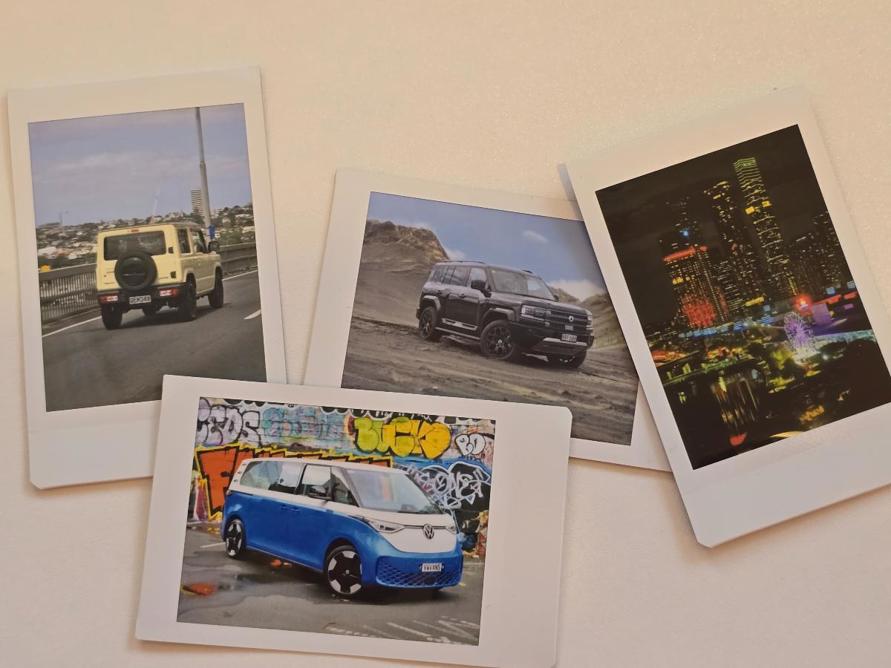
But beyond just being gimmicky fun for parties, the Mini Evo Cinema is also a surprisingly versatile and unique tool that gives amateur filmmakers and content creators the ability to "time travel" through decades of film history, making it a genuinely engaging device for people who value nostalgic aesthetics over modern technical perfection.
And, as it turns out, that is exactly what fired up my enjoyment of taking photos - and video - all over again. Who would have thought that?


