



What's this new car all about then?
Now we're talking. While Volvo New Zealand has been quietly refocusing on electrified vehicles for the last couple of years (it no longer sells anything without electrical assistance of some kind), it hasn't exactly been shouting about its efforts.
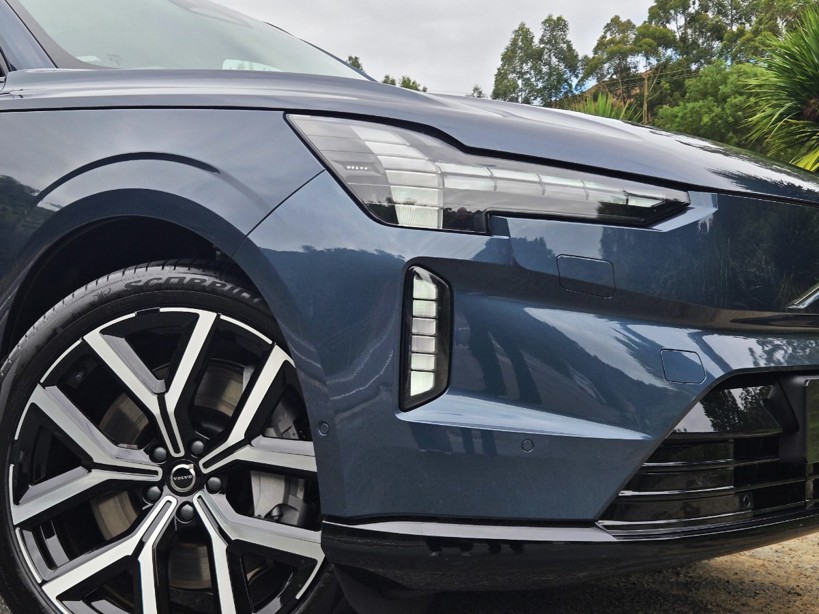
That changes now with the arrival of the EX90, the new pure-electric 7-seat flagship model for the brand.
It's been a while coming: revealed in late-2022, production was delayed due to some software-sorting-out (the Polestar 3, on the same platform, was also affected). We went to the US to drive it in late-2024 and then... nothing. Until now.
But the wait means we're getting the updated model, with 800-volt architecture that's capable of charging at 350kW.
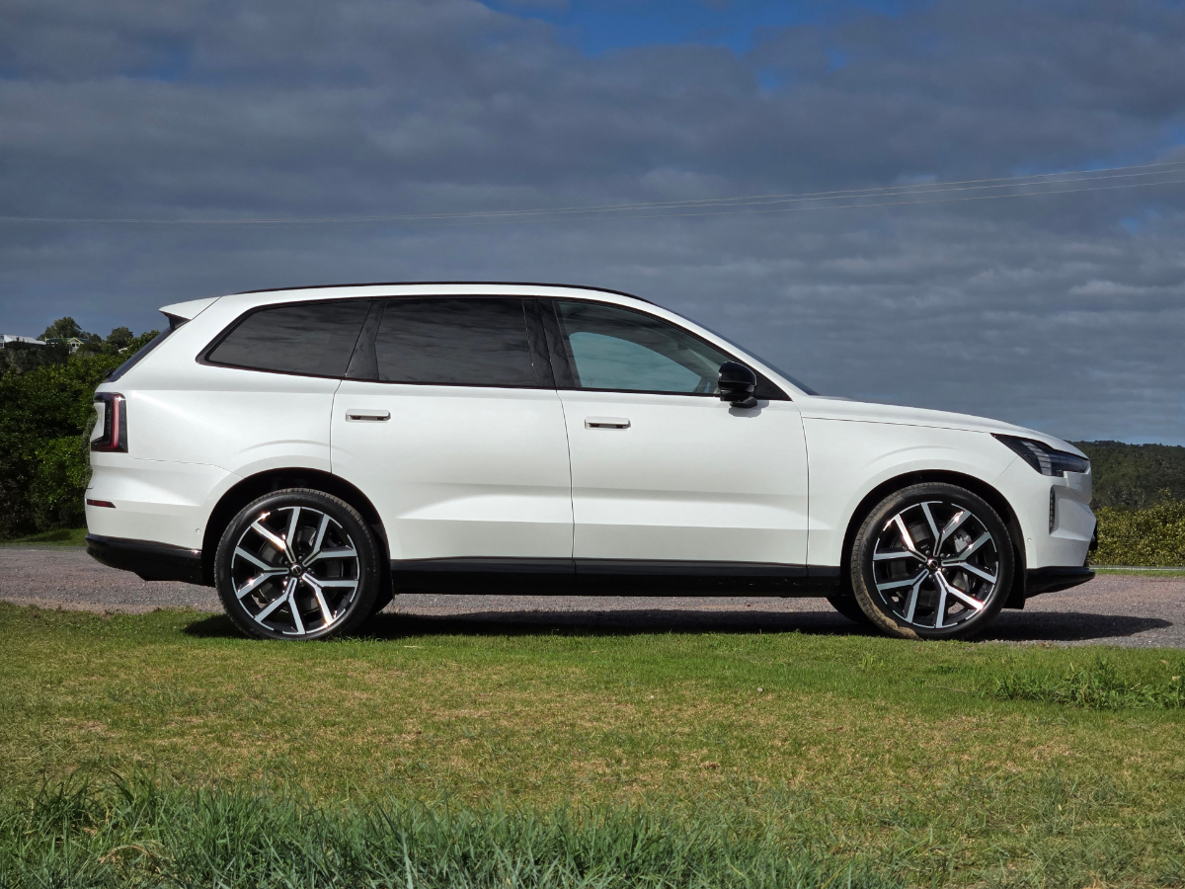
As the name suggests, the EX90 is an electric alternative to the XC90, although it's an entirely different car. The EX90 is 84mm longer at 5037mm, but both have the same 2984mm wheelbase. And yes, the recently updated XC90 will continue alongside the newcomer in mild-hybrid and plug-in hybrid models.
Volvo NZ is boastful about the EX90 being in a class of one for now, given there are no other pure-electric premium SUVs with 7 seats on the market. It's a good point.
Volvo calls the EX90 its "first software-defined vehicle" (oh, now those teething troubles make more sense), with the Swedish maker developing many of the computery bits in-house. It's the most high-tech Volvo currently on sale, although, although it's worth noting that the forthcoming EX60, on the new SPA3 platform, will move things forward yet again.
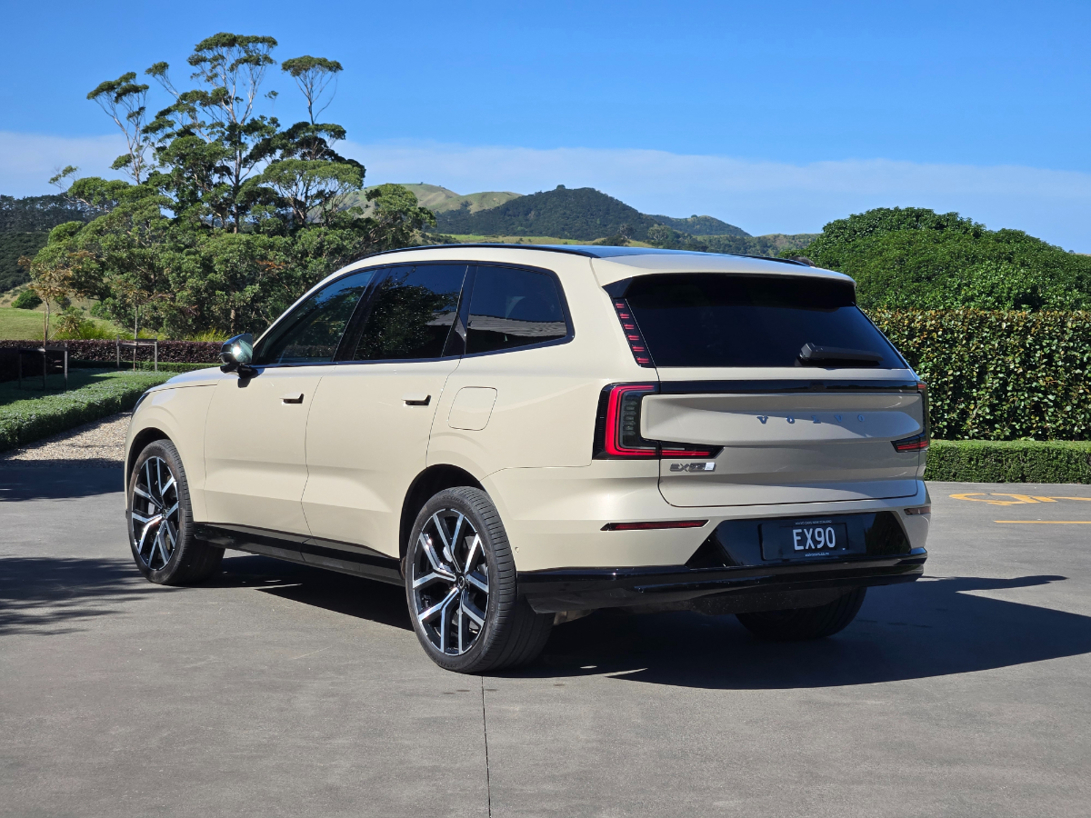
It's Chinese-built but super-Scandi in design, with the closed front end and tail-light stack from the (much) smaller EX30 EV and functional but fashion-looking aero, including Polestar-alike side mirrors and flush B-pillars. It has the highest level of recycled steel and plastic of any Volvo in production, and that Chengdu factory runs on 100% renewable electricity.
Volvo has sorted the complexity of its infotainment menus quite well, despite an iffy start with the first versions of the EX30.
If Volvo cabins make you ooh and aah (they often do us), the EX90 will make you ooh and aah and ooh again. It's very 2026-EV with a central 15.6-inch infotainment screen and 9in driver display, but it's all impossibly classy with soft surfaces and beautifully executed trims, including Forest Stewardship Council-approved wood decor that's backlit at night.
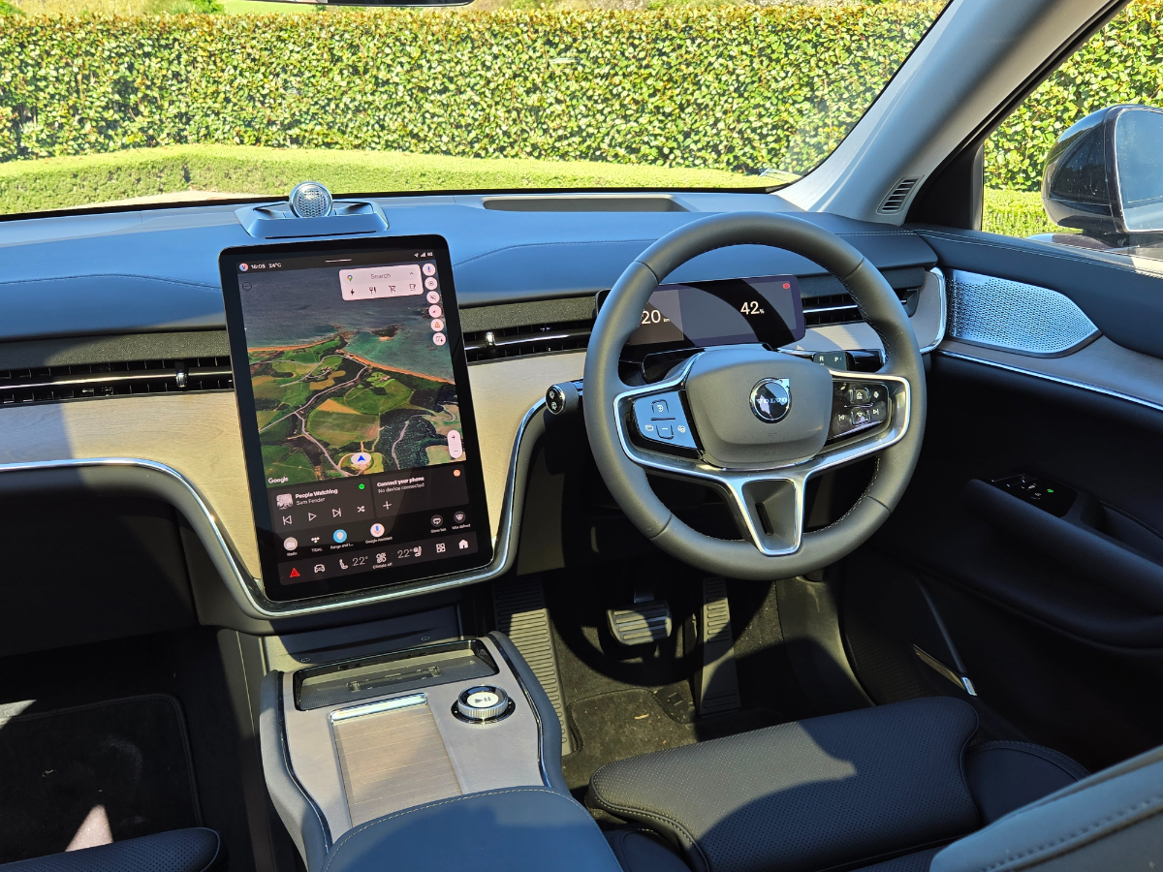
The dashboard features a "tweeter-on-top" for the grunty Bowers & Wilkins audio system, designed to minimise acoustic reflection from the windscreen. Delight in the detail.
Volvo was an early adopter in eliminating physical switchgear with the XC90, although we love that it's retained an elegant rotary dial for audio play/volume functions. It's also sorted the complexity of its infotainment menus quite well in recent times, despite an iffy start with the first versions of the EX30: clear menus and a handy dock along the bottom for shortcuts.
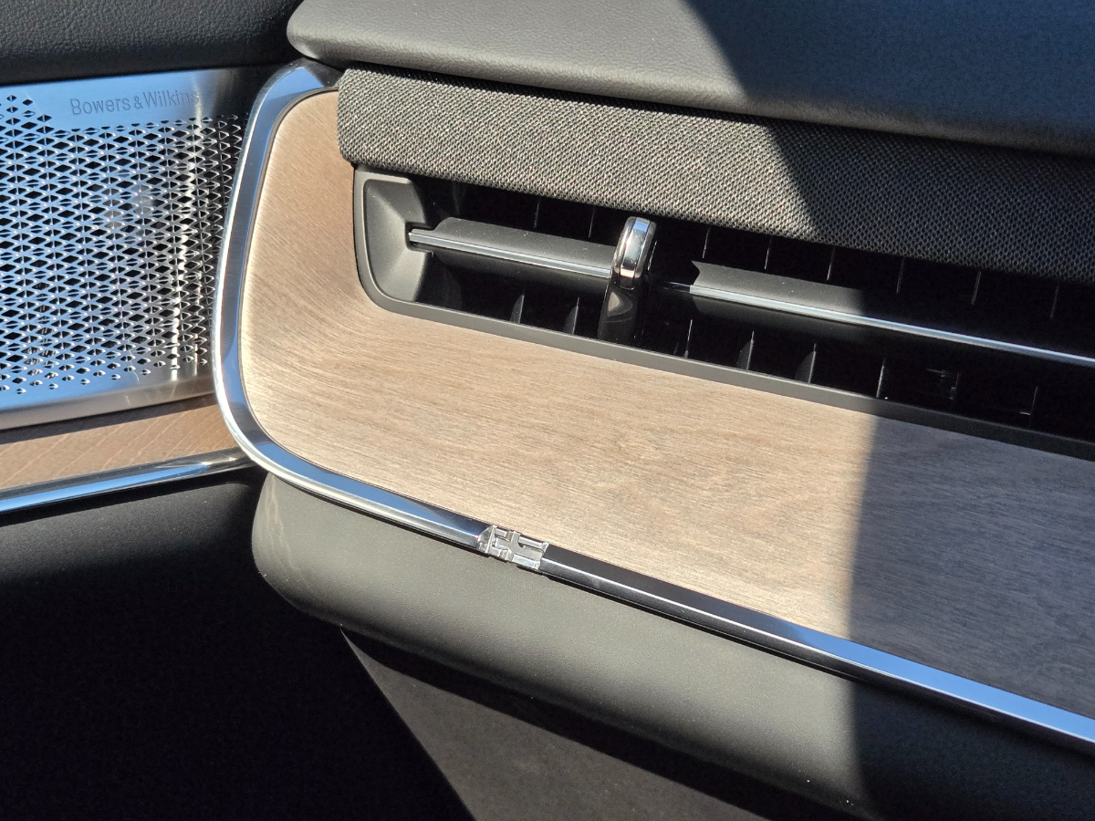
But some things may still irk, like burying the side mirror controls in a sub-menu and requiring the driver to use steering buttons to adjust them. Not uncommon these days, and it would all be okay if Volvo offered a reversing auto-dip function for the mirrors... but it doesn't. The EX30 has the same issue. Why, oh why?
The 3-row seating is configured theatre-style, with each row set slightly higher than the one in front to create a better view out. Volvo is famous for its ergo-chairs and the EX90 meets those high expectations; even in the back row, which you wouldn't call massive, but is still capable of housing an adult occupant in relative comfort.
It's a Volvo, so it has safety cred; take that as read. Five-star ANCAP of course, but also the safest large SUV tested in 2025.
It also has COTY cred: it's the reigning World Luxury Car of Year.
How much is it?
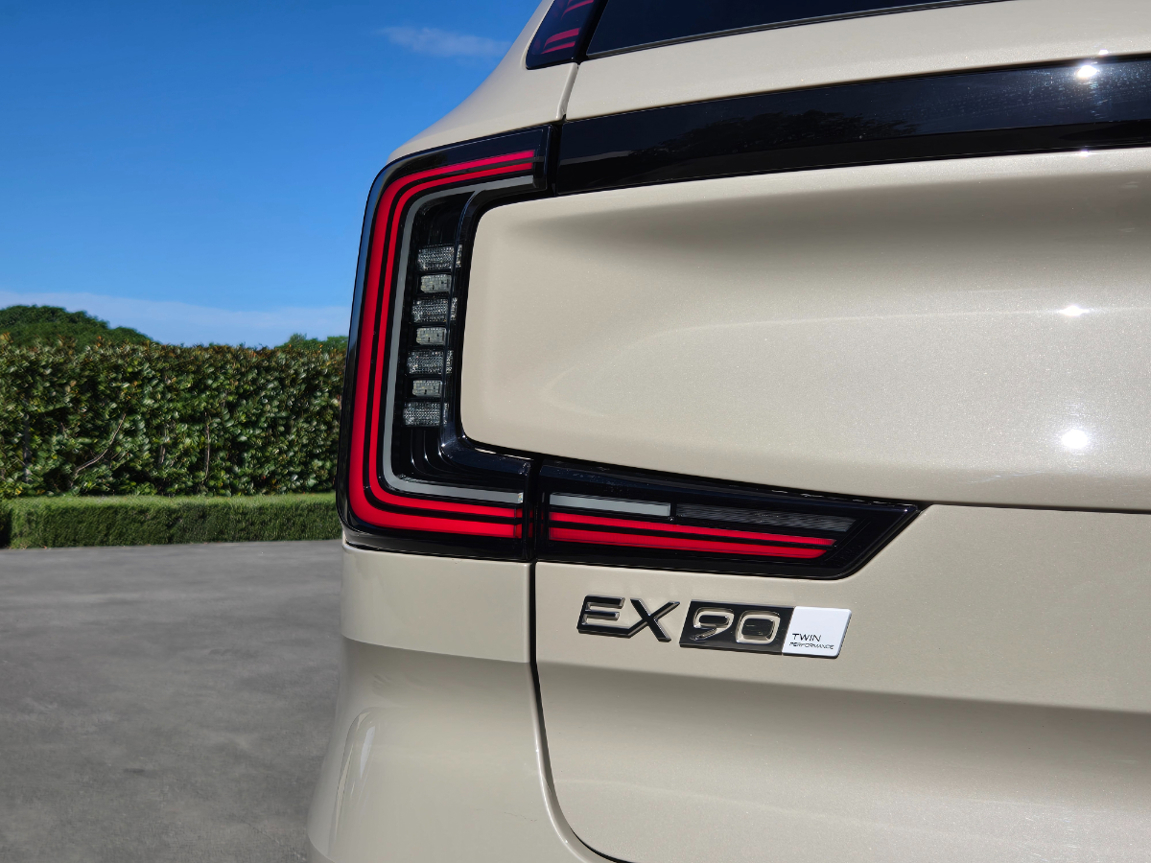
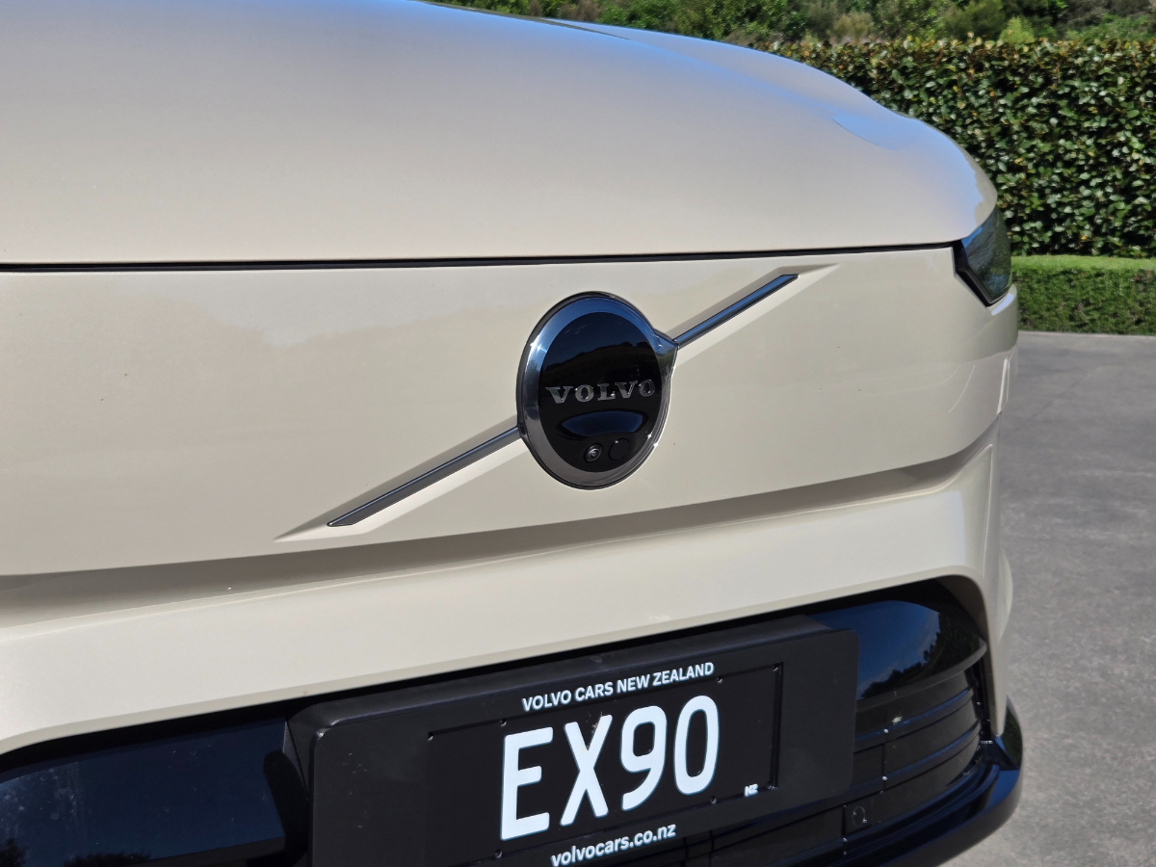
The EX90 comes in two versions for NZ, both with "Twin" (it says so on the tailgate badge) motor AWD: the $149,990 Plus and $159,990 Ultra Performance. They share a massive 106kWh battery that gives 600km WLTP range in either model, and if you can take advantage of the maximum charge rate it can power-up from 10-80% in 22 minutes.
The Plus makes a healthy 335kW/670Nm and can achieve 0-100km/h in 5.5 seconds, but the Ultra Performance keeps with recent Volvo EV tradition (may we refer you to the EX30 Cross Country) by ramping things up to a ridiculous level for a family car: 500kW/870Nm, with 0-100km/h in 4.2 seconds.
What's it like to drive?
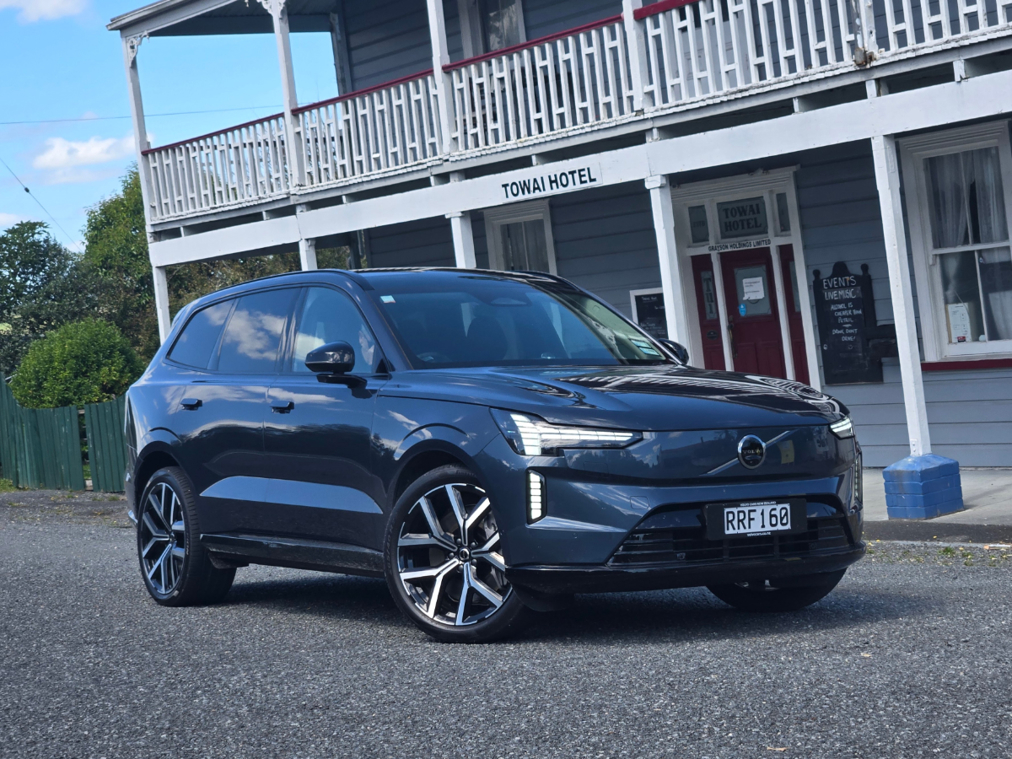
Pretty sensational, and not just in a go-fast way. If you like your large EV-SUVs to be supremely smooth and quiet, the EX90 delivers. We took the Ultra Performance north from Auckland on a hugely varied route and it immediately impressed with extreme refinement.
Even on 22-inch wheels (standard-fit for the Ultra Performance), it rode incredibly well on Kiwi backroads, albeit with a hint of the suspension-patter over little ripples than you get with virtually every EV - and many cars with air suspension, which this model also has. But really, nothing to complain about. On motorways and smoother surfaces it's sublime.
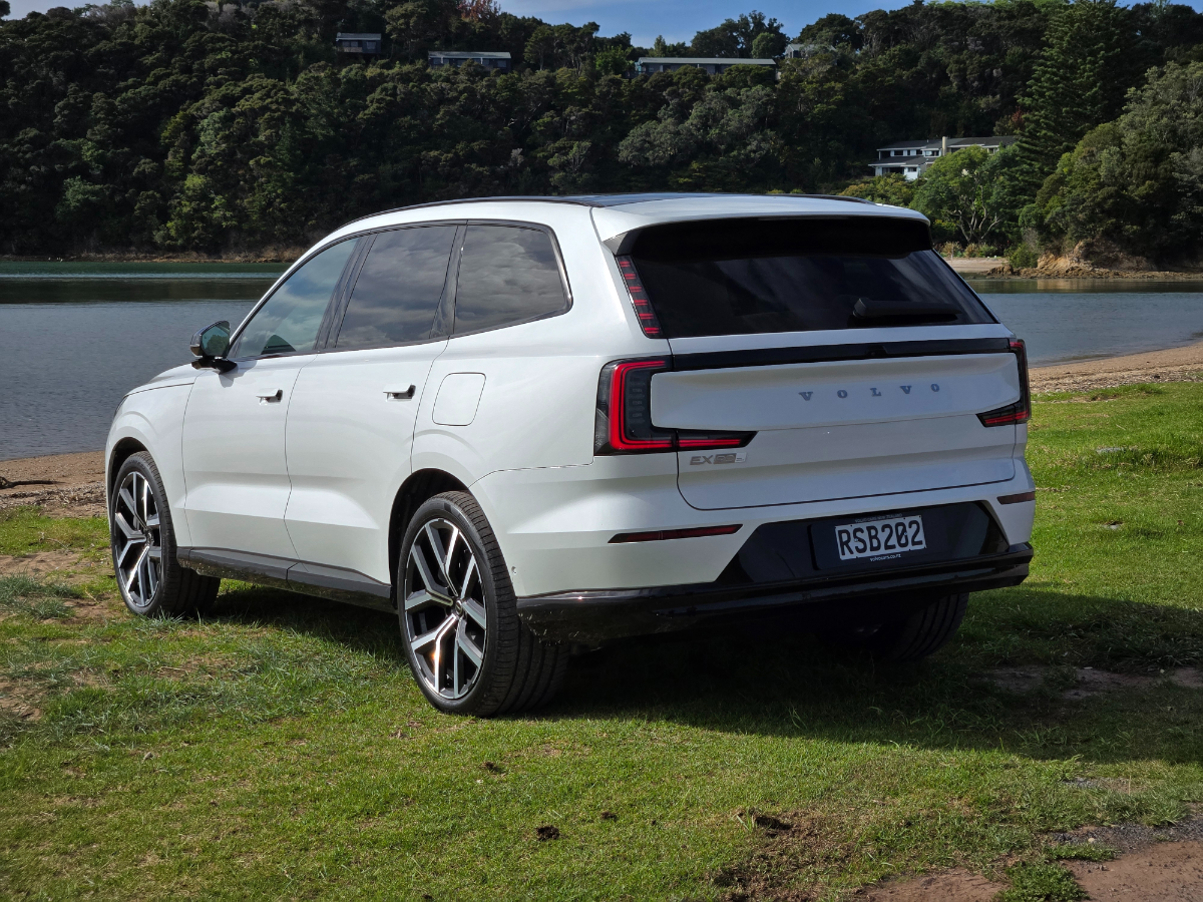
You're normally very aware of road noise in an EV on Kiwi coarse chip, but the EX90 does a good job of softening the aural assault.
The thottle is smoothly calibrated in normal mode, allowing you to modulate the power with quite a bit of finesse. Hit the Performance button (again, you have to go inside the infotainment system) and the EX90 gets very spicy for a 2.8-tonne SUV, rocketing past slower traffic in an alarming fashion. You have to be ready for it.
Weight and monster footwear aren't always conducive to cornering finesse, but the EX90 feels pretty composed on tight backroads (we tackled a few). It's no sports-SUV, but it flows from bend-to-bend beautifuly and the electric AWD system is impressively unobtrusive even when it's working really hard.
What’s the pick of the range?
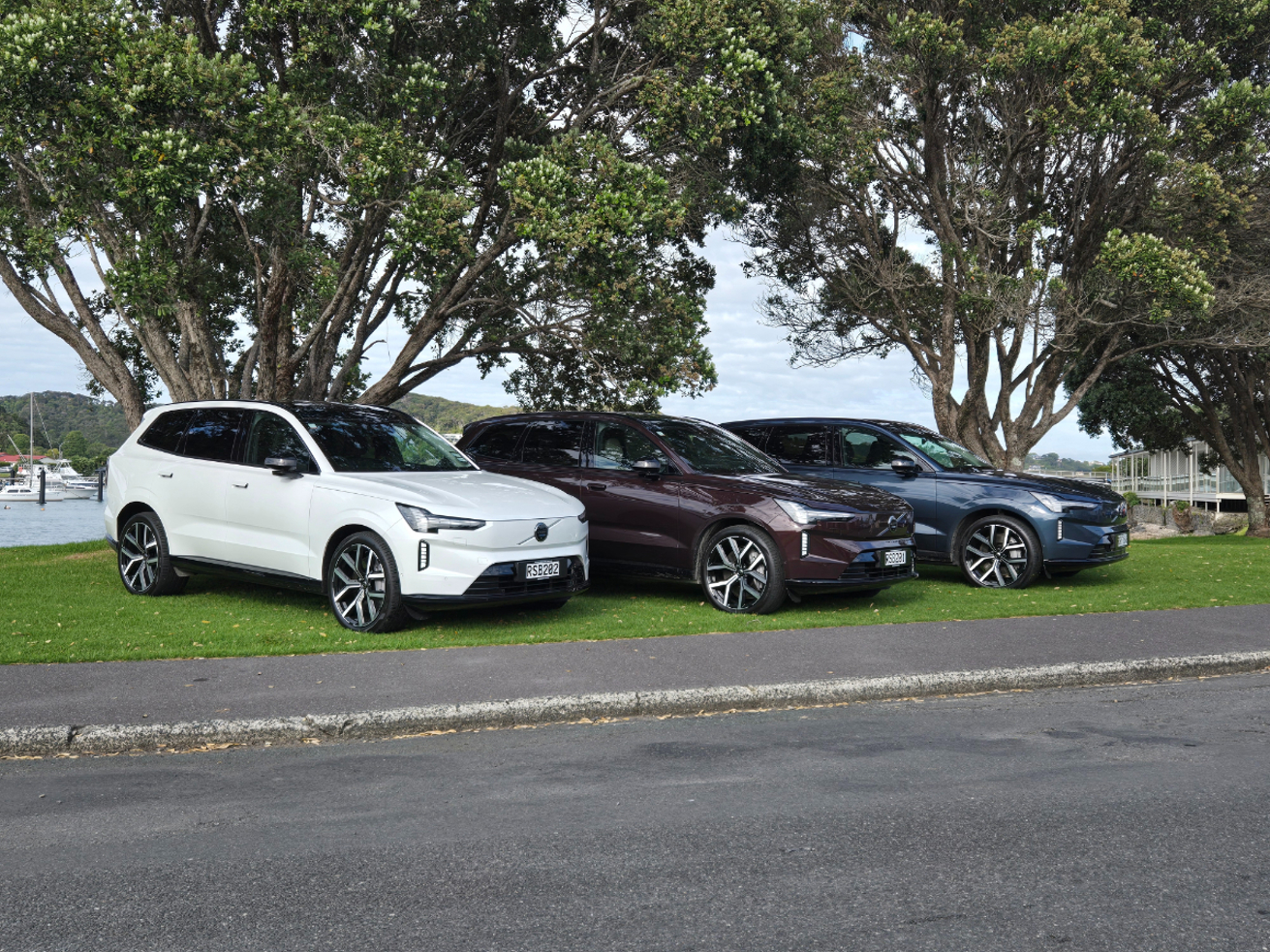
The reason we haven't driven the entry EX90 Plus is that Volvo NZ doesn't have any in the country. Nor does it need them, because most of its orders and customer interest are in the flagship Ultra Performance.
The Plus is still lavishly equipped, but for the extra $10k the Ultra Performance adds the crazy power, dual-chamber air suspension with 22-inch wheels (20s are standard on the Plus), Pixel headlights that can auto-dim for multiple objects at the same time, panoramic roof, ventilated/massaging front seats, tinted/laminated side windows, upgraded 25-speaker audio system and flush door handles with soft-close doors.
The Ultra Performance is also the only model you can specify with wool upholstery or Nappa leather ($3500), although common to both is Nordico: a rather nice faux-leather containing recycled material... including wine-bottle corks. Both the Nordico trim and interior "decor" inlays are each available in three different shades.
It's a package that's hard to argue with for the price. Volvo says there's potential lease/company-executive interest in the Plus simply because it's $10k cheaper, so it's definitely still on the books and you can have one if you want one. But the focus is on the flash model.
What other cars should I consider?
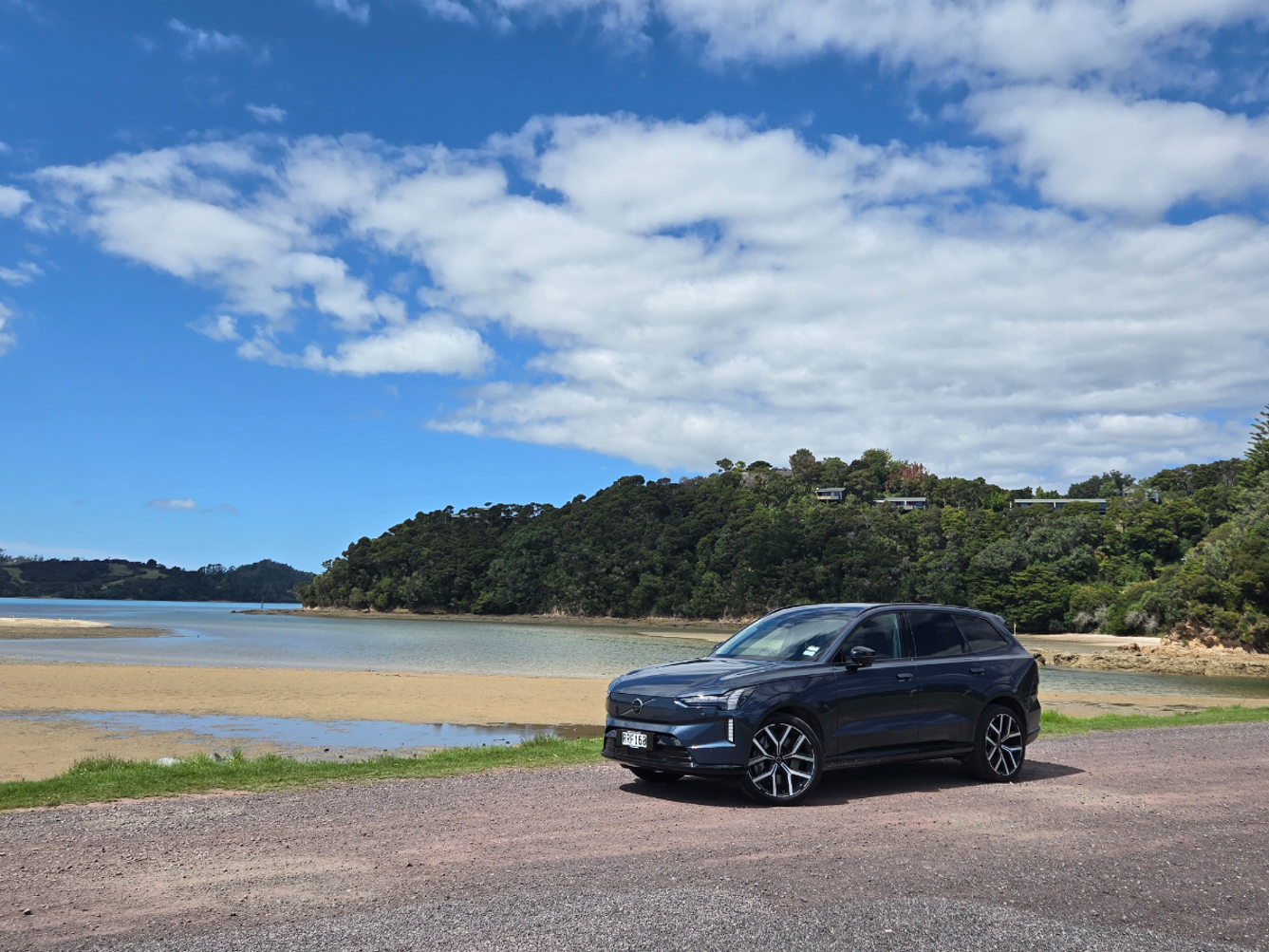
Volvo NZ is a bit boastful about the EX90 being in a class of one for now, given there are no other pure-electric premium SUVs with 7 seats on the market. That's a good point.
So putting powertrain specifics aside and accepting that you really want those 7 chairs (because if you don't, you'll wait for the even-newer EX60), the most obvious rival for this big fancy Volvo SUV is the other big fancy Volvo SUV, the XC90 T8 Ultra plug-in hybrid ($161,990).
As an aside, the XC90 is really on a roll right now. Sales were up 97% in 2025 and have risen 183% this year to date... admittedly small numbers overall (130 and 34 registrations respectively), but it's definitely growing in a big way.
The XC90 T8 does also show that price parity with combustion cars is part of the EX90 proposition. Volvo also has its eye on other luxury 7-seaters such as the Audi Q7 ($162,990-$208,990), BMW X5 ($157,400-$178,400, including a PHEV option) or Mercedes-Benz GLE ($153,300-$264,300).
A wild card to finish: if you're among those who maintain that Tesla is a premium brand, there's the new Model Y L with longer wheelbase and 6-seat (not 7!) cabin at $83,900. Not quite the same thing as the Volvo, but in the 3-row EV ballpark.