



- Mini's 2001 reinvention translated the original's character into a new design.
- Alec Issigonis shaped the 1959 Mini around space efficiency amd compact proportions.
- Today's Charismatic Simplicity reduces components while adding sculpted surfaces.
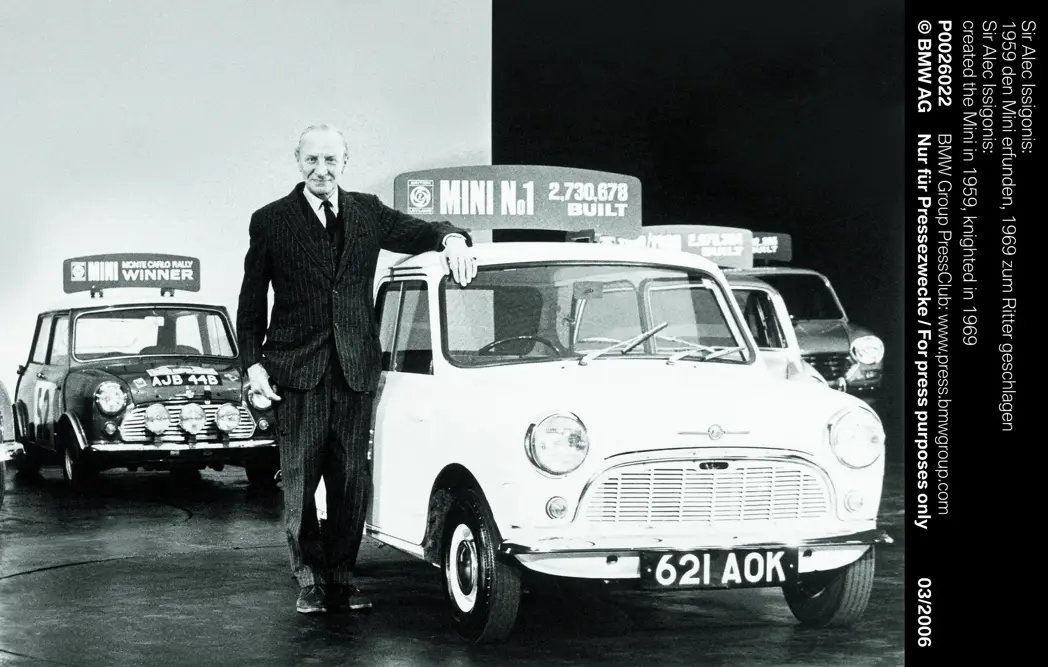
When Alec Issigonis created the classic Mini in 1959, its significance went beyond a recognisable silhouette.
Space efficiency, compact proportions and short overhangs gave the car its practical foundation, while direct driving fun and a cheeky character made it memorable.
The idea was bigger than the shape
Those qualities formed a durable design idea rather than a fixed collection of styling cues.
That distinction would become important decades later, when BMW Group had to decide how a small British original could move into a new era without becoming an imitation of itself.
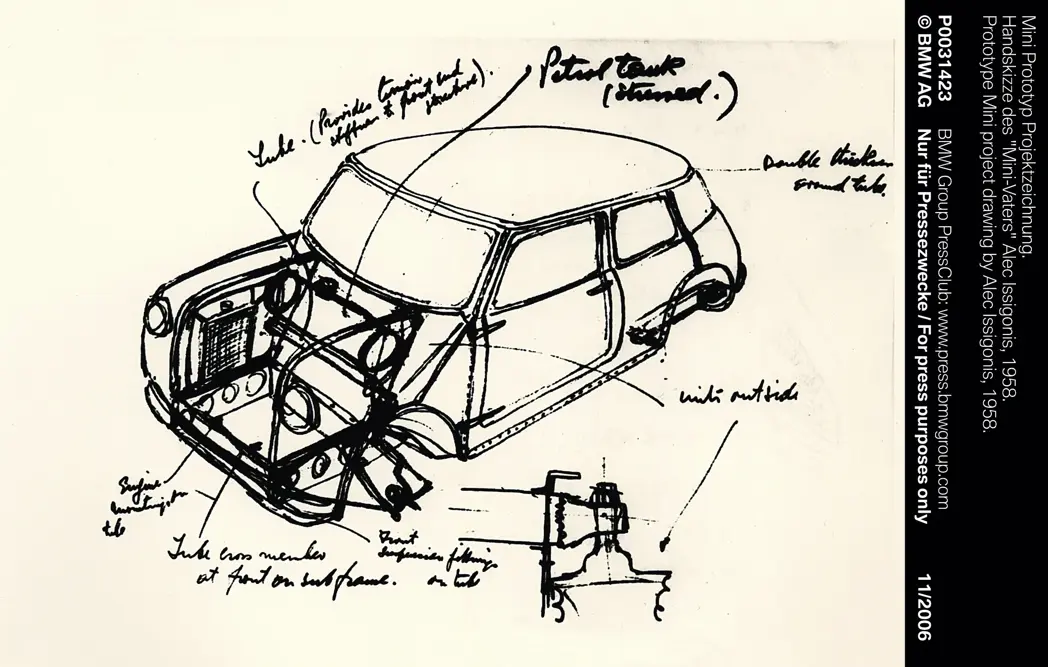
Following BMW's acquisition of Rover in 1994, BMW and Rover designers explored competing directions for the next Mini.
The challenge was to retain what people understood instinctively about the car while creating something fit to stand as a contemporary model.
A new original arrived in 2001
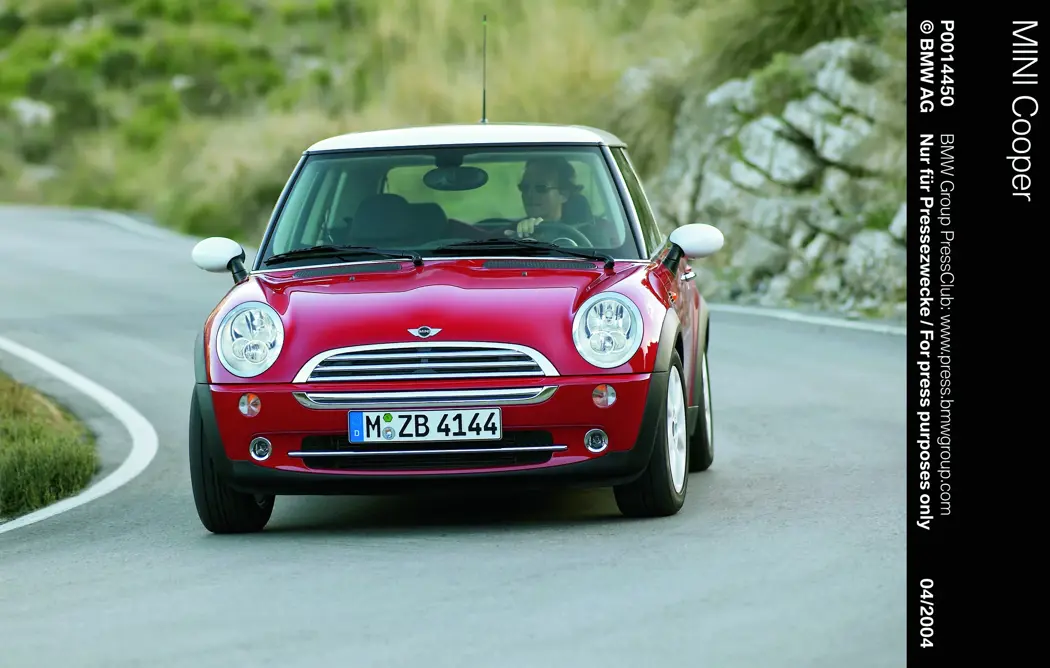
The resulting modern Mini, launched in 2001, was conceived as a new original rather than a retro copy.
It carried forward the classic model's compact stance, distinctive proportions and lively personality, but expressed them through a fresh design shaped for its own time.

That approach has allowed Mini to evolve for 25 years without treating its heritage as a museum piece. The continuity lies in the underlying principles: making intelligent use of a compact footprint, giving the driver an immediate connection to the car and allowing functional decisions to create character.
“Mini has created its own icons over the years. This work is never finished – we must continue to carry it forward,” said Holger Hampf.
Simplicity becomes the next chapter

Mini's current Charismatic Simplicity approach continues that process by reducing the number of components and concentrating attention on essential forms.
Sculpted surfaces replace unnecessary visual clutter, while the round central display and compact steering wheel reinterpret familiar Mini elements rather than merely repeating them.
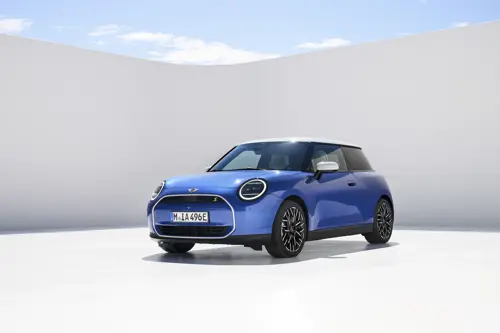
The Cooper Electric demonstrates how those ideas now come together. Its design may be cleaner and more digitally focused, but the objective remains linked to Issigonis's original thinking: achieve more with less, preserve useful space and make a compact car feel unmistakably individual.
That is the thread connecting 1959, the BMW-era relaunch and today's Mini. The icon has endured because its designers treated its past as a set of principles to advance, not a shape to freeze.


