



- Wing Commander Andy Green has ticked off yet another speed record at Bonneville Speed Week.
- The fastest man in the world has added hydrogen to his list of record-breaking fuels at the wheel of the JCB Hydromax streamliner.
- The Bonneville run was in preparation for an official FIA Land Speed Record run later this week.
It would be something of an understatement to say that Wing Commander Andy Green has gone very, very fast using some decidedly different ways of making a vehicle move.
In 1997, the former RAF fighter pilot drove the twin-jet-powered ThrustSSC to 763.035mph (1227.985km/h) at the Bonneville salt flats in the USA, becoming the first person to break the sound barrier on land.
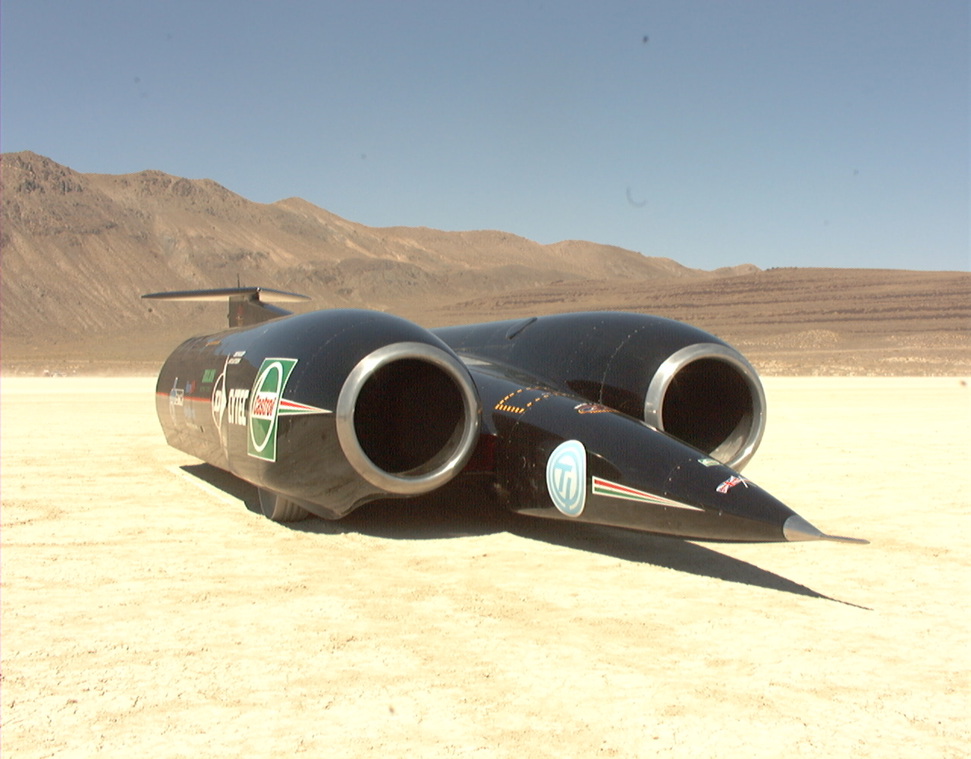
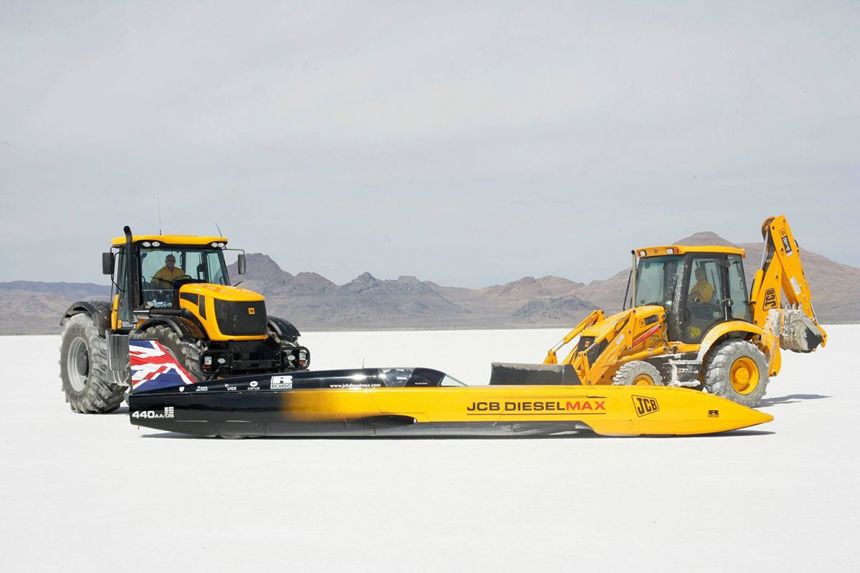
It is a record that still stands to this day, and most people would be content with settling back and having that as the highlight of their post-retirement CV. But in 2006, Green swapped jet thrust for diesel power, driving the JCB Dieselmax to 350.092mph (563.418km/h) and the world diesel land-speed record.
While this could be considered 'slow' in Green's world, the remarkable part of this record is the fact that the Dieselmax used two heavily modified 4.4-litre four-cylinder diesel engines developed from the engines British heavy equipment manufacturer JCB used in its backhoe diggers and telescopic handlers, producing around 1500hp (1119kW) between them.
So where do you go after smashing the speed of sound and driving the world's fastest diesel-powered backhoe? That's easy; you head into the future with hydrogen.
Twenty years after Dieselmax, Green is back setting records at Bonneville Speed Week with another pair of engines that have a rather unlikely day job.
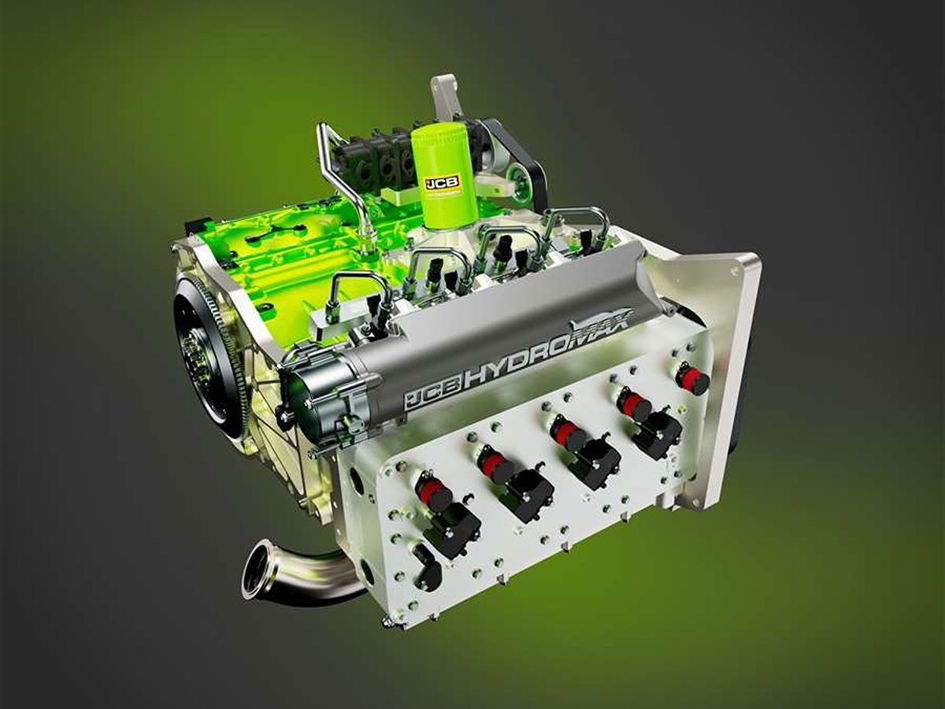
Green's latest ride, the JCB Hydromax Streamliner is powered by two production-based 4.8-litre JCB hydrogen internal-combustion engines - essentially the same technology now being used to power JCB's construction machinery.
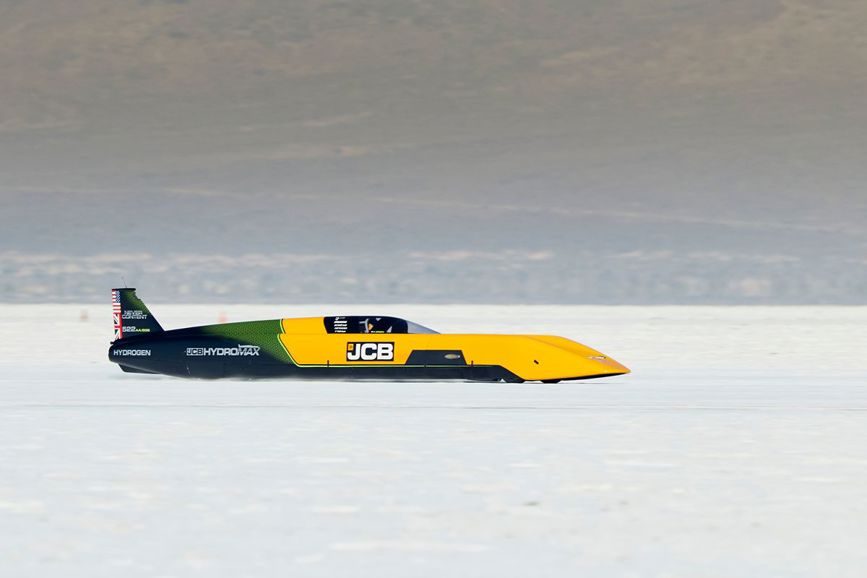
JCB's 4.8-litre engine is a development of the earlier 4.4, and the company produces it in both diesel and hydrogen forms, with the Hydromax using a highly tuned pair of the latter that produce up to 1600bhp (1193kW).
While not yet operating at their full power capability, the engines have proven good enough to power Green and the Hydromax fast enough to officially secure a Southern California Timing Association (SCTA) speed record at the Bonneville Salt Flats, reaching a remarkable 368.347mph (592.798km/h).
The car set the new record in the Blown Gas Streamliner (AA/BGS, 500+ cubic inches) class, marking the first time in 16 years that this specific class record has been broken, surpassing the previous 2010 record of 348.342mph (560.602km/h).
The class features streamliner cars that run the absolute largest engine displacements (AA) in land speed racing, representing engines that are 501.00 cubic inches (approx. 8.2 litres) and larger, with no upper limit.
The B indicates engine must use forced induction via a supercharger or turbocharger, while the G indicates it must strictly run on standard event-sanctioned gasoline rather than exotic nitro or alcohol fuel blends - as the Hydromax is a combustion hydrogen vehicle it fits into this category - and finally S stands for Streamliner, which is pretty obvious.
To meet SCTA requirements, the team completed two runs on consecutive days, averaging their maximum speeds. The Hydromax recorded 367.141mph (590.856km/h) on the first day and hit a peak of 369.554mph (594.74km/h) on the second for an average of 368.347mph (592.798km/h).
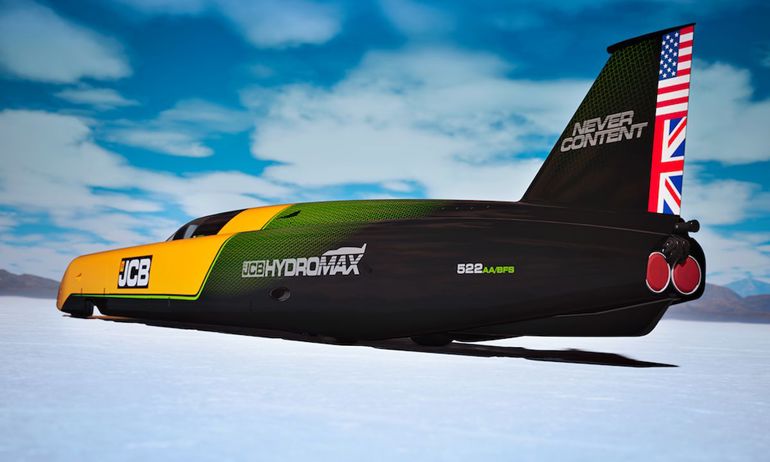
However, the SCTA record isn't the team's ultimate goal, with Hydromax staying on in Bonneville after Speed Week to set the official FIA world land speed record for hydrogen-powered vehicles. Notice we said "set", not "break" - this is because one doesn't actually exist yet and whatever Green and Hydromax manage will be the record.
The team has set themselves tow benchmarks for the FIA attempt, using the 368.347mph SCTA run and 350.092mph FIA record it currently holds with the Dieselmax as its goals, with plans to surpass both.
"It has been an absolute joy to be back on the salt, racing at Speed Week alongside some incredible teams," Green said after the Bonneville run.
"The Bonneville Salt Flats are the home of the World Land Speed Record, where racers get to push the boundaries of physics and innovation.
"This record has given all of us huge confidence in the car, the team and the quality of the engineering. With our first record in the bag, we're now turning up the power on the engines, aiming to go even faster next week."
The SCTA success follows a rigorous testing program consisting of 44 runs to date, and the team is currently tuning the twin engines toward their full combined output of 1600 hp in preparation for the FIA bid.
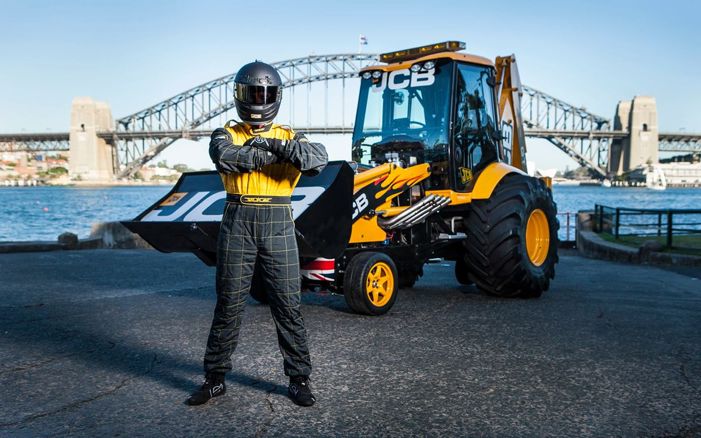
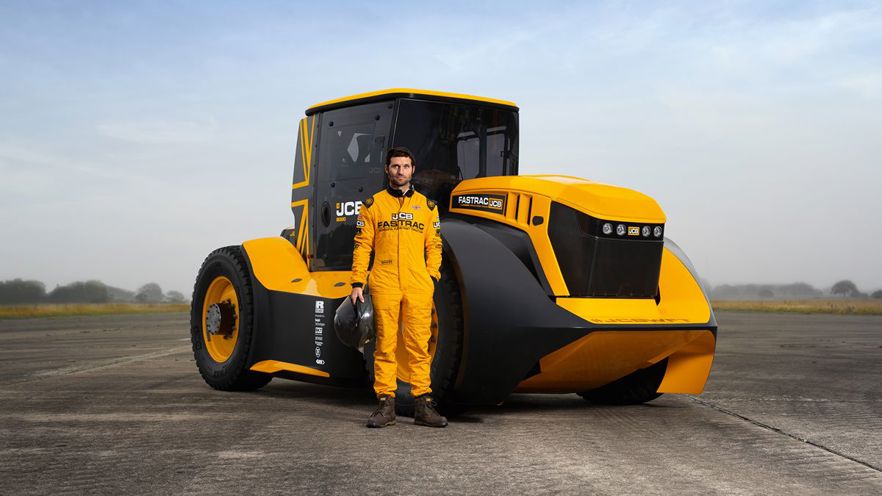
Setting the hydrogen benchmark will add another record to JCB's growing list of, shall we say "eclectic" speed records, as along with the diesel land speed record it has also set the record for world's fastest backhoe (116.82km/h) with the wheelie-popping JCB GT at Bathurst in 2014, and world's fastest tractor (217.569km/h) in 2019 with TT racing legend Guy Martin at the wheel of the JCB Fastrac Two.


