



Farizon Auto might be a new name to many here in New Zealand, but as a commercial vehicle brand under the Geely Holding Group, it shares a stable with better-known names like Volvo and Polestar.
Farizon was formed in 2016 to focus on the development and sales of commercial vehicles for the Chinese domestic market, and launched here last year with the all-electric SV Supervan.
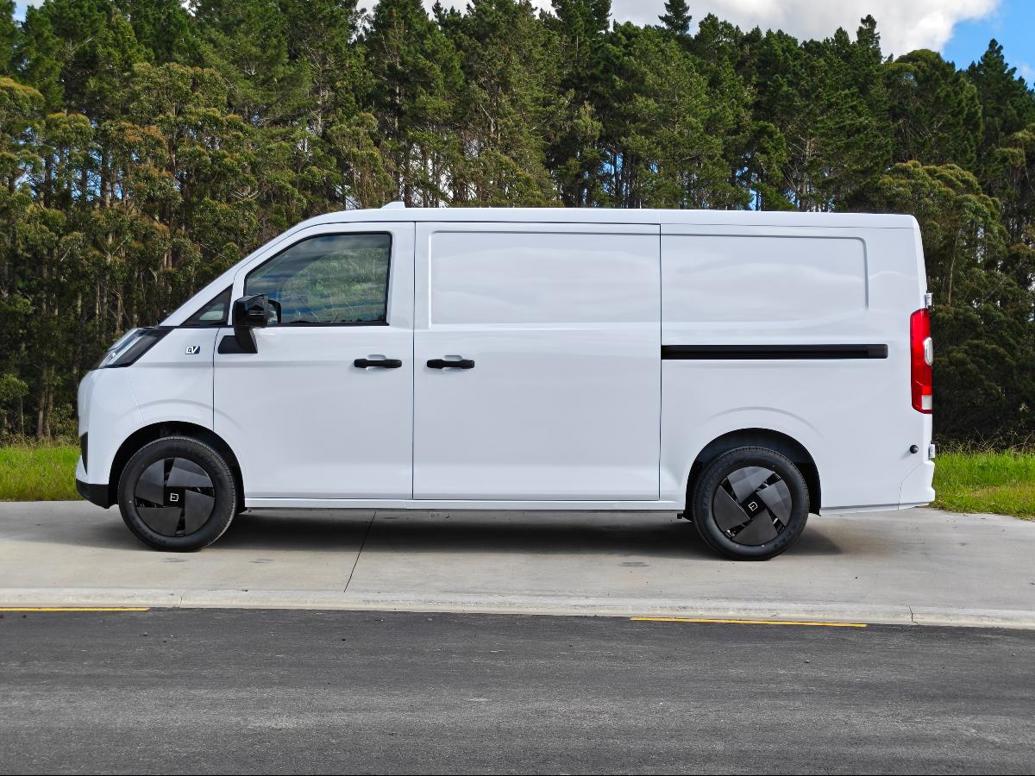
But it is the V7E you see here that is the biggest sign so far of the brand wanting to make a mark in the local commercial segment, entering the market, as it does, as an all-electric direct competitor to the Toyota Hiace.
But here’s the most aggressive move - the electric V7E actually undercuts the diesel Hiace in terms of price, landing in New Zealand with a price tag of $55,990, $3k cheaper than the Toyota.
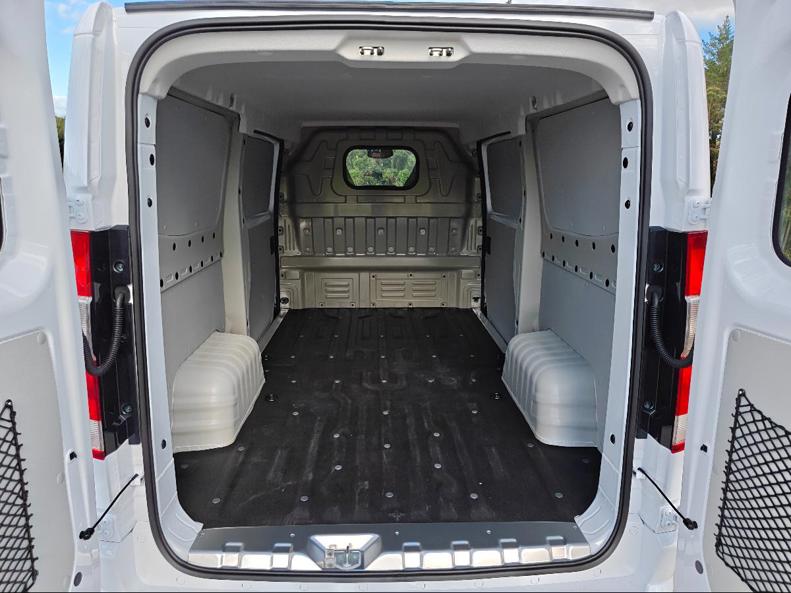
In terms of exterior dimensions, the V7E is fractionally smaller than the Hiace ZR, but offers a larger interior space, with a seven-cubic-metre cargo area that is broadly similar in terms of height and width, but is 120mm longer overall.
The V7E boasts a claimed electric range of 329km from its 66.7kWh battery, and will charge for 20 to 80 percent in 30 minutes, giving it more than enough range for daily usage.
It's a bold play in a segment that's ripe for an electric shake-up, but does this newcomer have what it takes?
On the outside: what are the Farizon V7E's main design features?
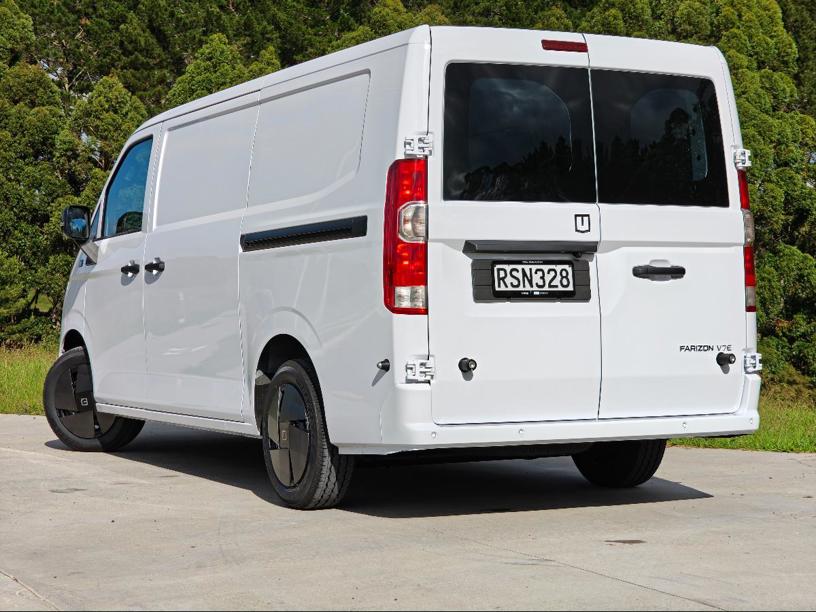
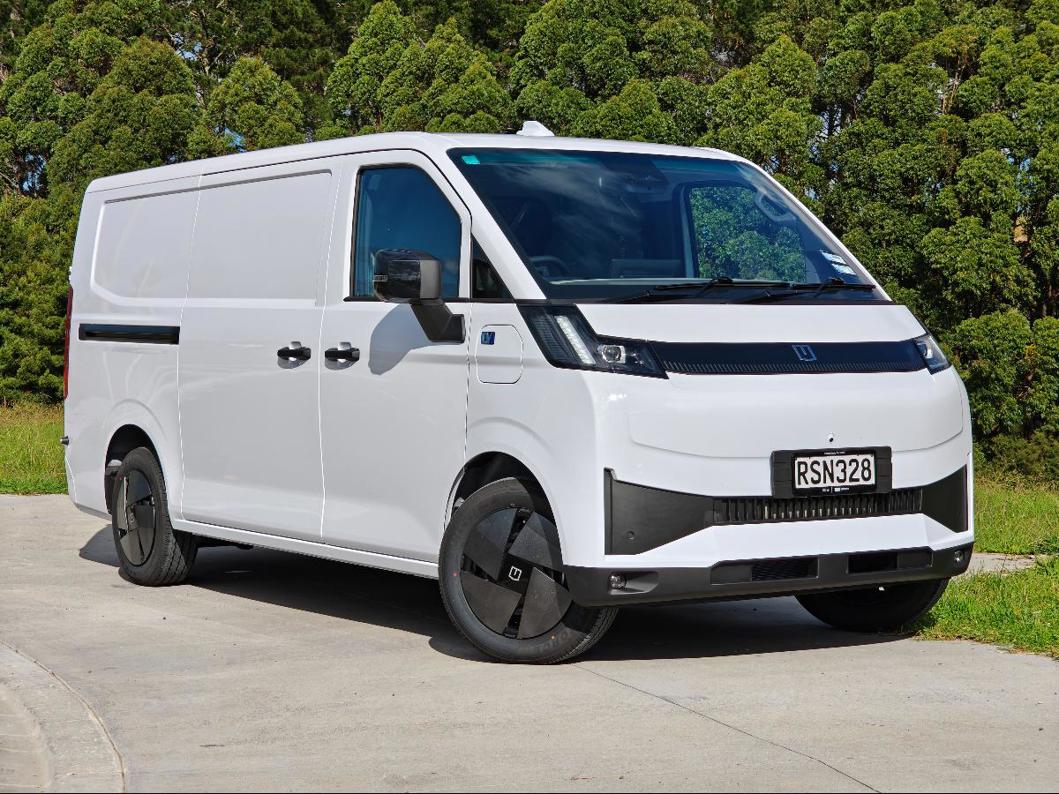
Let's be honest, the V7E looks awesome. It pretty much looks like what a late-1980s sci-fi movie set designer thought vans would look like in the far-flung future of 2026.
While the rear is the familiar boxy shape dictated by function, the front is where the designers had their fun. The nose is super short and sharply cut off, with an almost Tesla Cybertruck-esque vibe to it. The windscreen is more steeply raked than you’d expect on a van, a clear nod to the aerodynamic efficiency needed to eke out that decent electric range.
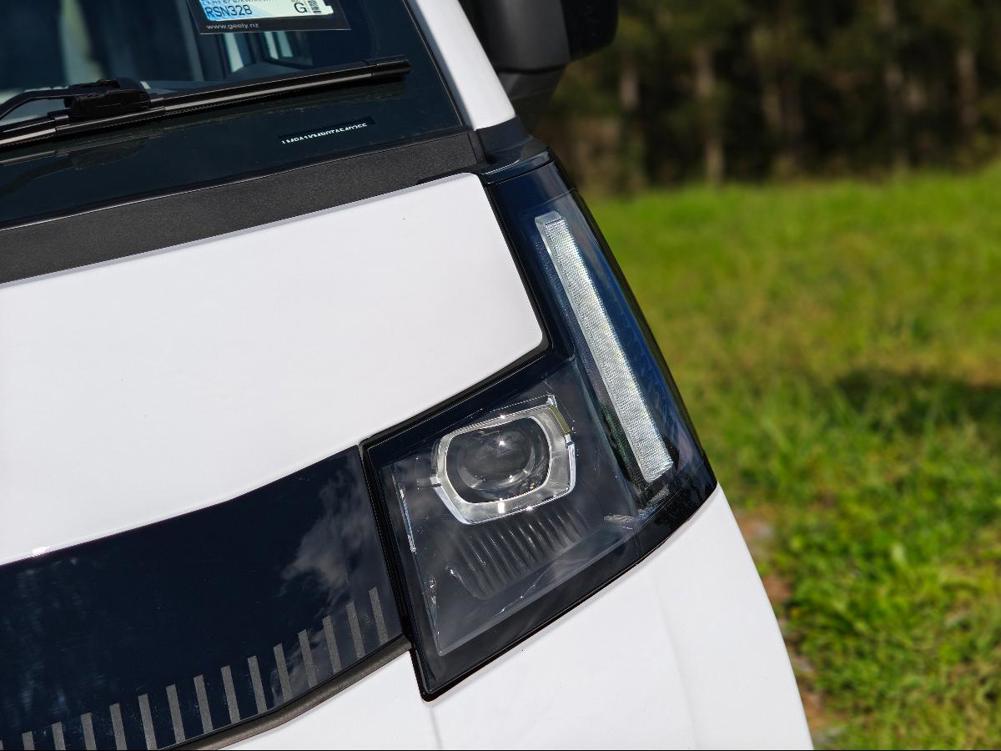
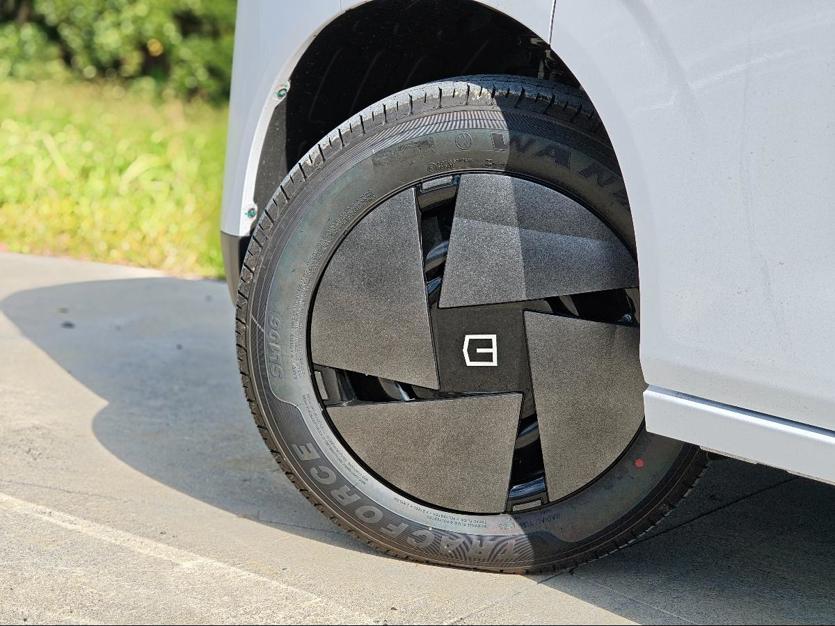
Fantastic headlights complete the futuristic look, while it also sports some seriously cool aero wheel covers over its 16-inch steel wheels. It's a design that manages to be both distinctive and functional, standing out in a sea of utilitarian white boxes.
OVERVIEW
| Price | $55,990 |
| Body style | Van |
| Wheels and tyres | 16-inch steel wheels, 195/65 tyres |
| Length | 4995mm |
| Wheelbase | 3200mm |
| Weight | 1942kg |
| Website | farizon.nz |
On the inside: what's the Farizon V7E's cabin like?
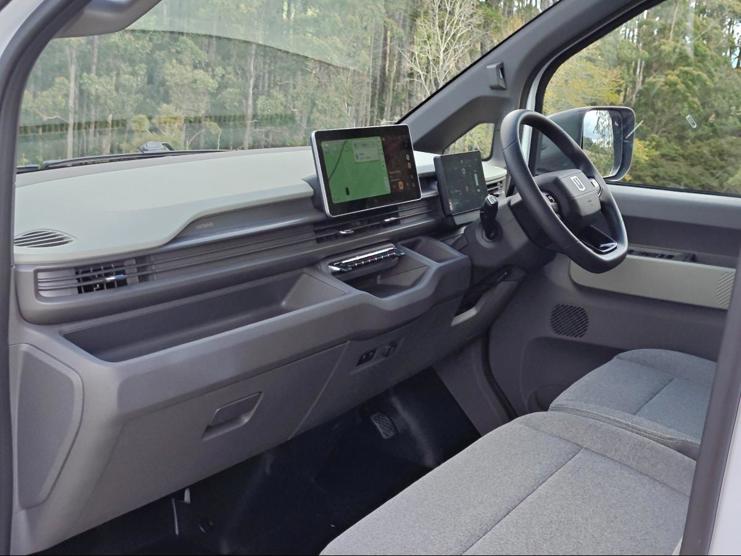
Inside, the V7E is all about hard-wearing serviceability, which is exactly what you want in a work vehicle. The cabin features a three-seater fabric bench, with the driver's seat getting the welcome surprise of ventilation - an efficient way to keep the driver cool without draining the battery on air conditioning.
For a commercial van, the Farizon V7E is genuinely good to drive, and it's a surprisingly competent handler.
A big, wide, desk-style armrest folds down from the middle seat, and while its fabric surface isn't ideal for writing, it's handy for a laptop. Storage is plentiful, with lots of clever cubbies and spaces, though the lack of rubber lining means things tend to slide and rattle around in the hard plastic trays. The overall build quality, however, feels solid and well-put-together.
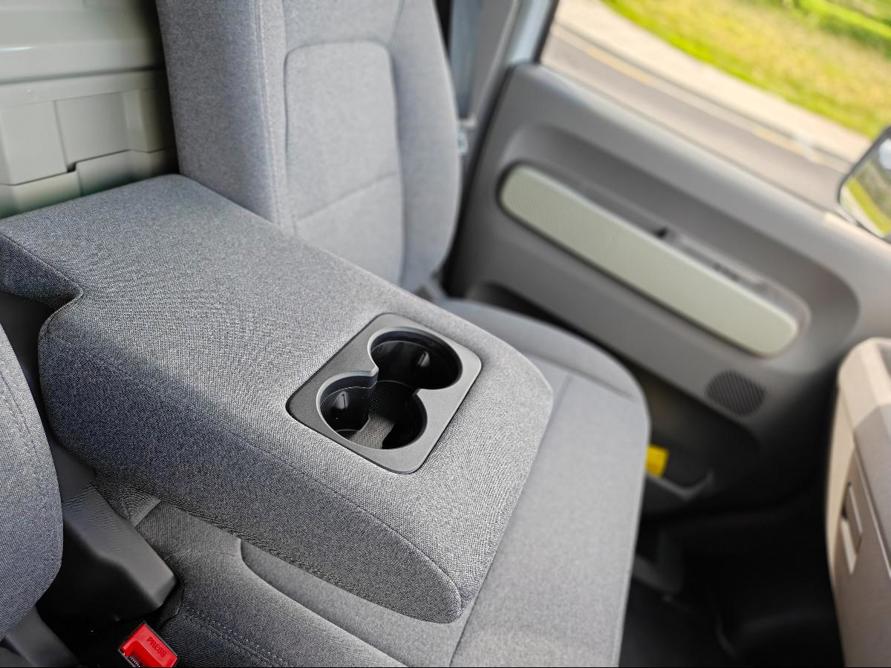
The V7E comes standard with a cargo divider, which brings us to my biggest criticism of it; the glass in the divider is incredibly reflective, creating a distracting overlay of the view ahead on top of the view behind in the rearview mirror.
I solved this by simply not using the centre mirror and relying on the large wing mirrors, which is common practice in a loaded van anyway. But it was still annoying.
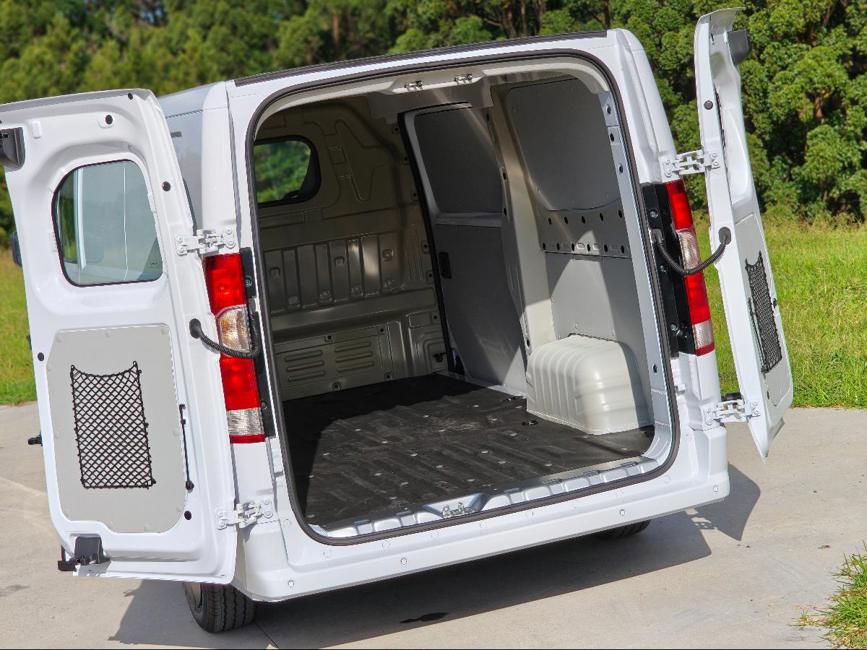
Out back, the V7E gets twin side sliding doors and enormous rear barn doors that swing open a full 270 degrees. The cargo bay itself is a good size, with a length of 2865mm and a width between the wheel arches of 1251mm, which is wide enough for a standard Euro pallet.
INTERIOR
| Head-up display | No |
| Infotainment screen | 12.3 inches |
| Phone projection | Wireless Android and Apple CarPlay |
| Wireless phone charger | No |
| USB ports | 1x USB-A and 1x USB-C |
| Climate control | Dual zone |
| Front seat heating/ventilation | No/Yes (Driver only) |
| Front seat adjustment | Manual |
| Cargo capacity | 7 cubic metres |
| Rear seat split/fold | No |
| Power tailgate | No |
On the road: what's the Farizon V7E like to drive?
For a commercial van, the Farizon V7E is genuinely good to drive, and it's a surprisingly competent handler, a trait likely aided by the low centre of gravity afforded by the underfloor battery pack.
It looks fantastic, is genuinely good to drive for a van, and has a practical range that will suit the daily grind of many businesses, particularly urban-based ones like couriers.
The steering lacks feel, but it's direct enough that you always know what the front wheels are up to. The lack of feel is no doubt due to the fact that the V7E uses a steer-by-wire system, something that also contributes to its impressively small turning circle, making it utterly effortless at low speed urban manoeuvres.
As vans are built to carry weight, the rear suspension is generally firm when unladen, but the V7E is particularly firm, even by those standards. You'll want to take it easy over speed bumps to avoid a kick from the rear, but the ride is perfectly acceptable for a commercial vehicle and would no doubt settle down nicely with some weight in the back.
The electric powertrain is smooth and quiet, but there is noticeable road noise, which is to be expected in a van. I also noticed a faint, high-frequency whine from the motors between 80 and 100km/h - it's not loud, and turning on the stereo easily drowns it out, but my ears are particularly sensitive to high-frequency sounds (dog-like, some might say…), so it may not be noticeable to a lot of people.
The 12.3-inch infotainment screen is simple and easy to navigate, and the van is packed with high-end driver aids. The adaptive cruise control with lane centering is excellent, and it also features a 360-degree camera, blind-spot warning, forward collision warning, and traffic sign recognition. It’s an impressively well-equipped package.
SPECIFICATIONS
| Powertrain type | Electric |
| Battery | 66.7kWh |
| Power | 100kW |
| Torque | 230Nm |
| Transmission | Single-speed, FWD |
| Power to weight | 52 kW/tonne |
| Adaptive suspension | No |
| Efficiency | 22.4kWh/100km (WLTP) |
| Range | 329km |
| Tow rating | 1 tonne |
On ownership: what's the Farizon V7E's warranty and servicing situation?
The Farizon V7E comes with a comprehensive 5-year/150,000km vehicle warranty and more extensive 8-year/200,000km warranty. The service intervals are set at every 12 months or 30,000km.
On the whole: what do we think of the Farizon V7E?
Overall, the Farizon V7E is a brilliant bit of kit. It looks fantastic, is genuinely good to drive for a van, and has a practical range that will suit the daily grind of many businesses, particularly urban-based ones like couriers.
The walk-up-and-go keyless system is super convenient (but can be deactivated if it isn’t suitable to the situation), and the cabin is a well-judged, functional workspace. Sure, the reflective cargo divider is a minor annoyance and the hard plastics could use some rubber lining, but these are small quibbles in what is an impressively complete and well-priced package.
It works incredibly well as a work van, and I couldn't help but think it would also make a brilliant base for a campervan too - after all, it even has V2L with a three-point plug in the rear. It’s cool, it’s competent, and it's electric. It just works well and Toyota should be concerned.
Farizon V7E FAQs
What kind of car is the Farizon V7E?
A light commercial van.
Does the Farizon V7E have hybrid or EV technology?
It is fully-electric.
What’s the fuel economy of the Farizon V7E?
The V7E returns 22.4kWh/100km under the WLTP cycle, although this will vary in the real world depending on payload.
Is the Farizon V7E safe?
The Farison V7E has yet to be tested by ANCAP and has dual front airbags only.
What safety and assistance features does the Farizon V7E have?
| Intelligent lights | Automatic high beam assist |
| Rain sensing wipers | No |
| Airbags | Two |
| Adaptive cruise control | Yes |
| Driver attention monitor | Yes |
| Traffic sign recognition | Yes |
| Forward collision warning | Yes |
| Blind spot warning/assist | Yes/yes |
| Lane departure warning/assist | Yes/yes |
| Rear cross traffic alert/braking | Yes/no |
| Reverse collision braking | No |
| Parking sensors | Yes |
| Camera system | 360 degree |
What are the Farizon V7E's main rivals?
- Toyota Hiace ZR ($58,990): size, price and target audience line up, diesel only though
- Ford E-Transit ($POA): similarly electric, but bigger and much more expensive
- Peugeot E-Expert ($92,990): same size, horrifyingly expensive though...
- LDV eDeliver 9 Big ($69,990): more expensive, but bigger and RWD
- Kia PV5 ($TBA): same size, but bigger battery. If it's priced right it could be a compelling option.


