



The reasons for the 4-cylinder Ford Ranger's shift from an acclaimed 2.0-litre biturbo-diesel to a Transit-derived single-turbo powerplant with 29kW/95Nm less output is now well-documented: it's primarily about economies of scale and logistics.
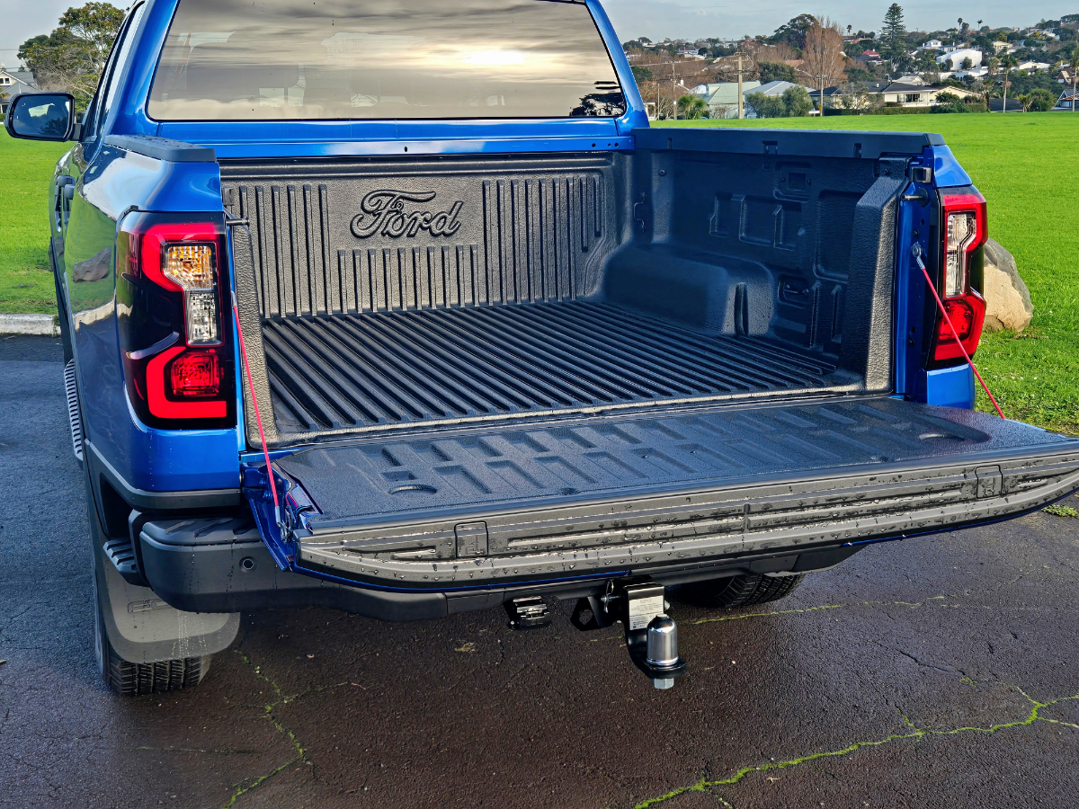
The previous biturbo was Ranger-exclusive. Makes it hard/expensive to keep up to date with development and emissions compliance when an engine is not shared with any other models in a brand's global portfolio.
Ford swears it's not a backwards step in terms of consumer appeal, but it's hard not to see the dramatic expansion of the 3.0-litre turbo-diesel V6 engine option as a defensive move in the context of the powered-down 4-cylinder: you can now have a V6 in any Ranger right down to an XL cab-chassis, and some of the special-edition stuff (Wolftrak, Tremor) is V6-only.
But they are reviews for another day. What's interesting to us right now is the XLT 2.0-litre 2WD. Given the XL is still pretty much a workhorse and pretty basic, the XLT is the new entry point for a Ranger buyer who wants to look the part and have a few home comforts.
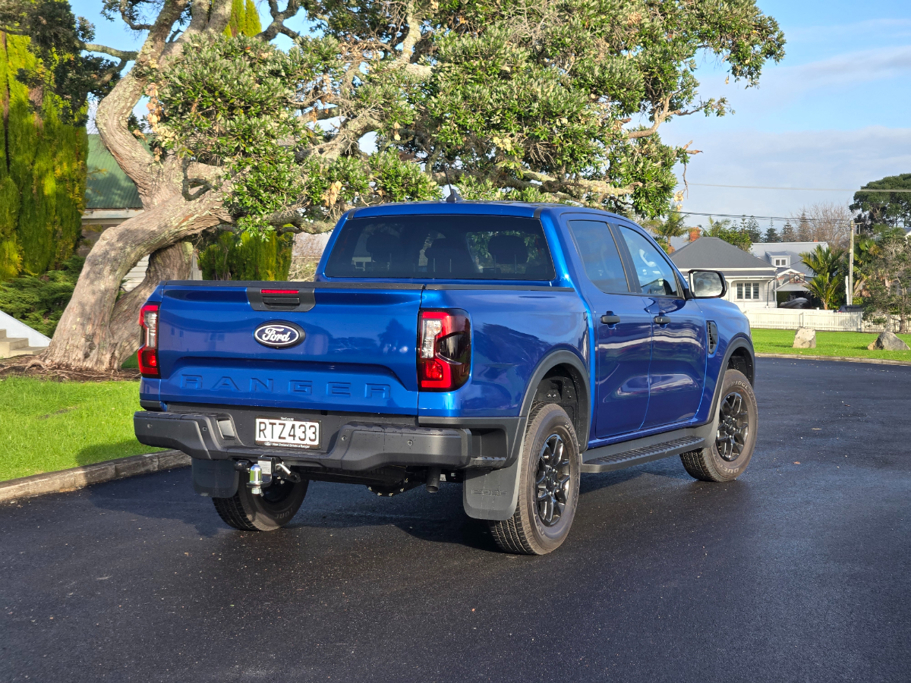
It's even a little cheaper than the previous biturbo: at $55,990, the XLT 2WD costs $1500 less than the previous biturbo version.
On the outside: what are the Ford Ranger XLT's main design features?
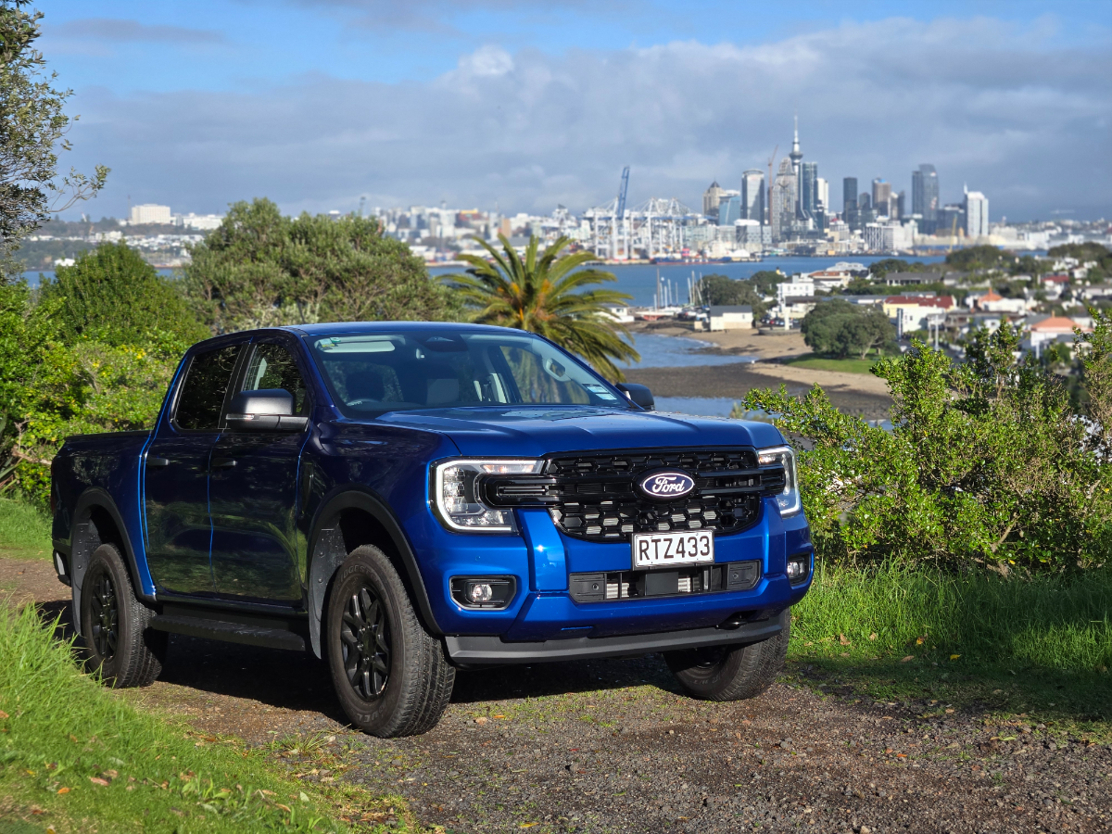
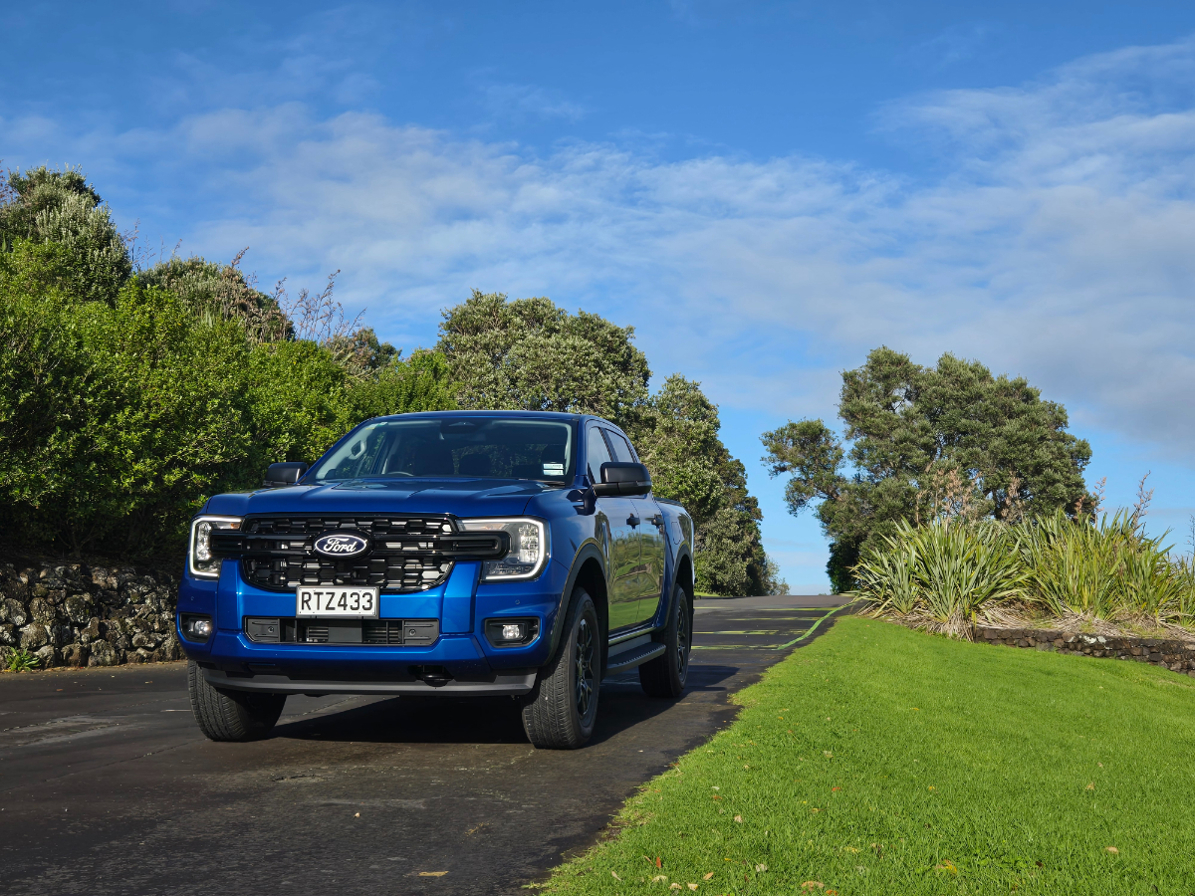
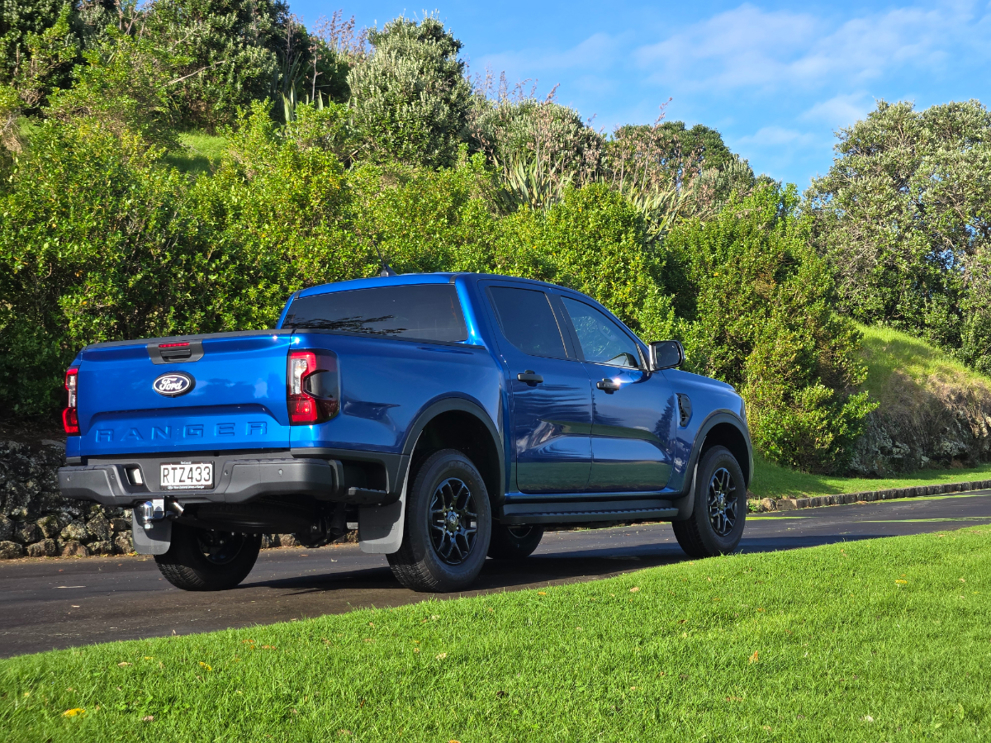
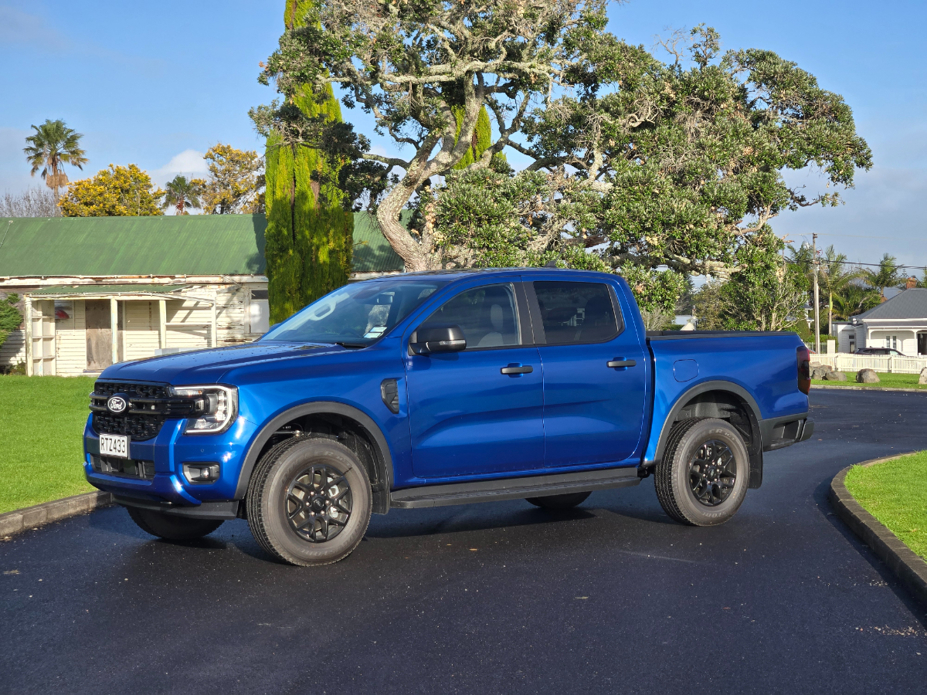
In styling terms, the XLT has arguably changed the least of any "2026.5" mainstream Ranger. But it does look quite a bit more premium thanks to the general de-chroming and darkening of the exterior (which has happened across the lineup) and the shift to gloss-black finish for the 17-inch alloy wheels.
The XLT's $56k price is lineball with a lot of medium-SUVs, so you could see it drawing family buyers who simply want to treat themselves to a ute.
Our test vehicle's Lightning Blue exterior colour looks pretty sharp, too. Blue has been a bit of a hero-hue for the XLT for a while now; the only other Rangers you can have in this finish are the Tremor and Raptor, so it's in good company.
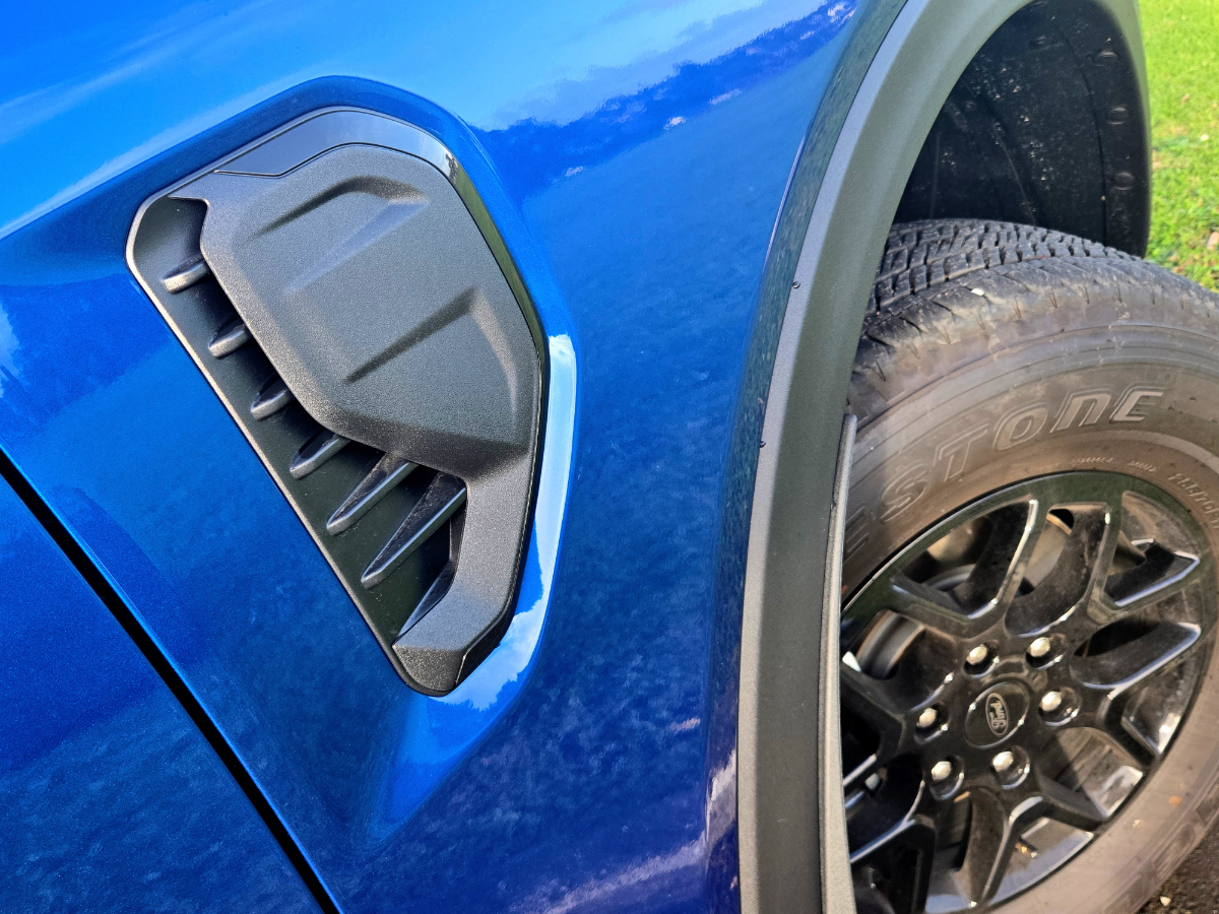
One small detail: the vent/garnish on the front guard that used to have "Biturbo" stamped on it is now blank, which looks a little sad. Especially when the 3.0-litre models still get "V6".
OVERVIEW
| Price | $55,990 |
| Body style | 4-door double cab wellside ute |
| Wheels and tyres | 17in alloy wheels, 255/70 Bridgestone Dueler H/T tyres |
| Length | 5406mm |
| Wheelbase | 3270mm |
| Weight | 2295kg |
| Website | ford.co.nz |
On the inside: what's the Ford Ranger XLT cabin like?
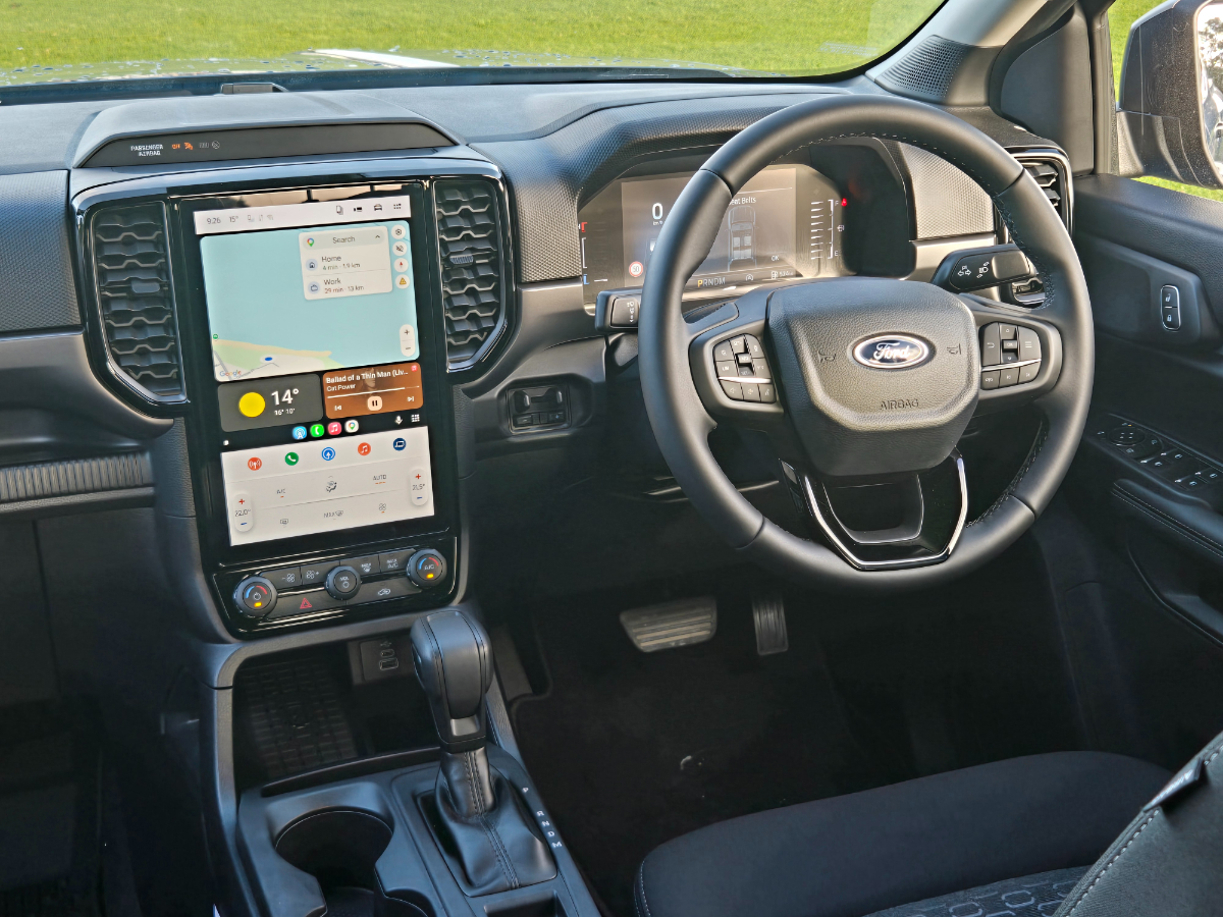
Again, Ford has kept the upgrades low-key inside, although all models now get the largest-size 12-inch portrait infotainment screen; it runs the Sync 4A operating system with wireless phone projection. Other than that, it's business as usual for the XLT.
We've driven more than our share of leather-upholstered Rangers; it's really nice to sit in one with fabric seats.
There's nothing flashy about the XLT cabin, but it certainly doesn't feel downmarket. The Ranger dashboard architecture and design detail still looks and feels very car-like: shapely steering wheel, honeycomb ventilation grilles and so on.
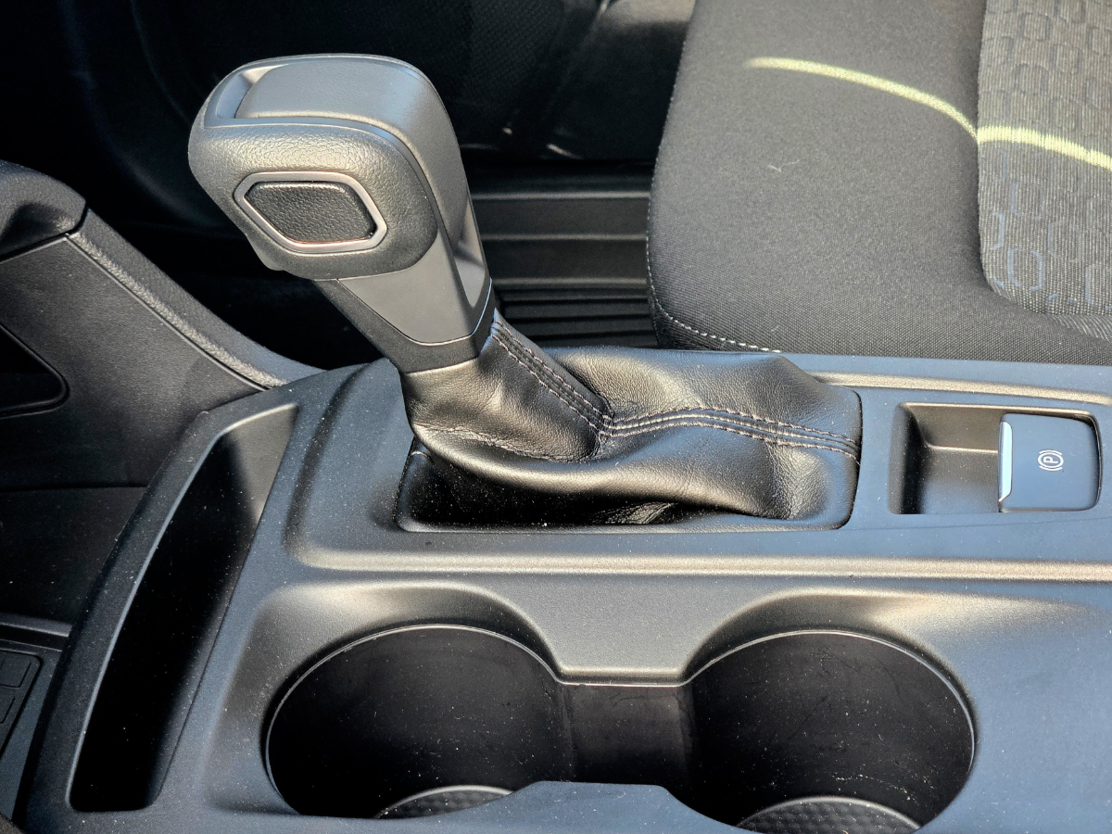
We've driven more than our share of leather-upholstered Rangers, so we have to say it's really nice to sit in one with fabric seats. They're more comfortable and initially warmer on winter mornings, which is just as well... because one thing the XLT does lack is heated seats.
INTERIOR
| Head-up display | No |
| Infotainment screen | 12-inch portrait |
| Phone projection | Wireless Android Auto and Apple CarPlay |
| Wireless phone charger | Single |
| USB ports | 1x USB-A and 1x USB-C front plus 12-volt, 1x USB-A and 1x USB-C rear plus 230V/400W 3-pin plug in rear and tray |
| Climate control | Dual zone |
| Front seat heating/ventilation | No/No |
| Front seat adjustment | Manual |
On the road: what's the Ford Ranger XLT like to drive?
The new 2.0-litre is pretty sprightly: Ford says it's measurably more responsive to the throttle than the previous biturbo, and the torque curve is smoother. So no, it doesn't feel like a massive downgrade from the outgoing engine.
On-road refinement is more important for this model than most, given it's a 2WD affair; but it does still have some off-tarmac chops
But a quick reality check before we move on. The new single-turbo engine doesn't have the aural character of the biturbo: it sounds distinctly more Transity (technical term) and at the end of the day, it still offers a whole lot less power and torque.
That's the price of future-proofing and if it's too high, you can always move up to the XLT V6. But that comes at considerable extra cost, because while the XLT 2.0 is RWD-only, the XLT V6 is AWD-only: call it an extra $16k, at $71,990.
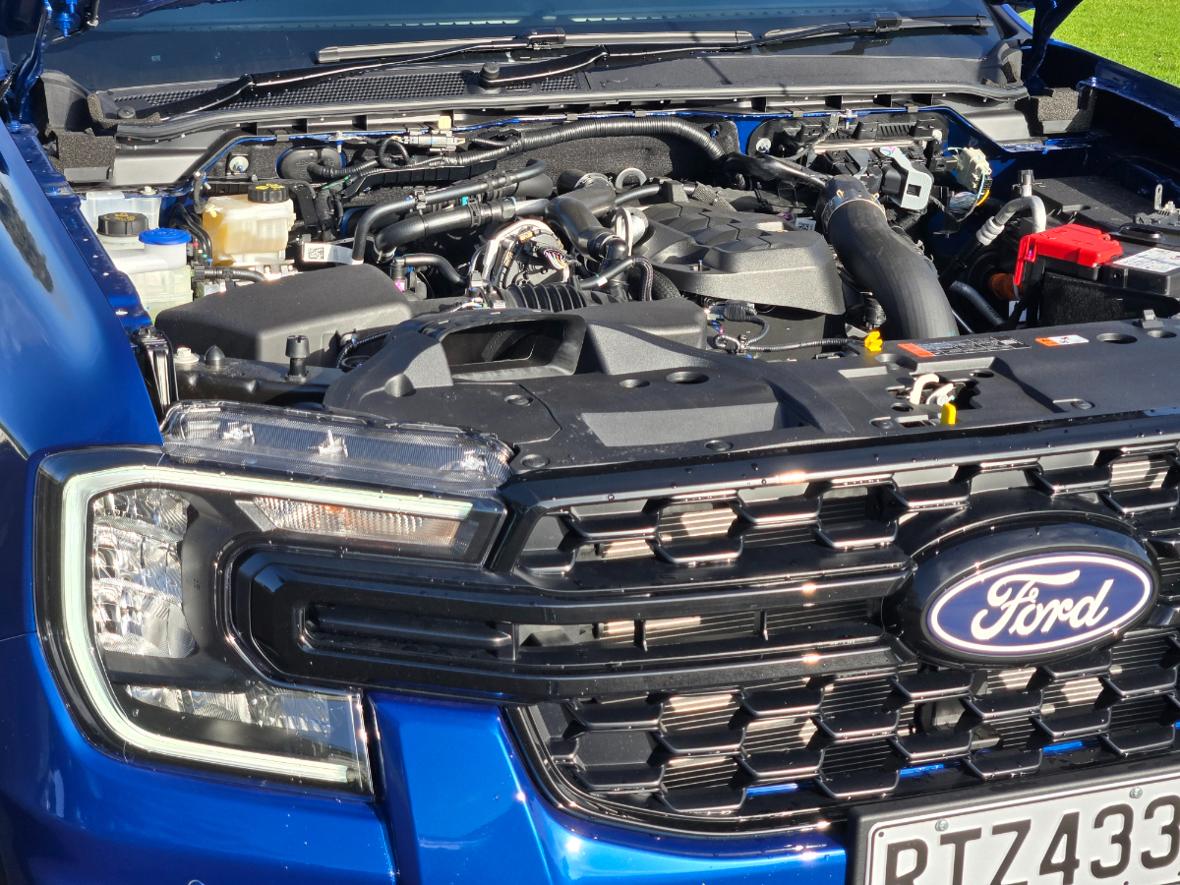
Speaking of future-proofing, the 2.0-litre powerplant used in Ranger has an upgraded fuel system, it's moved from wet belt to chain drive (better reliability, easier servicing) and has steel pistons. It's matched to a 10-speed automatic transmission, which does indeed seem a little less busy here than it does in the biturbo.
It stands to reason the new engine should be more economical. At the media launch for the latest Ranger/Everest in May, Ford Australia suggested a 10% improvement. That hasn't flowed through to Kiwi 3P-WLTP figures, with a mere 0.1l/100km gain for this model. We finished our week with the vehicle at 9.6l/100km, reflecting a variety of real-world driving.
Ranger remains a commendably car-like ute on the road, and the single-turbo engine is pretty quiet at a 100km/h cruise. On-road refinement is more important for this model than most, given it's a 2WD affair; but it does still have some off-tarmac chops, with a Slippery drive mode and e-locking rear axle.
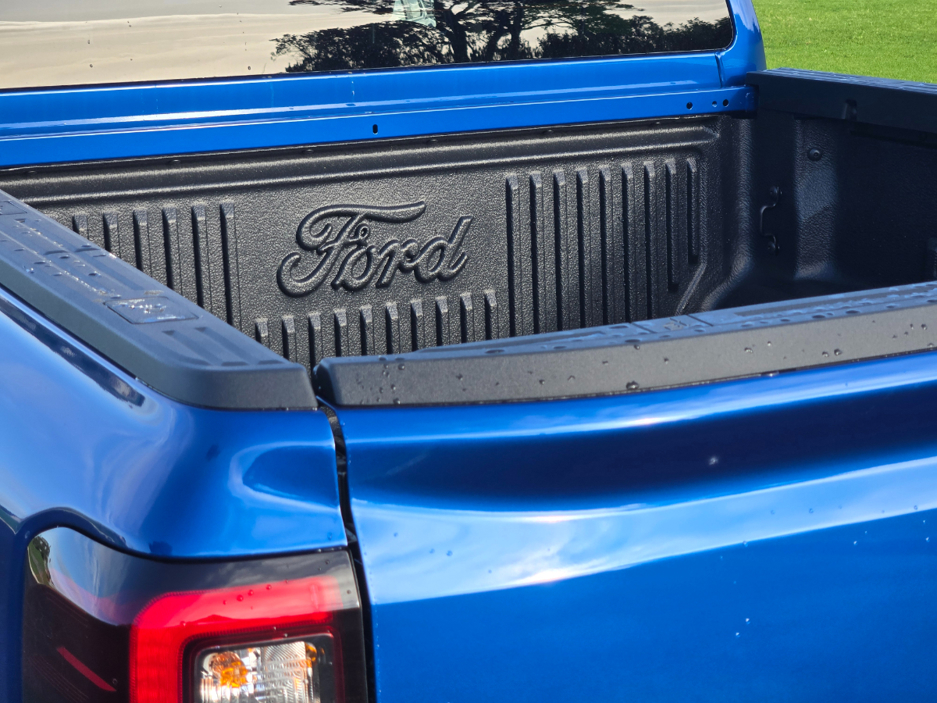
It's also up for 3.5-towing like 4WD Rangers, and the XLT wellside happens to have the largest payload of any Ranger on sale in NZ: 1156kg.
SPECIFICATIONS
| Powertrain type | Turbo diesel 4-cylinder |
| Capacity | 2.0 litres |
| Power | 125kW |
| Torque | 405Nm |
| Transmission | 10-speed, RWD |
| Power to weight | 54kW/tonne |
| Adaptive suspension | No |
| Efficiency | 7.9l/100km (3P-WLTP) |
| Tank size | 80 litres |
| Tow rating | 3.5 tonnes |
On ownership: what's the Ford Ranger XLT warranty and servicing situation?
The Ranger carries a 5 year/150,000km warranty (so not quite as good as the passenger vehicles and Everest, with unlimited km). Servicing is required every 12 months/15,000km.
On the whole: what do we think of the Ford Ranger XLT?
You can't have that extra power and torque back from the old model, so let's accept that and move on. As it stands, the XLT 2.0 is a compelling iteration of the Ranger for a variety of reasons.
It looks really sharp now. The previous one had lots of bling, but the darker detailing of the facelift version looks a lot more contemporary.
It won't suit ute buyers looking to head off-road on a regular basis, but the XLT 2.0 is plenty tough enough for light off-tarmac driving and towing. And the $56k price is lineball with a lot of medium-sized family SUVs, so you could see this drawing buyers who simply want to treat themselves to a ute. That's living the Kiwi dream, right?
Ford Ranger XLT 2.0 single-turbo 2WD FAQs
What kind of car is the Ford Ranger XLT?
A 2WD double-cab wellside ute.
Does the Ford Ranger XLT have hybrid or EV technology?
No, it's a 2.0-litre turbo-diesel.
What’s the fuel economy of the Ford Ranger XLT?
It returns 7.9l/100km under NZ's 3P-WLTP protocol.
Is the Ford Ranger XLT safe?
Ranger carries a 5-star ANCAP rating, valid until December 2028.
What safety and assistance features does the Ford Ranger XLT have?
| Intelligent lights | LED |
| Rain sensing wipers | Yes |
| Airbags | Dual front and side, driver's knee, far side, curtain |
| Adaptive cruise control | Yes |
| Driver attention monitor | No |
| Traffic sign recognition | Yes |
| Forward collision warning | Yes |
| Blind spot warning/assist | Yes/yes |
| Lane departure warning/assist | Yes/yes |
| Rear cross traffic alert/braking | No/no |
| Reverse collision braking | No |
| Parking sensors | Front and rear |
| Camera system | Rear |
What are the Ford Ranger XLT 2.0 single-turbo 2WD's main rivals?
- Toyota Hilux SR 4WD ($56,990): Not as flash-looking (steel wheels!), but mild hybrid and 4WD.
- Mitsubishi Triton VRX 2WD ($52,990): Less than Ranger XLT money takes you to the top-spec Triton.
- Nissan Navara ST ($57,690): ST specification is fairly basic in this company, but 4WD is standard.
- GWM Cannon Alpha Ultra 4WD ($57,990): Go GWM and you can go half a size up with your ute.
- Toyota RAV4 GXL ($57,990): We shouldn't encourage this, but hybrid-crossover or chunky ute?