



The arrival of new Chinese brands on New Zealand shores has been a constant feature of the last few years, with each one seemingly trying to one-up the last, and GAC, or Guangzhou Automobile Group, is one of the more recent arrivals.
GAC is a massive state-owned manufacturer in China, producing vehicles for brands like Honda, Toyota, and Mitsubishi for the domestic market, as well as its own Aion and Trumpchi brands.
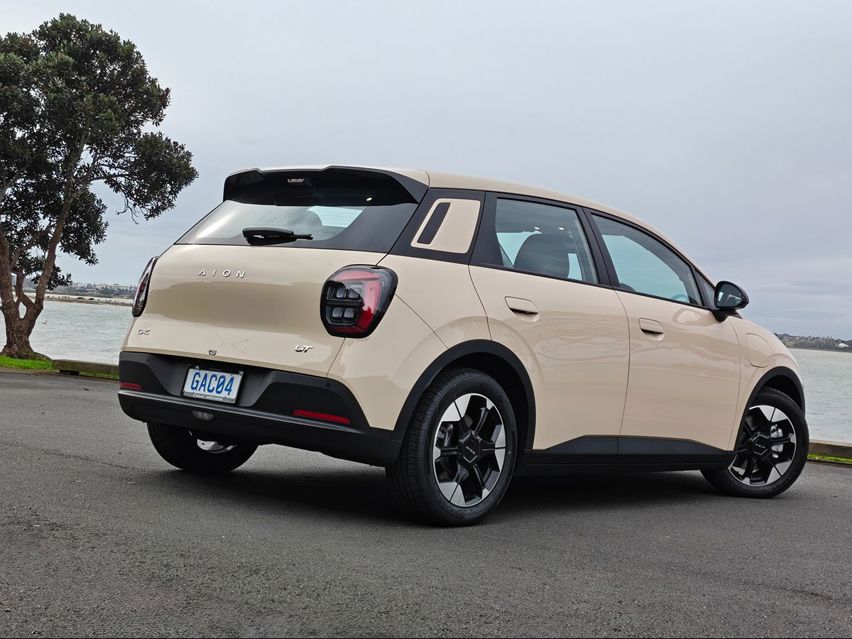
But despite this formidable background, if you’d asked me before which new Chinese brand might bring a whiff of the cheap and cheerful, I might well have put my money on GAC - they seemed to just appear, without much fanfare and seemingly little commitment to the local market.
But, guess what? I could not have been more wrong.
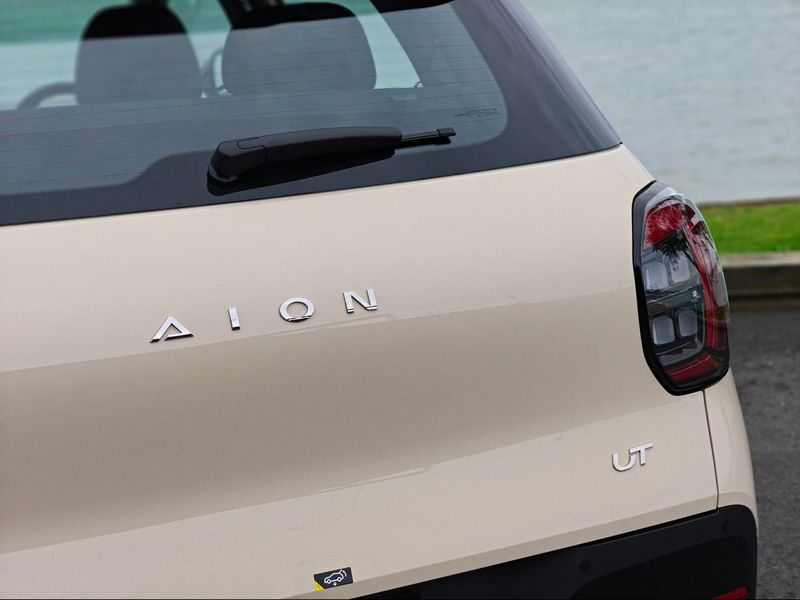
While a relatively modest operation here in New Zealand, GAC genuinely produces some of the best Chinese vehicles available here today - seriously, every GAC I’ve driven so far has been impressive, and the Aion UT is no exception.
On its reveal, the Aion UT's price of $39,990 for the entry model and $43,990 for this range-topping Lux model initially seemed a bit steep to me, but seeing it in the metal and realising it was considerably bigger than I thought (think Toyota Corolla sized as opposed to Suzuki Swift sized), as well as considerably higher quality than I expected, me revise that initial opinion.
And now having driven it and lived with one for a week, I can confidently say it is actually something of a bargain.
On the outside: what are the GAC Aion UT Lux's main design features?
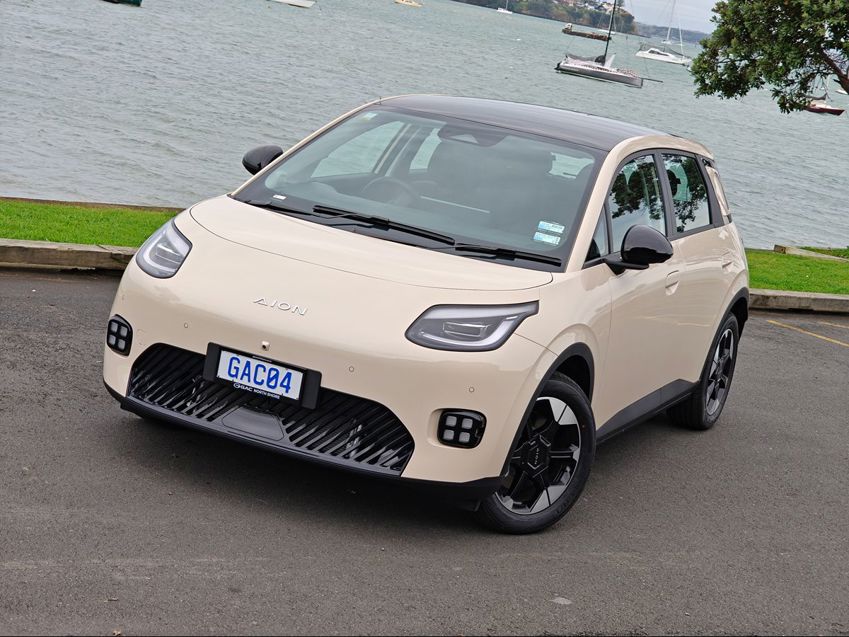
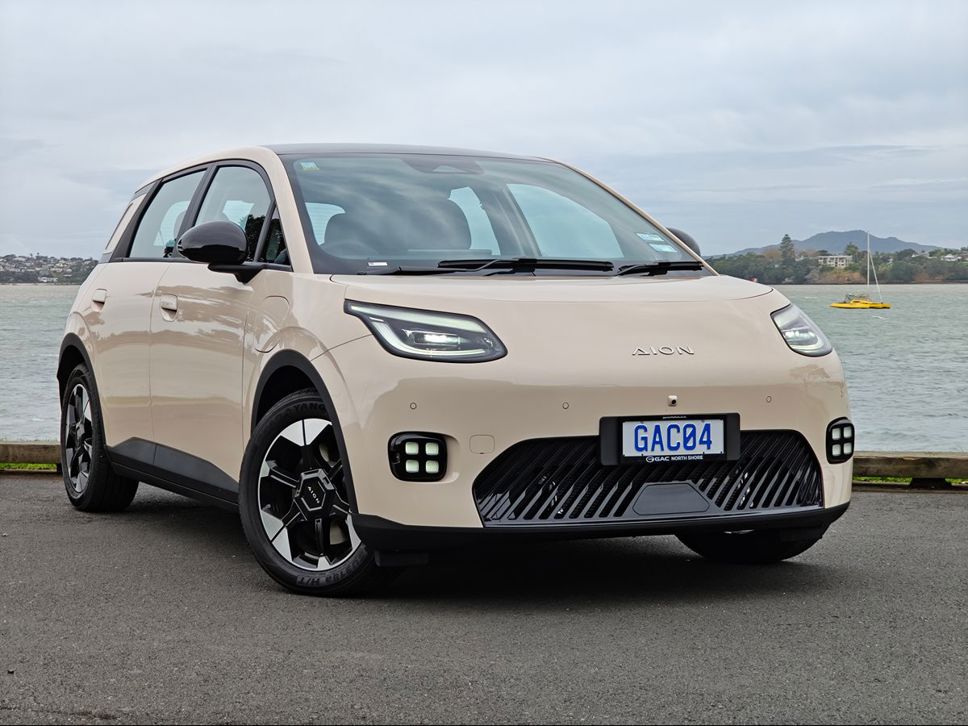
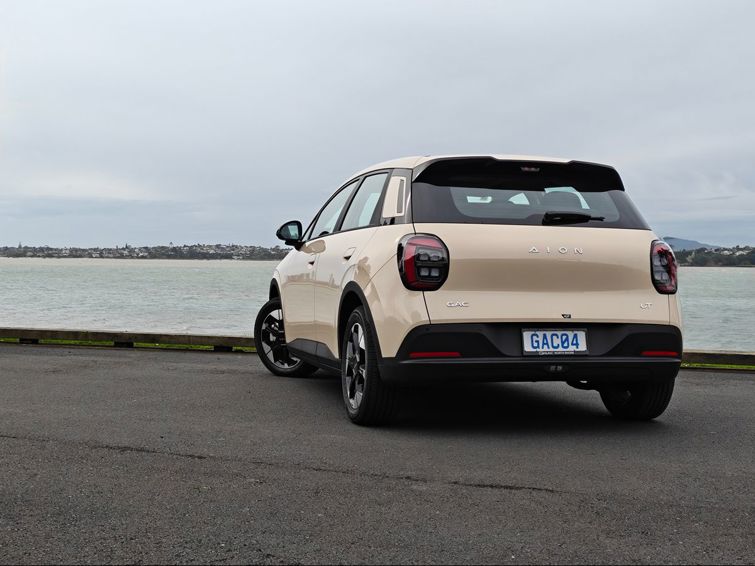
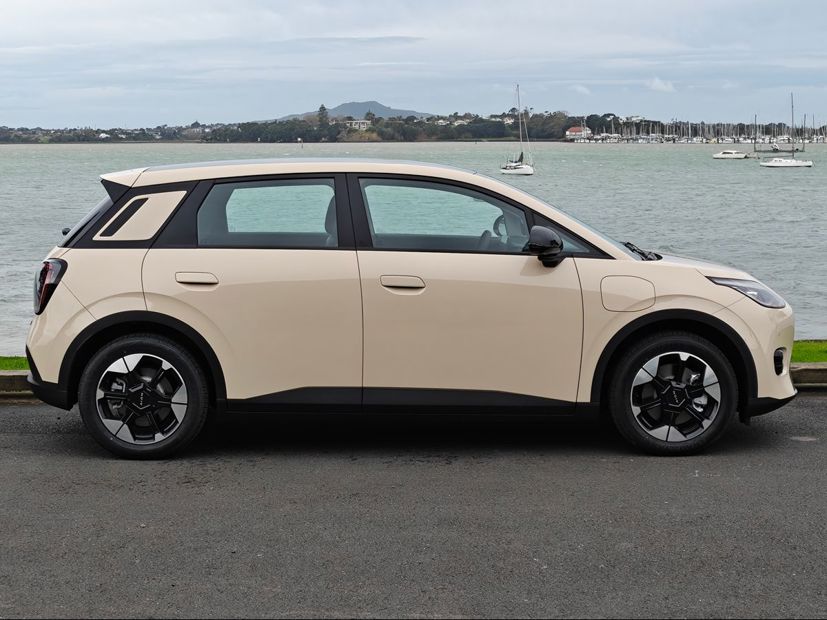
The Aion UT is a handsome, compact five-door hatch that manages to channel a sort of Mini-esque vibe without actually copying a single Mini design cue. It’s a design that can be cute and perky in one colour, or serious and grown-up in another, deftly appealing to a wide range of tastes.
The biggest surprise came on a twisting back road, where the Aion UT is genuinely, shockingly entertaining.
The design is cohesive and thoughtfully executed, with excellent proportions and a confident stance on the road. There’s also a distinct European flavour to its styling, which is not a surprise given that it was styled in GAC's design studio in Milan.
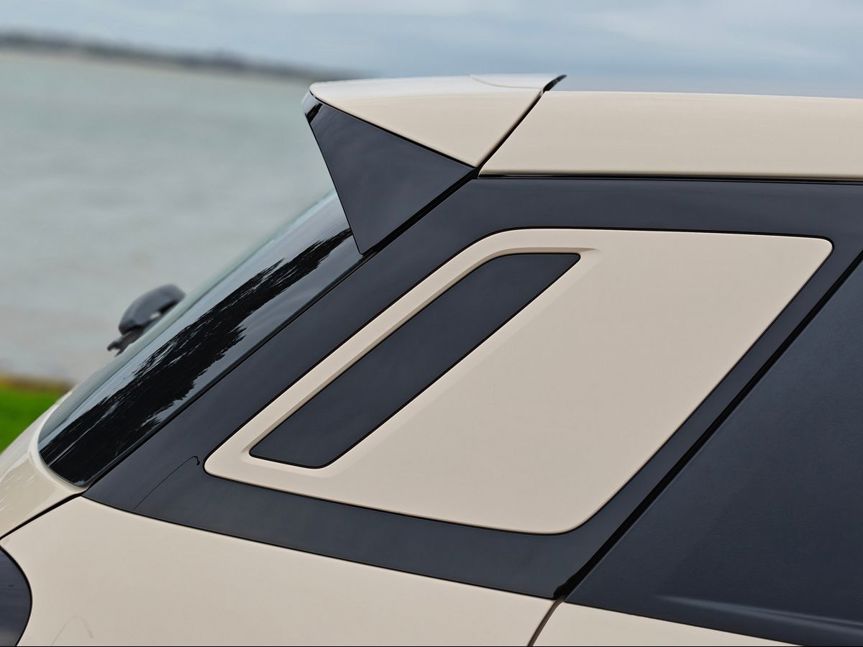
Crucially, this European influence sees it handily avoid the awkwardness that can sometimes afflict new Chinese models, presenting a polished and well-resolved final product that looks right at home on our roads.
OVERVIEW
| Price | $43,990 |
| Body style | Five door hatch |
| Wheels and tyres | 17-inch alloy wheels, 215/55 tyres |
| Length | 4270mm |
| Wheelbase | 2750mm |
| Weight | 1700kg |
| Website | gacnz.co.nz |
On the inside: what's the GAC Aion UT Lux's cabin like?
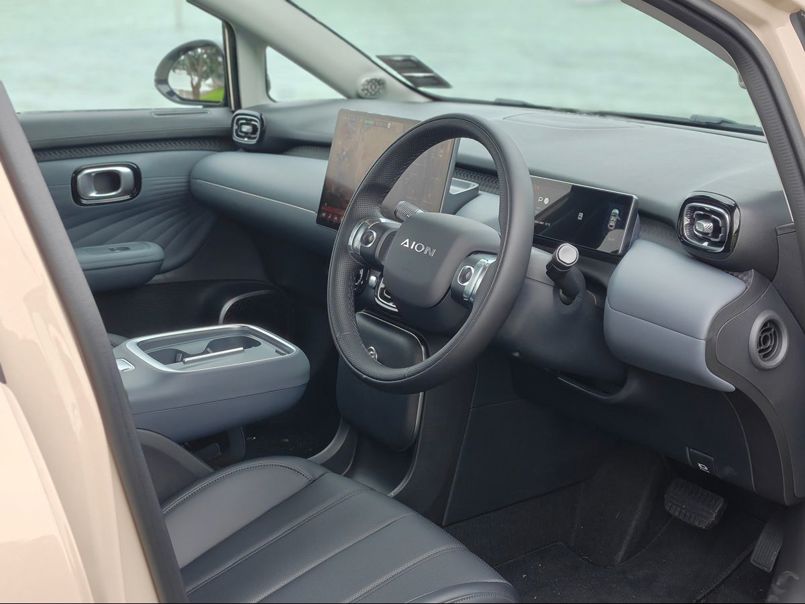
That impressive European feel continues when you step inside where the quality is genuinely impressive. The materials are excellent, and every surface you touch feels premium and well-considered, from the classy switchgear to the tactile feel of the aluminium dial for the centre console storage.
There’s some body roll through corners, but it’s so predictable and confidence-inspiring that you can throw it into corners, brake late, and it just sorts itself out.
Our particular test car, finished in black, looks suitably classy and grown-up, but an airier French Cream interior colour option is also available.

The seats are another highlight – superbly comfortable and nicely supportive, they position you low in the car, proper driver-style, rather than perching you up high, while they also feel like they were designed for a larger European frame. Yes, the leather is fake, but it feels nice to the touch.
While some people may recoil at the UT's total lack of physical controls, the only real gripe I had with the interior was the wireless charging pad; its hard plastic surface lets your phone slide around, a minor annoyance that could be easily fixed with a rubberised finish.
INTERIOR
| Head-up display | No |
| Infotainment screen | 14.6 inches |
| Phone projection | Wireless Apple CarPlay and Android Auto |
| Wireless phone charger | One |
| USB ports | 1x USB-A and 1x USB-C front, 1x USB-A rear |
| Climate control | Dual zone |
| Front seat heating/ventilation | Yes/yes |
| Front seat adjustment | Power, 6-way driver, 4-way passenger |
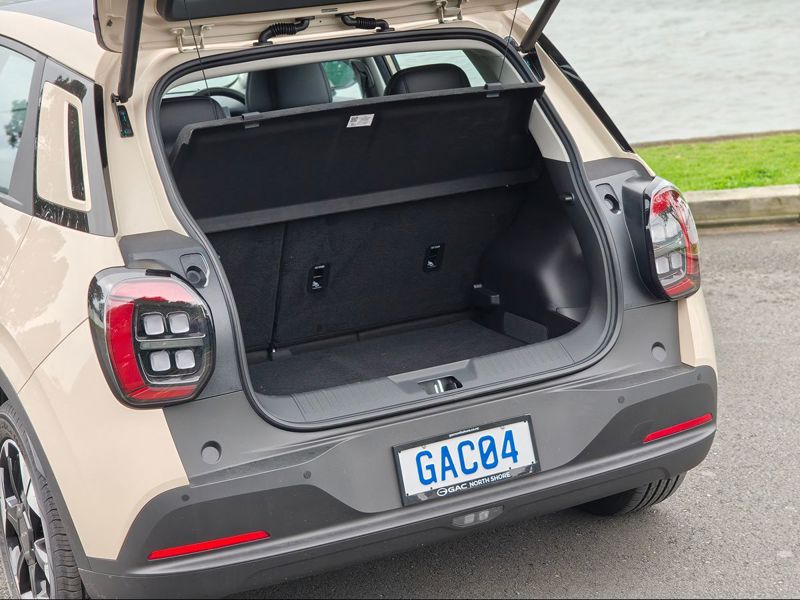
| Boot capacity | 321 litres |
| Rear seat split/fold | 60/40 |
| Power tailgate | Yes |
On the road: what's the GAC Aion UT Lux like to drive?
Around town that Aion UT offers a wonderfully comfortable and refined urban ride. The steering is light and lacks feel at low speeds, but it is perfectly fine for city driving.
On the motorway, it’s super comfy, refined, and composed, while the driver-assist systems are perfectly fine, despite all the complaints I have heard (and read) from Australian motoring journalists upon the UT's launch over there.
Apart from a few odd glitches, I found them to be generally nicely calibrated, with the adaptive cruise control being well ahead ahead of the Chinese competition, feeling, once again, very European in its smooth operation. Either we get a different (or updated) calibration, or the Aussies are weird. Either is plausible.
And, to be fair, the glitches I encountered may well have been on this specific test car, namely the inability to get the speed sign recognition to work or to adjust the following distance on the radar cruise, which seemed stuck on maximum, while a few assists also seemed to turn themselves back on after being disabled. Assuming these are just early-model quirks, the systems themselves are actually fine.
It is a superbly competent, predictable and enjoyable hatch to chuck around with enthusiasm, or just comfortably cruise long distances in.
But the biggest surprise came on a twisting back road, where the Aion UT is genuinely, shockingly entertaining. It’s not a razor-sharp hot hatch, but rather an incredibly well-resolved and confident car.
There’s some body roll through corners, but it’s so predictable and confidence-inspiring that you can throw it into corners, brake late, and it just sorts itself out. The stability control works subtly in the background, trimming power to mitigate slip without killing your momentum. The tyres, likely chosen for efficiency over performance, protest with a chorus of squeals straight out of a 70s cop show, but this just adds to the amusement.
It's one of the very few Chinese EVs I have genuinely enjoyed hustling on a winding road, and the only real let down is the steering, which remains a bit numb even at speed.
Give this car a bit more steering feel and a touch more power, and you’d have a genuinely engaging hot hatch on your hands. But as it stands, it is a superbly competent, predictable and enjoyable hatch to chuck around with enthusiasm, or just comfortably cruise long distances in.
SPECIFICATIONS
| Powertrain type | Electric |
| Battery | 60kWh |
| Power | 150kW |
| Torque | 210Nm |
| Transmission | Single-speed, FWD |
| Power to weight | 88.2kW/tonne |
| Adaptive suspension | No |
| Efficiency | 16.4kWh/100km (WLTP) |
| Range | 430km |
| Tow rating | Not rated |
On ownership: what's the GAC Aion UT Lux's warranty and servicing situation?
The GAC Aion UT comes with an 8-year/160,000km warranty on the car and an 8-year/200,000km warranty on its high voltage battery, providing it is serviced at a GAC-approved service centre in accordance to the service schedule.
The package also includes 5 years of roadside assistance, and the Aion UT has a service schedule of 15,000km or 12 months.
On the whole: what do we think of the GAC Aion UT Lux?
The Aion UT has genuinely surprised and delighted me - it’s a genuinely good little car that feels far more premium and dynamically sorted than its price tag suggests. It’s comfortable, refined, packed with impressive technology, and, most surprisingly, a genuinely fun thing to drive. It blends a sophisticated European driving feel with a stylish and practical package that is hard to fault.
The few electronic niggles I experienced feel like pre-production issues rather than fundamental flaws, and if they are sorted, the Aion UT represents a staggeringly good package that seriously challenges the established players, particularly for the money asked for it.
There is one glaring fly in the ointment, although it will only really be one if you need to regularly fast charge the Aion UT - it's maximum charging speed is a fairly dismal 87kW. However, while this is a downside for public charging, we found its 11kW AC charging more than satisfactory for home/work charging, and the Aion UT proved to be a car that was a breeze to live with, and it proves that GAC is a brand we need to take very seriously indeed.
GAC Aion UT Lux FAQs
What kind of car is the GAC Aion UT Lux?
A compact five-door hatchback
Does the GAC Aion UT Lux have hybrid or EV technology?
The GAC Aion UT is fully electric, with a 60kWh battery and a single electric motor driving the front wheels.
What’s the energy economy of the GAC Aion UT Lux?
16.4kWh/100km (WLTP)
Is the GAC Aion UT Lux safe?
The Aion UT has not been tested by ANCAP or Euro-NCAP yet, but GAC says it is designed to achieve a 5 star rating, the same as its larger Aino V sibling. The Aion UT features a total of seven airbags, including dual front airbags, dual front side curtain airbags, dual curtain airbags and a front centre airbag.
What safety and assistance features does the GAC Aion UT Lux have?
| Intelligent lights | Automatic LED |
| Rain sensing wipers | Yes |
| Airbags | 7 |
| Adaptive cruise control | Yes |
| Driver attention monitor | Yes |
| Traffic sign recognition | Yes |
| Forward collision warning | Yes |
| Blind spot warning/assist | Yes/Yes |
| Lane departure warning/assist | Yes/Yes |
| Rear cross traffic alert/braking | Yes/yes |
| Reverse collision braking | Yes |
| Parking sensors | Front and rear |
| Camera system | 360 degree |
What are the GAC Aion UT Lux's main rivals?
- MG4 Essence ($44,990): Older, but still impressive. Not as refined and lots of hard plastics.
- Toyota Corolla ZR Hybrid ($44,190): Not an EV, but still the benchmark compact hatch.
- BYD Atto 2 Premium ($46,990): More of a compact SUV, but a compellingly good alternative.
- Dongfeng Vigo ($39,990): Similarly an SUV, but roughly the same size. Cheaper, but feels it.
- Leapmotor B05 Life ($43,990): Surprisingly larger, but the entry B05 lines up nicely price-wise.


