



What’s this new car all about then?
The Kia PV5 is a new electric van. But so much more than just a van. But also, really, primarily a van.
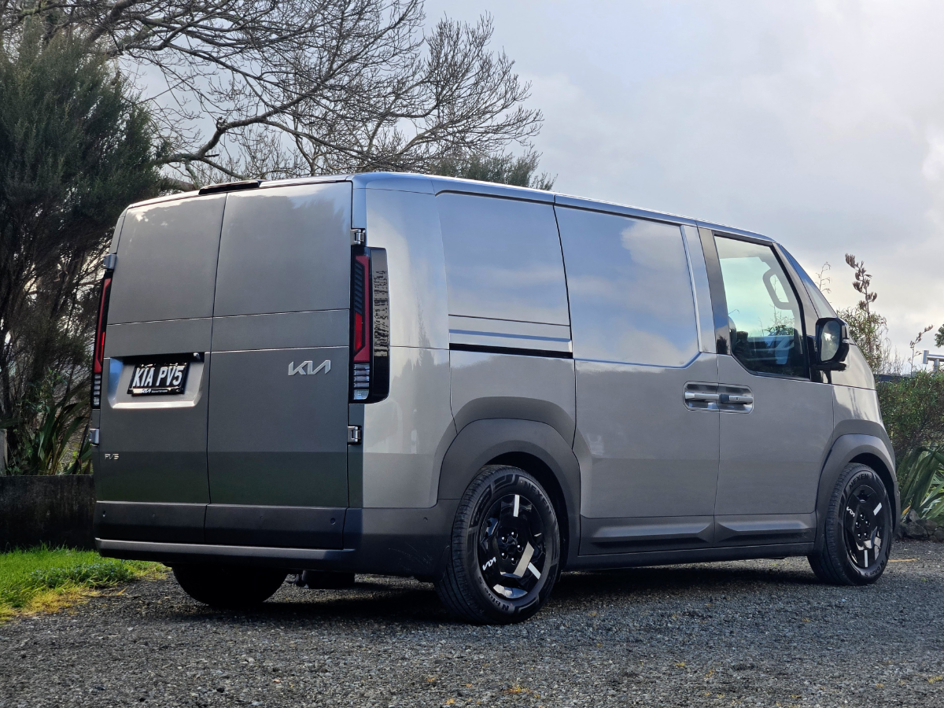
Aside from being Kia New Zealand's first foray into the van market, and notable for being a bespoke EV, PV5 is pitched by the factory as a whole new way of looking at this type of vehicle. The PV name denotes "platform beyond vehicle", meaning it's about more than just transportation.
To paraphrase factory thinking, PV5 is about flexibility, modular manufacturing and lots of customisation. The PV5 platform is called E-GMP.S, the first part picking up the name of Kia's passenger-vehicle EV underpinnings, but with the .S signifying "service" - everything from commercial vehicles to mobile living spaces.
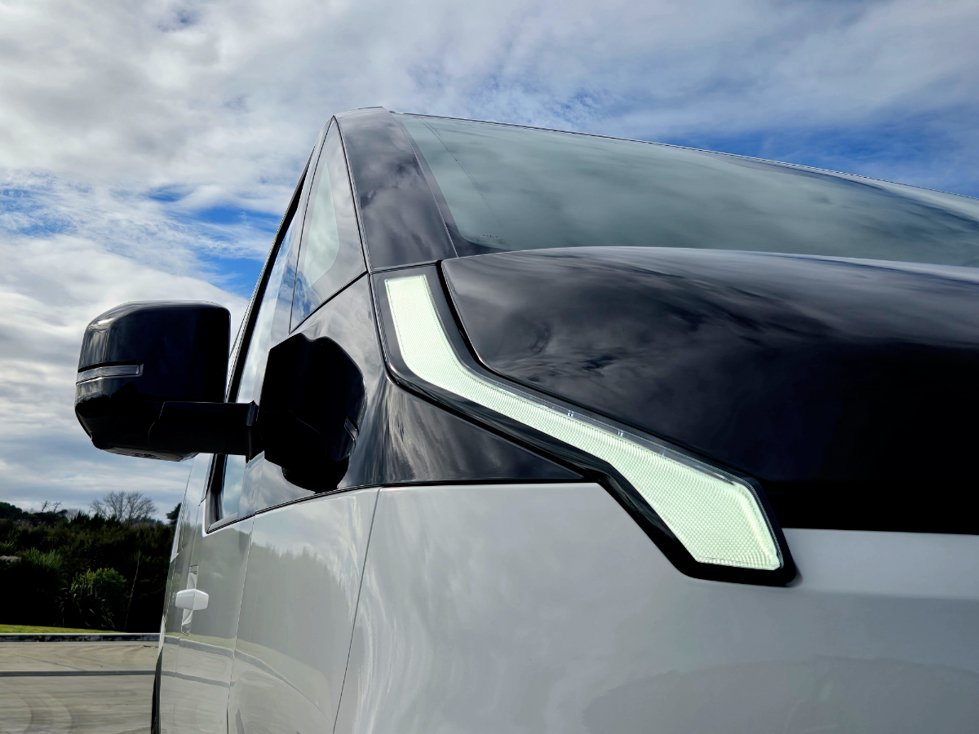
It all sounds very grand and there's no doubt a lot of future proofing in the project, but don't get dizzy thinking about it all. At launch in NZ, the PV5 Cargo is essentially a clever EV-van that makes configuration for specific use-cases that much easier thanks to bespoke electric architecture and a very low "step in" floor height (419mm). Oh, and it looks really cool.
The Kiwi-specification PV5 carries a 71.2kWh NMC battery and single 120kW/250Nm motor. Maximum range is 416km.
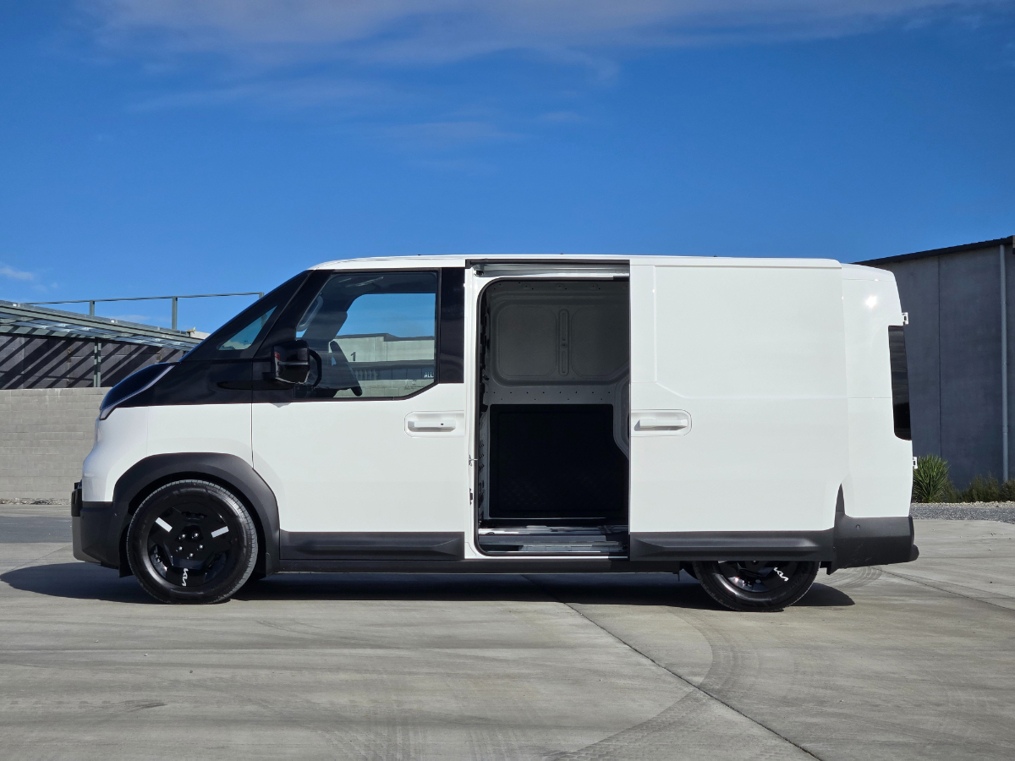
It comes as a 5-door, with one sliding aperture on the passenger-side and barn doors at the back; or a 6-door with an extra slider on the driver's side. At 4695mm in length, it's about the same size as a medium SUV (a Kia Sportage, if you like), with 4.42 cubic metres of load space and 765kg payload. It's not a tow machine, though: rated at just 750kg.
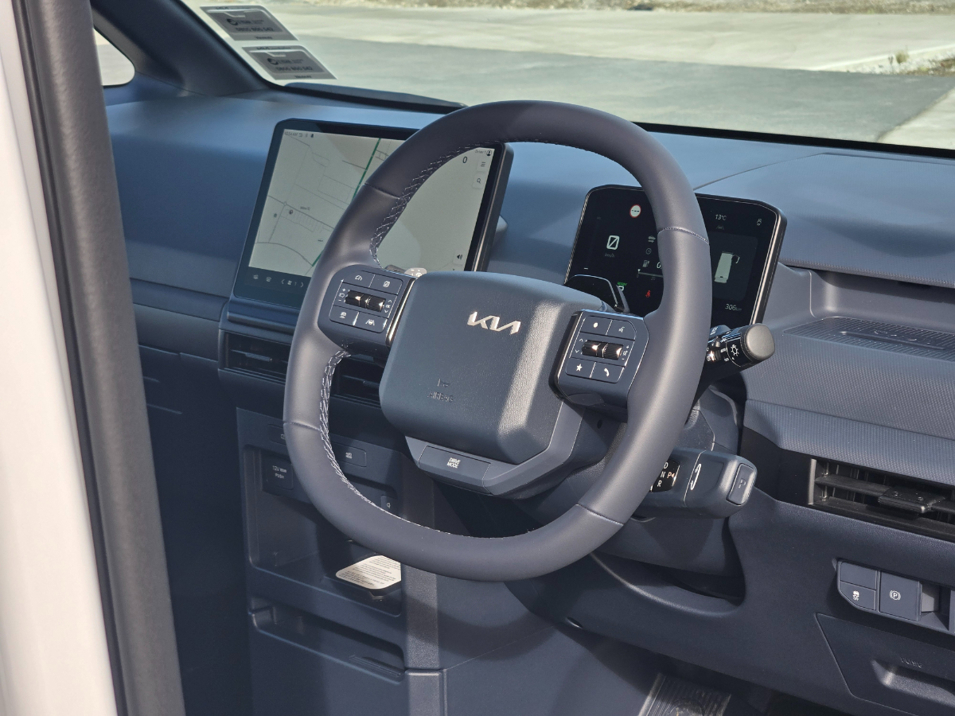
The cabin is new-gen stuff, with a 7.5-inch instrument cluster, and a 12.9in infotainment system with a new OS. It runs on Android and it's live, meaning you get full Google Map service without pairing a phone and (more importantly for business users) over-the-air (OTA) update capability.
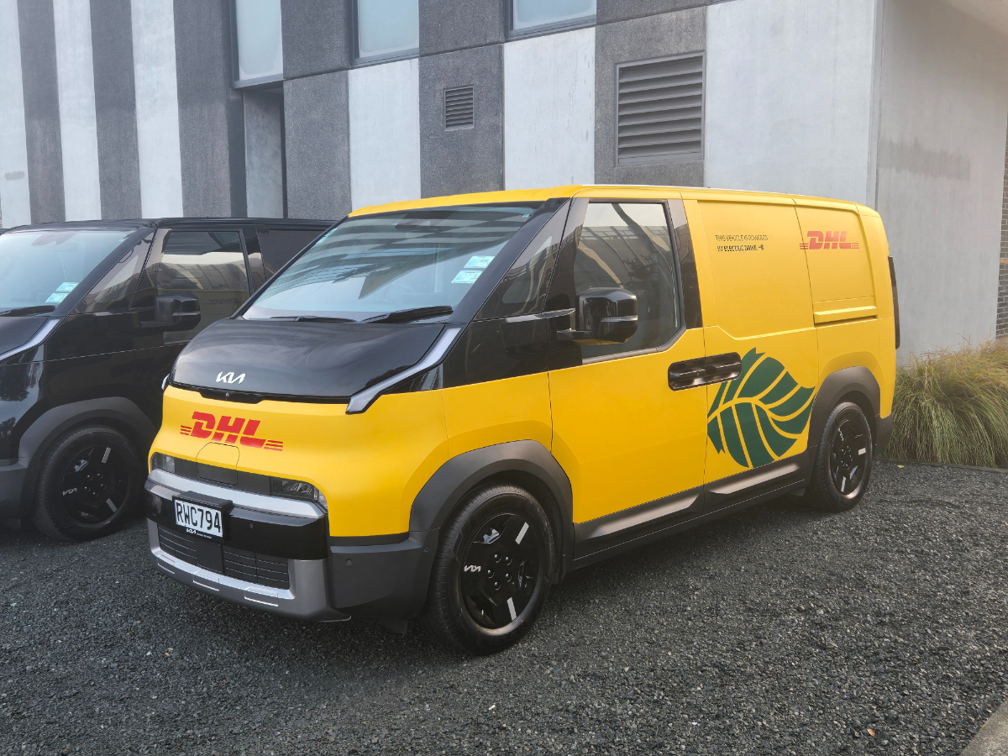
Ah yes, business. Kia NZ is aiming PV5 exactly where you'd expect: any buyer group wanting reduced energy costs, the promise of lower total cost of ownership (TCO to grown-ups) and reduced emissions. It's thinking about last-mile courier drivers, mobile trade and service providers that could use its V2L capability on site, fleets with sustainability requirements and government and council departments with zero-emissions goals.
Kia NZ has done some sums using EECA's TCO tools and reckons the extra capital cost of a PV5 over a "diesel competitor" (let's just say Toyota Hiace and be done with it) is erased by the time both vehicles hit the 30,000km mark. From there, the TCO climbs to $107,661 for the diesel and $90,004 for the PV5 at 100,000km, although the final reckoning should also include residual value: an unknown for the Kia but traditionally strong for diesel light commercials.
Kia argues the PV5's 7-year/150,000km warranty, 8-year/160,000km battery cover and long 2 year/30,000km service intervals (not to mention cheaper servicing in general, because it's an EV) all make a compelling business-purchase case.
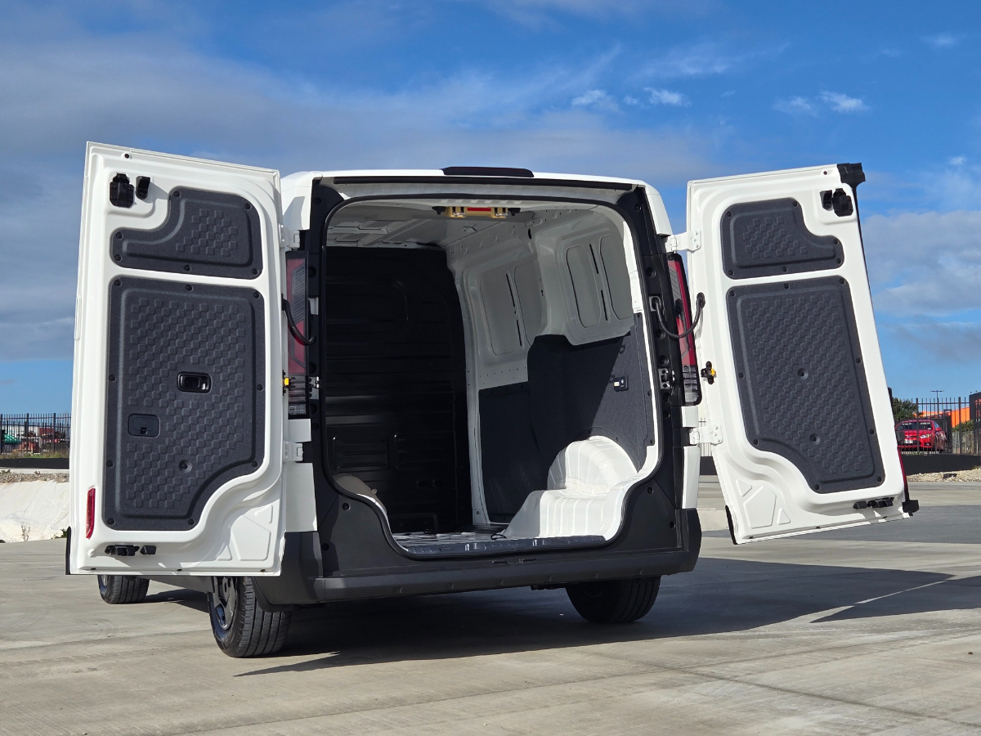
PV5 is all about customer configuration. Kia NZ already has a number of individual accessories on its books: everything from mats to roof racks to awnings, to an $845 rear suspension upgrade (it's a 35mm lift) to help cope with heavier loads on a regular basis.
But PV5 is also about using that low, flat floor for clever fitouts. Kia NZ has three aftermarket partners signed up: Camco, Auto Transform and Sortimo. Between them all there's modular stuff like shelving and Molle mounts, as well as more substantial conversions like a fully configured coffee van.
That last provider might be the key to unlocking more of that "beyond vehicle" concept Kia is banging on about. Sortimo is an international associate for PV5 and holds a Conversion Partner Certificate from Kia globally, to do big things to the vehicle. The sky's the limit in other words... although perhaps the size of your wallet might be the limit.
How much is it?
The base PV5 Cargo in Clear White with 11kW AC charging capability is $64,990. White's the only free colour, but for another $1500 you can have Steel Grey, Aurora Black Pearl, Cityscape Green or Soft Mint Green. If you're ordering 50 vehicles or more, the factory will paint your PV5s any colour you want, which is pretty cool.
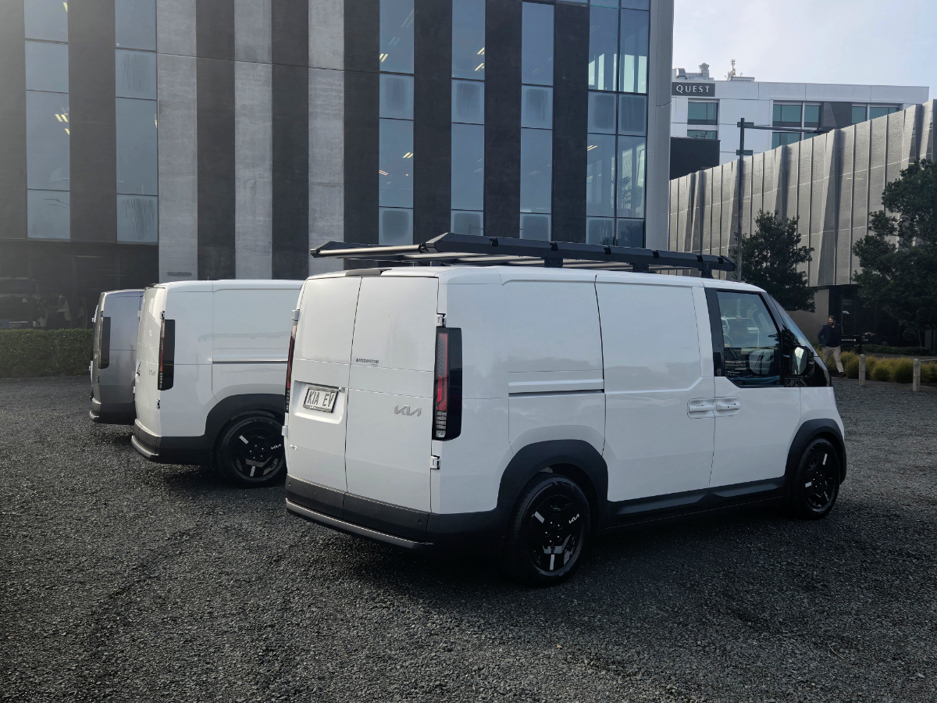
Making your PV5 a 6-door adds $500, while it's another $2000 to double the AC charging speed to 22kW.
That last thing is especially relevant for business users, because AC is the main charging method for EV work vehicles. The PV5 can DC fast-charge at 150kW, but it's an expensive and off-site way to do things (not many businesses have their own DC station), neither of which make much sense for a fleet vehicle.
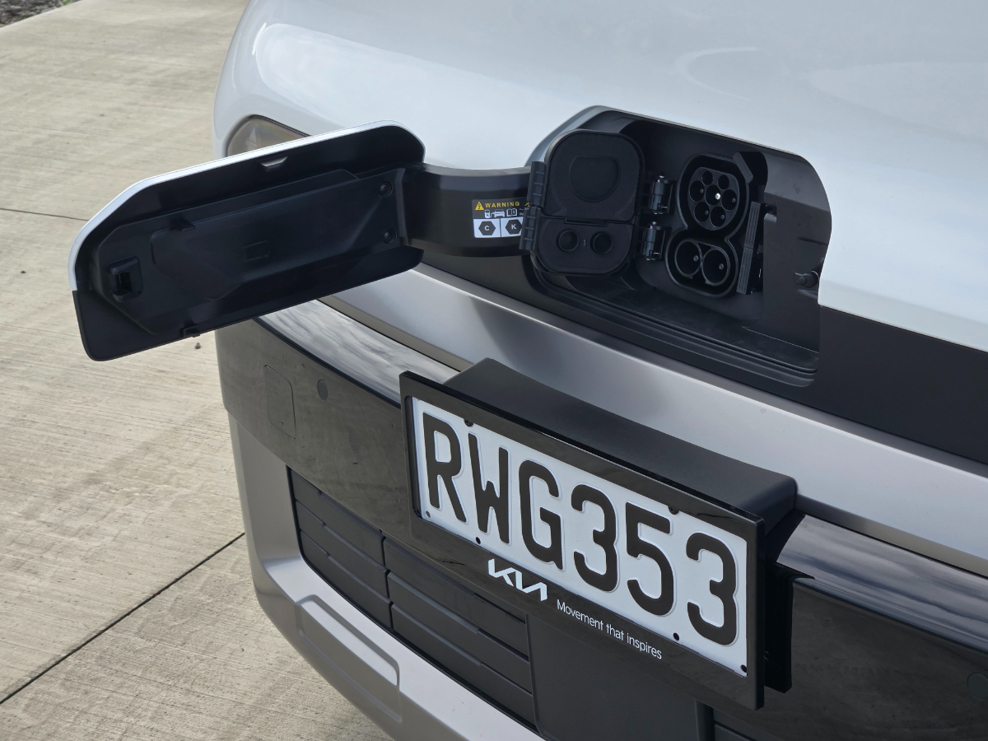
But many businesses do have the 3-phase power required to run 22kW AC charging, so $2k could be a good investment in productivity terms (a normal household wallbox-type station runs at 7kW). Thus equipped, a PV5 could power up from 20% to 80% charge in a couple of hours.
What’s it like to drive?
The PV5 is ultra refined and smooth, mainly because it's a Kia EV but also because the cabin is completely sealed off from the cargo area, so there's none of that rattling around and resonating road noise you get with some vans.
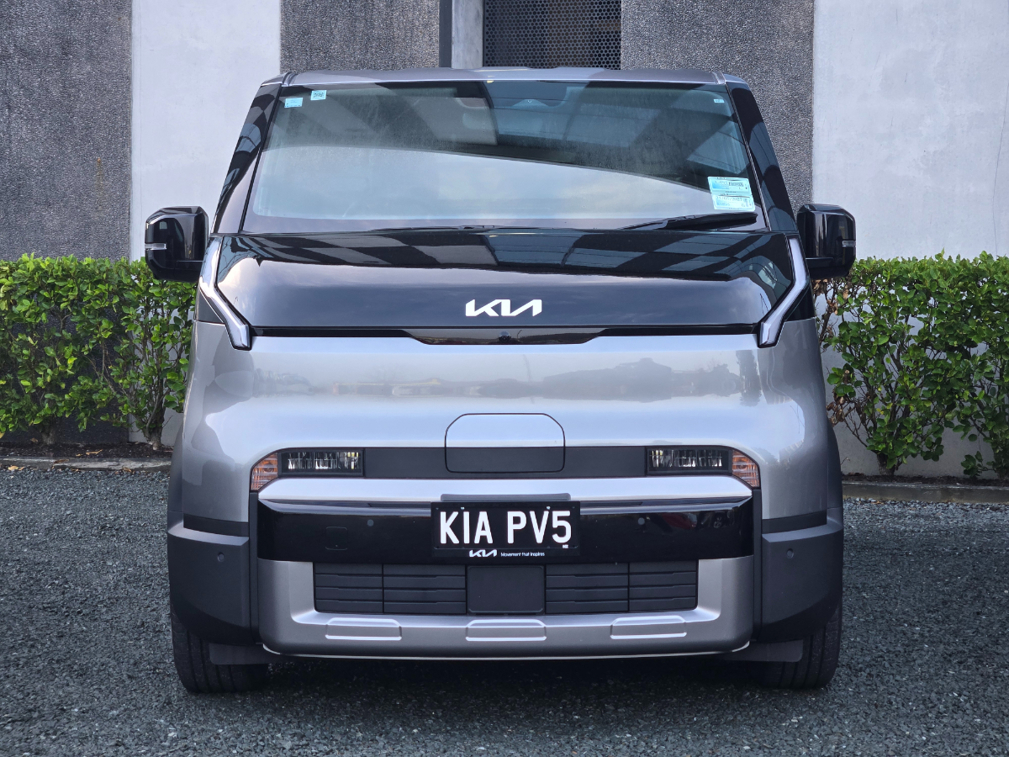
It rides pretty well even when unladen and the steering is assured. Fun fact about the performance: even though the Cargo and Passenger have an identical powertrain and the latter is heavier, the Cargo is actually 1.8 seconds slower to 100km/h because the throttle is calibrated more gently to take care of the load on board.
Not that either are especially quick: 10.7 and 12.5 seconds to the legal limit respectively, with a top sped of 135km/h. All okay with us: PV5 presents a pleasant driving experience in SUV terms, let alone a van.

There's no physical switchgear in the cabin, but the infotainment screen retains a dock for often-used functions like climate control.
No rear windows of course, but a 360-degree camera system is standard, which takes care of the parking hassles. The monster pillars do block your forward view through corners a bit, but the extremely low side-windowline gives the cabin an airy feel.

The strangest feature is the conventional glass rearvision mirror, which is of course looking back at... the bulkhead. It's quite distracting. Surely a digital display linked to a rear camera would have been the logical choice here?
Driving's not the main point of this platform, of course. Kia NZ demonstrated that on its media-launch drive route, which took us to Michael Van de Elzen's restaurant Good From Scratch at Muriwai, west of Auckland city.
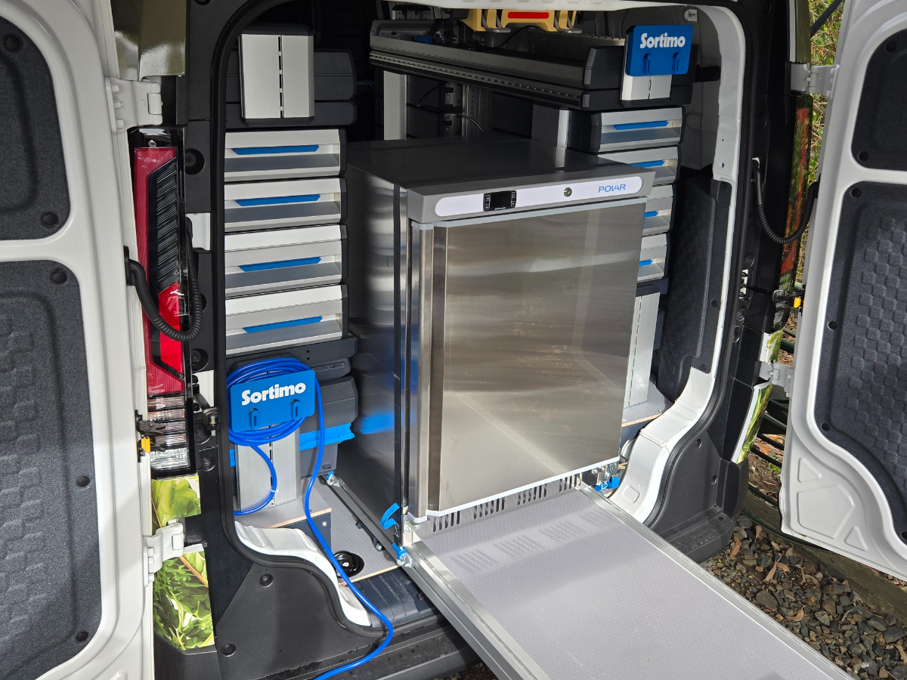
There, the chef used a fully Sortimo-modified PV5 (complete with fridge) to V2L-power a pickling session. Platform beyond kitchen.
What’s the pick of the range?
There's just the one model right now, the PV5 Cargo. But as you might expect from something that's basically a giant set of Oxford Blocks, there are more to come.
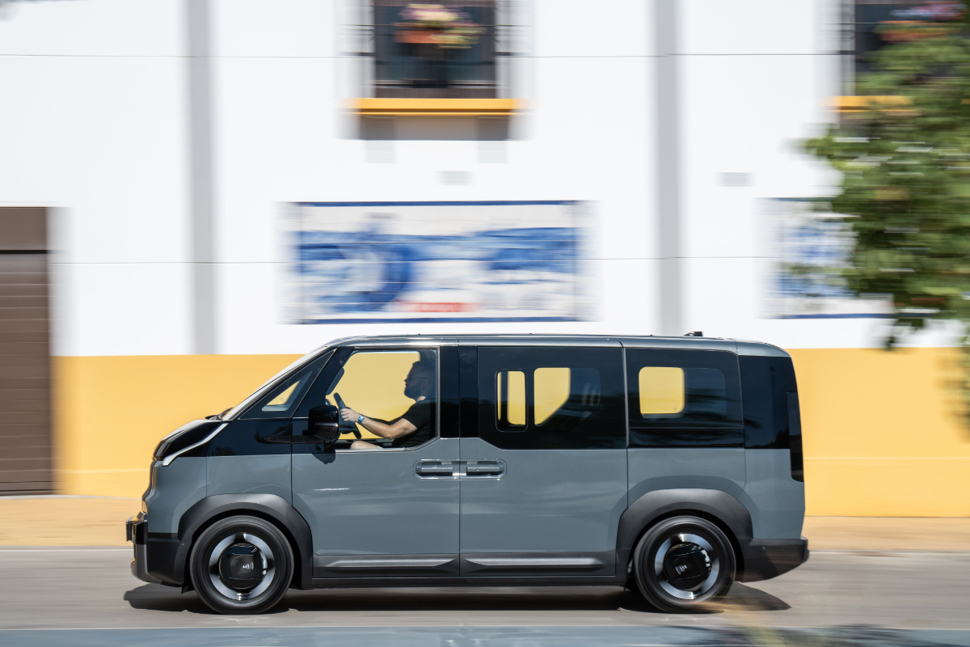
Front cabin modules are standardised, while rear-end, roof, and quarter glass components can be flexibly combined during production. Kia says it can create up to 16 variants from a small number of assemblies.
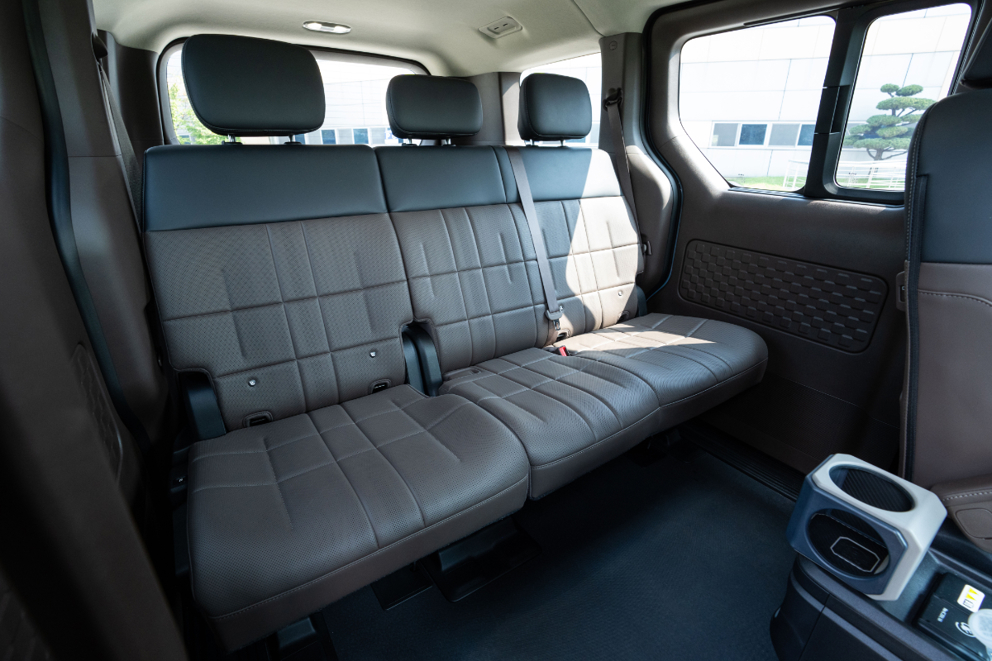
At the end of this year, Kia NZ will launch the Passenger version of the PV5, with 3 rows of seating in a 2-2-3 configuration, allowing for an aisle on the passenger-side for walk-through to the 3rd row. It'll have dual sliding doors and a rear liftgate in place of the Cargo model's barn doors.
In early-2027 we'll see a high-roof Cargo model that's 300mm taller, with 5.165 cubic metres load volume. The extra height also allows for an optional walk-through door from the front compartment to the cargo area.
Also due next year are the PV7 medium-sized Cargo and Passenger models (up to 5.3m long), and in 2029 the even larger PV9 Cargo and Cab Chassis (6m). But we don't have a lot of detail about those just yet.
What other cars should I consider?
The PV5's arch rival must be Geely's Farizon V7E ($55,990), which has captured 44% of the pure-electric van market year-to-date.
The Volkswagen ID.Buzz is in the frame as an image-conscious choice (currently on special offer, but still a whopping $99,990). Ford also sells an electric version of its Transit Custom in long-wheelbase form, but that's also up there price-wise at $98,990.
That's the standout BEV-van cohort, but of course the real rivals are traditional diesel models, led by the all-conquering Toyota Hiace: $58,990-$59,990 in its smallest (but still substantially larger than PV5) ZR body shape.


