



There are potentially a few foundations still rocking following Suzuki New Zealand's launch of the e Vitara. It's the brand's first pure-electric vehicle of course. It's also a pure-electric Vitara, which is a dramatic change for a badge that's been around since the 1980s. And it's a joint project with Toyota.
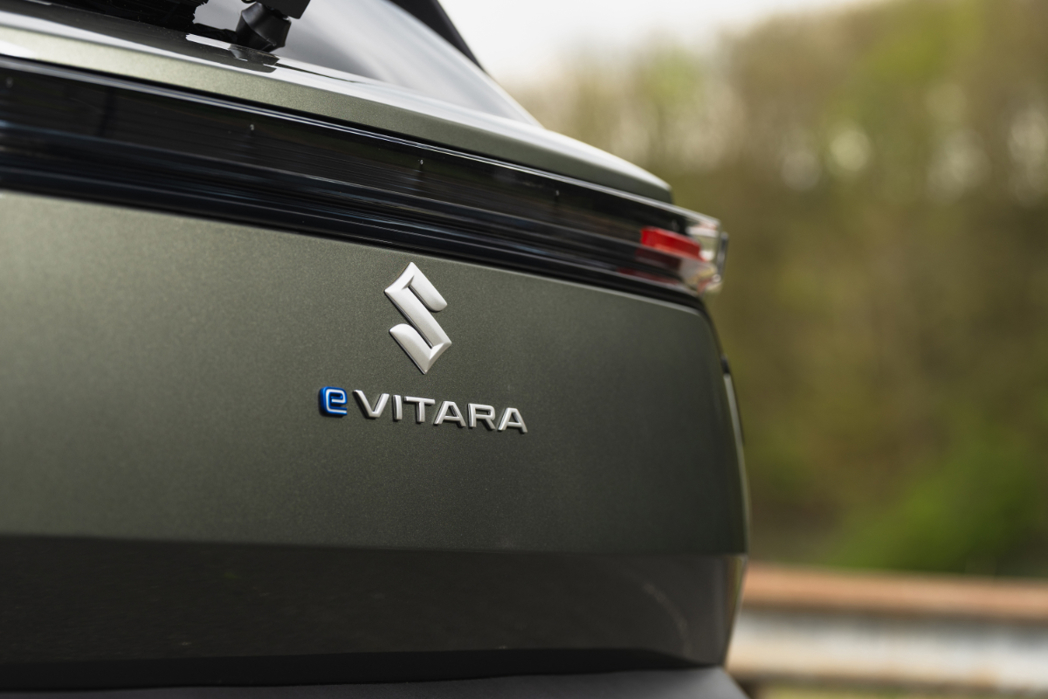
The introduction of e Vitara also marks the end of the standard Vitara for NZ (not for other markets, though).
This new model is Suzuki's most expensive new vehicle by some margin, starting at well over the $50k mark. The last of the Vitara hybrids are being sold at a maximum of $37,790, so that's a massive step up if you're perusing the Suzuki NZ website.
There's a lot to take in. We're starting with the entry-level $54,990 e Vitara 2WD, albeit with the fancy two-tone exterior paint finish (an extra $1000).
On the outside: what are the Suzuki e Vitara 2WD's main design features?
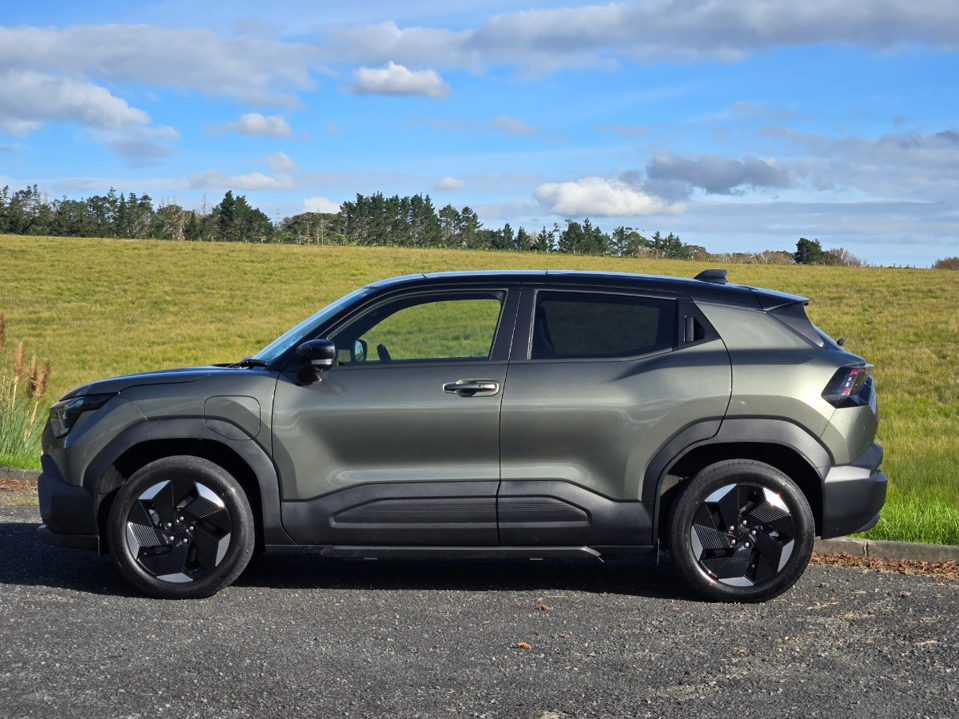
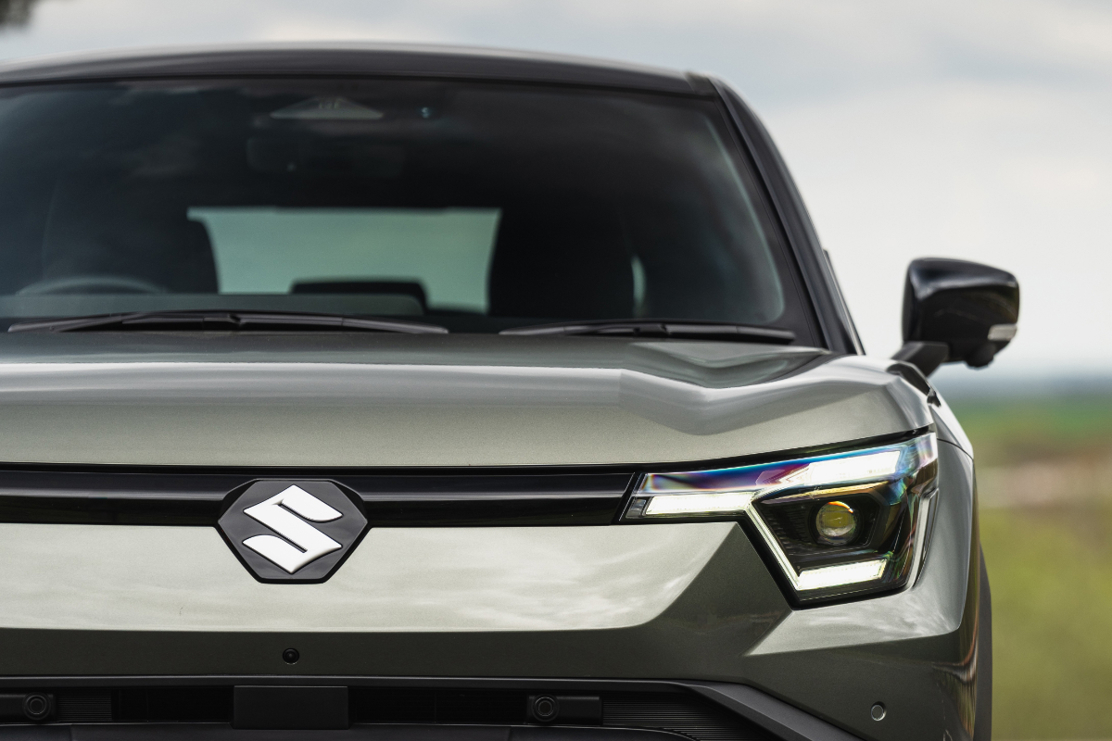
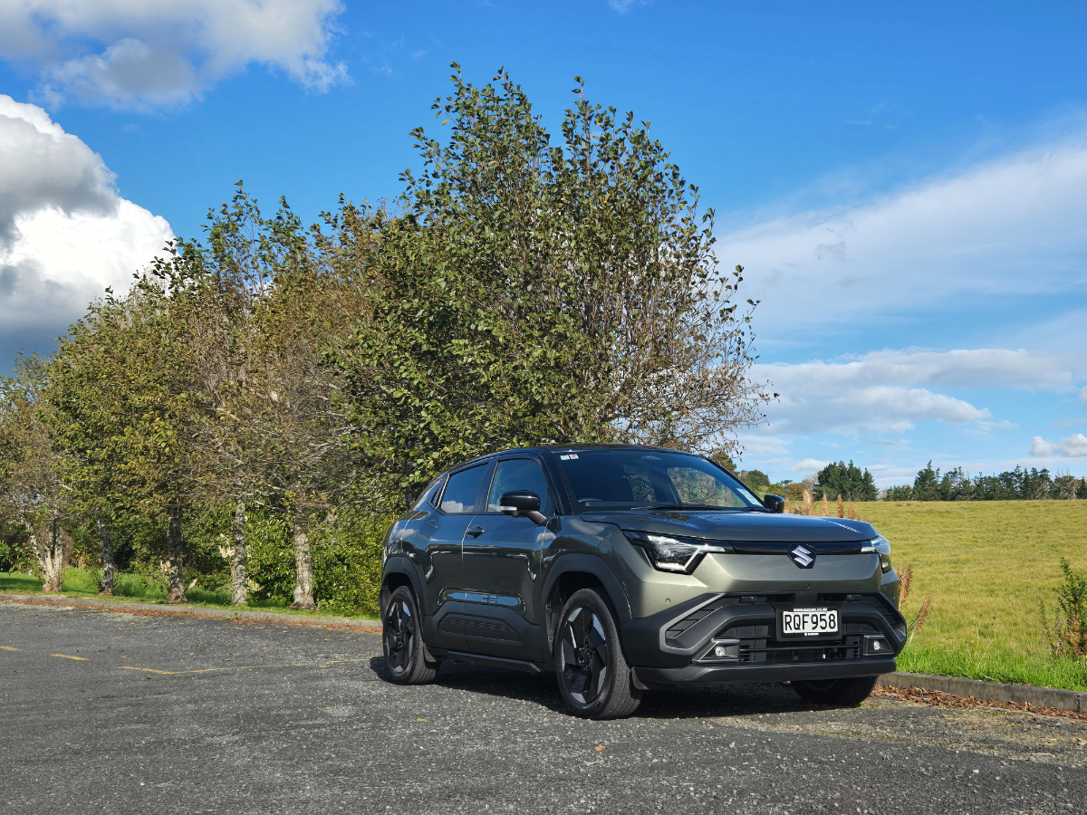
The e Vitara was a Suzuki-led project, and it's manufactured by its Maruti Suzuki subsidiary in India. But it looks totally different to anything else the brand currently sells, and sans-badges, it could easily pass for a small Toyota.
A pure-electric Vitara is a dramatic change for a badge that's been around since the 1980s. And it's a joint project with Toyota.
It does just that, of course. It's sold in various markets as the Toyota Urban Cruiser, with only minor styling changes front and rear. Not in NZ, though.
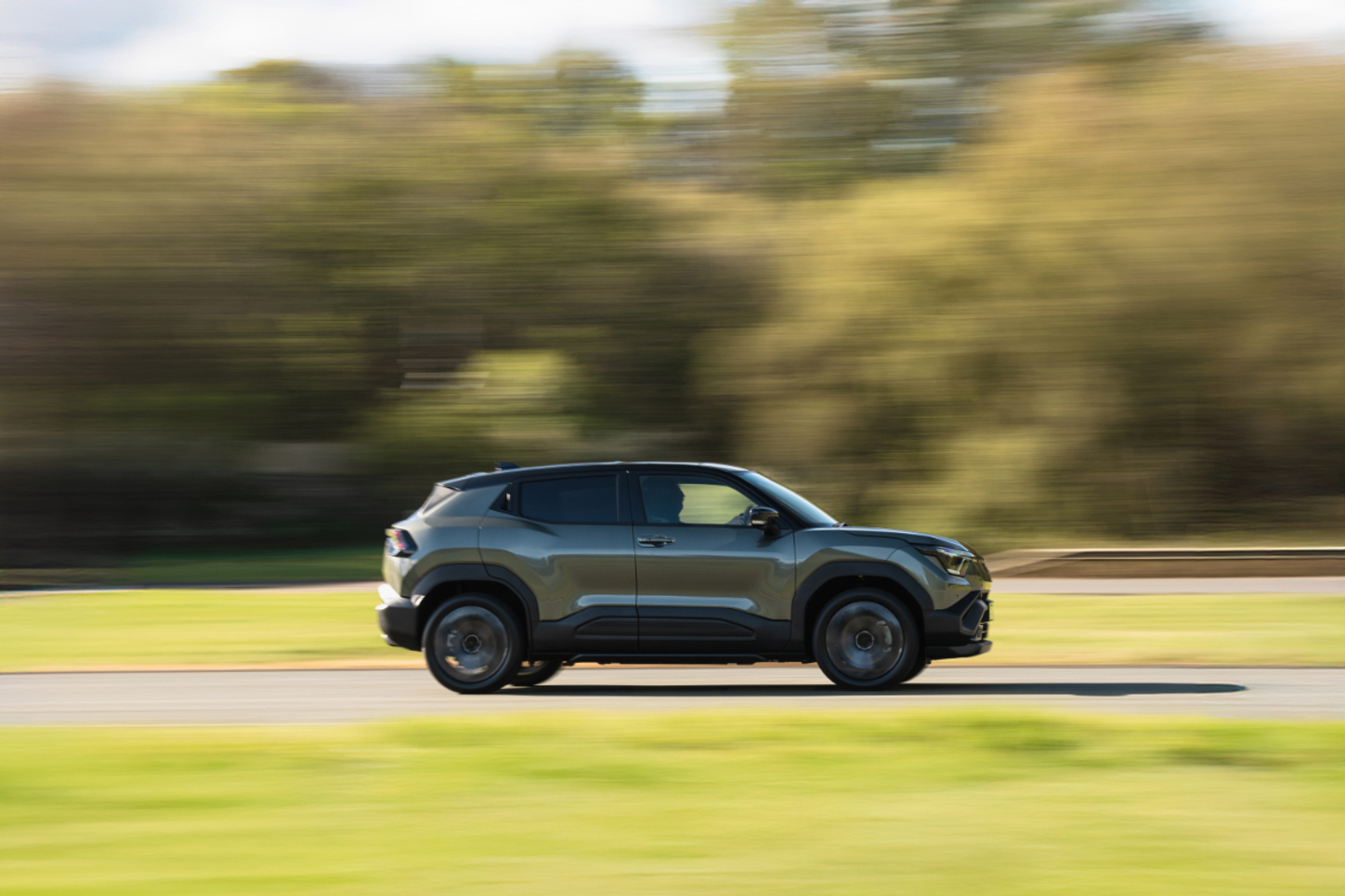
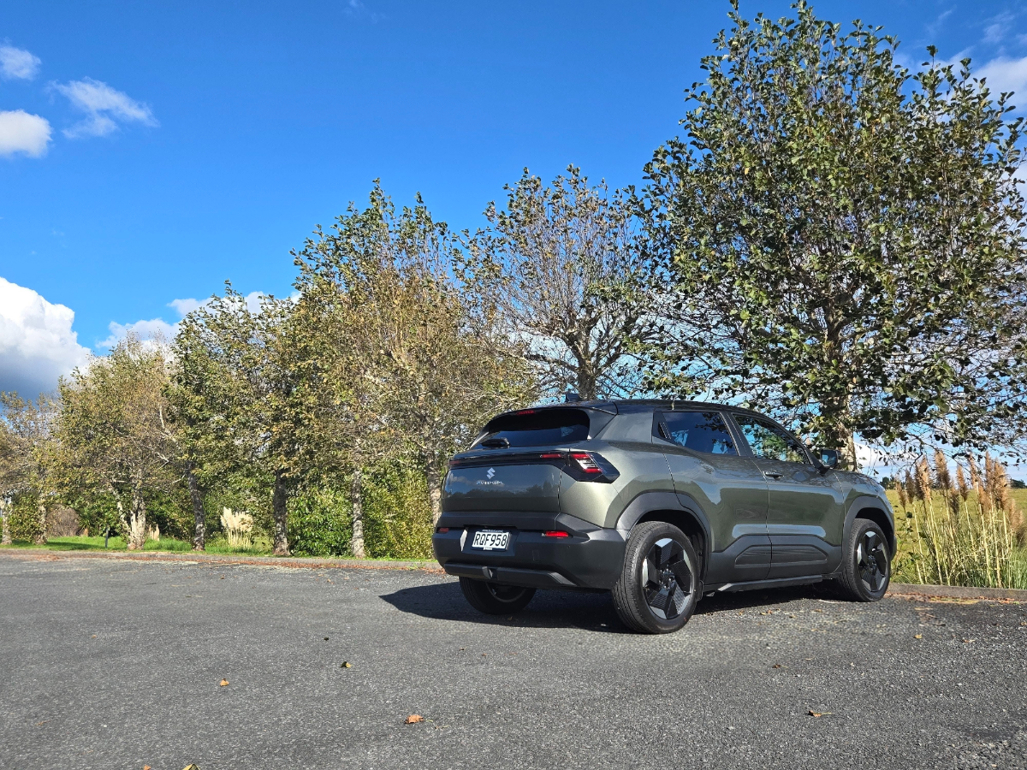
Tangled auto-industry webs aside, the e Vitara is a brilliant-looking little thing. It's true city car size at less than 4.3m in length, with the wheels pushed right out to the corners to give a long 2.7 wheelbase (the largest of any Suzuki).
The exterior is packed with angles, creases and chunky addenda just like a big-boy 4x4. We might go so far as to use the word "adorable".
OVERVIEW
| Price | $55,990 (launch price, standard retail $57,990) |
| Body style | 5-door compact SUV |
| Wheels and tyres | 18in alloy wheels, 225/55 MRF Wanderer Ecotread tyres |
| Length | 4275mm |
| Wheelbase | 2700mm |
| Weight | 1799kg |
| Website | suzuki.co.nz |
On the inside: what's the Suzuki e Vitara 2WD cabin like?
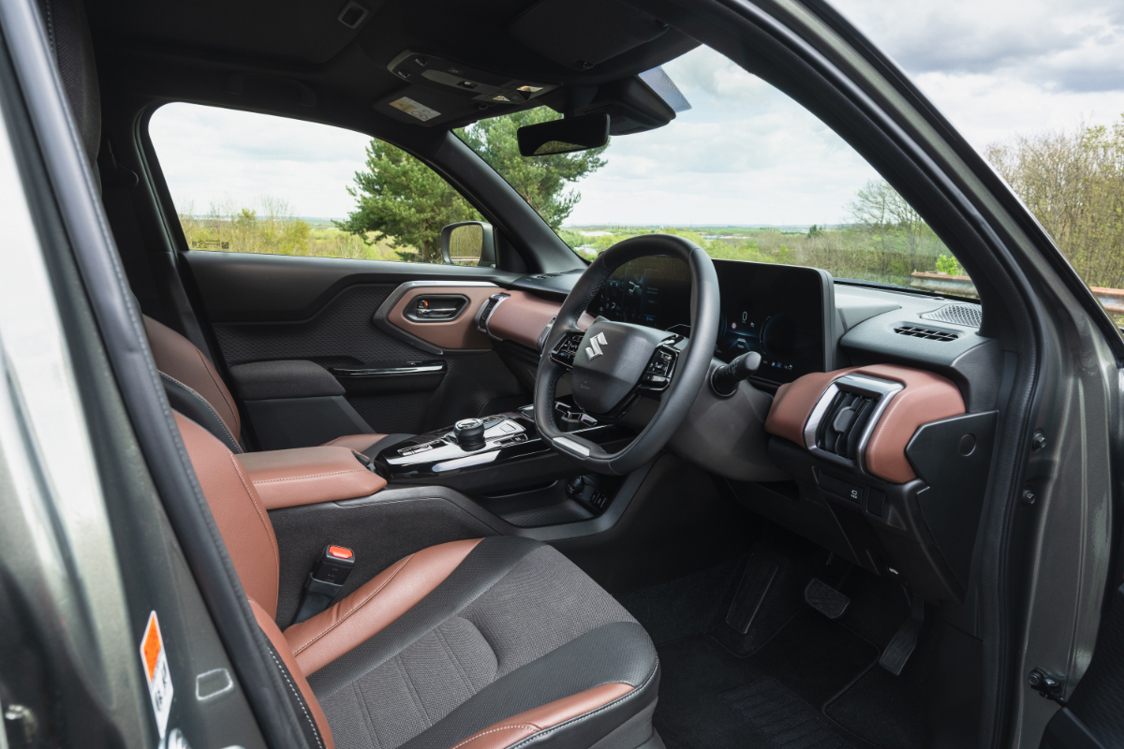
Suzuki has gone all 4x4-chunky with the cabin styling: lots of squared-off shapes and some truly substantial ventilation outlets, with satin-finish surrounds.
There are some lux-touches, like a good-quality Infinity sound system with subwoofer and 12-colour ambient lighting.
Some might also say Suzuki has gone off the rails a bit with the in-your-face brown seat and dashboard inserts, although it certainly gives the cabin a lift and draws the eye away from some of the trad-Suzuki shiny black plastic on the dashtop and door trims.
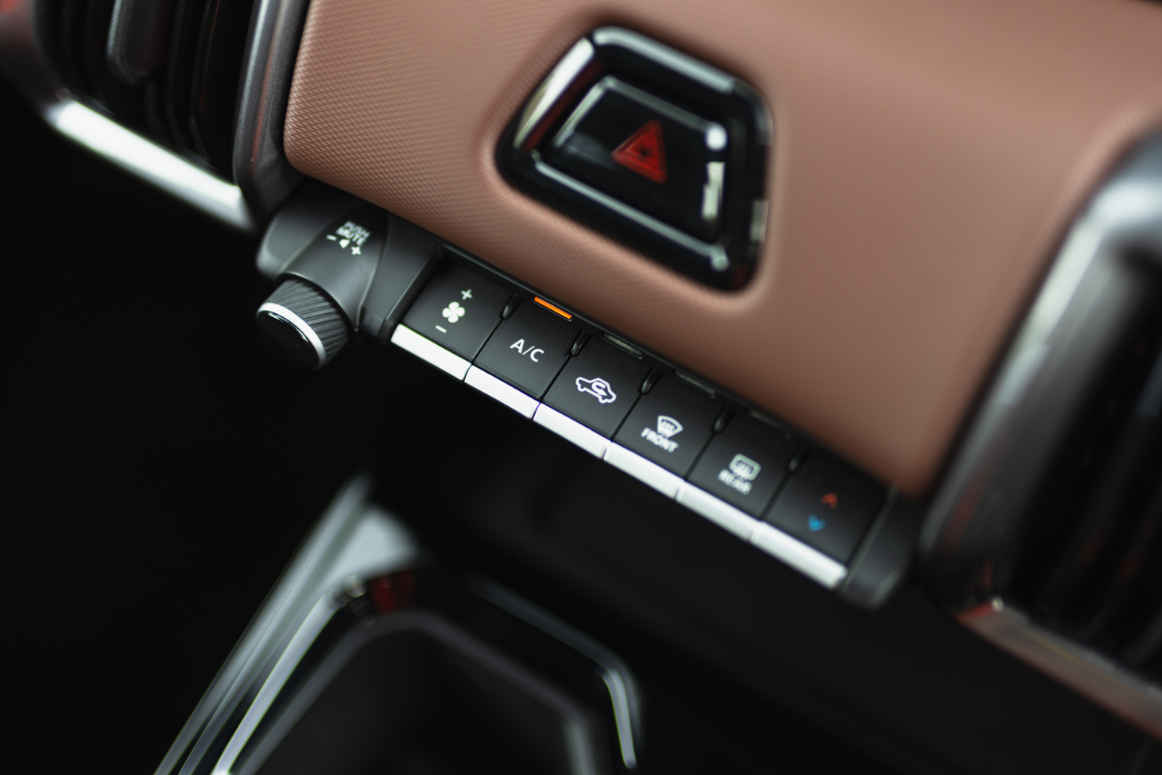
The 10.25-inch infotainment screen and interior controls are pretty well laid-out. There are physical buttons for audio volume and climate on the centre console, but the screen also provides a shortcut to the full menu.
Heated seats are a nice touch, but it's shame you don't get buttons for those too: instead you have to hit a screen shortcut, sit through a brief-but-tiresome animation, wait for the menu to appear and then stab at the slightly sluggish touch-display. First-world problems?
There are some lux-touches, like a good-quality Infinity sound system with subwoofer and 12-colour ambient lighting.
The rear seat is well-configured, with a European-style 40/20/40 split to the backrest (you can also adjust the angle) and a slide function that allows you to move the squab 160mm back-and-forth. This is an incredibly spacious cabin for a car with such a tiny exterior footprint.
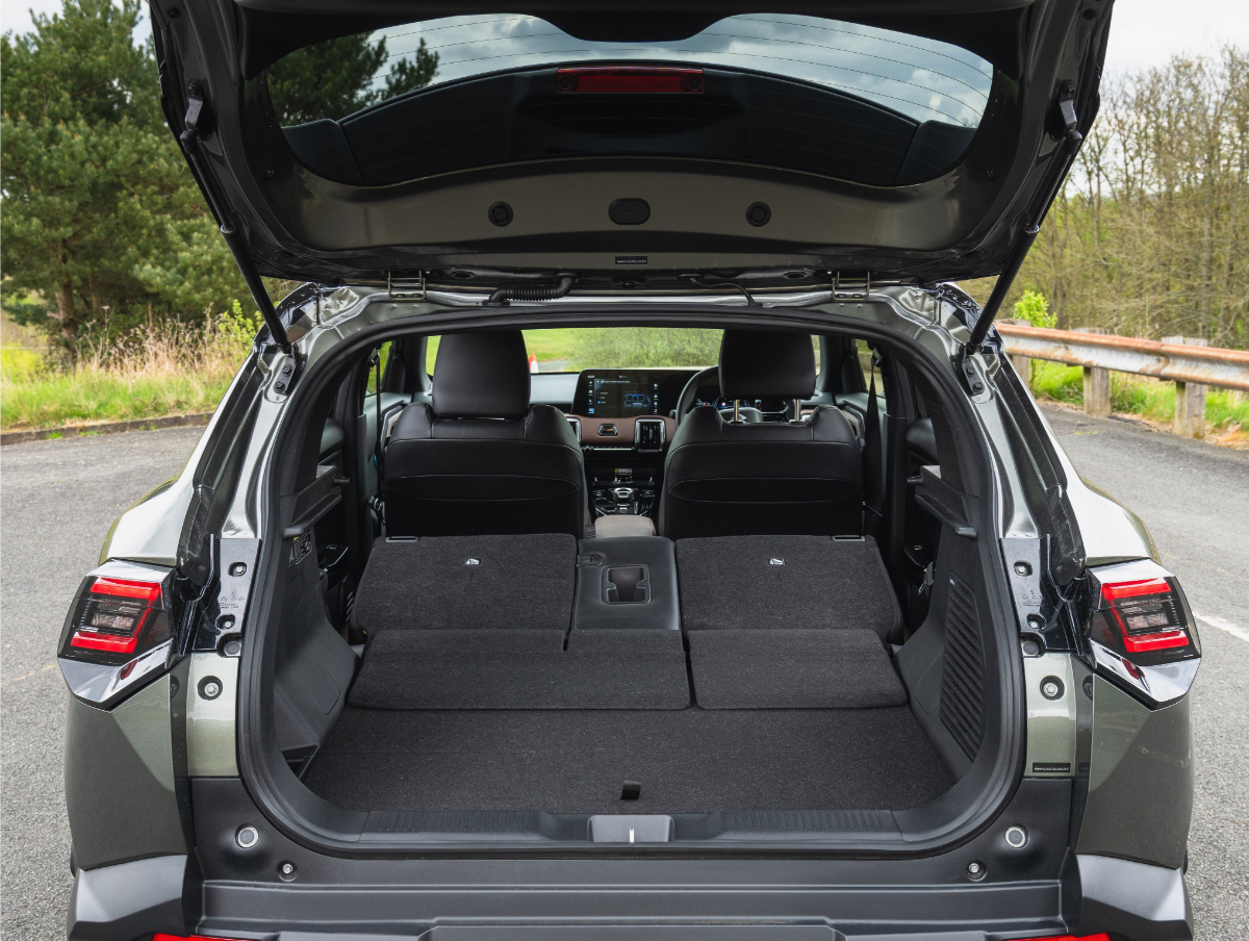
But there's got to be opportunity cost and it's the boot. Depending on where the rear seat is positioned, you've got between 238-310 litres of load space, which is fine for a city car but potentially a bit limiting if you're on a family road trip.
INTERIOR
| Head-up display | No |
| Infotainment screen | 10.25 inches |
| Phone projection | Wireless Android Auto and Apple CarPlay |
| Wireless phone charger | Single |
| USB ports | 1x USB-A and 1x USB-C front plus 12-volt, 1x USB-A and 1x USB-C rear |
| Climate control | Dual-zone |
| Front seat heating/ventilation | Yes/No |
| Front seat adjustment | 10-way power-adjustable driver's seat |
| Boot capacity | 238-310 litres (rear seats slide 160mm) |
| Rear seat split/fold | 40/20/40 |
| Power tailgate | No |
On the road: what's the Suzuki e Vitara 2WD like to drive?
The e Vitara has a pretty interesting powertrain package. The 61kWh battery is sourced from BYD, while the eAxle drive unit (motor, reduction gear and inverter all in one) comes courtesy of partner Toyota. A similar design is used in its bZ4X.
The WLTP range of 426km is decent, although the maximum DC charge rate of 65kW is curiously slow.
If you like your EV to feel like a car rather than a science experiment, you'll like the e Vitara. The steering, brakes and chassis feel well-sorted, balanced and with decent feedback. In this respect it does feel like a real Suzuki: even the brand's cheapest and smallest models have a certain something in terms of their on-road behaviour.
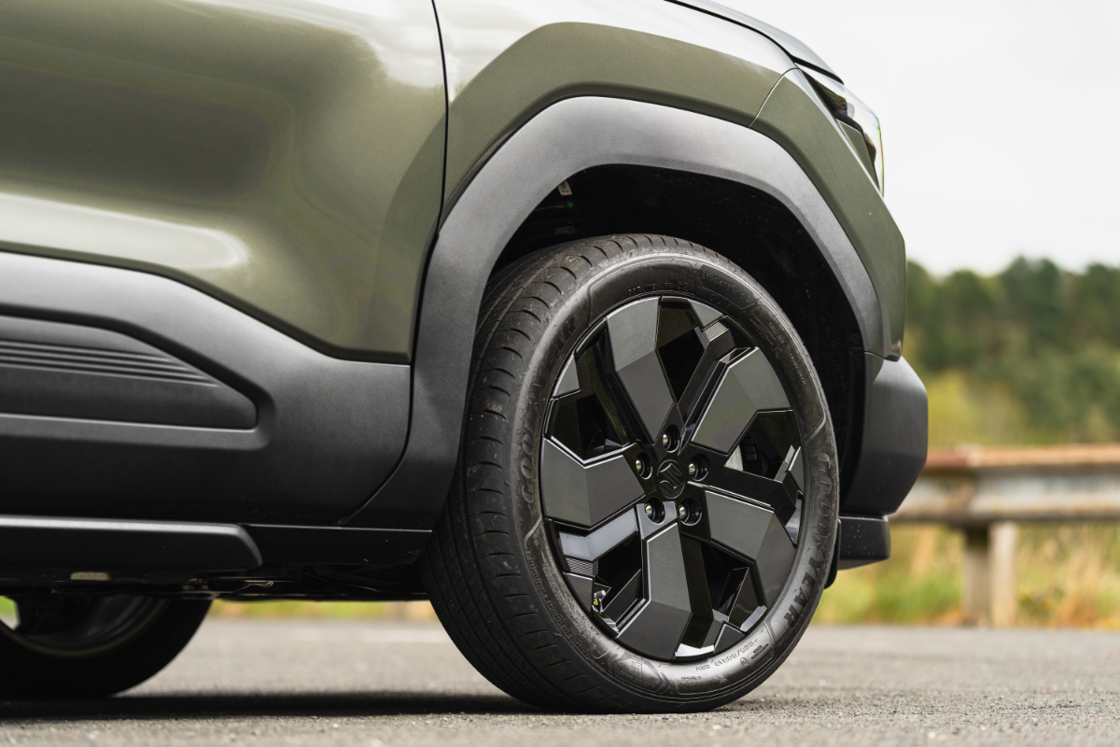
It's front-drive and being an EV with instant torque, it's very easy to get the front wheels spinning with an enthusiastic right foot. But often the only way you know that's happening is the flickering orange traction light on the dashboard; the electronics do an impressive job of keeping the FWD-fuss hidden in the background.
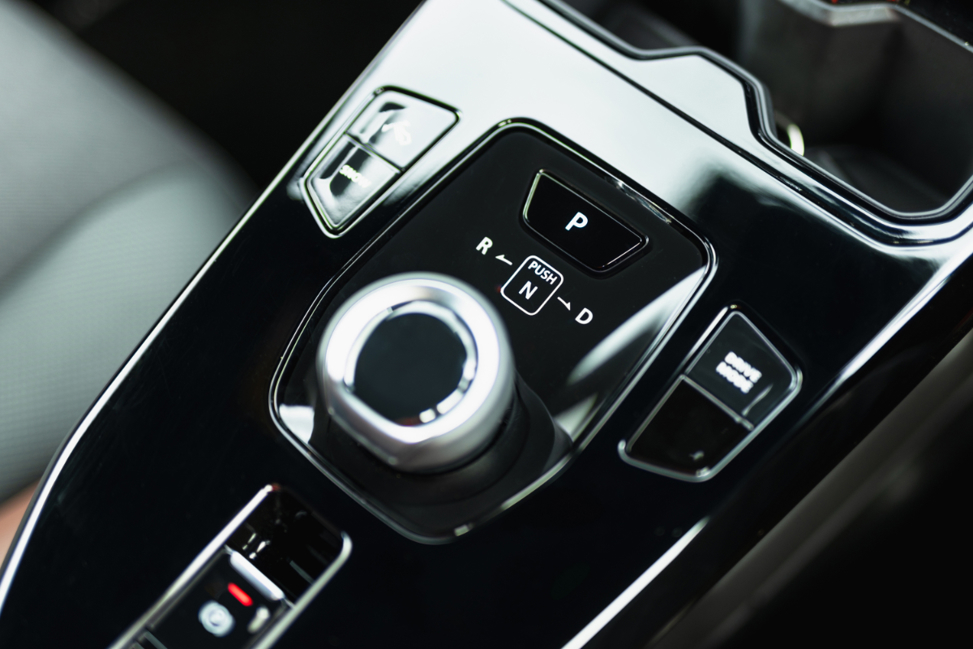
There are Eco, Normal and Sport drive modes via a pushbutton, but you don't tend to bother with them; none seem to make much difference. There's a separate button for Snow traction.
You can also adjust the regeneration, although it's achieved in a slightly odd fashion. There's a button on the centre console that switches it on or off, but if you want to actually change the strength (there are three levels) you have to go into the vehicle settings inside the infotainment screen. Perhaps the thinking is that it's a set-and-forget thing, depending on personal preference.
The primary ride is relatively soft but well-controlled, which suits the car. Less satisfactory is the secondary ride, which can feel quite lumpy at urban speeds. But that's not unusual for an EV.
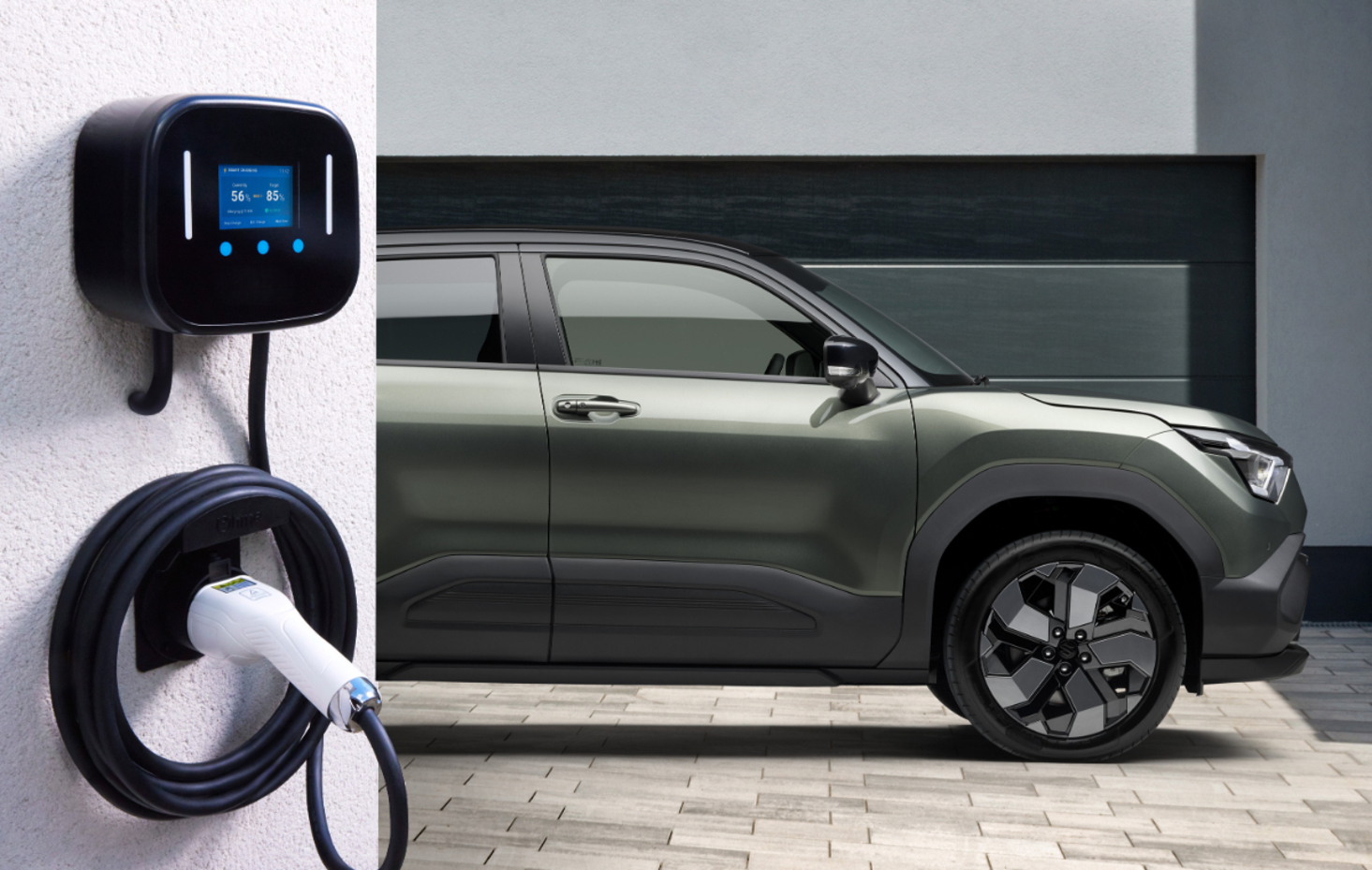
The WLTP range of 426km is decent, although the maximum DC charge rate of 65kW is curiously slow. Then again, it's not a huge battery: Suzuki claims a 20-80% charge in just 34 minutes.
SPECIFICATIONS
| Powertrain type | Battery electric |
| Battery | 61kWh |
| Power | 128kW |
| Torque | 193Nm |
| Transmission | Single-speed, FWD |
| Power to weight | 71kW/tonne |
| Adaptive suspension | No |
| Efficiency | 15.1kWh/100km (WLTP) |
| Range | 426km (WLTP) |
| Tow rating | 750kg |
On ownership: what's the Suzuki e Vitara 2WD warranty and servicing situation?
New Suzukis are covered by a 3-year/100,000km warranty, which is extended to an 8-year/160,000km powertrain warranty if the vehicle is serviced at an authorised dealer. There's also roadside assistance for 5 years.
A (free) 1 month/1000km check is required, then servicing is every 12 months/10,000km.
On the whole: what do we think of the Suzuki e Vitara 2WD?
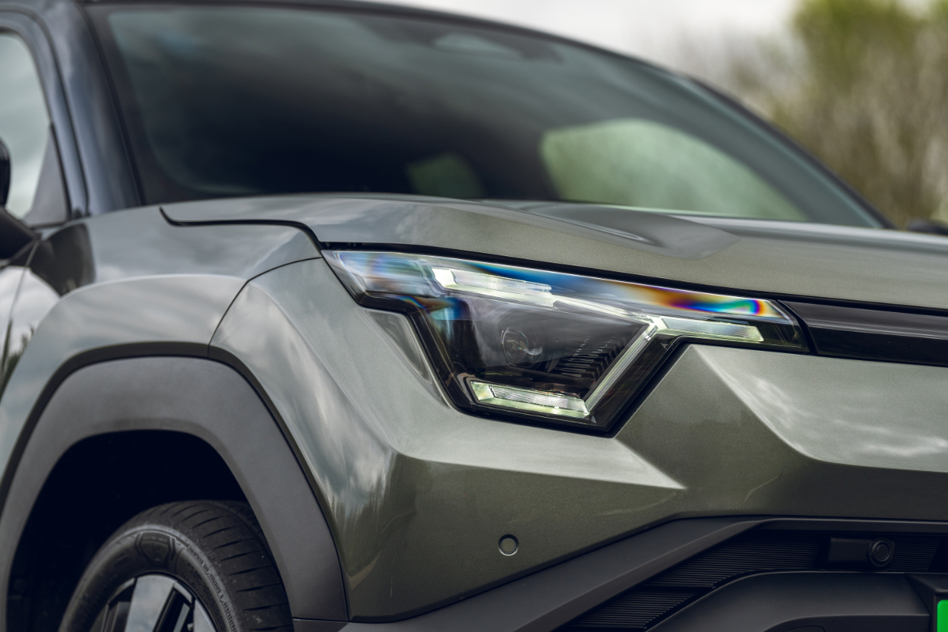
The e Vitara looks awesome, is smooth and simple to operate and has some clever battery and powertrain technology courtesy thanks to help from BYD and Toyota.
Suzuki is a conservative company and the Vitara name has a long heritage and big following, so an all-electric version is also quite a novelty. It's a very appealing product.
What counts against the e Vitara in 2WD form is price. While the AWD version has relatively few rivals in its price bracket, at $56k the 2WD version is up against a plethora of compact EV-SUVs - most priced in the $40k bracket.
The e Vitara is lavishly equipped and well-engineered, and you can certainly argue it all adds up, but it's still relatively expensive by class standards - which is something we never thought we'd say of a Suzuki. There's a smaller 49kWh battery available in other markets (including Australia); a shorter-range, cheaper model might really get this entry-level e Vitara 2WD moving.
Suzuki e Vitara 2WD FAQs
What kind of car is the Suzuki e Vitara 2WD?
A compact EV-SUV.
Does the Suzuki e Vitara 2WD have hybrid or EV technology?
Yes, it's pure-electric.
What’s the efficiency of the Suzuki e Vitara 2WD?
15.1kWh/100km. The 2WD achieves a WLTP range of 426km from its 61kWh battery.
Is the Suzuki e Vitara 2WD safe?
The e Vitara scores 4 stars in NCAP and that score is expected to carry across to ANCAP (although it hasn't yet).
What safety and assistance features does the Suzuki e Vitara 2WD have?
| Intelligent lights | LED adaptive |
| Rain sensing wipers | Yes |
| Airbags | Dual front, driver and passenger side, driver's knee, front and rear curtain |
| Adaptive cruise control | Yes |
| Driver attention monitor | No |
| Traffic sign recognition | Yes |
| Forward collision warning | Yes |
| Blind spot warning/assist | Yes/no |
| Lane departure warning/assist | Yes/yes |
| Rear cross traffic alert/braking | Yes/no |
| Reverse collision braking | No |
| Parking sensors | Front and rear |
| Camera system | 360 degree |
What are the Suzuki e Vitara 2WD's main rivals?
- BYD Atto 2 Premium ($45,990): Another SUV with BYD batteries, but this one's a BYD.
- Forthing Taikon Exclusive ($47,990): A whole size larger, but also a whole lot cheaper.
- MGS5 EV Essence 62 ($54,990): Replacement for ZS is much more polished, and RWD.
- Kia EV3 Light SR ($55,520): Similar style to the e Vitara, and a similar price too.
- Toyota bZ4X ($56,990): Much bigger than the Suzuki, but look at the price.


