



For years, console sim racers looking for a better experience than an entry-level setup were still limited to gear- or belt-driven wheels that often felt more like toys than professional equipment, while PC players could choose to spend excitingly more money for direct drive alternatives.
However, the Moza R3 that launched in 2024 changed the landscape with the brand’s first-ever Xbox-compatible direct drive (DD) system that led gaming-tech giant Logitech to make the move downmarket with the direct drive RS50 wheel late last year.
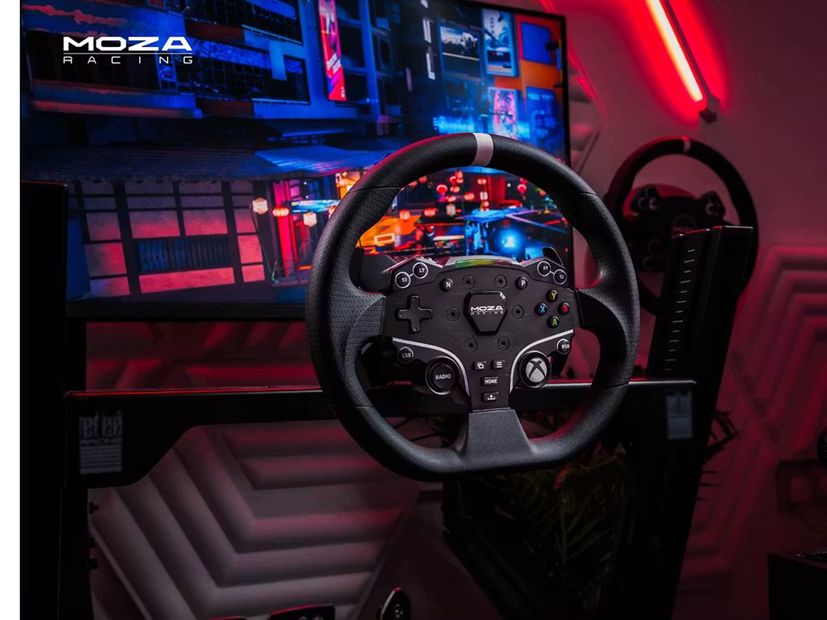
But the $729 Moza R3 Bundle (that includes the base, a wheel and pedals) aggressively undercuts the RS50 ($1300 for the wheel and base, and a further $329 for the pedals), landing instead far closer to Logitech’s $500 gear-driven G923 wheel. But let’s back up a bit and explain some of the terms being waved around here - mainly, “direct drive”.
A simple explanation of the difference between the Moza R3 (and Logitech RS50) direct drive system and the Logitech G923’s gear-driven system is to think of the gear driven system as being a car with a conventional automatic transmission, while the direct drive system is like having an electric motor on each wheel.
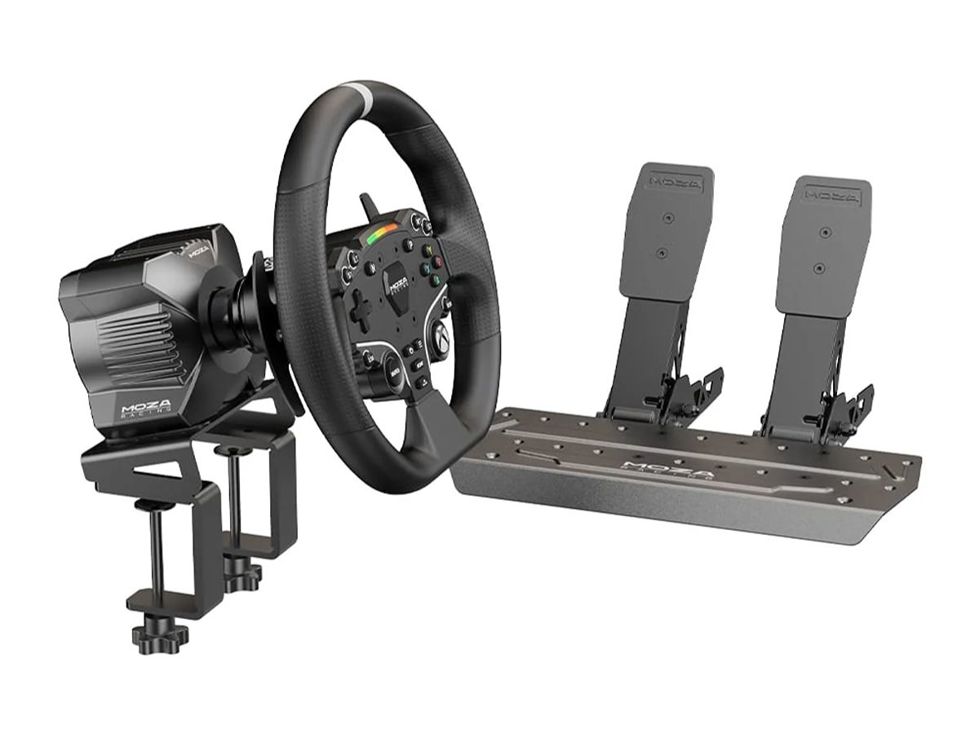
Where the G923 has to transmit its feedback and power through a series of gears, the Moza R3 doesn’t, as the wheel is connected directly to the force feedback electric motor. This translates into instant responses, smoother steering and considerably more detail being transmitted through the wheel. In other words, much better and considerably more realistic. Plus, they’re also significantly quieter to boot.
I was converted to the joys of direct drive at the launch of the Logitech RS50 last year, where I fell deeply in love with Logitech’s range-topping G Pro Racing Wheel, a professional grade racing wheel that packs a whopping 11Nm of force feedback torque as well as an eye-watering price tag of generally around $2k for the wheel and a further $600 or so for the pedals.
But the sheer realism it brings justifies its price tag, and given the amount of money you will have to first spend on a PC that will do it justice makes it a relative drop in the ocean anyway.
The RS50 transfers a lot of that vibe into the more affordable mid-range sector and bringing 8Nm of torque to the feedback, a considerable bump up on the gear-driven G923’s 2.5Nm.
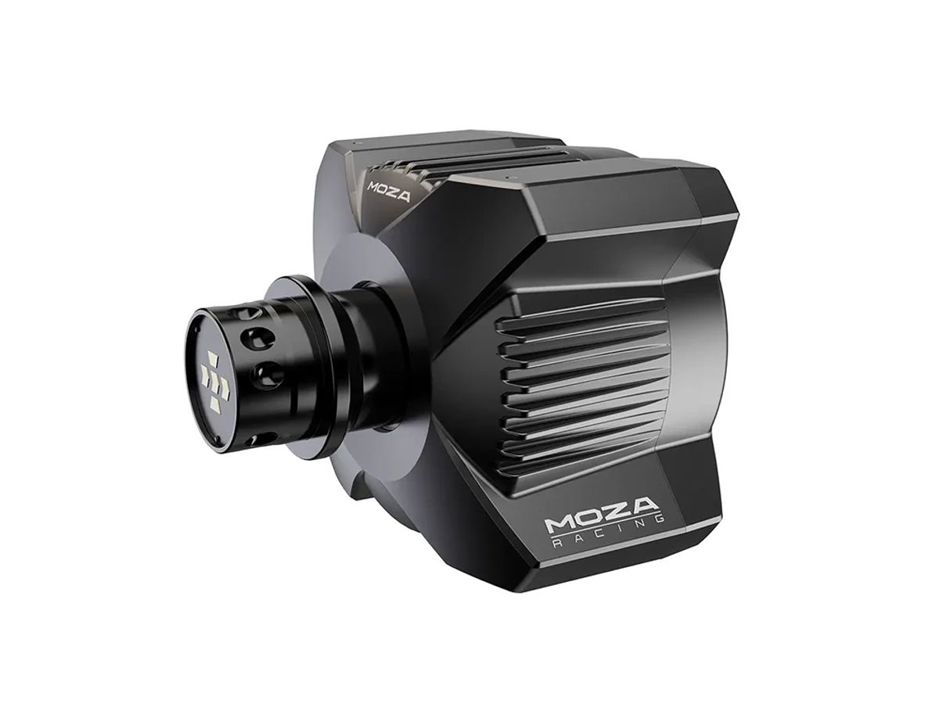
The base is compact enough to be shorter than a typical smartphone, but despite its diminutive size, the build quality is exceptionally high.
And this is where the Moza R3 slips in and makes the older gear-driven Logitech set up look a little sick in comparison.
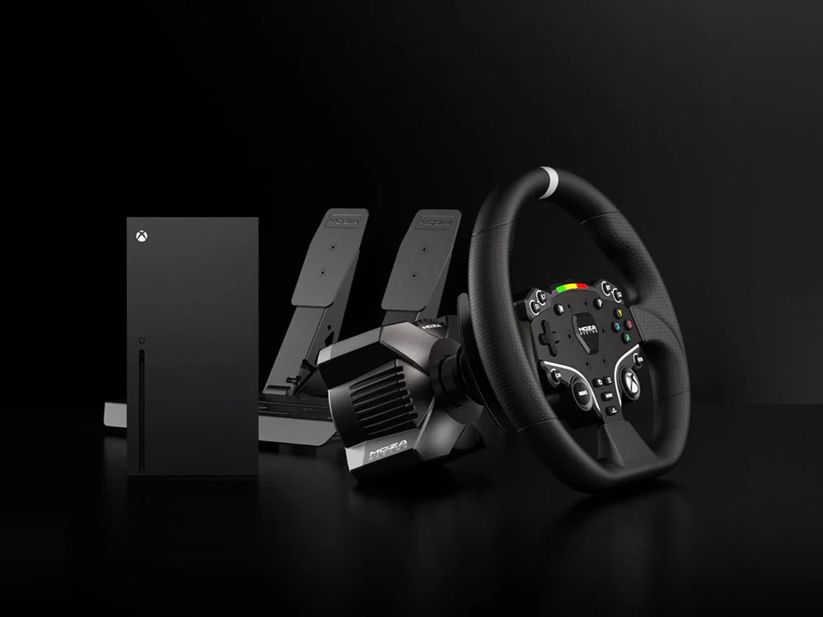
The Moza R3 base delivers 3.9Nm of peak torque which, while being the lowest torque figure in Moza’s lineup, still outperforms the G923 easily in both raw power and fidelity, with crisp, immediate feedback without the internal friction and mushiness associated with belts and gears. Furthermore, the fanless design ensures it remains silent during operation, using its aluminium casing as a heat sink.
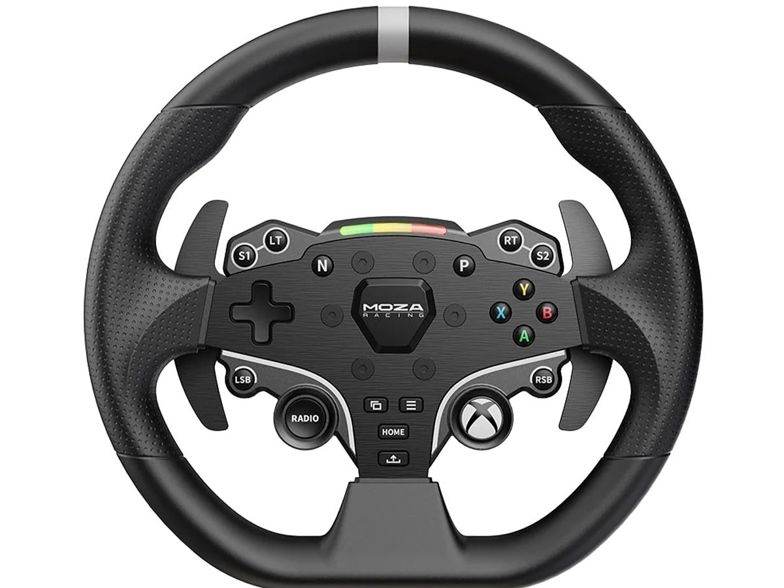
The base is compact enough to be shorter than a typical smartphone, but despite its diminutive size, the build quality is exceptionally high, featuring an aviation-grade aluminium housing, while the supplied 280mm diameter ESX steering wheel features a sturdy metal faceplate and aluminium alloy frame.
Unlike the leather-wrapped PC version, the Xbox R3 uses a polyurethane grip, which doesn’t feel quite as nice, but the metal shifter paddles provide a satisfyingly sharp click when shifting.
Rounding out the Moza R3 kit are the SR-P Lite pedals. Unlike many budget sets that rely heavily on plastic, these are constructed from high-strength steel. While the throttle is responsive, the stock brake pedal, which uses a Hall effect sensor rather than a load cell, is arguably the weakest point of the set up, feeling too light and without the progressive feel of Logitech’s 75kg load cell on the RS pedals, but still better than the progressive rubber spring set up in the G923.
Yes, the Moza R3 only offers half the force feedback torque of the Logitech RS50, but its is also less than half the price, and it simply destroys the gear-driven G923 that is only a few hundred dollars cheaper.
On the track, the R3 shines through its smoothness and detail, allowing you to feel subtle track surface changes and the exact moment tires lose grip. However, at 3.9Nm, the feedback can reach its maximum output and lose detail if pushed too hard in high-downforce corners, but this is a high-end complaint that most entry-level console gamers won’t even recognise.
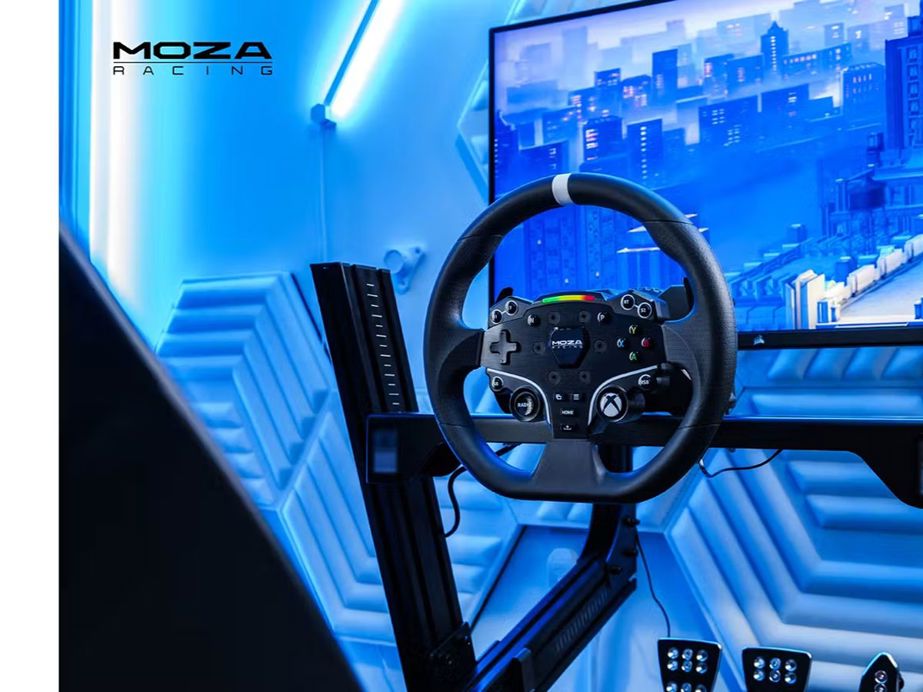
One of the R3's greatest strengths is the Moza ecosystem. Like Logitech’s Pro and RS systems, the R3 is modular and allows you to easily swap wheel rims and add peripherals like a clutch pedal, handbrake, or digital dash directly to the base.
While the Moza R3 can also be used with a PC, it is an absolute game-changer for Xbox console racers. It offers professional-grade direct drive technology and premium materials at a price previously reserved for plastic, gear-driven wheels.
Yes, the Moza R3 only offers half the force feedback torque of the Logitech RS50, but its is also less than half the price, and it simply destroys the gear-driven G923 that is only a few hundred dollars cheaper. While serious competitive racers may eventually outgrow its 3.9Nm limit, you will likely have migrated to a PC if you get that serious about it, making the R3 easily the best gateway into high-fidelity sim racing for console users, with the only real restriction being that it isn’t compatible with PlayStation consoles.


