



Reviewing the pure-electric version of the new Toyota Hilux could potentially be a no-win task from a credibility point of view. But let's get started.
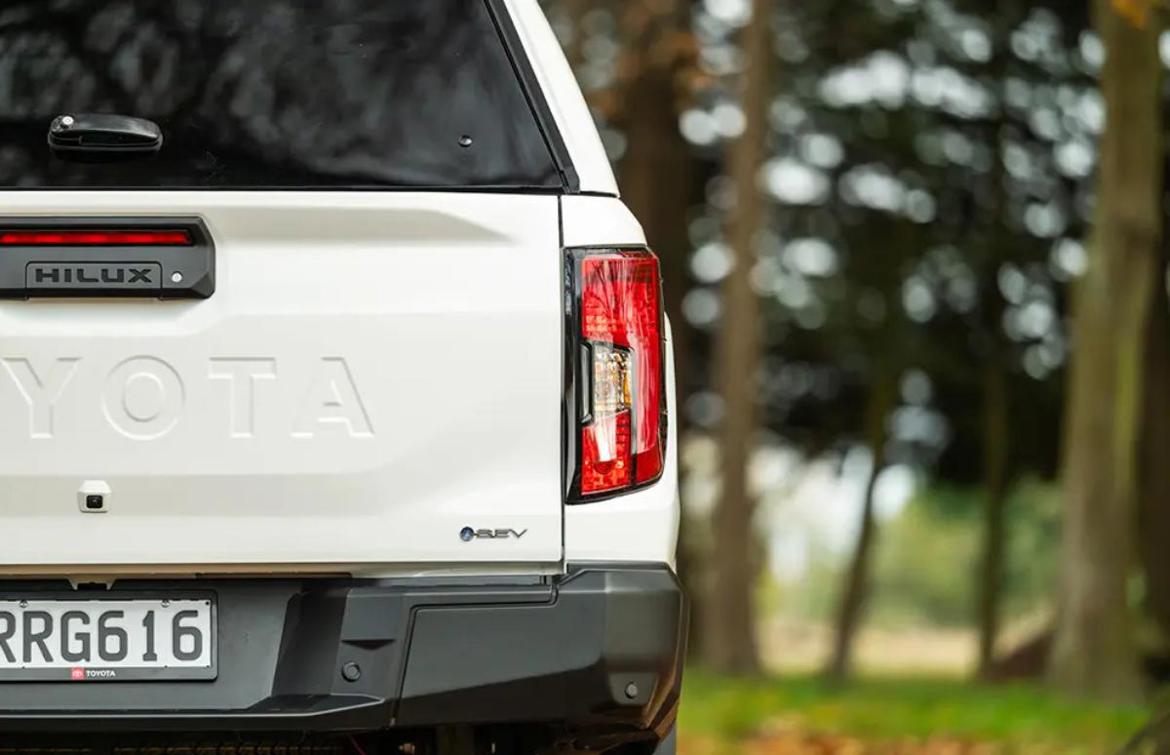
The facts about the first-ever Hilux battery electric vehicle (BEV) are as follows: it's essentially an electrification of the existing diesel ute (which is itself far from new underneath), so packaging constraints mean it's limited to a 59.2kWh battery. That fits within the standard Hilux ladder-frame chassis without major modification, which also means it's well-protected in off-road driving scenarios. That was a deal-breaker for Toyota.
But the modest battery means just 315km range under the NEDC protocol favoured by Toyota in this part of the world (by which we mean Australia, really), but it's actually just 240km under the WLTP test that forms the basis of New Zealand's official efficiency ratings.
When reviewing this model, we could go either of two ways.
First, we could fixate on the lack of range and reduced 2-tonne tow rating, then risk looking like we don't understand the true purpose of this model. After all, a company like Toyota must have a plan.
This is really in a class of one right now. There are other electrified utes, but Hilux is the only BEV that's also based on proper ladder-frame underpinnings and therefore truly 4x4-capable.
Second, we could view the BEV as one option among a multitude of Hilux models, and accept Toyota's argument that there are very specific use-cases where it works well. Toyota NZ chief strategic officer Andrew Davis says it's designed for "everyday operational roles and for predictable routes".
Less central to the NZ business case for NZ but absolutely crucial to the existence of this model Down Under is the Australian mining industry. BEVs are great for mining because they reduce heat and eliminate exhaust emissions, and can ease the load on site ventilation. Aussie mining operations already love Toyota utes; it's a major market for the super-tough 70-series and one company has even been working on a 70 EV specifically for that application.
And there we go: now we seem like apologists for Toyota's possibly-half-baked electric ute.
The truth of the matter is somewhere in the middle. No doubt Toyota would have loved to offer a Hilux BEV with a much bigger range, but if it's not commiting to a redesign of the diesel's underpinnings right now, it's hardly going to make a plug-in version from scratch.
Toyota needs this model globally to reduce its emissions profile and many businesses will want it as a component of their fleets (especially if it's a Toyota-centric fleet, of which there are many) for exactly the same reason. It's 5-star ANCAP rated, so we're also talking Government departments, airports... you get it.
Toyota NZ offers the Hilux in three double-cab models, including a base SR cab-chassis ($79,990) suitable for trays or custom service bodies, the SR wellside featured here ($81,990) and a more luxurious SR5 wellside ($85,990).
At $25k more than the equivalent 4WD diesel-automatic model, our SR BEV test model is certainly not cheap.
On the outside: what are the Toyota Hilux SR BEV's main design features?
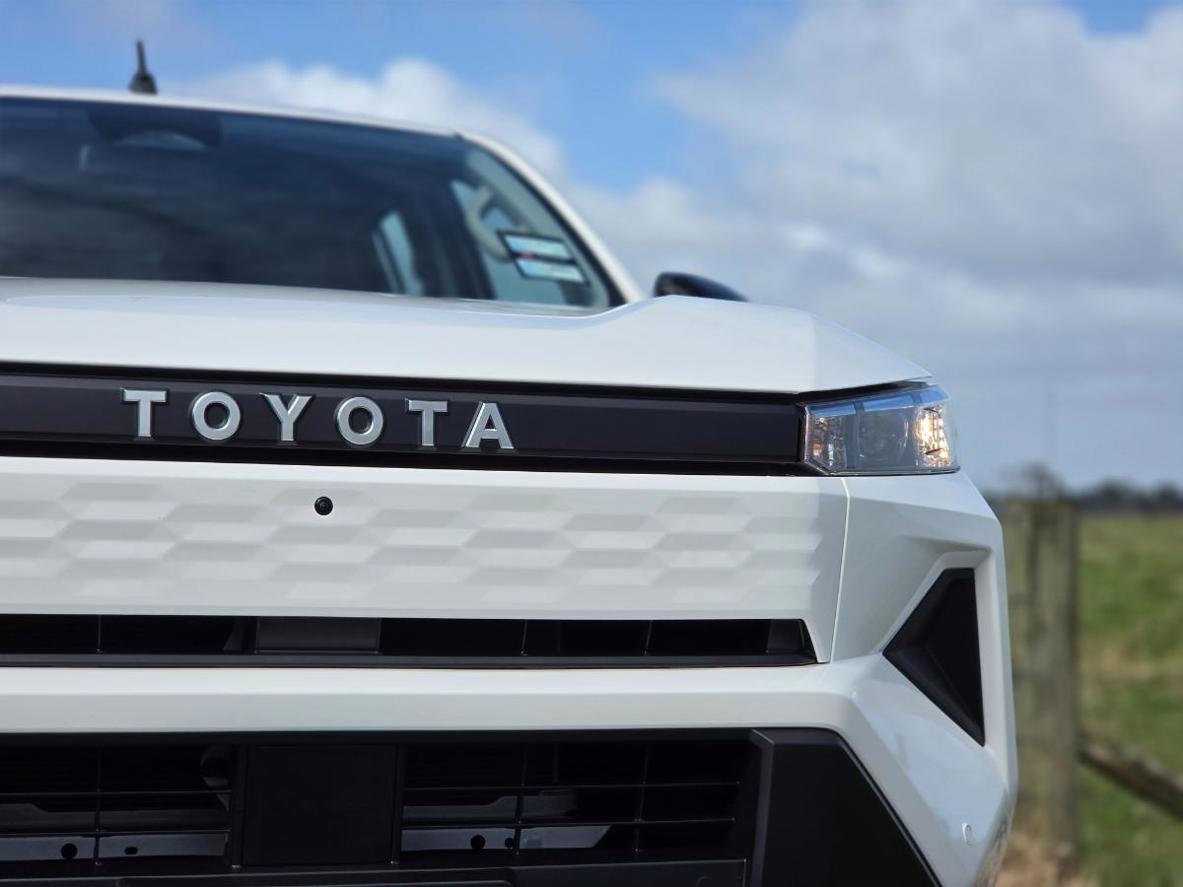
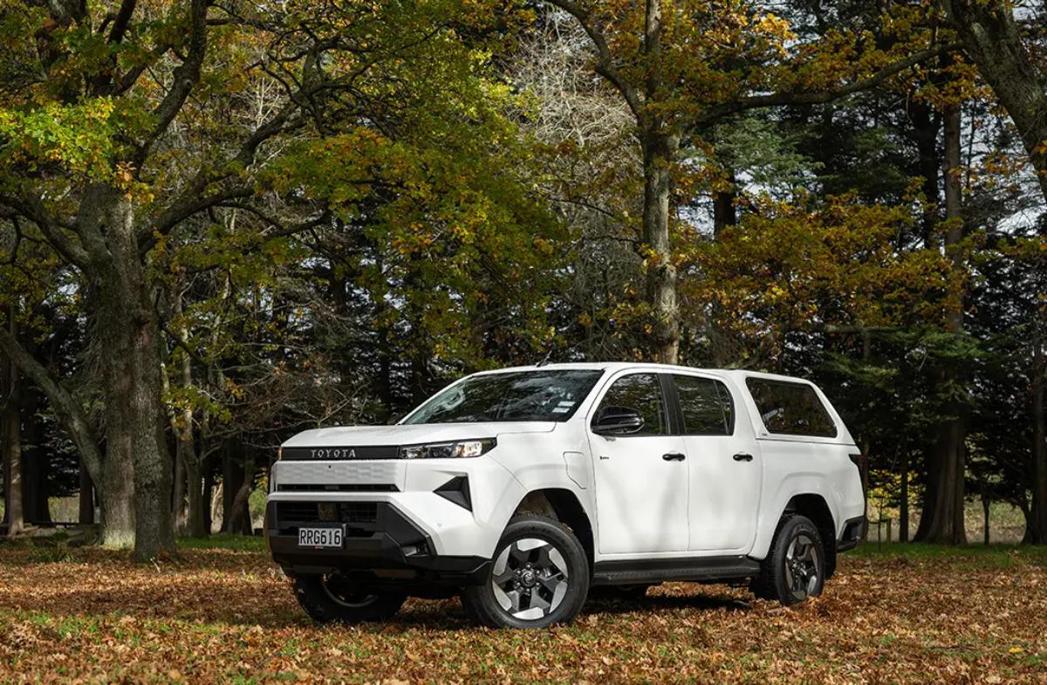
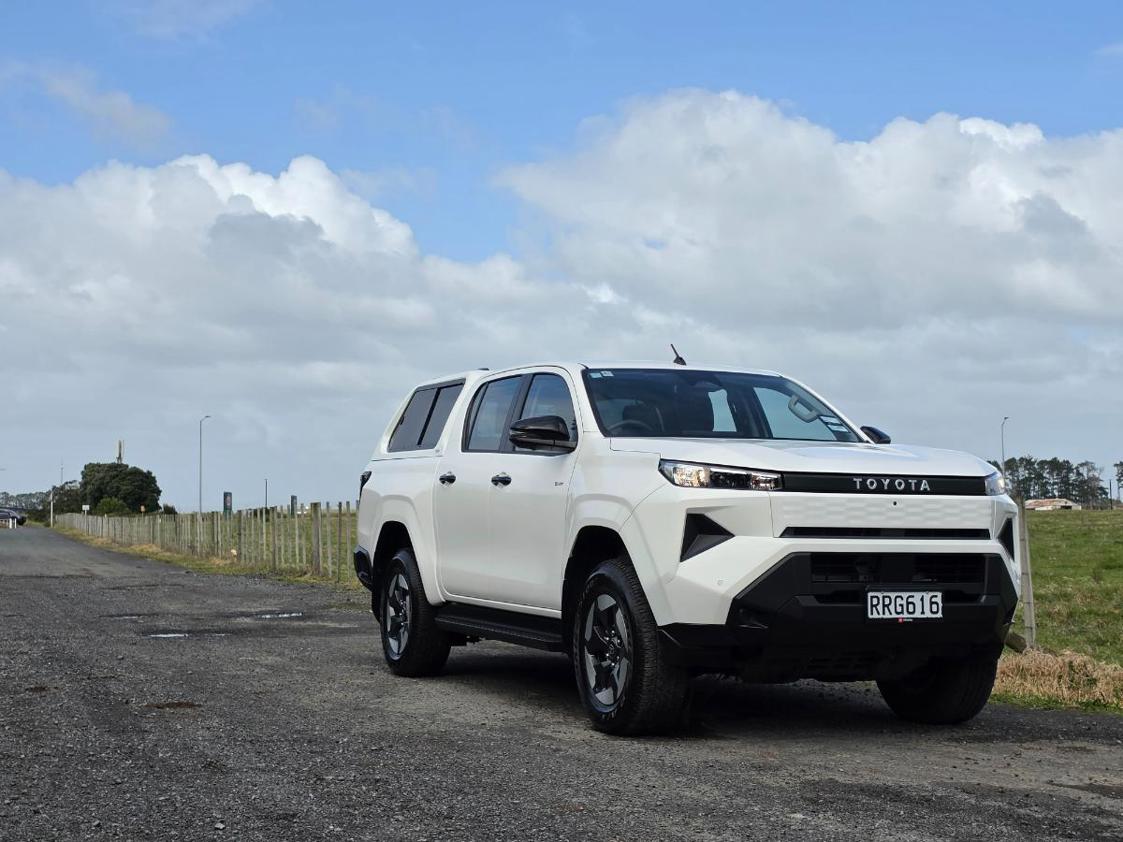
The BEV doesn't differ greatly from diesel Hilux models styling-wise, save a blanked-off grille that still has a nice little texture on it to remind you what's normally there.
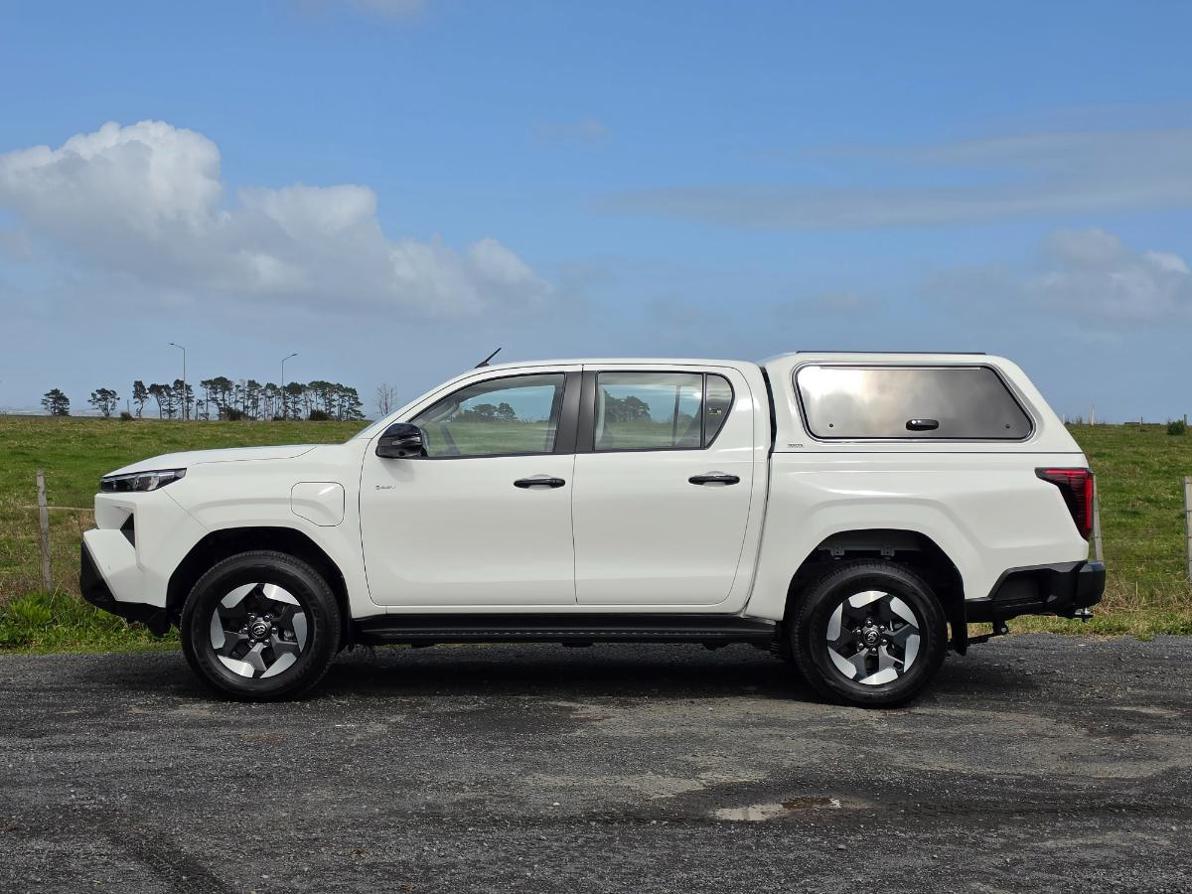
Toyota hasn't gone overboard on the badging, with tiny "BEV" logos on the front doors and tailgate. While diesel SR models have painted steel wheels, the BEV gets aero-look alloys; perhaps Toyota felt steelies just wouldn't be acceptable on an $80k machine. The BEV also gets body-colour door handles.
Speaking of which, you can only have the BEV in two exterior colours: Glacier White as featured here and the more fashion-oriented Ash (grey). Our car's finish and the general work vibe of the BEV makes it an ideal showcase for Toyota's Standard Lift Up Canopy ($4780), which comes ready-painted in the same Glacier White.
OVERVIEW
| Price | $81,990 |
| Body style | 4-door double-cab wellside ute |
| Wheels and tyres | 17in alloy wheels, 265/65 Bridgestone Dueler tyres |
| Length | 5325mm |
| Wheelbase | 3090mm |
| Weight | 2420kg |
| Website | toyota.co.nz |
On the inside: what's the Toyota Hilux SR BEV cabin like?
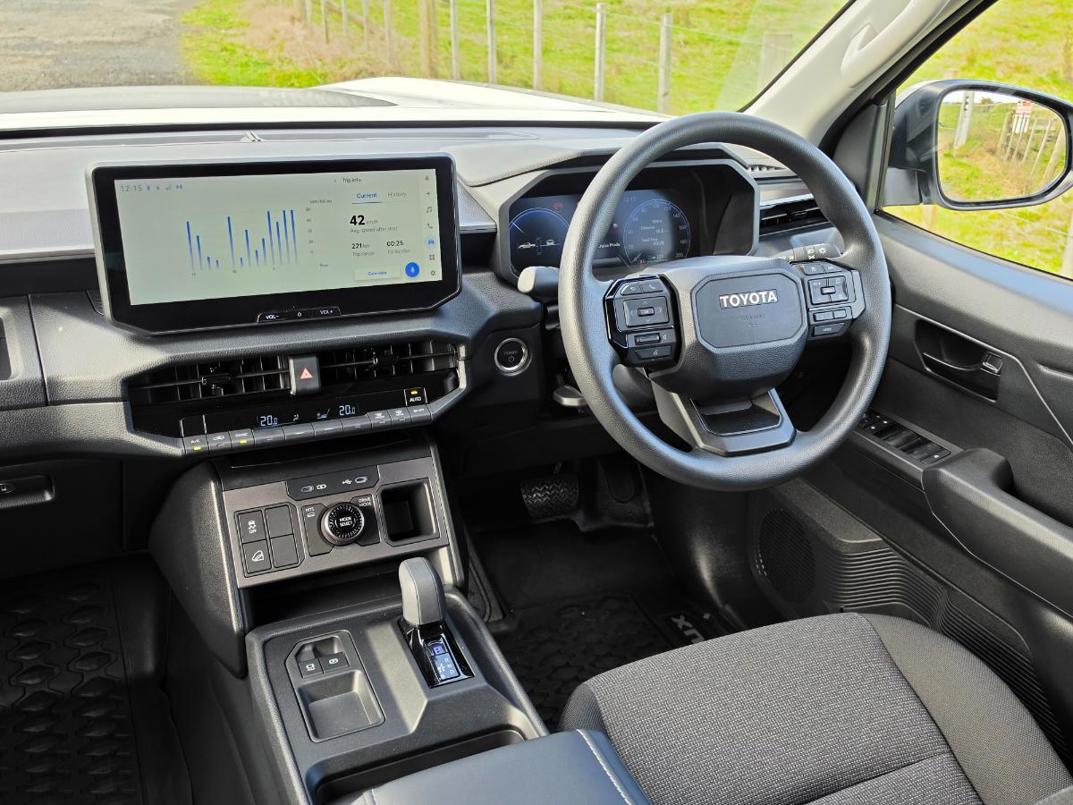
We've written loads about the new Hilux interior already. It's very appealing, but this is our first experience of the basic-spec SR trim.
If you're charging at a DC station, you can activate a 'My Room' function that allows you to keep all the cabin electronics and air-con operational in the most efficient way while you're sitting there.
Same chunky Land Cruiser-like architecture, but it's clear this is a work ute. There's no sign of a soft surface anywhere on the dashboard, the cupholders and glovebox lack the lids of higher-specification models and for some reason Toyota thinks a plain plastic steering wheel is still viable in an $82k vehicle. Not okay.
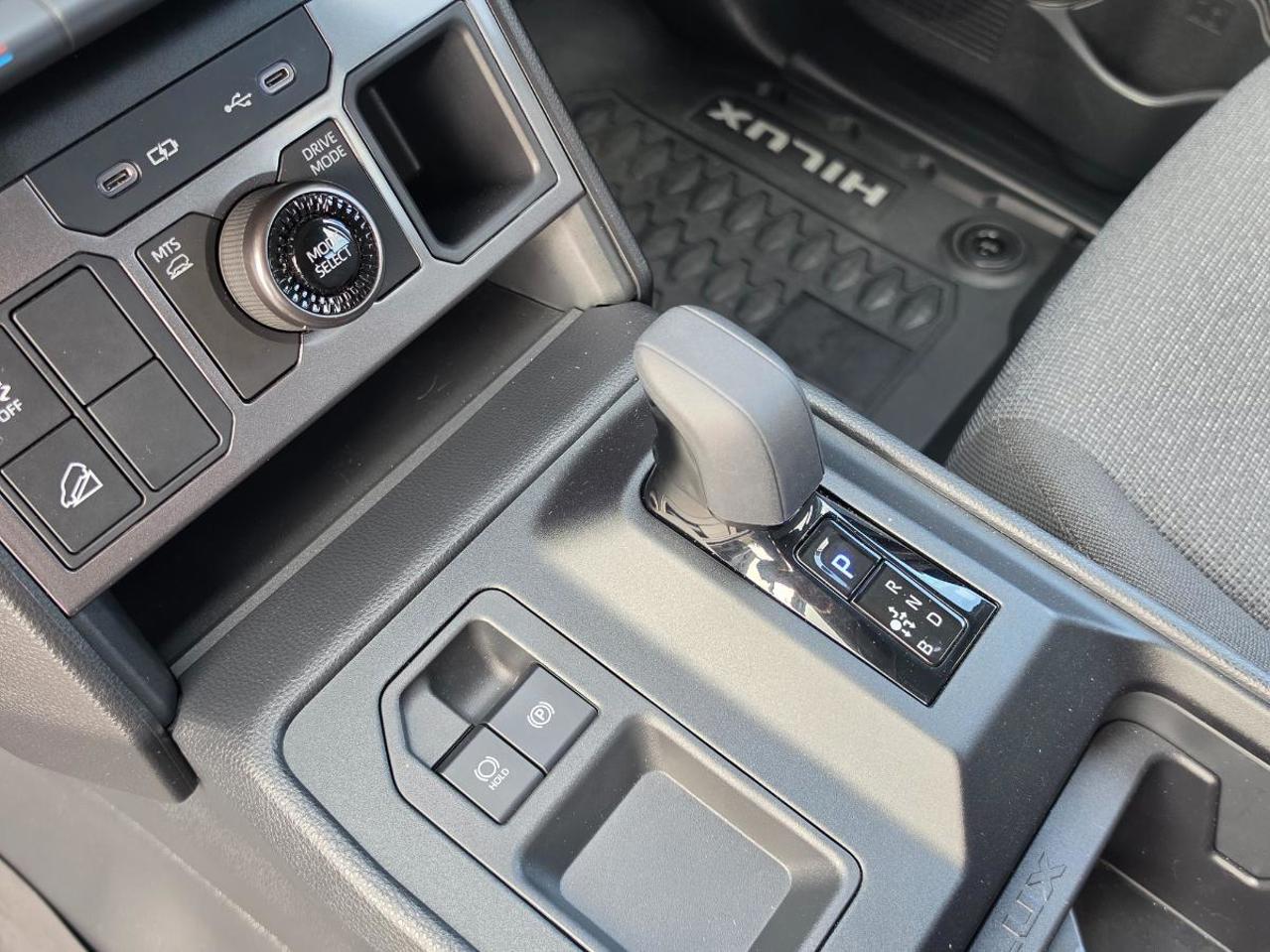
But the SR BEV is still a bit more luxurious than the SR diesel: it gets the full-size 12.3in infotainment display and dual-zone climate air-con, for example.
And it's good on the tech, with a fancy digital instrument display and wireless Android Auto and Apple CarPlay.
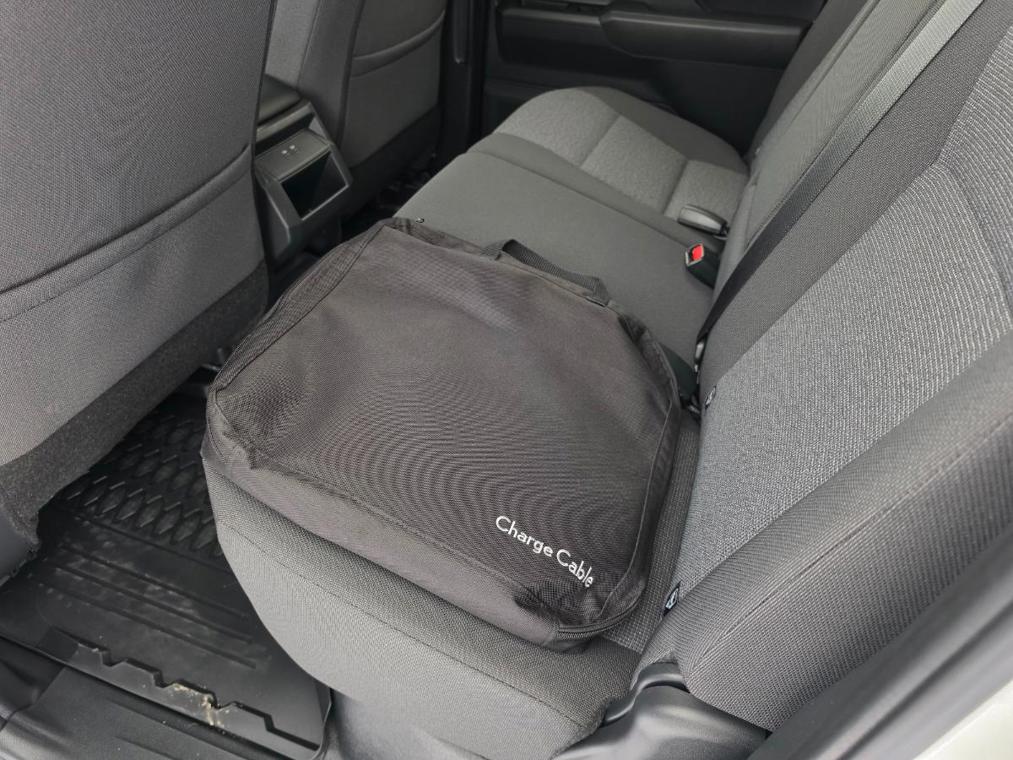
We quite like the basic grey fabric upholstery, which looks durable and is certainly comfortable. Manual adjustment for the seats, of course.
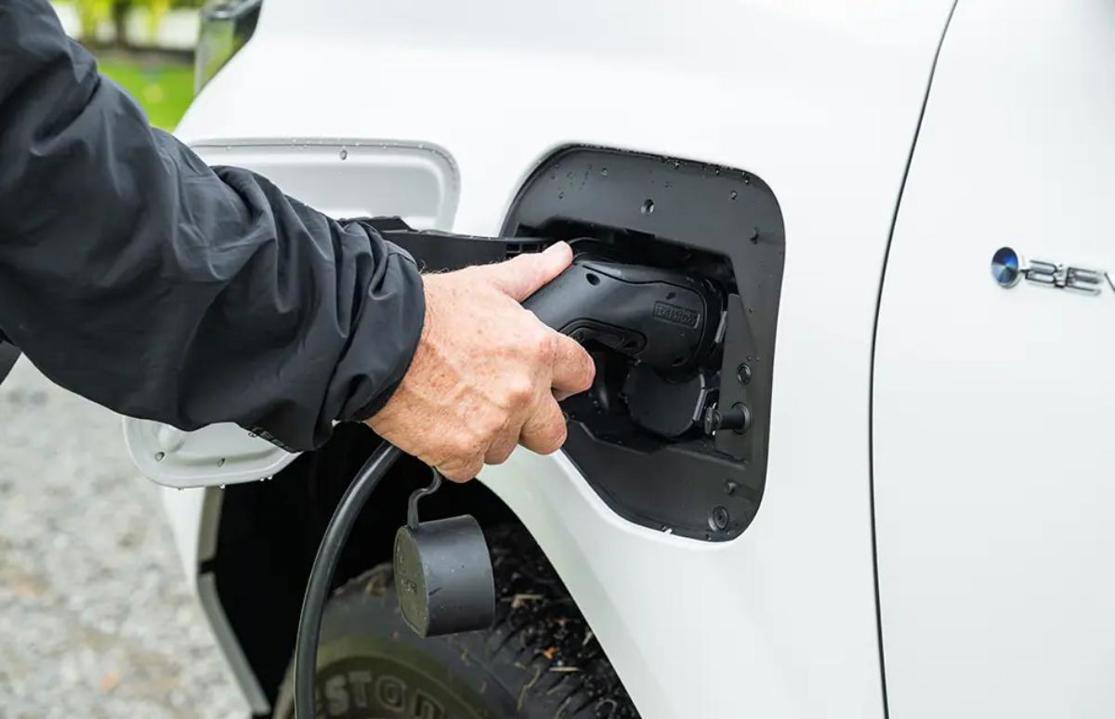
If you're charging at a DC station (150kW maximum rate, pretty good), you can activate a "My Room" function that allows you to keep all the cabin electronics and air-con operational in the most efficient way while you're sitting there. Nothing new of course, but as something we first saw in an electric Lexus, it's nice to see it included on Toyota's first EV work-ute.
There's no specific vehicle-to-load (V2L) functionality available via the exterior charge port, but the Hilux BEV does have a 1500W 3-pin plug in the centre console that's grunty enough to run power tools or camping equipment. Shame the location is not ideal: it's buried in a small storage area.
That power supply is also part of the reason the BEV doesn't have the full flip-up back-seat squab. Only the smaller portion of the 60/40 split opens, and even then there's only a tiny knook for the puncture repair kit (no spare in this model). The other (locked) side houses the inverter for that V2L power supply and other EV hardware.
Fine, but because there's no frunk either, there's really nowhere to tidily store the bag containing the emergency charging cables; and you'll probably want to have those with you, given the Hilux's modest range.
INTERIOR
| Head-up display | No |
| Infotainment screen | 12.3 inches |
| Phone projection | Wireless Android Auto and Apple CarPlay |
| Wireless phone charger | Single |
| USB ports | 2x USB-C front, 2x USB-C rear pus 12-volt and 220V/1500W outlet |
| Climate control | Dual zone |
| Front seat heating/ventilation | No |
| Front seat adjustment | 6-way manual driver, 4-way manual passenger |
| Rear seat split/fold | 60/40 for base |
| Power tailgate | No, tailgate assist for drop-down |
On the road: what's the Toyota Hilux SR BEV like to drive?
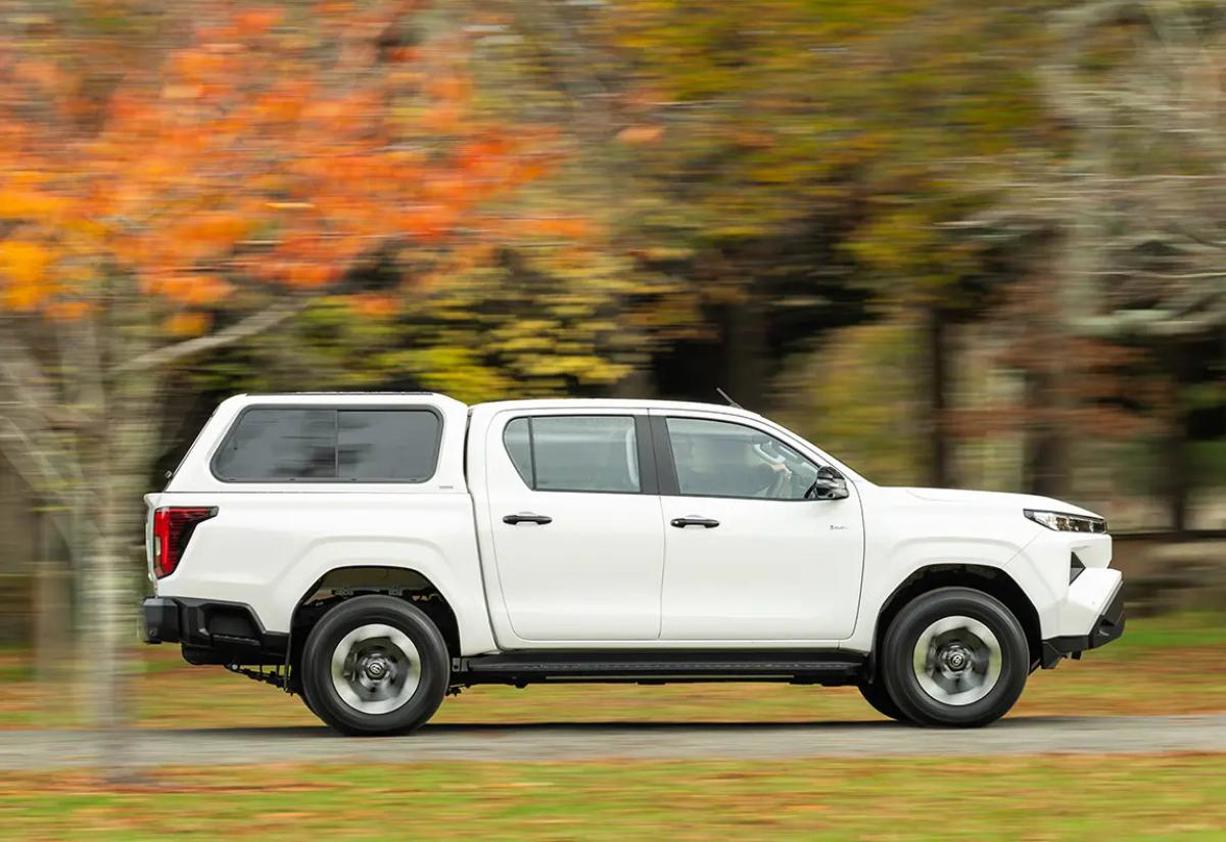
Did we use the phrase "half baked" back there somewhere? Apologies. The BEV is arguably the best riding and handling Hilux in the range, probably any Hilux range... ever.
The battery is mounted low, in the middle of the vehicle, which seems to really settle it. Given how much better regular utes handle with a bit of weight on board, that makes sense.
With a combined 144kW and 205.5Nm/286.6Nm from the front and rear axles respectively, the BEV has roughly equivalent outputs to a diesel Hilux. But it's very different to drive, of course: EV-perky off the line without being over-the-top, but running out of puff quite markedly past 80km/h if you're keen to keep accelerating.
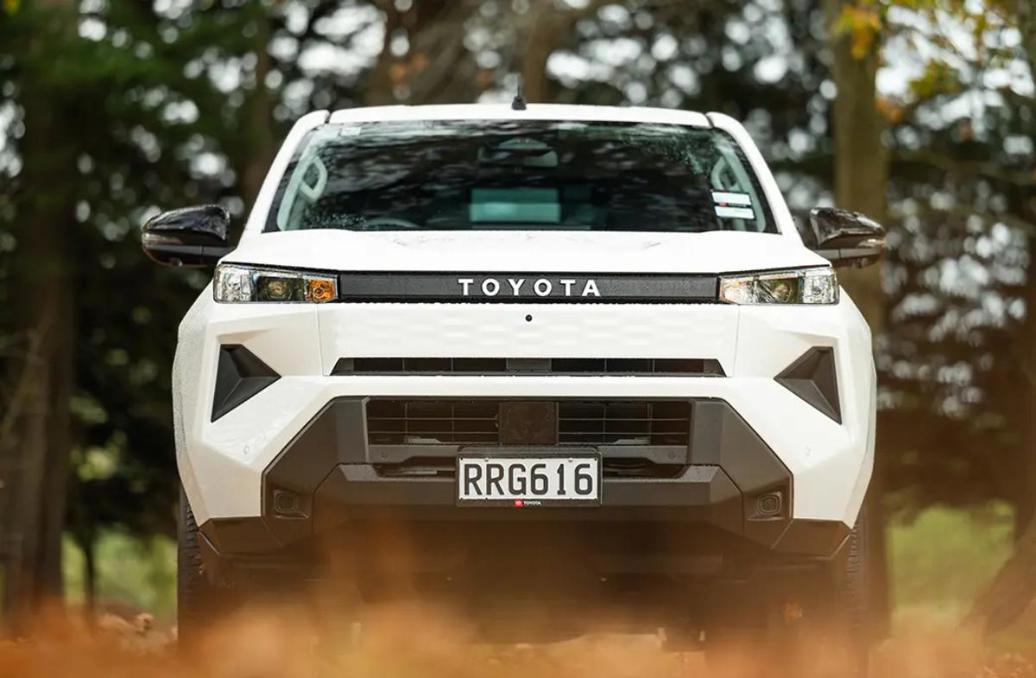
But it's smooth, so smooth, and astonishingly quiet even at open-road speeds. The ride is really impressive; there are still secondary shudders over small bumps, but they're more EV-shudders than ute ones. There's little of the choppiness and annoying yaw you get in traditional utes on-road. Especially Hilux utes. It's not wholly car-like, but it's a comfortable truck.
It handles, too. Road-oriented tyres help, but the dual motors seem nicely calibrated and there's little of the power push-and-shove you sometimes get with AWD EVs on winding roads. Ultimately it'll understeer gently, but the chassis has plenty to give on-road.
Much of the credit must go to the different weight distribution and centre-of-gravity the BEV is built around. The battery is mounted low, in the middle of the vehicle, which seems to really settle it. Given how much better regular utes handle with a bit of weight on board, that makes sense. The BEV is about 300kg heavier than a diesel SR 4WD automatic.
The Hilux BEV also has a slightly different rear suspension setup. Instead of a beam-axle housing a differential, it's fitted with a De Dion design: aka a "dead axle", so-called because it's just a steel tube linking the wheels, no drive hardware on board. The rear e-motor is mounted separately.
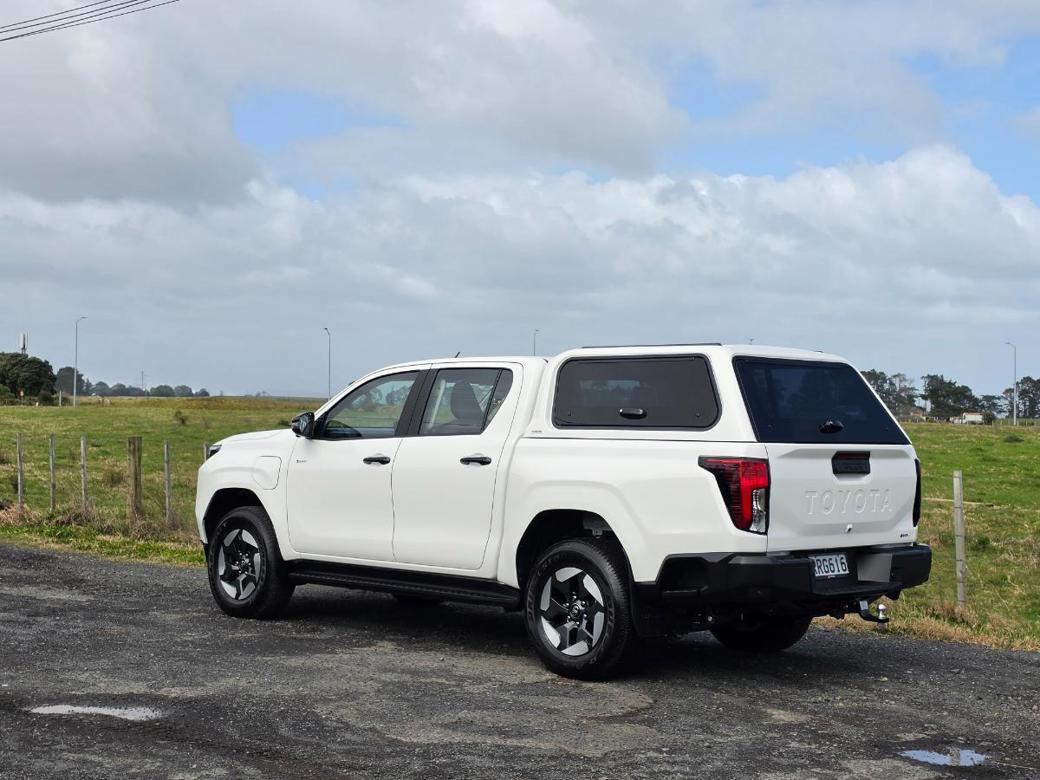
We didn't hit the rough stuff in the BEV, but colleagues on the Hilux media event earlier this year (we couldn't make it there, it's complicated) report it's as capable as the diesels in that environment, too. Not surprising given e-motors are brilliant in low-traction conditions, the BEV has the full Multi Terrain Select drive-mode controller (it has an on-road Sport mode too) and this Hilux remains a hard-core ladder-frame 4x4 underneath.
Indeed, that revised rear-axle arrangement potentially improves roigh-terrain ability because it's essentially a smooth tube that's unlikely to get caught on too much, not a beam with mechnical hardware hanging down.
Where the Hilux BEV does come up short is limited range, 725kg payload (240kg shy of an SR diesel) and 2-tonne towing (1.5t down). And of course anything you carry or tow is going to eat into that meagre range even further.
But what's the range, really? Our car showed 260-270km pretty consistently on a full charge. Open-road driving, especially the more, ahem, enjoyable kind we undertake for a review, is going to mean you can only really count on a little over 200km. Around town, you'll manage 250km. It's not a lot.
SPECIFICATIONS
| Powertrain type | Battery electric |
| Capacity | 59.2kWh |
| Power | 144kW (combined), 82.2kW front, 129.3kW rear |
| Torque | 205.5Nm front, 286.6Nm rear |
| Transmission | Single-speed |
| Power to weight | 56kW/tonne |
| Adaptive suspension | No |
| Efficiency | 20.2kWh/100km (NEDC) |
| Range | 240km (WLTP) |
| Tow rating | 2 tonnes |
On ownership: what's the Toyota Hilux BEV warranty and servicing situation?
The vehicle is covered for 3 years/100,000km, but extended to 5 years/150,000 ("Platinum Warranty") is servicing is carried out at an authorised outlet. The traction battery has separate 8 year/160,000km cover.
Servicing is required every 12 months/15,000km.
On the whole: what do we think of the Toyota Hilux SR BEV?
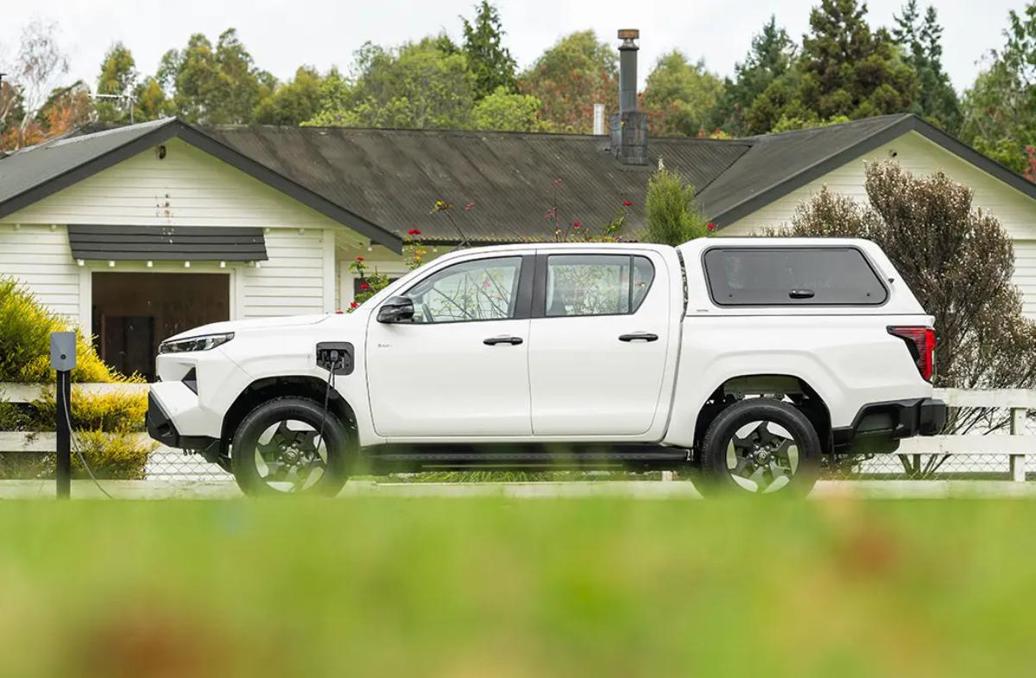
There's a lot stacked against the Hilux BEV as a standalone concern: it's expensive, the range is tiny and it doesn't carry or tow nearly as much as its diesel siblings.
But on the plus side, it's just one option in a range of Hiluxes and more importantly, it's a Toyota. That opens a lot of doors.
It's also really in a class of one right now. There are other electrified utes in market, but Hilux is the only BEV that's also based on proper ladder-frame underpinnings and therefore truly 4x4-capable.
It has some major shortcomings in a practical sense, but you can't escape the impression the Hilux BEV is a beautifully engineered machine.
Toyota Hilux SR BEV FAQs
What kind of car is the Toyota Hilux SR BEV?
A double-cab ute.
Does the Toyota Hilux SR BEV have hybrid or EV technology?
It's pure electric.
What’s the efficiency of the Toyota Hilux SR BEV?
The WLTP range is 240km, which equates to 24.7kWh/100km.
Is the Toyota Hilux SR BEV safe?
All Hilux models including the BEV have a 5-star ANCAP rating, valid until December 2031.
What safety and assistance features does the Toyota Hilux SR BEV have?
| Intelligent lights | Bi-beam LED |
| Rain sensing wipers | Yes |
| Airbags | Dual front and side, front-centre, driver's knee, side curtain |
| Adaptive cruise control | Yes |
| Driver attention monitor | Yes |
| Traffic sign recognition | Yes |
| Forward collision warning | Yes |
| Blind spot warning/assist | Yes/no |
| Lane departure warning/assist | Yes/yes |
| Rear cross traffic alert/braking | Yes/no |
| Reverse collision braking | Yes |
| Parking sensors | Front and rear |
| Camera system | Reversing Panoramic View Monitor with dynamic guidelines |
What are the Toyota Hilux SR BEV's main rivals?
- Geely Riddara RD6 Pro ($69,990): Also a BEV and much more grunty with much bigger range, but based on a car platform.
- BYD Shark Performance ($78,990): Super hybrid not BEV, but this money buys you the new Performance model with 3.5t towing.
- GWM Cannon Alpha Ultra PHEV ($69,990 on special): Conventional PHEV but big EV range and proper 4x4 ability.
- Jac T9 PHEV ($59,990): Another super hybrid, decent EV range and and built on ute platform.
- Toyota Hilux Adventure ($63,990): SR BEV money gets you the flagship Hilux mild-hybrid diesel, and leaves $18k change for eaccessories.