



- Mitsubishi has released a new teaser for the upcoming next-gen Pajero.
- The new vehicle will use a digital reinterpretation of the classic off-road multi meter.
- Australian documents also reveal potentially four model grades for the new Pajero.
Last month Mitsubishi revealed that it will debut an all-new Pajero "cross-country SUV" before the end of 2026 with a teaser view of the new SUV's headlights, marking the nameplate's return after a five-year hiatus.
Now it has continued that teaser campaign by revealing a nice retro touch that long-time Pajero fans will recognise: a modern digital interpretation of the Pajero's classic multi meter display found in earlier generations.
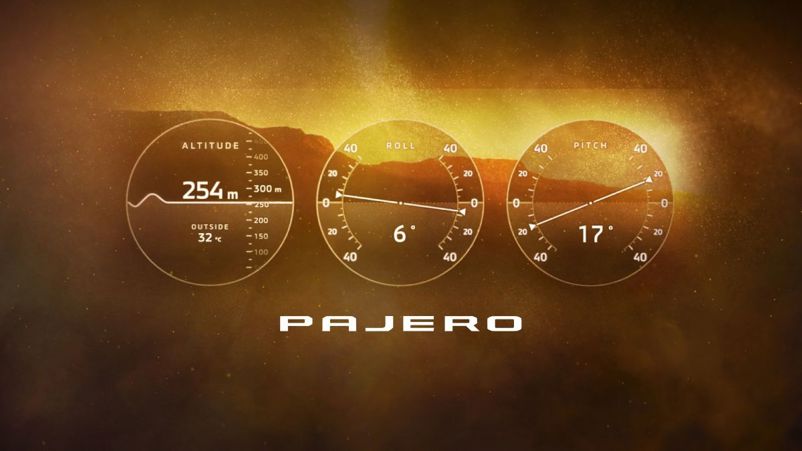
This system provides the driver with real-time data crucial for navigating off-road environments, such as altitude, compass heading, ambient temperature, vehicle pitch and roll angles, and left-right torque distribution, much in the way the old analogue gauges in the previous, now discontinued, model did.
While there is no word on a New Zealand arrival for the new Pajero yet, Australia has been identified as one of the first markets to receive the fifth-generation vehicle, and now homologation documents obtained by Australian website Cars Guide indicate that it will be available in four distinct grades: the GLX and GLS, which focus on utility; the luxury-oriented Exceed; and a flagship GSR variant.
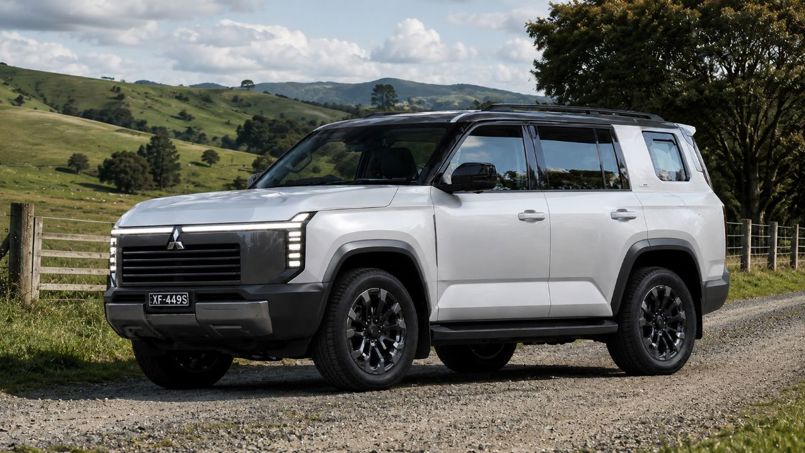
The upcoming Pajero is engineered on the rugged ladder frame of the current Triton ute, though it features a model-specific cabin and suspension system designed to balance off-road capability with ride comfort - that means coil springs at the rear.
Power is expected to come from the Triton's 2.4-litre bi-turbo four-cylinder diesel engine that produces150kW and 470Nm, paired with a six-speed automatic transmission, and the Pajero will also likely utilise the Triton's Super Select 4WD-II system, incorporating active yaw control and a rear differential lock. Recent sightings of the vehicle testing in Australia suggest a blocky, utilitarian aesthetic.
The history of the Pajero began with its original launch in 1982, when it was introduced as a recreational vehicle that merged off-road performance with passenger car comfort. In 1983, the model entered the Dakar Rally, eventually securing a record 12 total victories, including a streak of seven consecutive wins.
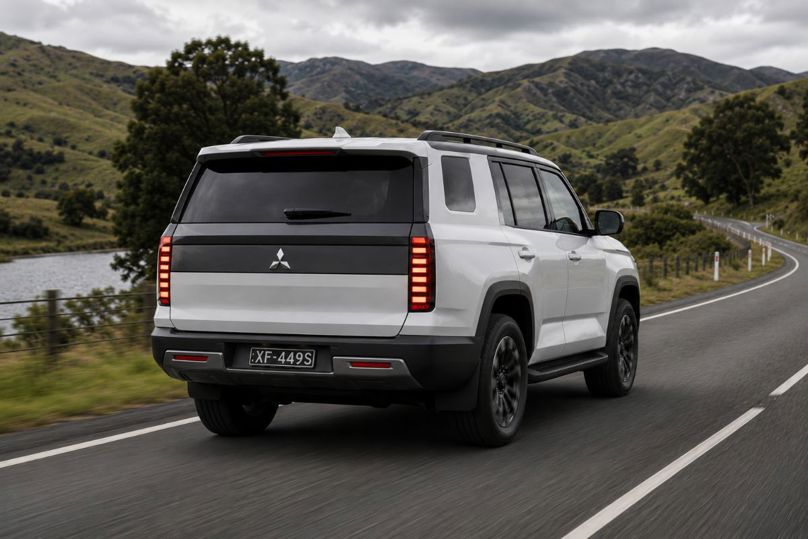
During the 1990s, the lineup expanded to include specialised models like the Pajero Mini, Pajero Junior, Pajero iO, and the mad Pajero Evo. Across its first four generations, the Pajero achieved global sales exceeding 3.25 million units before it was discontinued in international markets in 2021.
Mitsubishi says the upcoming 2026 release represents "the next phase for the nameplate", with future speculation suggesting potential three-door or compact variants like the original SWB version, as well as the Mini, Junior an iO, may follow in the next decade.


