



- Renault has revealed an all-electric reboot of the iconic Espace MPV.
- Debuting in 1984, the Espace was one of the originators of the people mover concept.
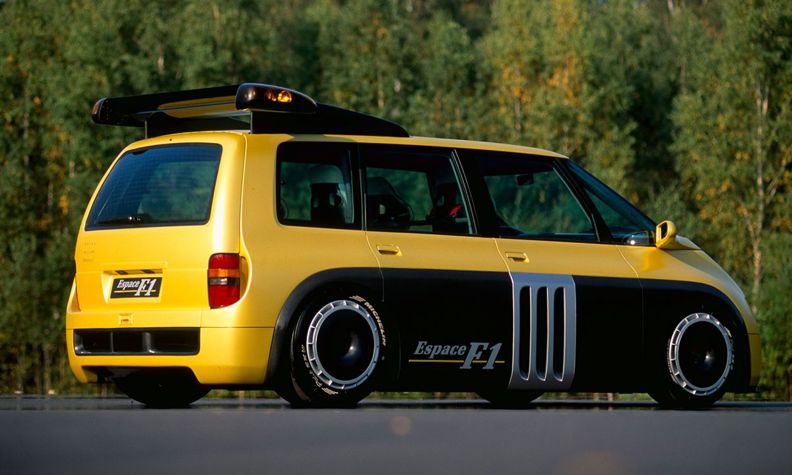
- It was taken to an absurd extreme in 1996 with the V10-powered Espace F1 that used the underpinnings of a Williams F1 car.
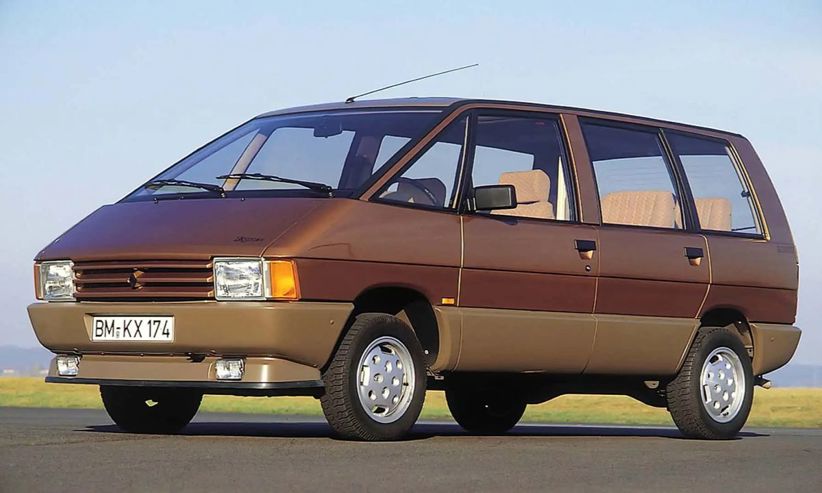
The original Renault Espace was one of those cars that changed what a family car could be when it arrived in 1984, arguably inventing the modern people mover concept, with its boxy shape, flexible interior and sheer amount of usable space making the conventional family hatchback look rather limited by comparison.
Now, more than four decades later, Renault is looking back to that idea with the E-Space Concept, a fully electric concept that will make its public debut at the 2026 Paris Motor Show.
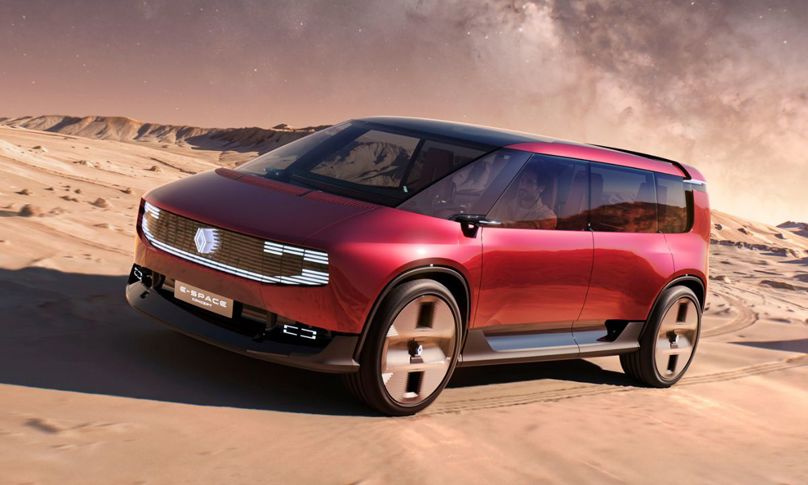
While not yet confirmed for production, Renault says the E-Space Concept is intended to "explore the future of family travel", with an emphasis on interior space, technology and the experience of occupants.
The 4.70m-long concept has a relatively large footprint for a family vehicle - roughly the same as that of the Volkswagen ID. Buzz and Kia PV5 - while its exterior design is distinguished by a wide U-shaped light signature at both the front and rear. An illuminated Renault diamond sits in the centre of the front end, with the lighting incorporating a pixel-style treatment.
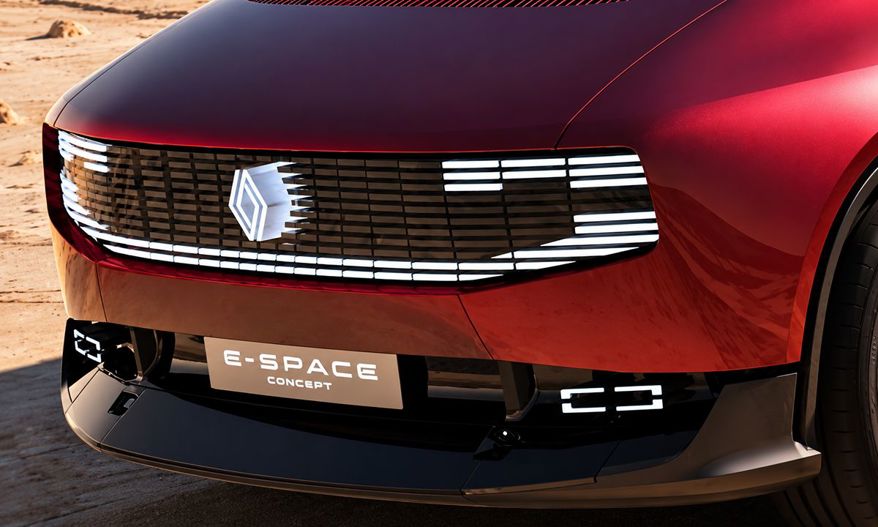
Renault says the name combines its E-Tech electrification branding with "Space" (obviously...), referring to the vehicle's intended focus on a spacious interior.
The company has released limited information about the cabin so far, with details of the production potential, powertrain, battery capacity and performance yet to be announced. The concept is instead being used to demonstrate Renault's current thinking around family-car design and in-car technology.
The Espace has always been a slightly unconventional part of Renault’s history - the original was conceived by Chrysler UK designer Fergus Pollock in the early 1970s before being handed to Matra to develop as a Simca model.
Chrysler UK and Simca were sold to PSA Peugeot Citroen in 1978, which passed on the design, saying it would be too expensive, which led Matra to take the project to Renault in 1982.
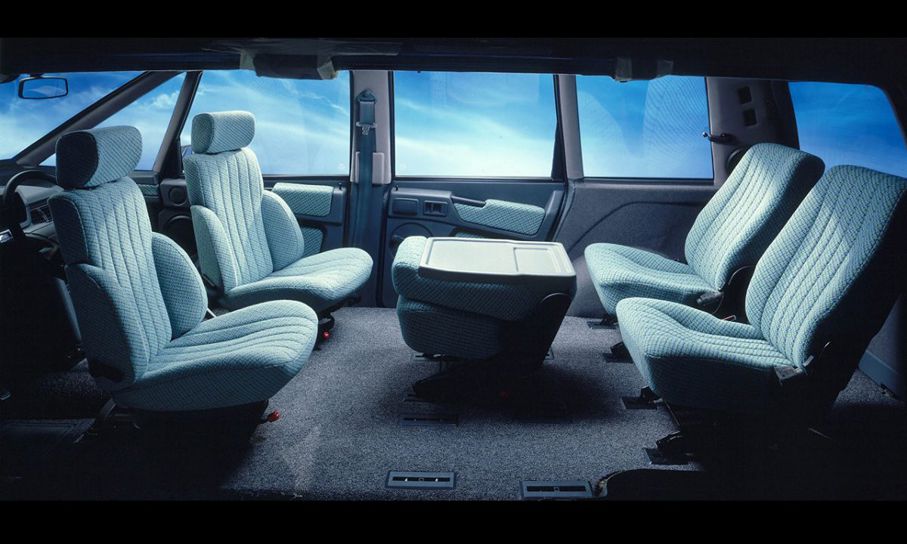
The first Espace arrived in 1984 with a one-box design, a flat floor and removable rear seats, while its two front seats could swivel 180 degrees. It was initially a slow seller, but eventually established the large European people-mover as a mainstream vehicle category.
Perhaps the strangest chapter came in 1994, when Renault and Matra built the Espace F1 to mark the 10th anniversary of the model.
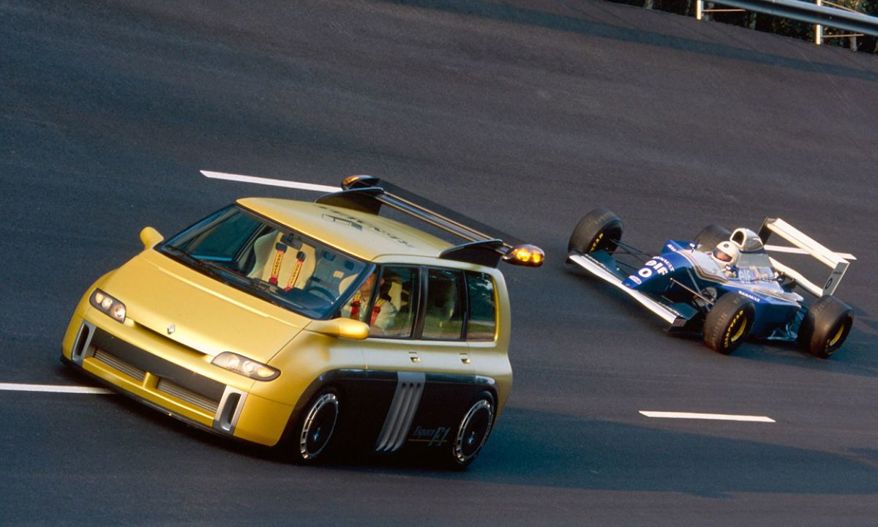
Underneath the familiar people-mover body was a carbon-fibre chassis carrying the 3.5-litre V10 from the Williams-Renault F1 car, producing around 820hp and driving the rear wheels through a sequential gearbox.
With its F1-derived suspension, brakes and aerodynamic additions, the Espace F1 was capable of approaching a terrifying top speed of 300km/h, and was a completely unhinged idea - taking a sensible family minivan and stuffing a screaming Formula 1 engine into it, mostly just to show off.
The new E-Space Concept isn't nearly that crazy (your groceries are safe this time), but Renault is basically doing a similar thing again: taking their classic family hauler and using it as a guinea pig to see what happens when you completely swap out the tech underneath.
The E-Space Concept is one of three concept vehicles Renault will display at the Paris show. It will be joined by the Renault 8 Gordini Concept, an electric two-seat coupe inspired by the 1960s performance model, and the Renault 4 JP4x4 Concept, a four-wheel-drive interpretation of the Renault 4.
The E-Space Concept will sit alongside a number of updated production vehicles on Renault's stand, including the revised Megane E-Tech electric, which gains a 67kWh LFP battery and a claimed range of up to 500km.
Renault is progressively introducing LFP batteries across its electric range to reduce costs and improve the price-to-range balance, with the chemistry avoiding more expensive nickel and cobalt.
The company says isn't replacing NMC, however, with the two technologies expected to serve different purposes: LFP for more affordable mainstream models, while higher-capacity NMC packs remain available where longer range and greater energy density are priorities.
Renault's Paris Motor Show press conference is scheduled for 12 October 2026, when the E-Space Concept will receive its full unveiling. More details about the concept, including its interior and technical specification, are expected to be released at the event.


