



What are these new utes all about then?
The Foton Tunland V7 and V9 belong to a new breed of Chinese utes that are half a size up on traditional one-tonners like the Ford Ranger and Toyota Hilux, but not reaching the scale of American pickups like the Chevrolet Silverado, Ford F-150 and Ram 1500.
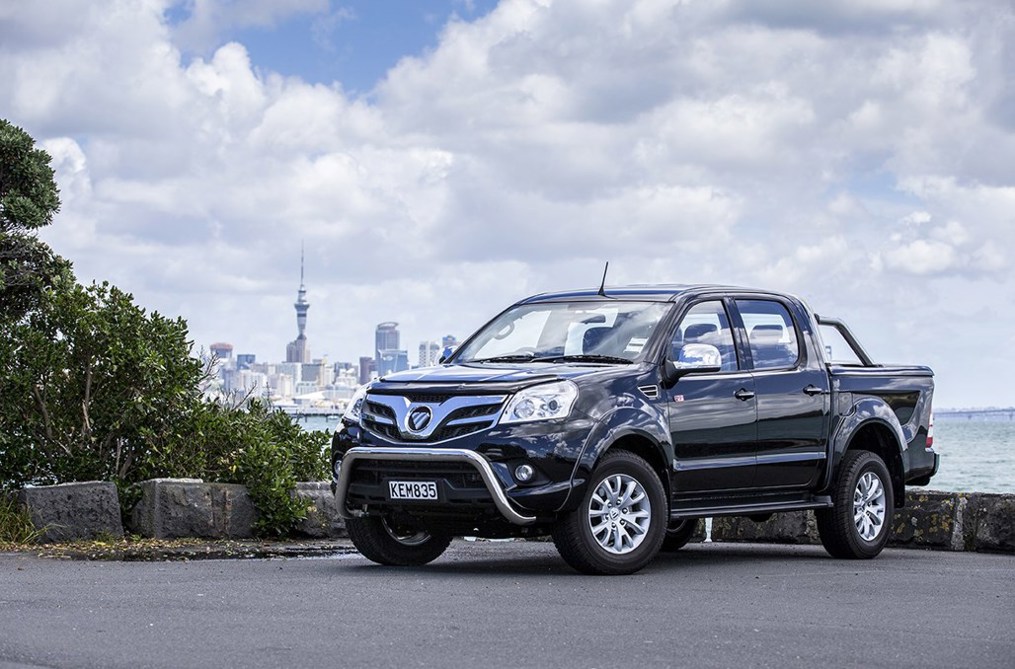
Foton Tunland: sounds familiar, right? Tunland was introduced to NZ alongside the existing Foton truck range well over a decade ago, initially through Ateco Automotive (current distributor of BYD, Jeep, Ram and others) but since 2017 represented by Anglesea Vehicle Distributors (AVD), a division of Hamilton-headquarted car-retail giant Ebbett Group.
AVD had its ups and downs with the previous Tunland. In 2017, its first year with the vehicle, it set a new sales record of 600-plus. But in 2019, Foton stopped making the vehicle in right-hand drive, meaning AVD had to simply get on with its Foton truck business in NZ. Which it has done in the years since.
But Tunland is back, big-style. The V-series models are new from the ground up (aka Mars 7 and 9 in China), 4x4 utes based on a ladder-frame chassis and powered by a new 2.0-litre turbo-diesel mild hybrid powertrain.
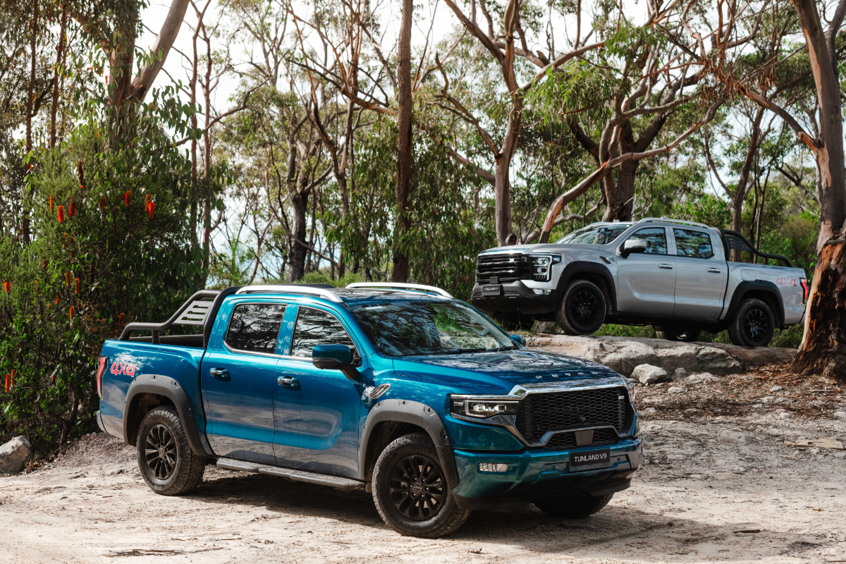
They look quite different at the front... but they're pretty much the same. The Tunland V7-C 4x2, V7-C 4x4 and V9-S 4x4 share the same 120kW/450Nm powertrain, major body panels and cabin design.
Foton NZ characterises the V7 as the model for "work" and the V9 for "play". Meaning the former is more for utey chores and business customers, the latter leaning more towards private buyers.
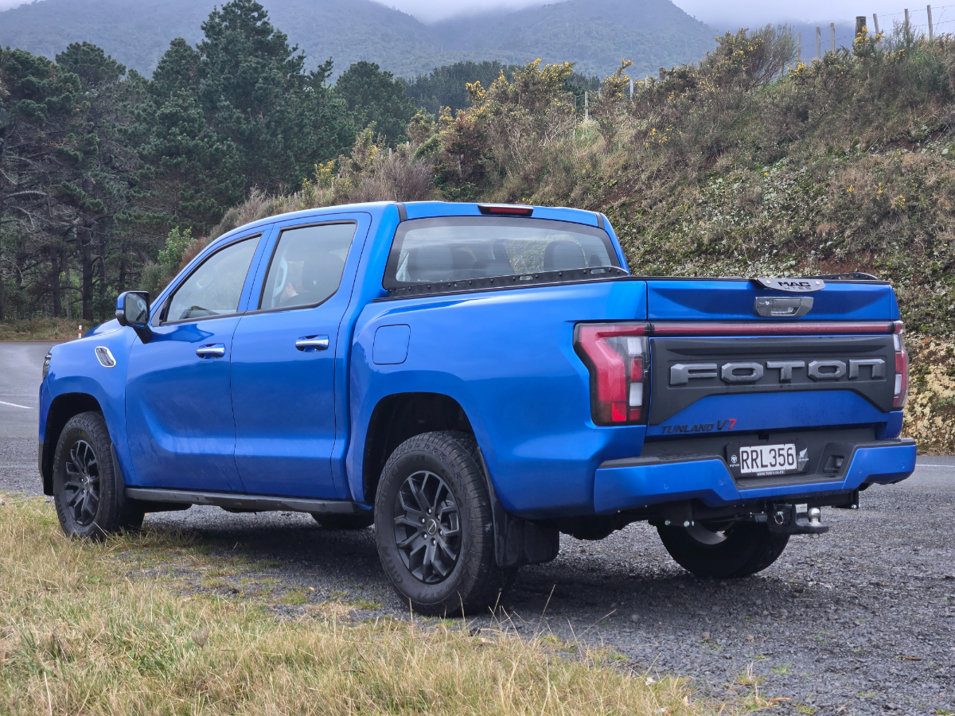
There are a few fundamental differences beyond the frontal styling (we know what you're thinking, we'll get to that in a minute). The V7 is the only model you can specify with 2WD, and both the 4x2 and 4x4 have a rigid rear axle and leaf springs versus the multi-link/coil arrangement of the V9.
The solid rear improves off-road articulation and presumably makes for a more stable towing platform, while the multi-link setup gives better ride and handling. But there's really not a lot between the two in on-paper capability. Payload is close at 1115kg, 1050kg and 995kg going up the range, while all can tow 3.5 tonnes.
The V7 4x4 gets extra Sand/Mud/Snow drive modes over the 4x2 (although that model still gets Eco/Standard/Sport), rear differential lock and all-terrain tyres. The V9 has the same 4x4 system, but adds a front diff lock.
At 5617mm in length, the Tunland is actually a little larger than the likes of the GWM Cannon Alpha (5445mm). Foton NZ chief executive Roger Jory reckons size is a strength: “It’s larger than the traditional utes, yet smaller than the heavy duty American trucks. It’s the perfect in-between. It’s a large-size ute designed to hit a sweet spot: the right size, the right capability and the right price."
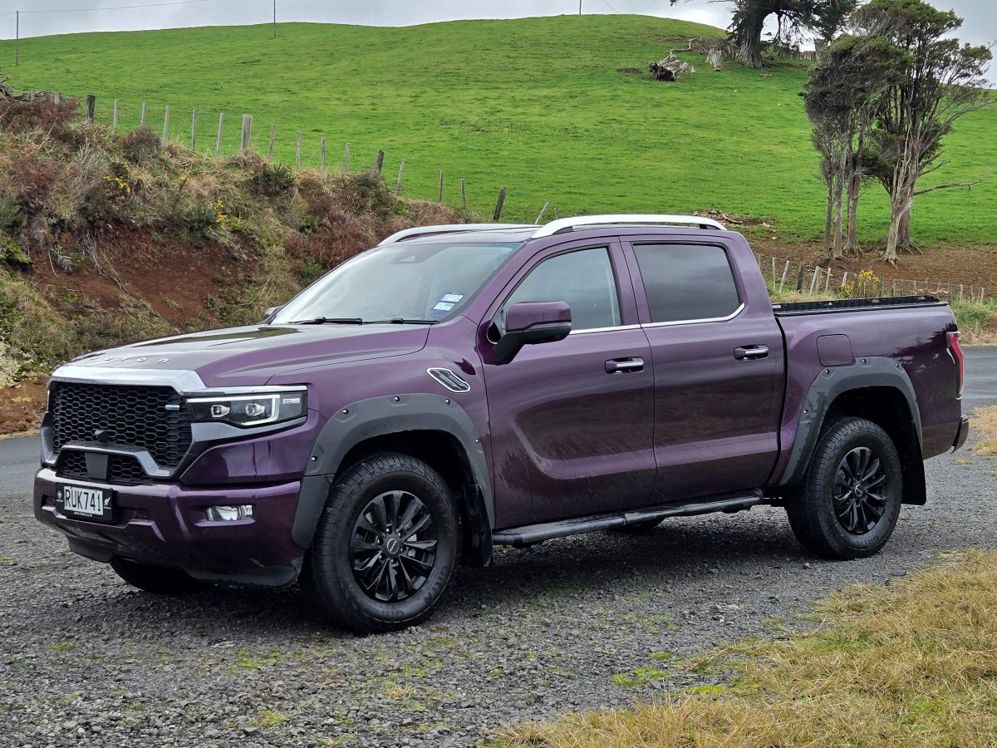
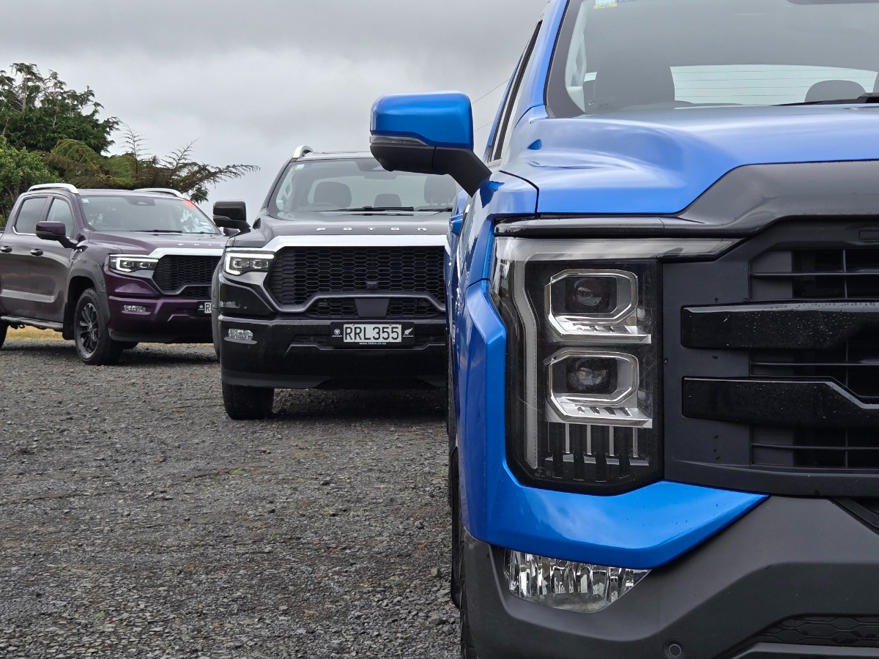
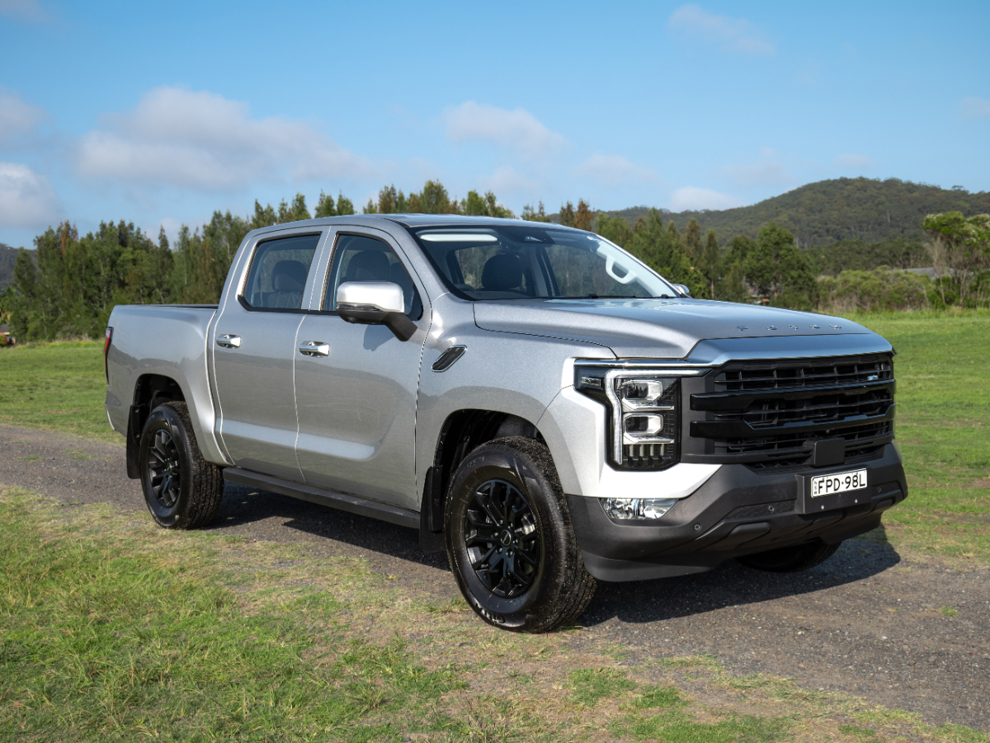
Ah yes, American pickups. It's pretty clear both models are inspired by US trucks. The V7 has frontal styling that coud easily be mistaken for a Ford F-150, while the V9 picks up Ram style and runs with it. The homages are either unashamed or shameless, you pick.
The V9 is also distinguished from the V7 by wheelarch extensions (the track stays the same, though), a unique "premium" design of side steps, and roof rails.
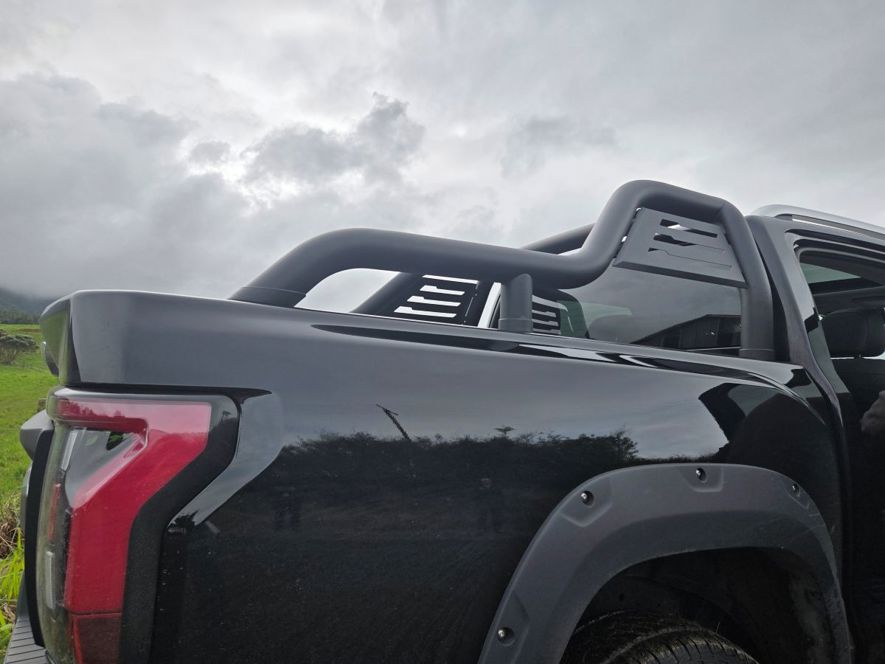
The tray on both models is 1650mm wide and 1250mm between the wheel arches, meaning it can take a standard-size pallet "with room to spare" says the company. There's a pop-out step built into the top of the tailgate for use when it's lowered; the door comes down easy with gas struts, although it's still fairly hefty to raise again.
Inside, it's part Chinese design template with a large 14.6-inch infotainment screen and part big-pickup style, with a wide centre console and lots of physical buttons for climate and 4x4 functions. It's a good mix, actually.
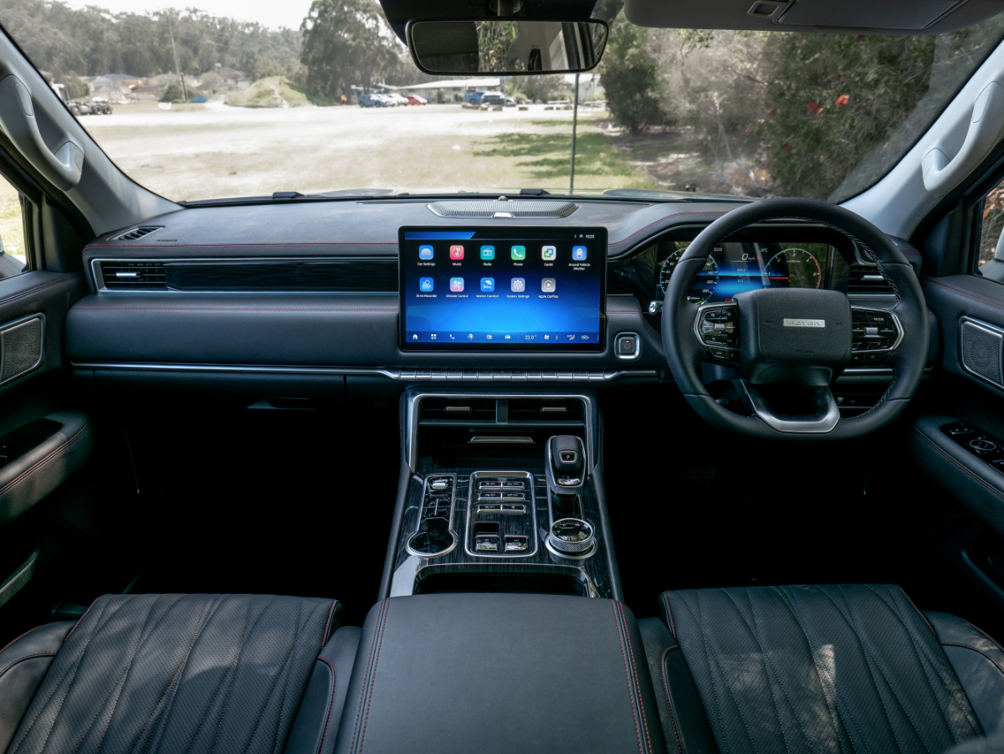
All models have panoramic 360-degree camera display (including a Transparent Chassis function) and dashcam, power front seat adjustment with heating, facial recognition for cabin settings with three profiles, 256-colour ambient lighting, an air purification system and rear-seat ventilation outlets.
Features unique to the V9-S include dual-zone climate control (it's single in the V7-C), anti-glare rearview mirror, front-seat memory and ventilation, rear-seat heating and a panoramic sunroof.
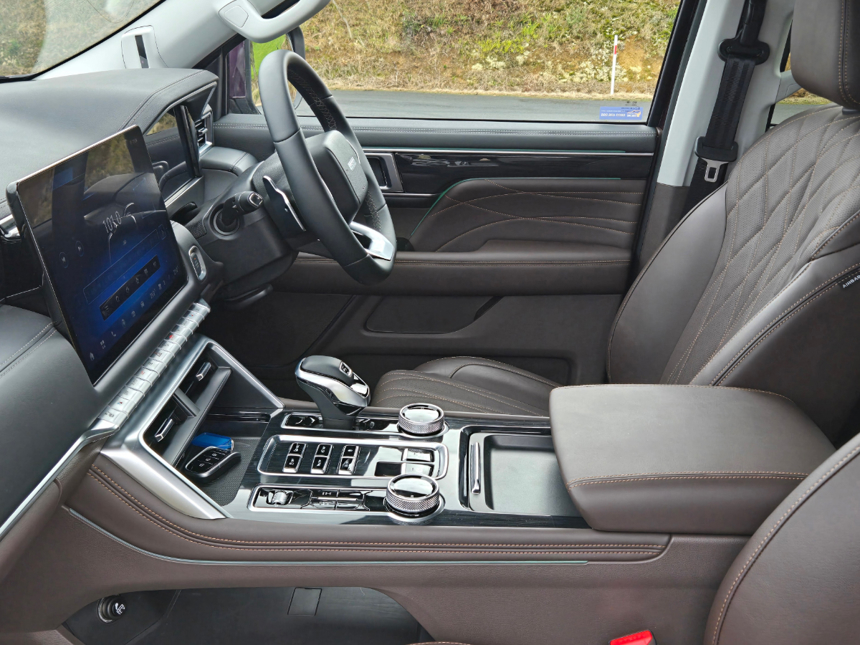
The synthetic leather upholstery is black by default, but Foton NZ is also offering brown as an option across the range.
Perhaps with that "play" aspiration in mind, the company is also offering some bold colours in addition to the usual white, black, silver and grey: Tahitian Blue, Aurora Green, Inferno Red and Charger Purple. One of our drive vehicles on the media launch day was finished in Charger Purple with the brown interior (including orange stitching), an extremely excellent combination.
Jory says NZ has even played a small part in the development of the Tunland. Back in 2018, on the strength of Foton NZ's record Tunland sales year, nine people from the V-series development team in China visited the local distributor for input on our market. Foton NZ hired the Claudelands event venue in Hamilton and assembled every current double-cab ute available here for the factory representatives to inspect.
It was a tiny part of a very large picture, agrees Jory: “But the Foton NZ team can take some recognition in playing a small part in the development of the Tunland V-series.”
Just to round out the picture, the previous (smaller) Tunland continues in heavily updated form in China as the G-series, and it is produced in right-hand drive again, mainly for South Africa. But Foton NZ is focused on the V-series, which it sees as more future-facing and offering a point of difference from the one-tonne mainstream.
How much are they?
These are large utes at less than regular-ute prices. The V7-C 4x2 opens at $48,990, it's another $3k to go 4x4 and the flagship V9-S 4x4 still comes in well under sixty grand: $57,990.
Jory says the dealer network is still evolving for Tunland: "“We have representation that we’re close to announcing in Whangarei and Auckland, Pukekohe we have covered, Hamilton, Tauranga, Hastings, Palmerston North and Wellington. We hope to make an announcement about Christchurch next week. We’re working with a partner in Dunedin and we have service centres in Greymouth and Nelson."
Jory argues Foton's long-term presence in NZ should count for something in the current environment: “Foton NZ [has a] proven aftersales track record, which is an important factor given all of the new entrants in the NZ market.
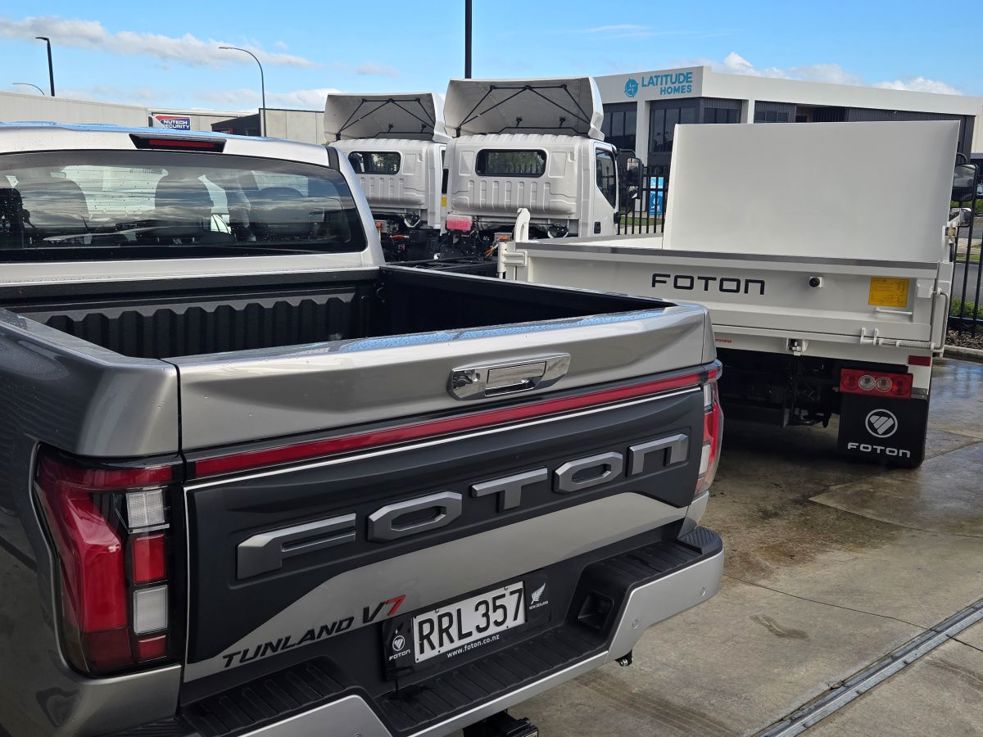
To the best of my knowledge, none of the new entrants have invested in a purpose-built national headquarters like Foton NZ has [opened in 2023], which demonstrates the commitment to the Foton brand.”
Foton is a subsidiary of BAIC, but operates as a separate division - the largest commercial-vehicle manufacturer in China, in fact.
There's no relationship between Foton NZ and local BAIC importer Auto Distribution Holdings (part of Armstrong's Group), although the latter has indicated that a new BAIC-branded ute will likely be part of its Kiwi portfolio in time. Whether that will be a Foton-derived product or a BAIC-specific effort is not yet known.
What are they like to drive?
Our media drive was just a taster of the new model: a run from Foton NZ headquarters around some backroads (including gravel) to Raglan. We spent most of our time in the V9-S.
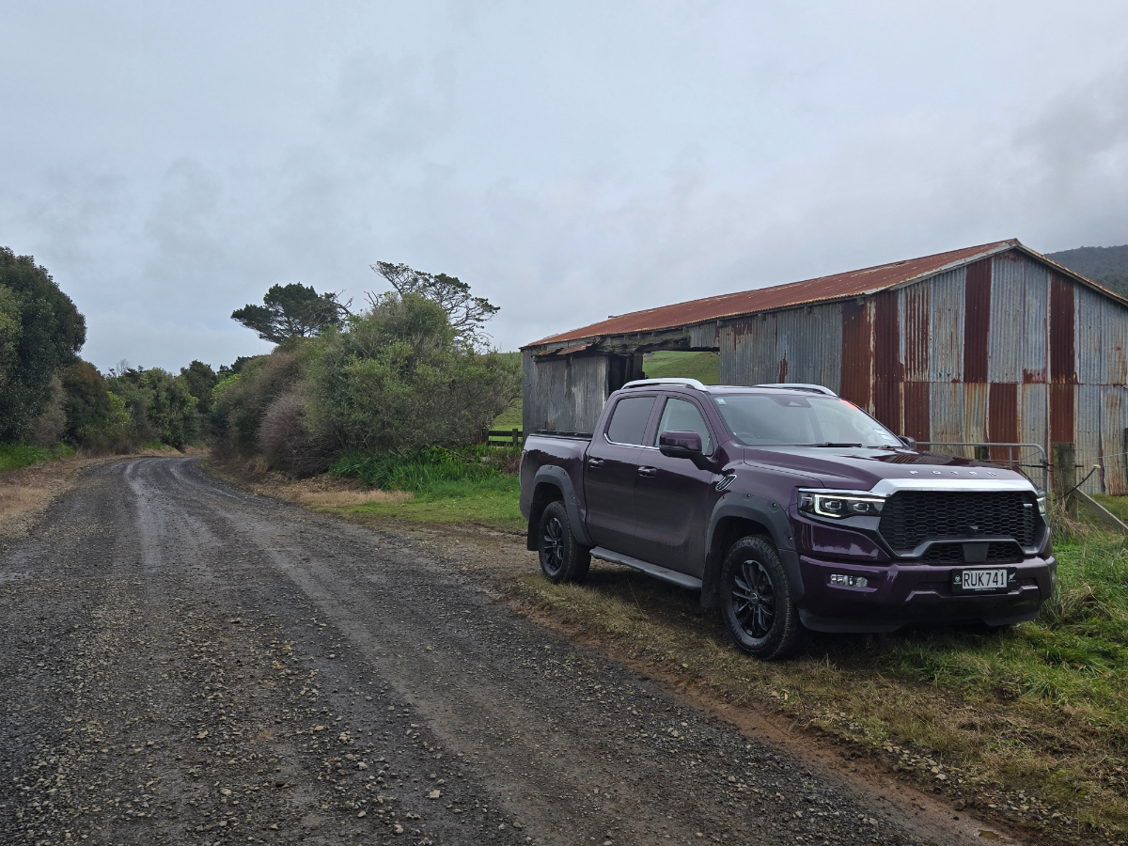
The powertrain is a standout. The turbo-diesel engine is impressively quiet and unstressed, partly thanks to the boost provided by the mild hybrid system at low-to-middling revs.
Foton has a joint venture with transmission specialist ZF and it's easy to assume the 8-speed in the Tunland has had just a little extra attention in terms of calibration. It seems to surf the engine's torque curve very well and in Sport mode on some winding gravel roads, it was doing some nice, controlled downshifts and keeping the big fella balanced on downhill stretches.
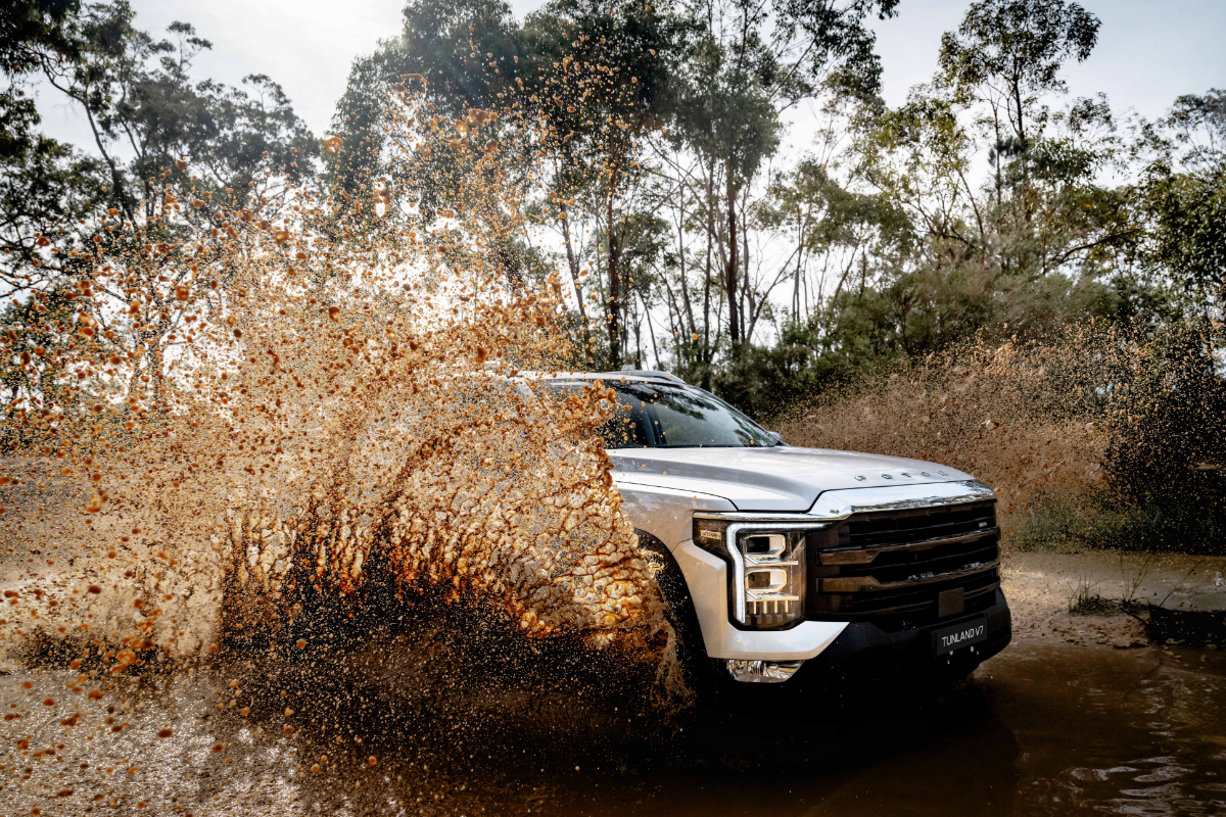
The steering (adjustable for weight) and handling are pretty good for a big truck. So is the ride, remembering that these are ladder-frame 4x4s. So even the V9, with its multi-link suspension, still has a trucky gait, with the occasional shudder and lateral movement over bumps.
The two 4x4 models are part-time 4WD, meaning they can run solely in 2WD if required. But there's also a 4x4 Auto setting designed for on-road use that can automatically adjust the torque bias, as well as traditional high and low-range locked settings.
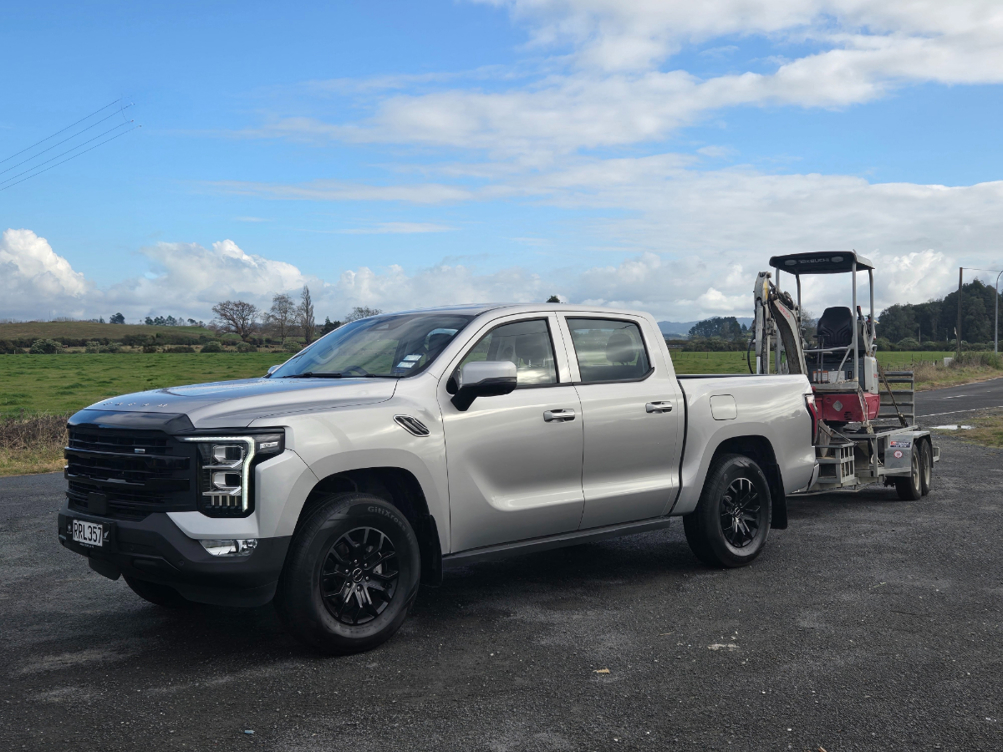
We did get a spin around the block in the V7-C 4x2... towing a trailer with a small digger on board: about 2.4 tonnes in total. Enough to get any ute working, but another good demonstration of the Tunland's strong powertrain and good transmission calibration.
What’s the pick of the range?
Horses for courses, work or play, right? But the differences in capability aren't that large between V7 and V9, so it might just come down to styling preference or equipment levels.
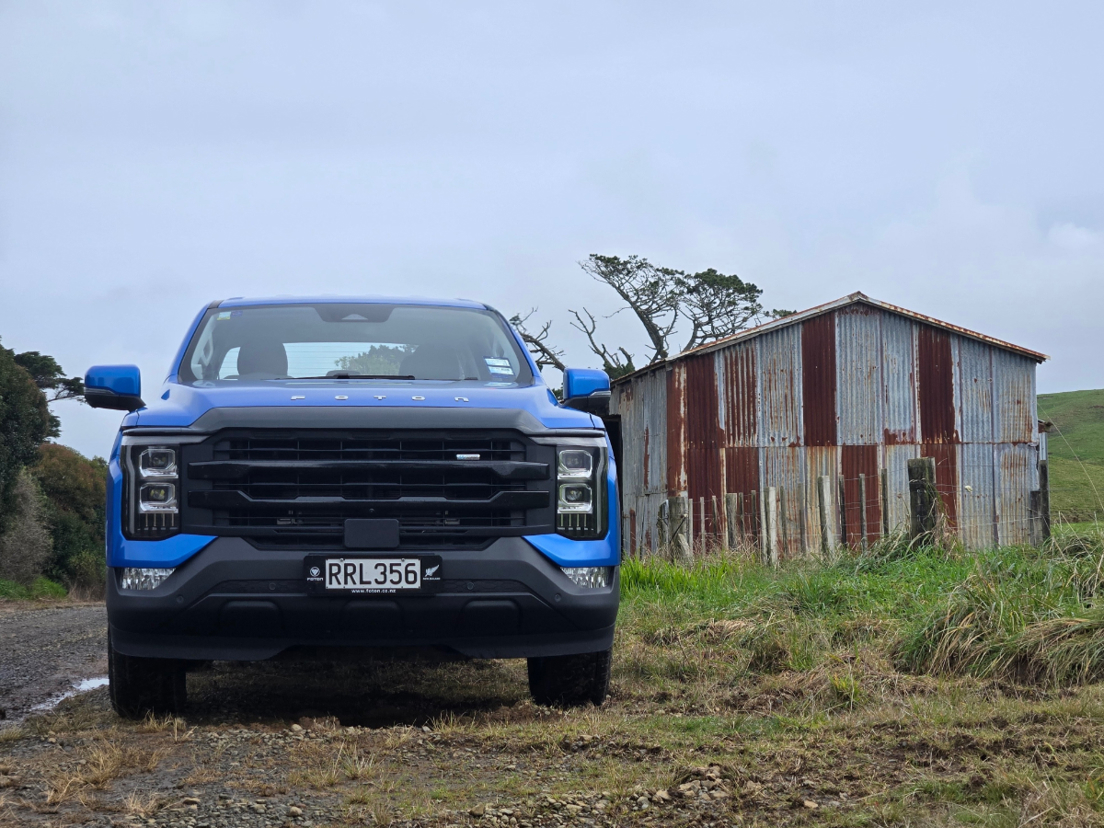
For what it's worth, we prefer the V7's Ford-esque visage, and the body sans the V9's fussy wheelarch extensions looks a lot cleaner. But you are getting a lot of extra comfort/convenience kit with the V9.
What other utes should I consider?
The obvious rivals are the Chinese utes of a similar double-cab-plus size: GWM Cannon Alpha, which comes in turbo-diesel and plug-in hybrid (PHEV) forms ($52,990-$69,990), and the closely related diesel-only LDV Terron 9 ($54,990-$59,990) and MGU9 ($60,990-$68,990).
But Foton NZ reckons the size, presence and value-pricing of the Tunland could attract potential buyers of traditional one-tonne utes. As an example ( ours, not the company's), the flagship V9-S 4x4 is a very similar price to the most recent Ford Ranger we've reviewed, the mid-range XLT 2WD. And that also leads naturally towards family SUVs in the $50k bracket.