



Range extenders have to be one of the most misunderstood members of the wider electrified market, quickly falling into the shadow of more conventional plug-in hybrids.
But what's the difference, I hear you ask? While both use a combustion engine and electric motor, the most common forms of PHEV use both to physically propel the car, with both the electric motor and combustion engine directly driving the wheels, while a range extender only ever uses the ICE as a generator to charge the battery.
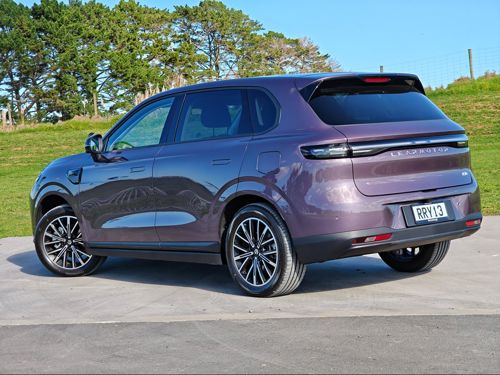
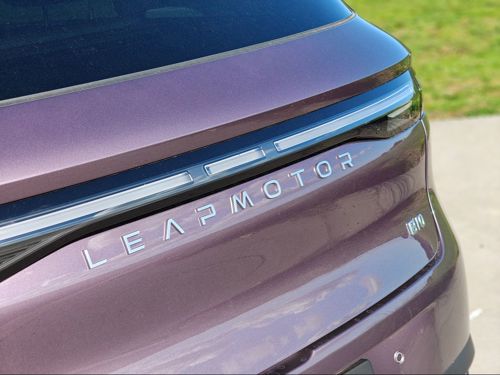
And that is where the Leapmotor B10 Ultra Hybrid comes in. Despite using the "Ultra Hybrid" moniker, it is essentially a B10 BEV with a petrol generator jammed under the bonnet to charge the battery when needed. In fact the Ultra Hybrid and BEV models share around 90 percent of their components, with identical bodies, interiors and even the same 150kW/240Nm electric motor mounted on the rear axle.
All of which basically means that the B10 Ultra Hybrid feels, acts and - for all intents and purposes - is an EV, commuting on a wave of silent, effortless power, with all the refinement that inherently brings. Except for when the 18.8kWh battery gets low, and the onboard 1.5-litre petrol engine acts solely as an independent, automated generator to feed power back into it.
Along with a pure-electric mode, the B10 also features a pair of drive modes that prompt more involvement from the combustion engine - Smart Hybrid Mode will prioritise battery power at low speeds, but engage the petrol generator at high speeds or under hard acceleration to preserve battery life, while Fuel Priority Mode fires up the petrol generator early to lock in and hold the battery’s current state of charge - both standard PHEV behaviours.
But where the B10 range extender really sets itself apart from a PHEV is its sheer refinement, an area where range extenders have an inherent advantage. Because the petrol engine never gets involved in directly mechanically driving the wheels, you don't get the vibrations or soaring revs that come with that.
Sure, the revs do climb when demand from the battery is high, but its all remains a smoother, more refined background hum that you genuinely have to try to notice.
The big payoff, however, comes in terms of total range and price - where the electric B10 will travel up to 434km on a charge, the Ultra Hybrid has a total claimed range of up to 900km, with a pure electric range of 86km, while the pure electric B10 starts at $44,990 for the entry Life model and tops out at $49,990 for the top-spec Design, the Ultra Hybrid starts at just $39,990 for the life and tops out at $44,990 for the Design model we drive here.
On the outside: what are the Leapmotor B10 Ultra Hybrid Design's main design features?
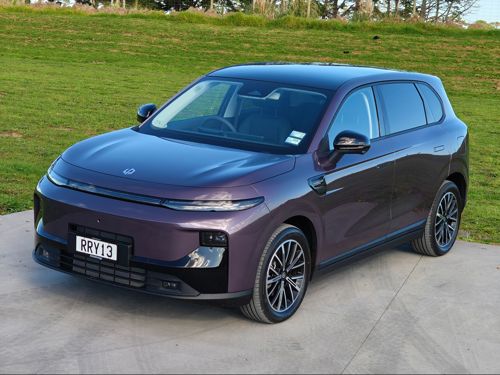
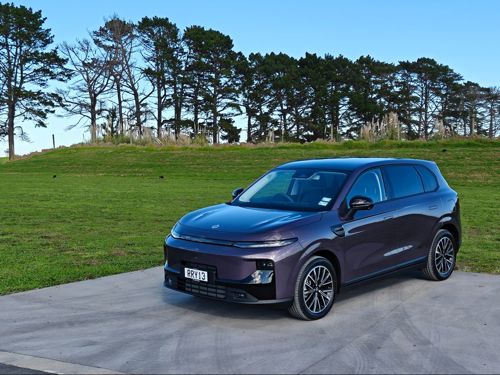
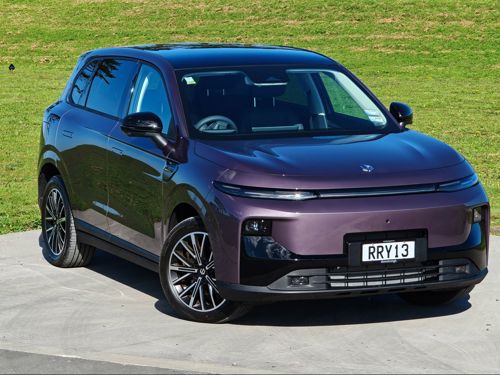
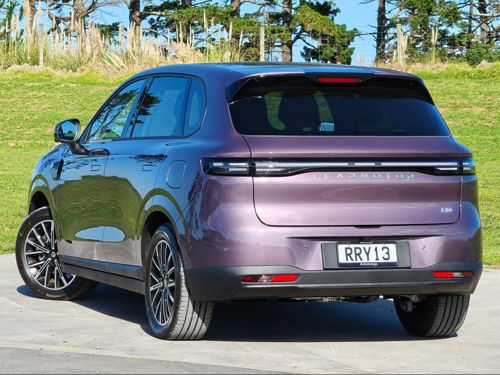
The B10 cuts a handsome figure on the road with its minimalist yet distinctive design that, while sharing some cues with the generic Chinese EV SUV template, still manages to set itself apart somewhat. Yes, it does suffer the Chinese SUV curse of having a wheel and tyre package that is slightly too small for its proportions, but it is minimised here.
The metallic purple paintwork on our test car is surprisingly subtle; it doesn't shout its colour, looking different depending on the light, but it suits the car's lines nicely, while there are neat little touches that elevate the design, like the staggered checker effect on the daytime running lights.
These clever, understated details lend it a surprisingly European feel, which is not particularly surprising given Leapmotor's partnership with Stellantis, and it looks far more continental than its origins might suggest. It’s a good-looking machine that successfully blurs the line between a small SUV and a large hatchback.
OVERVIEW
| Price | $44,990 |
| Body style | Small SUV |
| Wheels and tyres | 18-inch alloy wheels, 225/50 tyres |
| Length | 4515mm |
| Wheelbase | 2735mm |
| Weight | 1785kg |
| Website | leapmotor.net/nz |
On the inside: what's the Leapmotor B10 Ultra Hybrid Design's cabin like?
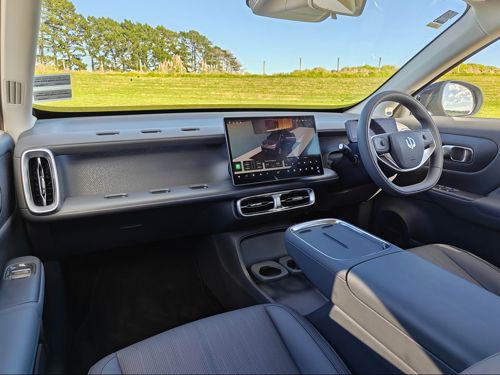
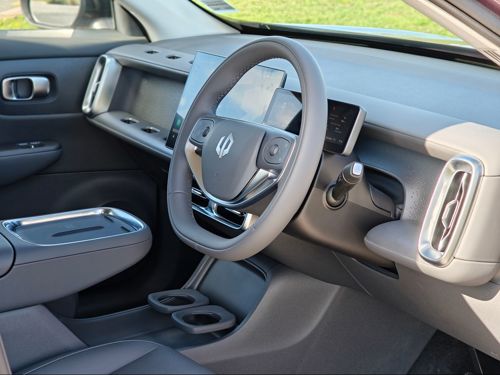
Stepping inside, the cabin is a highlight, with a design that feels funkier and cooler than its C10 stablemate, though perhaps a slight step down in outright material quality. There are a few areas of hard plastics, but they are of a high grade, featuring nice, subtle texturing that avoids any sense of cheapness.
The overall aesthetic is modern and cool without being cheesy, continuing that strong European vibe from the outside. The seats are very comfortable, though I did find them lacking in under-thigh support on longer journeys, while raising the seat cushion tends to tilt it forward, which doesn't help those of us with longer legs. Compounding this, the steering wheel doesn't have quite enough reach adjustment to find that perfect driving position. It's bearable, but not ideal.
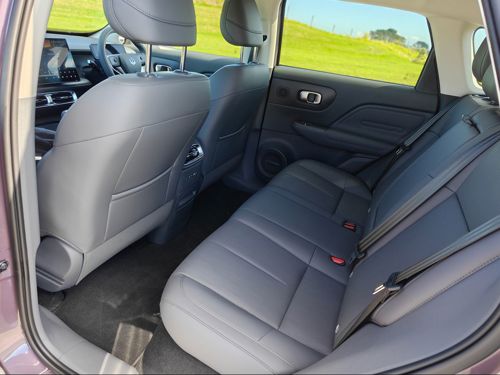
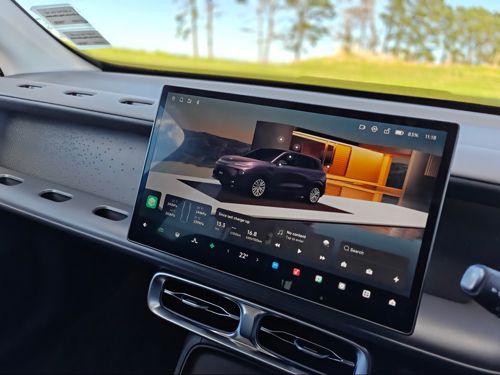
A full-length panoramic glass roof bathes the cabin in light, the stereo provides good sound quality, and the 14.6-inch central screen is quick to respond. Wireless Android Auto and Apple CarPlay connect fast and maintain a stable connection.
One potential downside to the cabin is the almost total absence of physical buttons and a heavy reliance on the touchscreen for most controls. While the touchscreen interface with its bottom dock and swipe-down menus is very usable, a few more physical buttons for core functions wouldn't go amiss.
INTERIOR
| Head-up display | No |
| Infotainment screen | 14.6 inches |
| Phone projection | Wireless Android Auto and Apple CarPlay |
| Wireless phone charger | Two |
| USB ports | 1x USB-A and 1x USB-C front and rear |
| Climate control | Dual zone |
| Front seat heating/ventilation | Yes/Yes |
| Front seat adjustment | Power 6 way driver, power 4 way passenger |
| Boot capacity | 330 litres |
| Rear seat split/fold | 60/40 |
| Power tailgate | Yes |
On the road: what's the Leapmotor B10 Ultra Hybrid Design like to drive?
Like its all-electric siblings, the B10 Ultra Hybrid delivers a fantastic ride. It has that slightly firm edge common to EVs but it’s exceptionally muted here, resulting in a ride quality that is comfortable and pleasant without being overly soft or floaty. It's exactly what you'd want from a small SUV.
Handling is predictable and well-controlled, and despite being rear-wheel drive, the B10 feels impressively neutral through corners and you have to really provoke it, even in the wet, to get the rear to move.
This neutrality makes it enjoyable for a keen driver who can use the car's balance, but equally pleasant for someone who just wants a stable, easy-to-drive vehicle. The steering is nicely weighted with good feel, again hinting at European tuning influences.
Power delivery is more than quick enough, and it’s deployed in a smooth, progressive manner that avoids any unruly antics. It's all extremely well-calibrated, although some of the driver-assist systems are a little insistent, with the speed limit alert being particularly persistent, bonging away as soon as you creep over the limit.
While these systems are gentle in their interventions, they are always doing something. They can all be turned off, but they reset to their default settings every time you start the car and the B10 lacks the driver profile settings or quick-access toggles found on the C10, which is a frustration. A simple software update to add this functionality would make a world of difference.
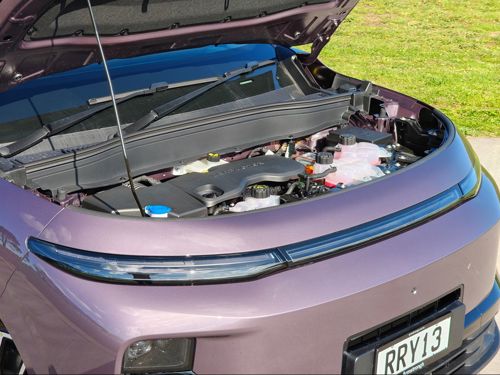
As for the range-extender system, it's remarkably unobtrusive. When the battery level drops, the petrol engine starts up almost imperceptibly. You might feel a slight vibration through the throttle pedal at higher revs, but it's quiet and well-insulated.
During a week of testing, running it as a pure EV with daily charging yielded an excellent efficiency of 14.5kWh per 100km. When I deliberately didn't charge it and ran it as a hybrid, it returned an decent fuel consumption figure of around 5.7L/100km on a mix of open-road and city driving.
SPECIFICATIONS
| Powertrain type | Plug-in hybrid |
| Capacity and battery | 1500cc and 18.8kWh |
| Power | 160kW |
| Torque | 240Nm |
| Transmission | Single-speed, RWD |
| Power to weight | 89.6kW/tonne |
| Adaptive suspension | No |
| Efficiency | 2.5l/100km (manufacturer claim) |
| Tank size and fuel type | 50 litres, 95 octane |
| Tow rating | 1.5 tonnes |
On ownership: what's the Leapmotor B10 Ultra Hybrid Design's warranty and servicing situation?
The B10 comes with Leapmotor's 6-year/100,000km standard warranty and an 8-year/160,000km for the battery, as well as 4 years of roadside assist.
Scheduled servicing is due every 12 months or 20,000km and a range of 3, 4 or 5 year service plans are available.
On the whole: what do we think of the Leapmotor B10 Ultra Hybrid Design?
The Leapmotor B10 Ultra Hybrid is, simply put, a fantastic little car that gets so much right. It's the perfect size, has the right amount of power, and almost everything it does, it does well.
The range-extender concept is executed brilliantly, offering the quiet, smooth EV driving experience for daily use with the long-distance convenience of a petrol generator. You get the best of both worlds with very few compromises.
My complaints are minor; the driving position could be better for taller drivers, and the over-eager driver assists desperately need a profile button or quick-settings toggle to be truly perfect. Thankfully, the latter is something that could easily be fixed with an over-the-air update, a process Leapmotor has a good track record with
Even without that fix, this is a brilliant, economical, and thoroughly pleasant car that offers a very compelling package.
Leapmotor B10 Ultra Hybrid Design FAQs
What kind of car is the Leapmotor B10 Ultra Hybrid Design?
A compact SUV.
Does the Leapmotor B10 Ultra Hybrid Design have hybrid or EV technology?
The B10 Ultra Hybrid is a range extender hybrid.
What’s the fuel economy of the Leapmotor B10 Ultra Hybrid Design?
Leapmotor claims an average combined fuel consumption of 2.5L/100km for the B10, but the real world consumption depends drastically on how you use it.
Is the Leapmotor B10 Ultra Hybrid Design safe?
The Leapmotor B10 has a 5 Star Euro NCAP rating and features 7 airbags.
What safety and assistance features does the Leapmotor B10 Ultra Hybrid Design have?
| Intelligent lights | Automatic LED |
| Rain sensing wipers | Yes |
| Airbags | 7 |
| Adaptive cruise control | Yes |
| Driver attention monitor | Yes |
| Traffic sign recognition | Yes |
| Forward collision warning | Yes |
| Blind spot warning/assist | Yes/Yes |
| Lane departure warning/assist | Yes/Yes |
| Rear cross traffic alert/braking | Yes/Yes |
| Reverse collision braking | Yes |
| Parking sensors | Rear only |
| Camera system | 360 degree |
What are the Leapmotor B10 Ultra Hybrid Design's main rivals?
- BYD Sealion 5 Premium ($49,990): More electric range and higher spec, but more expensive.
- Jaecoo J5 SHS-H ($39,990): Range Rover looks for a seriously sharp price, not quite as refined though.
- Chery Tiggo 7 Ultimate ($43990): Bigger and with more standard kit, but feels cheap.
- Forthing Taikon Exclusive ($44,990): Sharp looks and aggressive value for money, but slow.
- Geely Starray Inspire ($52,990): Head-to-head in terms of spec, outdoes B10 in terms of quality.


