



GWM was the first Chinese automotive brand to enter the New Zealand market, launching in 2009 as Great Wall Motors with a double-cab ute priced at $21,990. Yes, really, less than half the price of a new Hilux at the time.
It was, of course, completely crap, but that price shook up the local ute segment and set GWM (as the company later became known) on the path to becoming an established brand here as it swiftly improved the quality of its products to the point that we now have a unnecessarily fast, superbly capable and fantastic looking 4X4 SUV from the company.
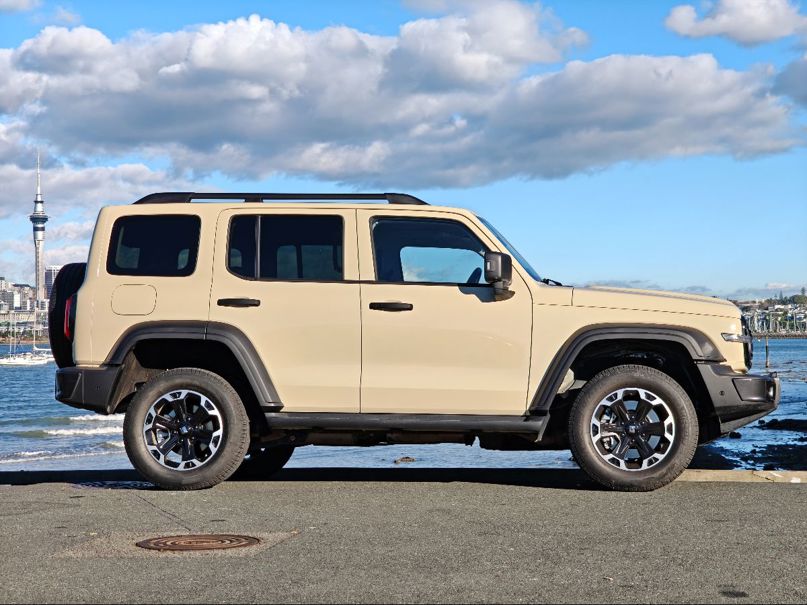
I am, of course, talking about the Tank 300 Ultra PHEV, the new plug-in hybrid flagship of the Tank 300 line up in New Zealand, joining the existing petrol, diesel, and standard hybrid models.
While the PHEV retains the brilliantly retro aesthetic, its high-tech powertrain sets it apart as a high-performance alternative to traditional off-roaders, with a massive jump in capability over its already extremely capable petrol and diesel variants; it delivers a combined 300kW of power and 750Nm of torque, which is more than double the power output of the diesel model.
This allows the ladder-chassis SUV to reach 100km/h in a frankly silly 6.3 seconds, while also offering an NEDC-claimed all-electric range of 115km, enabling silent daily commuting without sacrificing its 3000kg towing capacity or its rugged off-road credentials.
Is that sort of power and performance necessary in a ladder chassis SUV? Of course not, but does it make the PHEV the pick of the 300 range?
On the outside: what are the GWM Tank 300 Ultra PHEV's main design features?

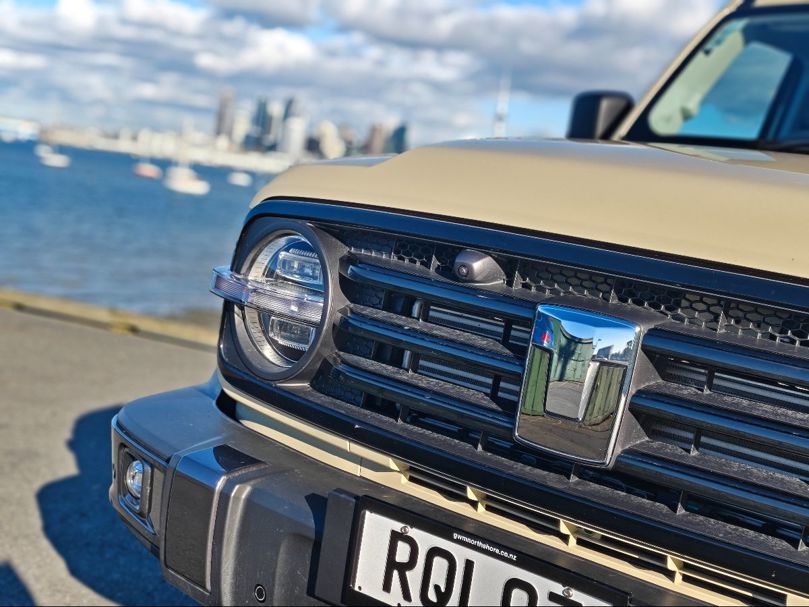
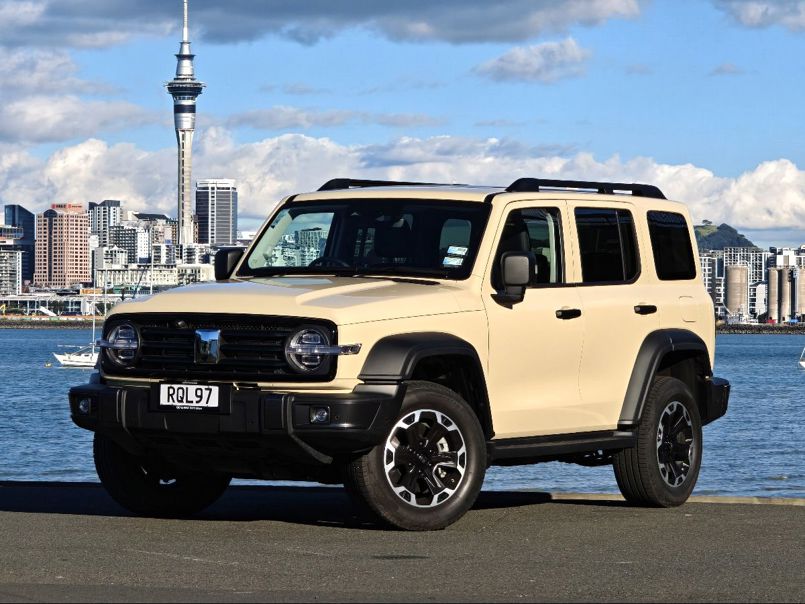
The Tank 300 makes an immediate and lasting impression with its bold, boxy design; a wonderful pastiche of iconic off-roaders, successfully blending cues from the Ford Bronco, Mercedes-Benz G-Wagen, and Jeep Wrangler into something uniquely its own.
The powertrain feels strong, brawny and willing across the rev range, with overtaking at open road speeds being as utterly effortless as smoking that hot hatch away from the traffic lights.
The result is a look that feels both charming and characterful, even evoking a sense of 1950s Soviet-era military chic, which is a massive part of its appeal - it looks every bit the capable off-roader it is, a promise its hardware backs up.
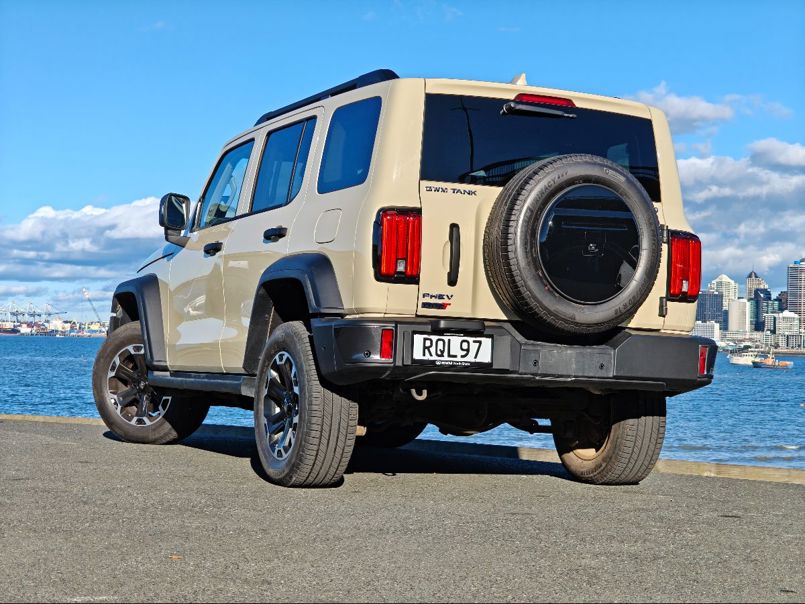
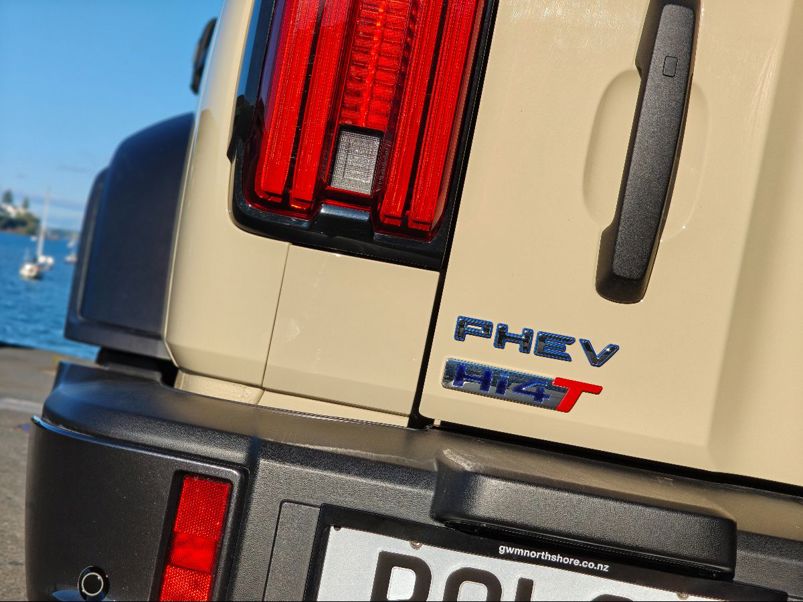
Apart from some badges, the PHEV gives no clues about what is powering it on the exterior - every Tank 300 regardless of model, looks pretty much the same, with no external differentiation apart from those badges and alloy wheel differences, and I rather like that.
Our top-spec 300 Ultra PHEV test car was finished in a new beige-y "Sundrift Sand" hero colour for the plug-in hybrid, which, while giving off some Toyota FJ Cruiser vibes, isn't its most flattering shade, with the 300 arguably looking better in black, vibrant orange, or a cool grey.
Overall, the Tank 300's design works exceptionally well as a base, ready for tasteful accessories to enhance its cool factor. Even if a lot of owners won't get that "tasteful" message...
OVERVIEW
| Price | $68,990 |
| Body style | Large five-door SUV |
| Wheels and tyres | 18-inch alloy wheels, 265/60 tyres |
| Length | 4760mm |
| Wheelbase | 2750mm |
| Weight | 2615kg |
| Website | gwmanz.com |
On the inside: what's the GWM Tank 300 Ultra PHEV's cabin like?
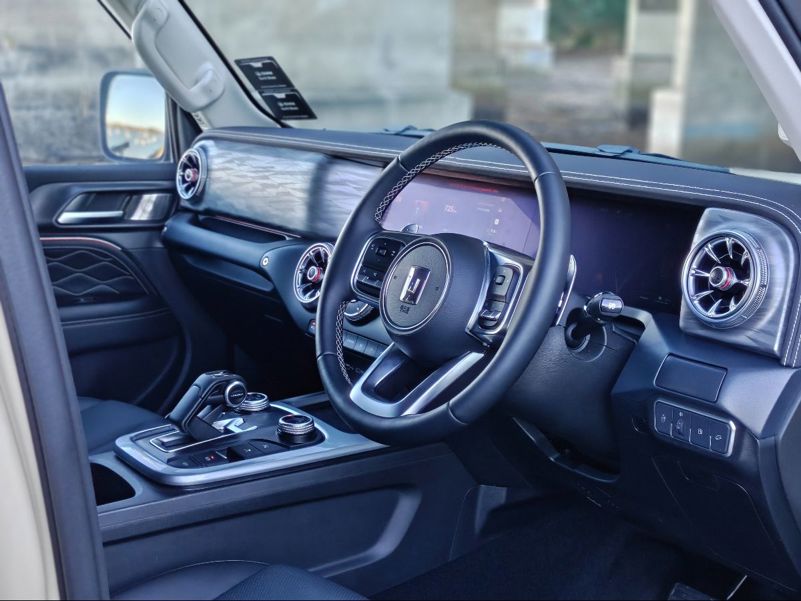
Step inside, and the cool factor continues with an interior that is, to put it bluntly, a blatant homage to the Mercedes-Benz G-Wagen.
Is this the best Tank 300 to drive on the road? Well, while the big power arguably makes it the most entertaining, the diesel is still probably the best one in terms of traditional driver appeal.
The prominent round air vents and general layout are clear nods to the German marque, but much like the exterior, it actually just works, so it's easy to forgive its lack of originality. While not up to Mercedes quality standards, the cabin still feels well-made, mixing a hint of luxury with a rugged, functional feel.
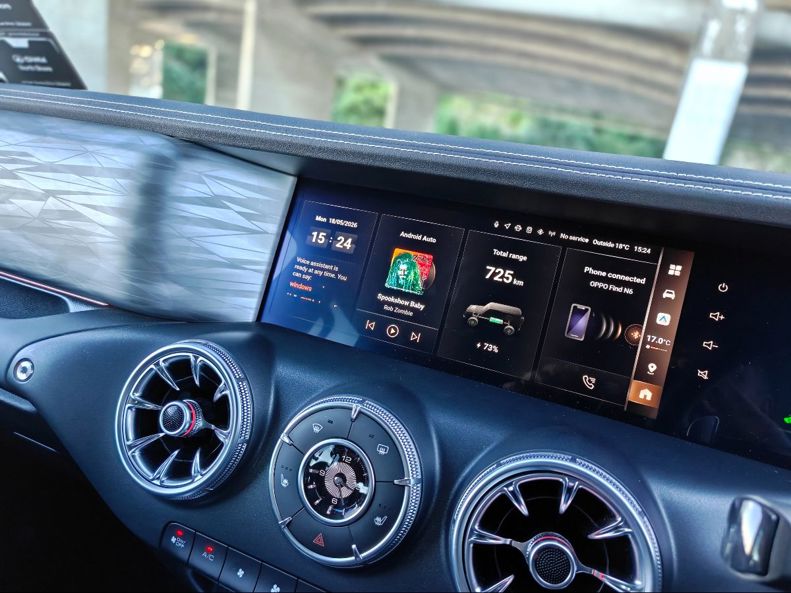
While there are hard plastics present, they are of a high quality that feels appropriate for a tough 4x4 rather than a sign of cost-cutting.
The layout is traditional and straightforward, with plenty of physical switches for key functions, while the central touchscreen is a sensible size - not so large it dominates, but big, bright, and responsive enough to be pleasant to use.
Comfort is a high point in the top-spec Tank 300 Ultra, with fantastic Nappa leather-accented seats that are heated, ventilated, and highly adjustable. Space is ample, making it an incredibly roomy and comfortable place to be, whether you're heading across town or deep into the back country.
INTERIOR
| Head-up display | No |
| Infotainment screen | 12.3 inches |
| Phone projection | Wireless Android Auto and Apple CarPlay |
| Wireless phone charger | One |
| USB ports | 1x USB-A and 1x USB-C front and rear |
| Climate control | Dual zone |
| Front seat heating/ventilation | Yes/Yes |
| Front seat adjustment | Power, 8-way driver and 4-way passenger |
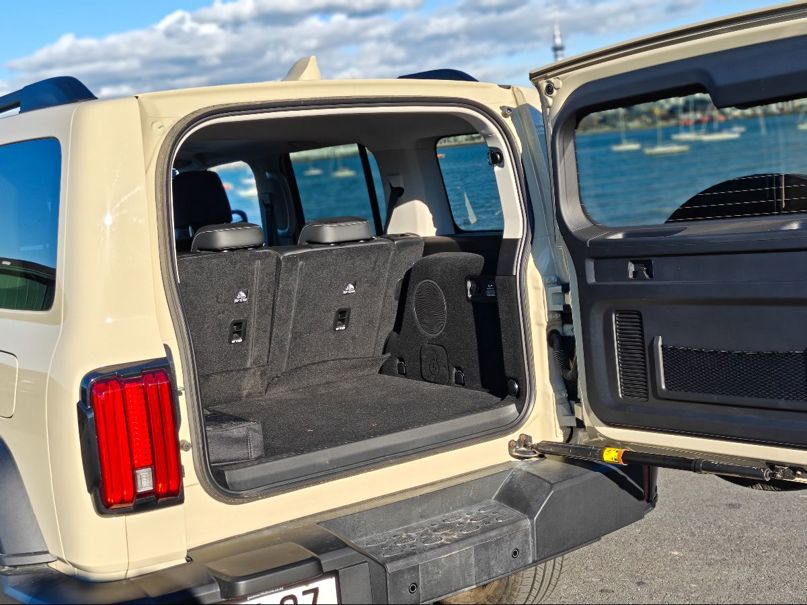
| Boot capacity | 360 litres |
| Rear seat split/fold | 60/40 |
| Power tailgate | No |
On the road: what's the GWM Tank 300 Ultra PHEV like to drive?

On the move, the Tank 300 PHEV feels every bit the big, chunky, ladder-chassis 4x4 it is. There’s a distinct truck-like vibe to the ride, but not in an uncomfortable way; it feels solid and planted.
The fact that the PHEV powertrain now also means it is both frugal on petrol and surprisingly quick, just makes it even more convincing.
While it prioritises ruggedness over the on-road sophistication of more luxurious (and pricier) rivals like the Denza B5, it remains a very comfortable vehicle, even when heading off road, where it is a proper beast, showcasing its immense capability with features like front and rear locking differentials.
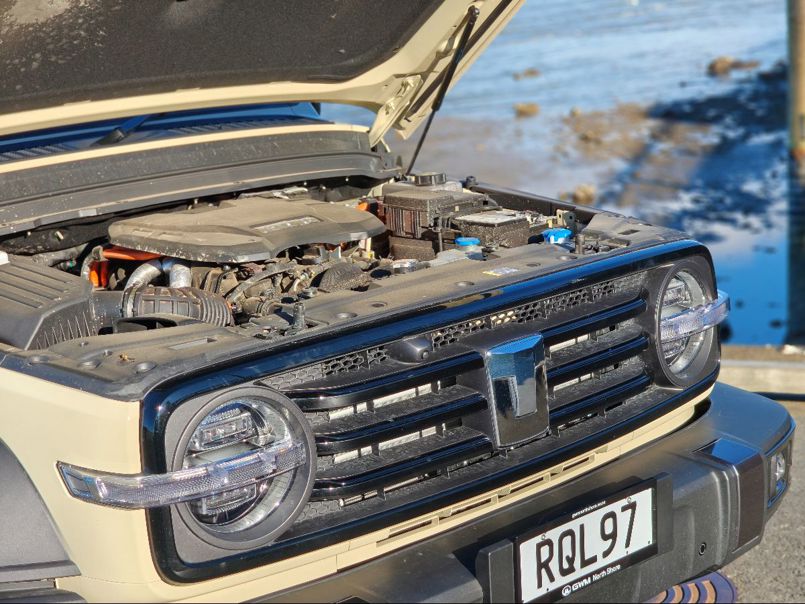
The plug-in hybrid powertrain is the star of the show, being the newest thing to power a 300. Combining a 2.0-litre turbo petrol engine with an electric motor for a mighty 300kW and 750Nm of torque, the Tank 300 PHEV possesses a, shall we say "surprising" turn of speed, enough to chirp its front wheels off the line, which is an amusingly bizarre sensation in a vehicle of this type.
The powertrain feels strong, brawny and willing across the rev range, with overtaking at open road speeds being as utterly effortless as smoking that hot hatch away from the traffic lights.
The transition between electric and petrol power can have the occasional subtle hesitation or clunk, but it's not unrefined. Around town, it leans heavily on its 37.1kWh battery, offering a claimed pure electric range of 115 km that it seems to achieve quite readily.
Over 370km of driving during our time with the 300, the trip computer showed an impressive average of 3.5 L/100km, though electricity consumption was a higher 29.6 kWh/100km, not surprising given its hefty nature.
The Tank 300 PHEV is surprisingly easy to manoeuvre thanks to a tight turning circle, and the driver assists are now actually a highlight. In a massive improvement over the last 300 I drove, the assists in the PHEV are brilliantly non-intrusive, doing their job quietly in the background without the frantic screaming that used to result.
Is this the best Tank 300 to drive on the road? Well, while the big power arguably makes it the most entertaining, the diesel is still probably the best one in terms of traditional driver appeal. While the PHEV powertrain is amusingly powerful and impressively frugal, it does feel slightly at odds with the 300's rugged off-roader feel and ride.
Still, you get used to it, and that grunt is fun...
SPECIFICATIONS
| Powertrain type | Plug-in hybrid |
| Capacity and battery | 20000cc and 37.1kWh |
| Power | 300kW |
| Torque | 740Nm |
| Transmission | 9-speed, 4WD |
| Power to weight | 114.7kW/tonne |
| Adaptive suspension | No |
| Efficiency | 1.9l/100km (manufacturer claim) |
| Tank size and fuel type | 70 litres, 91octane |
| Tow rating | 3 tonnes |
On ownership: what's the GWM Tank 300 Ultra PHEV's warranty and servicing situation?
The Tank 300 PHEV comes with a 7 years/unlimited kilometre standard warranty, with an 8 year/unlimited kilometre warranty on the battery, and it also features 5 years of 24/7 roadside assist. Servicing is every 12 months or 15,000km.
On the whole: what do we think of the GWM Tank 300 Ultra PHEV?
The Tank 300 PHEV is a remarkably compelling package that is hard to argue with, especially considering its price point of $68,990. It's an incredibly capable ladder-chassis SUV that can go just about anywhere, is comfortable and well-equipped, and possesses a unique and charming character that makes you happy just being in it.
The fact that the PHEV powertrain now also means it is both frugal on petrol and surprisingly quick, just makes it even more convincing. GWM has matured significantly, moving from building cheap, questionable vehicles to producing genuinely good, well-priced products and the Tank 300 PHEV is perhaps the best example of this yet.
Sure, the diesel is still probably the better drive, but the PHEV manages to be fun, frugal, and fantastically capable, all while looking cool and carving out its own niche in the market, offering a blend of attributes that very few rivals can match. What more do you really want?
GWM Tank 300 Ultra PHEV FAQs
What kind of car is the GWM Tank 300 Ultra PHEV?
A large ladder chassis 4X4 SUV.
Does the GWM Tank 300 Ultra PHEV have hybrid or EV technology?
The Tank 300 is a plug-in hybrid with a 37.1kWh battery.
What’s the fuel economy of the GWM Tank 300 Ultra PHEV?
On a full charge the Tank 300 PHEV is rated at 1.9L/100km, while its 'low charge' economy is 8.3L/100km.
Is the GWM Tank 300 Ultra PHEV safe?
The Tank 300 has a 5 Star ANCAP rating and packs a total of 7 airbags, including driver and front passenger, front side, front middle and full length curtain airbags.
What safety and assistance features does the GWM Tank 300 Ultra PHEV have?
| Intelligent lights | Automatic LED with highbeam assist |
| Rain sensing wipers | Yes |
| Airbags | 7 |
| Adaptive cruise control | Yes |
| Driver attention monitor | Yes |
| Traffic sign recognition | Yes |
| Forward collision warning | Yes |
| Blind spot warning/assist | Yes/Yes |
| Lane departure warning/assist | Yes/Yes |
| Rear cross traffic alert/braking | Yes/Yes |
| Reverse collision braking | Yes |
| Parking sensors | Four front, four rear |
| Camera system | 360 degree |
What are the GWM Tank 300 Ultra PHEV's main rivals?
- Toyota Land Cruiser Prado Adventure ($104,490): Bigger, but same retro vibe and off-road ability. Much more expensive though.
- Isuzu MU-X ($79,990): Capable and roomy, but lacking any form of electrification.
- Mitsubishi Pajero Sport VRX ($64,990): Similar price, but a full seven-seater. Well down on power though.
- Denza B5 ($88,990): The only thing with a similar PHEV powertrain. Significantly more luxurious and pricey.
- GWM Cannon Alpha PHEV ($69,990): Same fantastic PHEV powertrain, but in ute form.


