


There was a time when the answer to almost any question about a diesel ute or SUV was to add another turbocharger. More power, more torque, more pulling power: what wasn't to like? Well, apparently, Ford has decided that perhaps we don't always need quite so much of all that.
Like the Ranger ute, the Ford Everest's engine range has been reshuffled for the latest model year, with the 2.0-litre bi-turbo diesel making way for a simpler single-turbo version in lower-specification models, while the more powerful 3.0-litre V6 diesel becomes the obvious choice for those wanting more muscle.
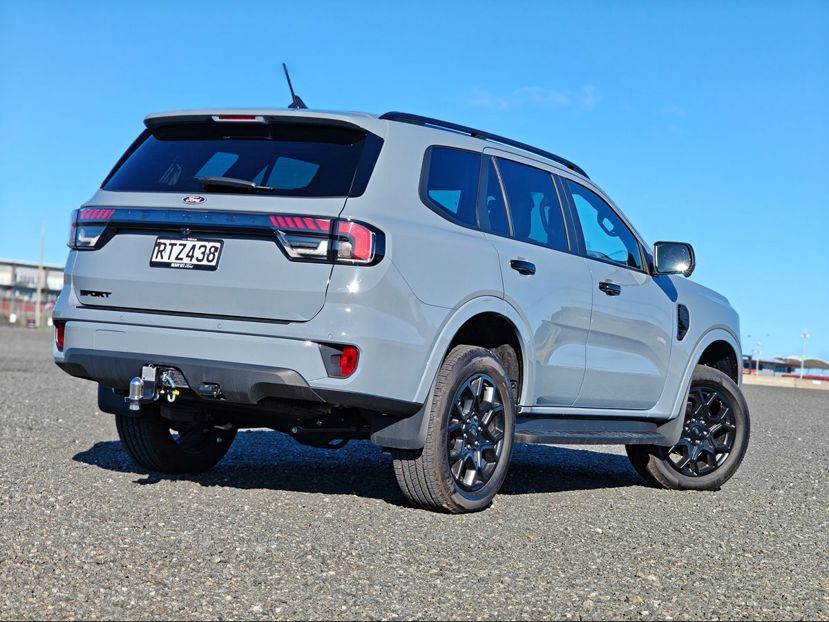
Based on the ever-popular Ranger ute, the Everest has long been one of New Zealand's more convincing large SUVs, combining proper off-road ability with seven-seat family practicality and a remarkably well-sorted ride.
It has also built a reputation for being a particularly pleasant thing to drive, which is not always a given when you're dealing with a large, body-on-frame SUV. But removing a turbocharger and reducing the power output sounds suspiciously like a step backwards. Surely a vehicle weighing this much needs all the grunt it can get?
Well, having spent time with the new Everest Sport, it turns out that the answer is as straightforward as the numbers suggest.
On the outside: what are the Ford Everest Sport 2.0 Turbo's main design features?
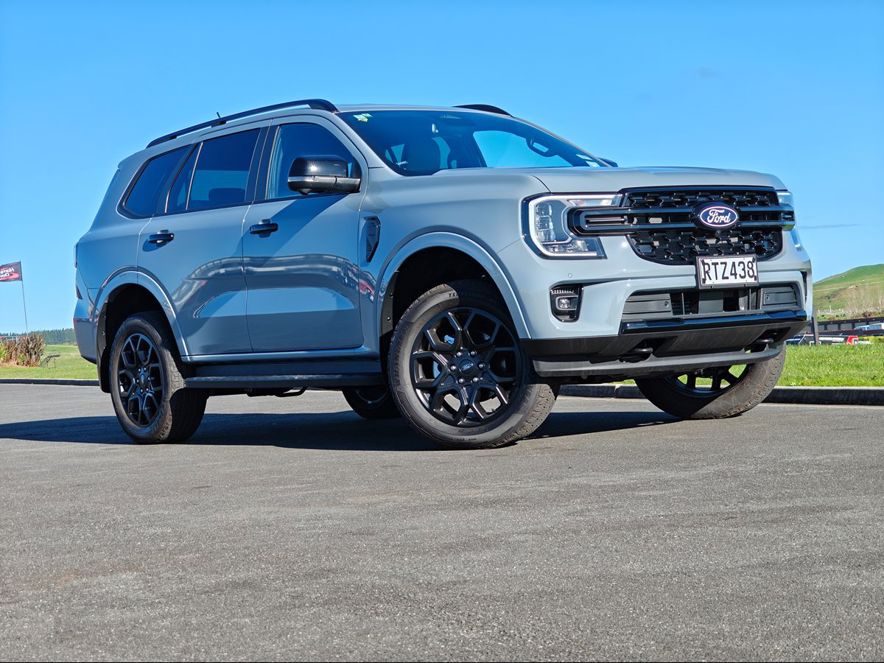
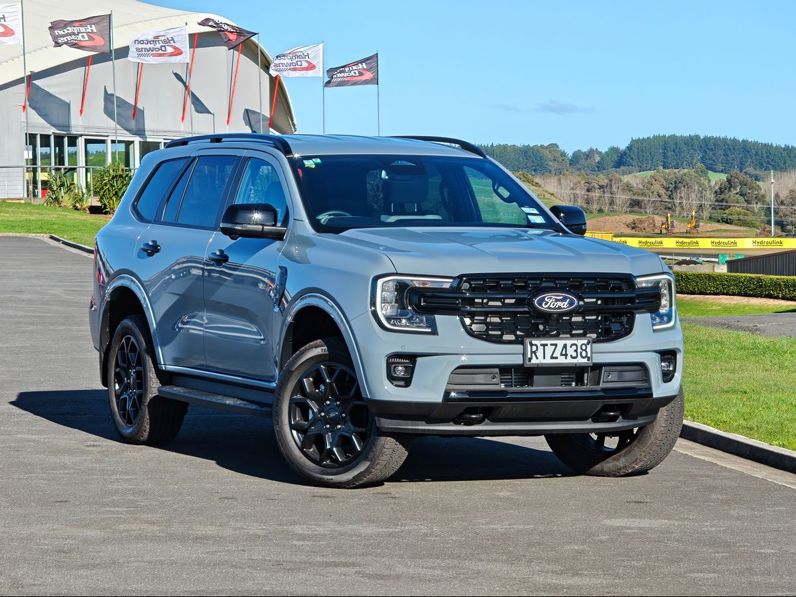
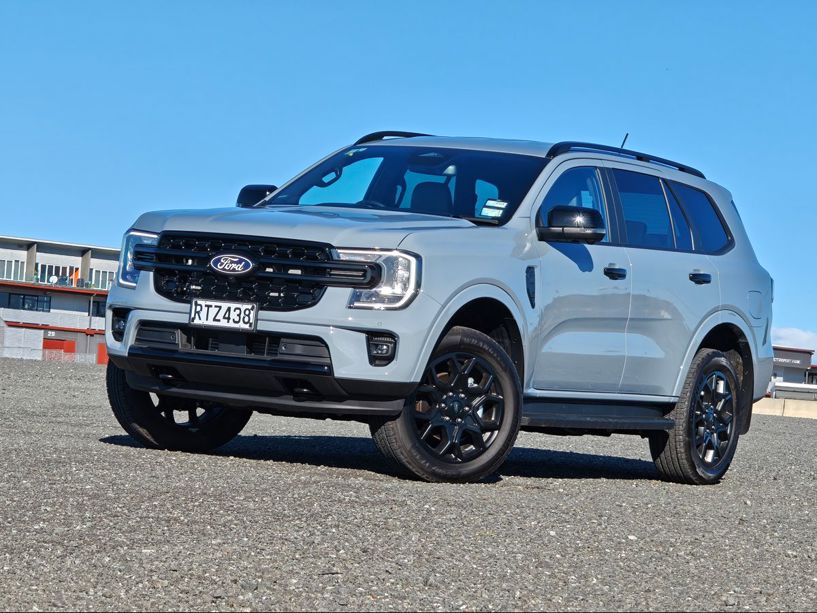
There isn't much to report in the way of exterior changes for the latest Everest, and Ford's big seven-seater remains a handsome, confident-looking SUV, with the sort of substantial proportions that make it look entirely at home beside a large family home, a boat ramp or a muddy access track.
Sometimes knowing when to leave things alone is a perfectly respectable design decision.
The latest model-year changes are largely mechanical, so there's no need for Ford to mess with a design that already works. The Everest Sport remains a good-looking, well-proportioned large SUV, and sometimes knowing when to leave things alone is a perfectly respectable design decision.
OVERVIEW
| Price | $77,490 |
| Body style | Large 5-door SUV |
| Wheels and tyres | 20-inch alloy wheels, 255/55 tyres |
| Length | 4978mm |
| Wheelbase | 2900mm |
| Weight | 2381kg |
| Website | ford.co.nz |
On the inside: what's the Ford Everest Sport 2.0 Turbo's cabin like?
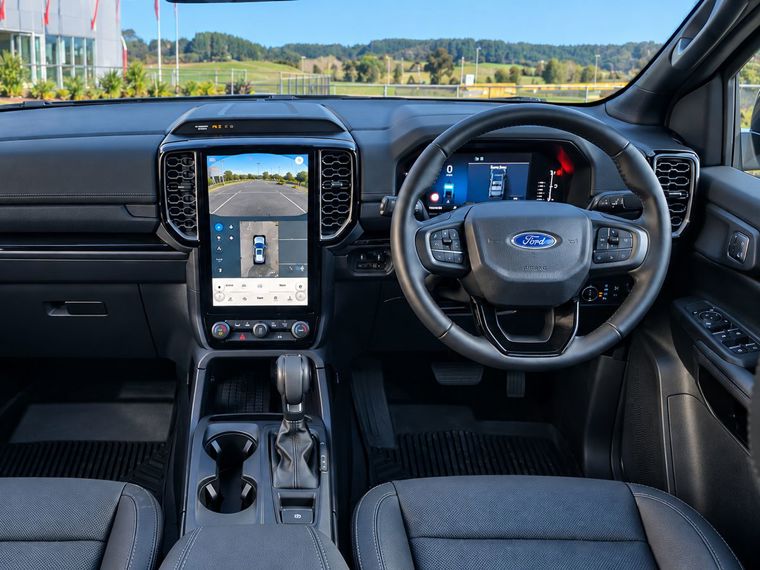
The Everest's cabin is another area where Ford has got the balance largely right. It feels modern and well equipped, but there's still an underlying sense that this is a vehicle designed to be used rather than simply admired in traffic.
There are hard plastics in the cabin, as you'd expect in something that shares its foundations with a working ute, but the more prominent touchpoints are finished in softer materials, and the overall assembly feels solid enough to withstand the daily punishment of family life.
The seats are wide, comfortable and supportive, with synthetic leather upholstery that feels appropriately upmarket for the Sport, and the seating position is well suited to longer journeys.
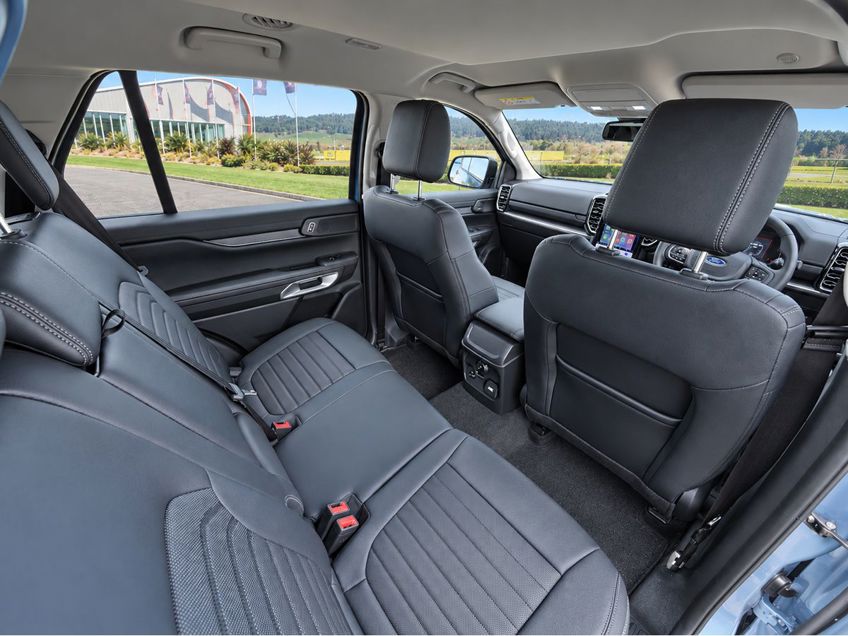
The dashboard is dominated by Ford’s familiar portrait-oriented Sync 4 infotainment touchscreen, which is a slick, responsive system that offers plenty of functionality without requiring an engineering degree to navigate, although some functions inevitably require a little menu diving.
Yes, the new single-turbo 2.0-litre diesel is noticeably less urgent than the bi-turbo engine it replaces.
Overall, the cabin feels comfortable, robust and thoughtfully designed. It doesn't try to pretend the Everest is a luxury limousine, but it does a convincing job of making a large, rugged SUV feel like a pleasant place to spend several hours.
INTERIOR
| Head-up display | No |
| Infotainment screen | 12 inches |
| Phone projection | Wireless Android Auto and Apple CarPlay |
| Wireless phone charger | One |
| USB ports | 1x USB-A and 1x USB-C front and rear |
| Climate control | Dual zone |
| Front seat heating/ventilation | Yes/Yes |
| Front seat adjustment | Power, 10-way driver, 8-way passenger |
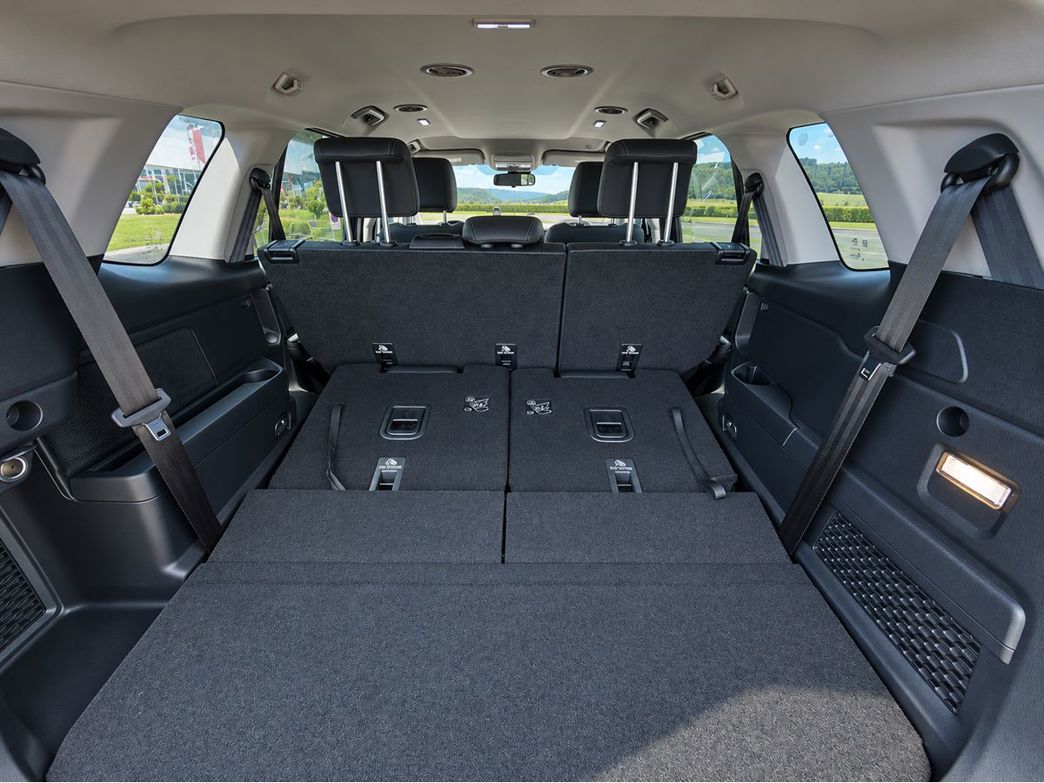
| Boot capacity | 259 litres all seats up), 898 litres (3rd row down) |
| Rear seat split/fold | 60/40 |
| Power tailgate | Yes |
On the road: what's the Ford Everest Sport 2.0 Turbo like to drive?
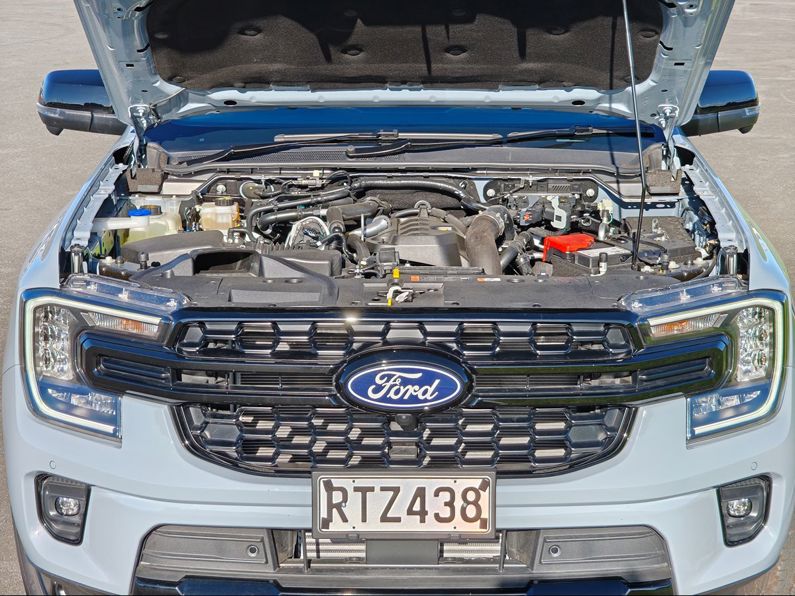
Let's get the obvious question out of the way: yes, the new single-turbo 2.0-litre diesel is noticeably less urgent than the bi-turbo engine it replaces.
There is an unexpected upside to this noticeable reduction in power: the new engine is considerably more refined.
The difference is most apparent when you're already travelling at open-road speeds and want a quick burst of acceleration. The old bi-turbo had more immediate punch in reserve, while the new engine prefers a more measured approach, meaning that pulling out to overtake between 80 and 100km/h requires a little more planning, particularly if there's an incline involved.
Around town, however, the difference is less dramatic. The Everest feels brisk enough getting away from the lights and building speed through the lower end of the range, and there is an unexpected upside to this noticeable reduction in power: the new engine is considerably more refined.
At 100km/h, the cabin is impressively quiet, with the diesel settling into the background rather than making its presence known through constant noise and vibration. Even when you ask for more acceleration, the engine remains smooth and relatively cultured. There's no sense of it becoming coarse or strained simply because you're asking it to work harder.
The other major improvement is the relationship between the engine and Ford's 10-speed automatic transmission - where the old bi-turbo combination could occasionally feel indecisive, with the gearbox shuffling through its ratios in search of the right one, the new single-turbo engine feels better matched to the transmission, with smoother shifts and less frantic gear-hunting.
Part of that calmer character comes from the fact that the drivetrain no longer seems quite so eager to chase performance at every opportunity. The gearbox is less inclined to kick down repeatedly, and the engine's more relaxed delivery contributes to the sense of refinement.
The trade-off is a much more cohesive driving experience, while fuel economy is another pleasant surprise.
Yes, that does mean acceleration can feel a little more leisurely, but the trade-off is a much more cohesive driving experience, while fuel economy is another pleasant surprise - over a mixture of driving conditions, we recorded 9.0L/100km, an impressive result for a large seven-seat SUV.
SPECIFICATIONS
| Powertrain type | Diesel |
| Capacity | 2000cc |
| Power | 125kW |
| Torque | 405Nm |
| Transmission | 10-speed, 4WD |
| Power to weight | 52.2kW/tonne |
| Adaptive suspension | No |
| Efficiency | 8.2l/100km (3P-WLTP) |
| Tank size and fuel type | 80 litres, diesel |
| Tow rating | 3.5 tonnes |
On ownership: what's the Ford Everest Sport 2.0 Turbo's warranty and servicing situation?
The Everest comes with Ford's standard 5-year/Unlimited kilometre warranty that also includes 24/7 roadside assist for the same period. Service intervals are every 12 months or 15,000km.
On the whole: what do we think of the Ford Everest Sport 2.0 Turbo?
I'll admit to being sceptical when Ford announced that the Everest Sport would lose the 2.0-litre bi-turbo diesel in favour of a less powerful single-turbo alternative. In a vehicle of this size, reducing power sounds like the sort of decision that looks sensible on a spreadsheet but becomes rather less appealing when you're trying to overtake a truck on a hill.
The drivetrain is quieter and smoother, the automatic transmission feels better integrated, and the overall driving experience is more relaxed.
And, to be fair, the reduction in performance is noticeable. The new engine doesn't have the same punch, and anyone who regularly asks their Everest to tow heavy loads or make brisk progress on hilly roads should still be looking at the V6.
But the single-turbo engine brings some substantial benefits of its own. The drivetrain is quieter and smoother, the automatic transmission feels better integrated, and the overall driving experience is more relaxed. Add the 9.0L/100km we achieved in mixed driving, and the case for the smaller engine becomes considerably more convincing.
Sometimes less really is more. In this case, less power has given the Everest a little more polish, and that turns out to be a rather good trade.
Ford Everest Sport 2.0 Turbo FAQs
What kind of car is the Ford Everest Sport 2.0 Turbo?
A large ladder-chassis 7 seat SUV.
Does the Ford Everest Sport 2.0 Turbo have hybrid or EV technology?
Nothing of the sort. While it has shed a turbo, Ford hasn't looked to electrification to fill the gap.
What’s the fuel economy of the Ford Everest Sport 2.0 Turbo?
Ford claims a combined average consumption of 8.2L/100km for the Everest Sport equipped with the 2.0-litre engine. In the real world we saw closer to 9, which is still an impressive return for such a large, capable vehicle.
Is the Ford Everest Sport 2.0 Turbo safe?
The Ford Everest has a 5 Star ANCAP safety rating and packs 9 airbags in total, including dual front and dual side airbags, as well as driver and front passenger knee airbags, a centre front airbag and dual curtain airbags.
What safety and assistance features does the Ford Everest Sport 2.0 Turbo have?
| Intelligent lights | Automatic LED |
| Rain sensing wipers | Yes |
| Airbags | 9 |
| Adaptive cruise control | Yes |
| Driver attention monitor | No |
| Traffic sign recognition | Yes |
| Forward collision warning | Yes |
| Blind spot warning/assist | Yes/Yes |
| Lane departure warning/assist | Yes/Yes |
| Rear cross traffic alert/braking | No/No |
| Reverse collision braking | No |
| Parking sensors | Front and rear |
| Camera system | 360 degree |
What are the Ford Everest Sport 2.0 Turbo's main rivals?
- Toyota Land Cruiser Prado GXL ($85,490): More expensive, but a formidable off-roader.
- GWM Tank 500 Vanta ($79,990): Well equipped and with the most powerful diesel four in the segment.
- Mitsubishi Pajero Sport VRX ($67,990): A cheaper, traditional diesel seven-seater. Quite old now though.
- Isuzu MU-X ($79,990): A more expensive, traditional diesel seven-seater. Also quite old now.
- Denza B5 ($88,990): More premium, with a petrol PHEV powertrain and genuine off-road ability.


